A mother's age can influence the physical traits and behavior of her offspring in humans and across many other animal species. Researchers refer to these changes as maternal age effects. Although the phenomenon is common throughout the animal kingdom, scientists are still working to understand the biological processes underlying it and why it has persisted over evolutionary history.
"Maternal age effects are incredibly common, from invertebrates up through humans, elephants, other primates and other mammals," said Kristin Gribble, an associate scientist in the Bay Paul Center at the Marine Biological Laboratory. "Nearly all forms of life show some level of maternal age effect, and most are negative effects caused by advanced maternal age."
Rotifers Offer Clues to Maternal Age Effects
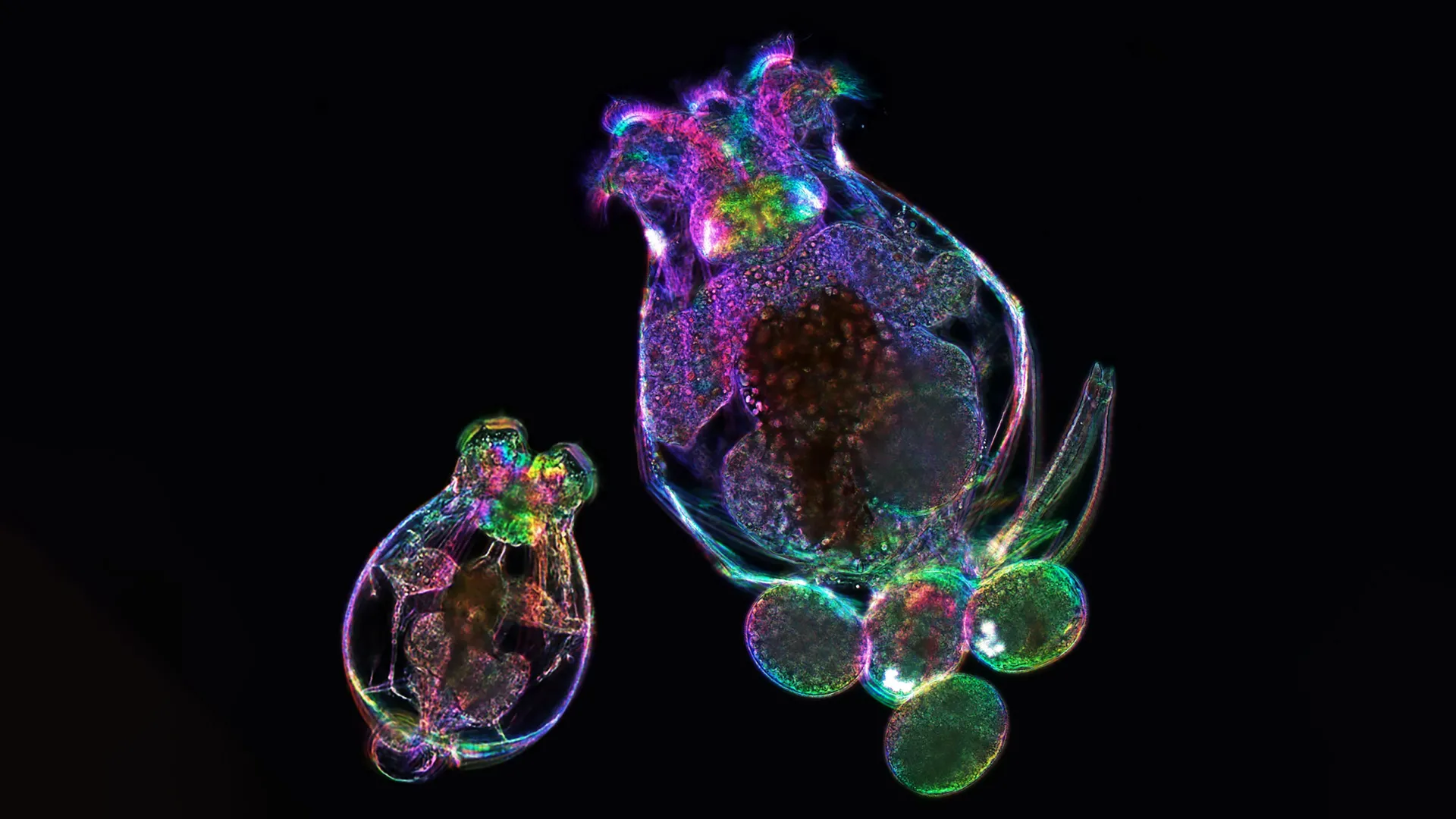
To investigate how information about maternal age is passed to offspring, Gribble's laboratory studies rotifers, tiny aquatic animals that reproduce rapidly and are well suited for laboratory experiments.
"Understanding the mechanism in these simple invertebrates can help us understand how maternal age effects occur in people as well," she said.