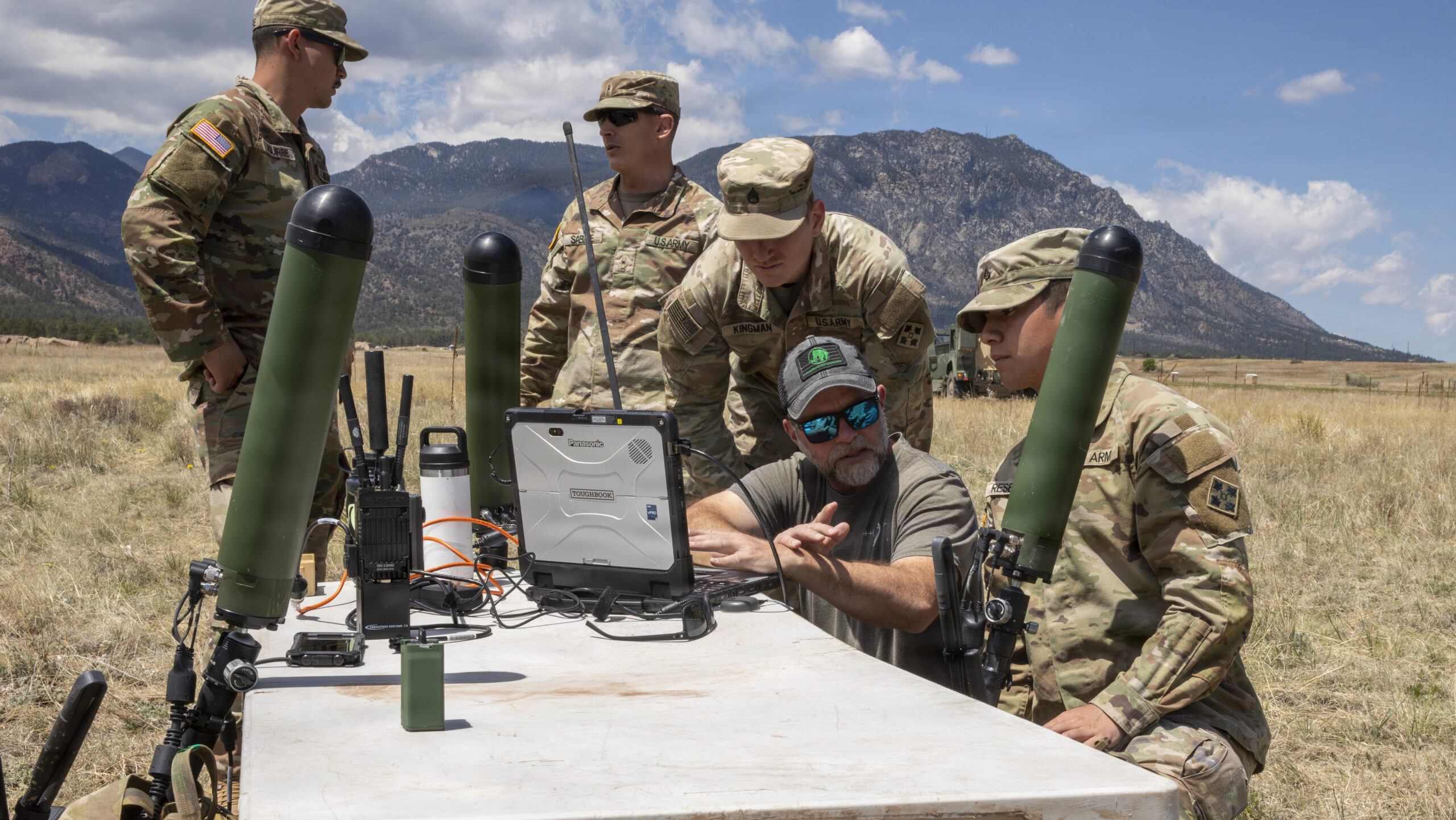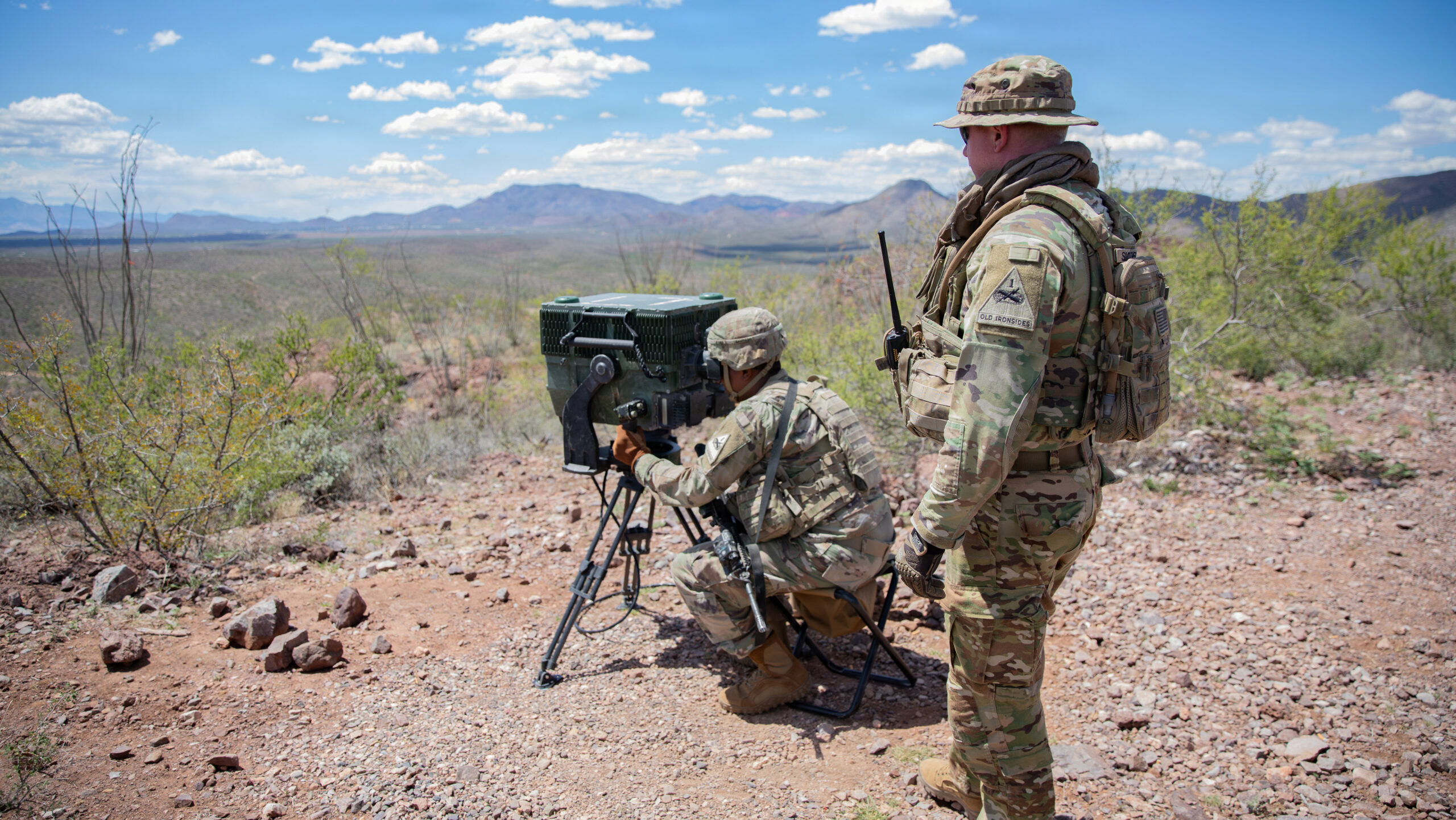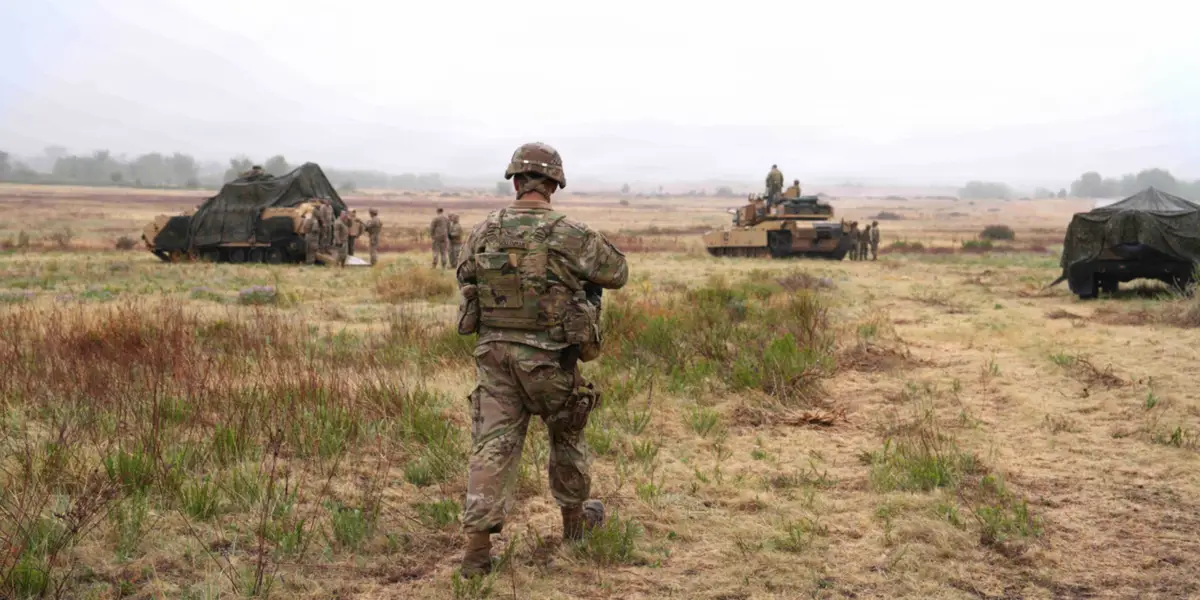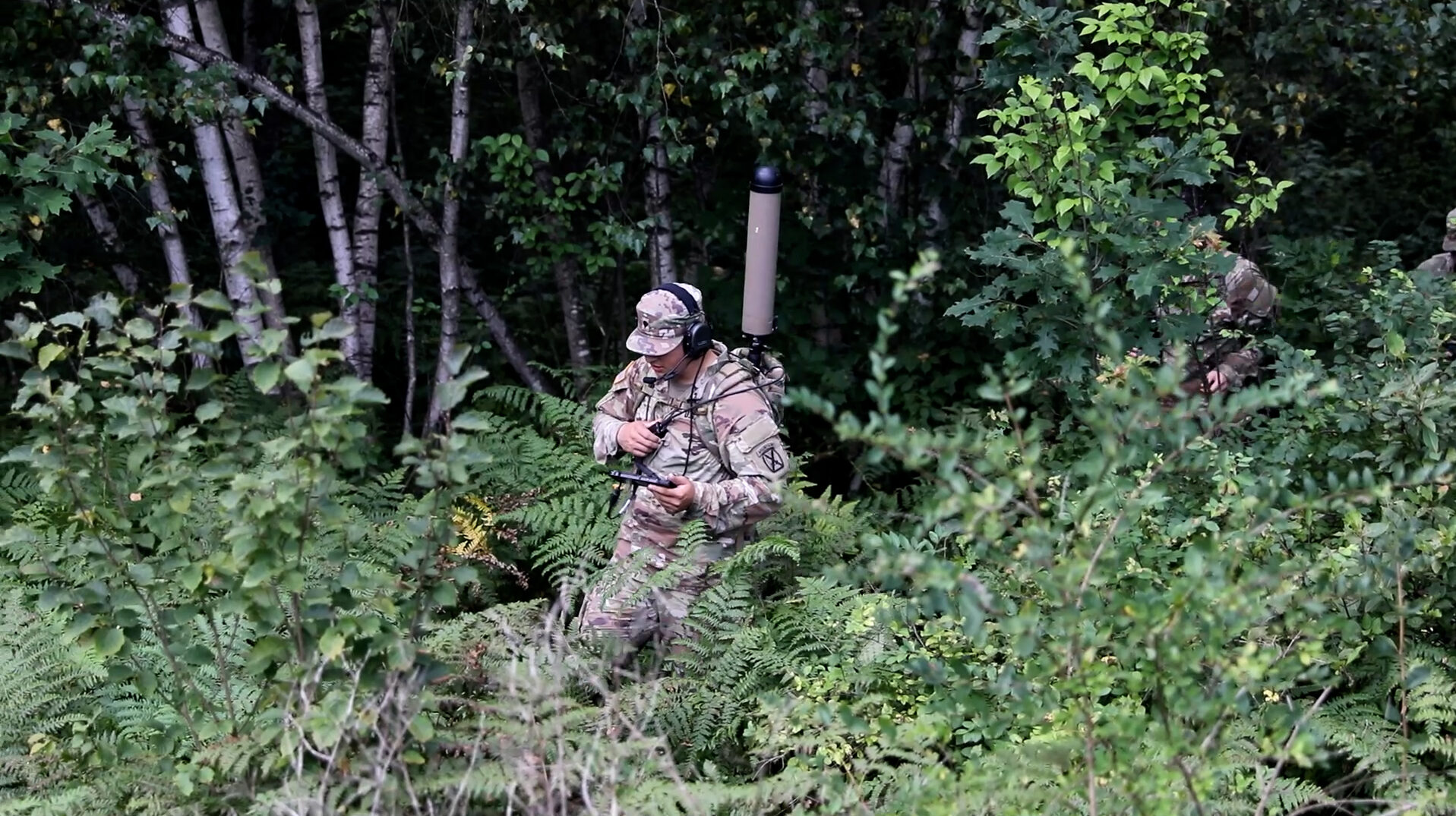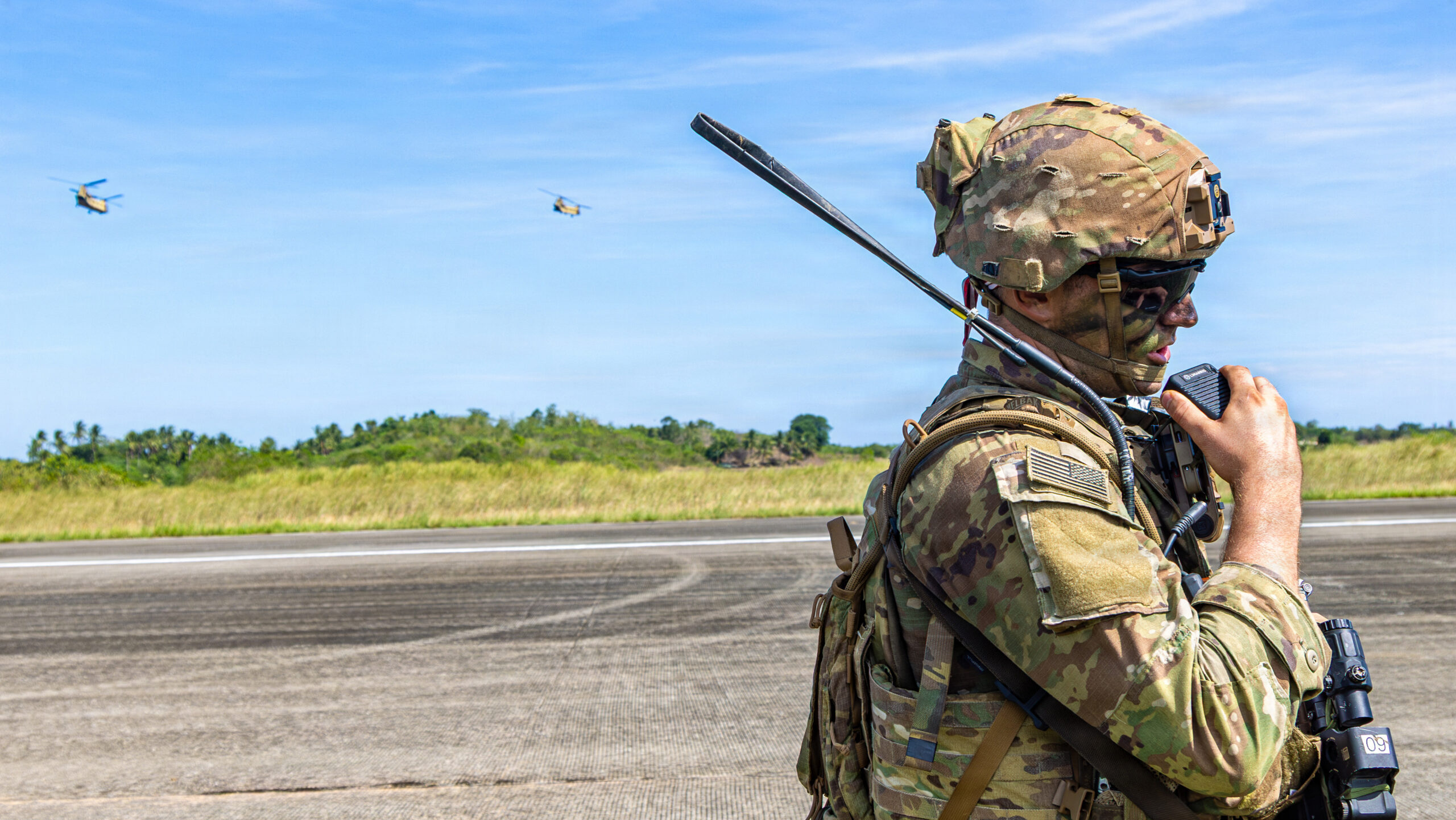
U.S. Army Sgt. 1st Class Joseph York, assigned to 3rd Mobile Brigade, 25th Infantry Division, communicates via radio during Operational Maneuver, the culminating event of Salaknib 2026 at Lal-Lo Airport, Philippines, June 13, 2026. (U.S. Army photo by Pfc. Jose Nunez)
WASHINGTON and AUGUSTA, Ga. — The Army is toying with new ways to deal with communication disruptions on the battlefield by trading the linear, step-by-step contingency plans soldiers once followed for mutually reinforced layers that look more like “electromagnetic camouflage,” I Corps commander Lt. Gen. Matthew McFarlane said today.
“Our traditional PACE plans — primary, alternate, contingency, emergency — ways to [communicate] are dead. A sequential PACE plan, predicated on responding to failure with manual, step-by-step user actions is useless against concurrent multi-band jamming,” McFarlane told an audience at the annual TechNet Augusta conference.
A boilerplate PACE plan that any soldier could expect briefed at a field exercise might look something like this: The primary method to communicate is over secure FM radio; the alternate method is through satellite calls; the contingency is HF radio; and the emergency is an IR strobe light, or maybe a message delivered via runner.