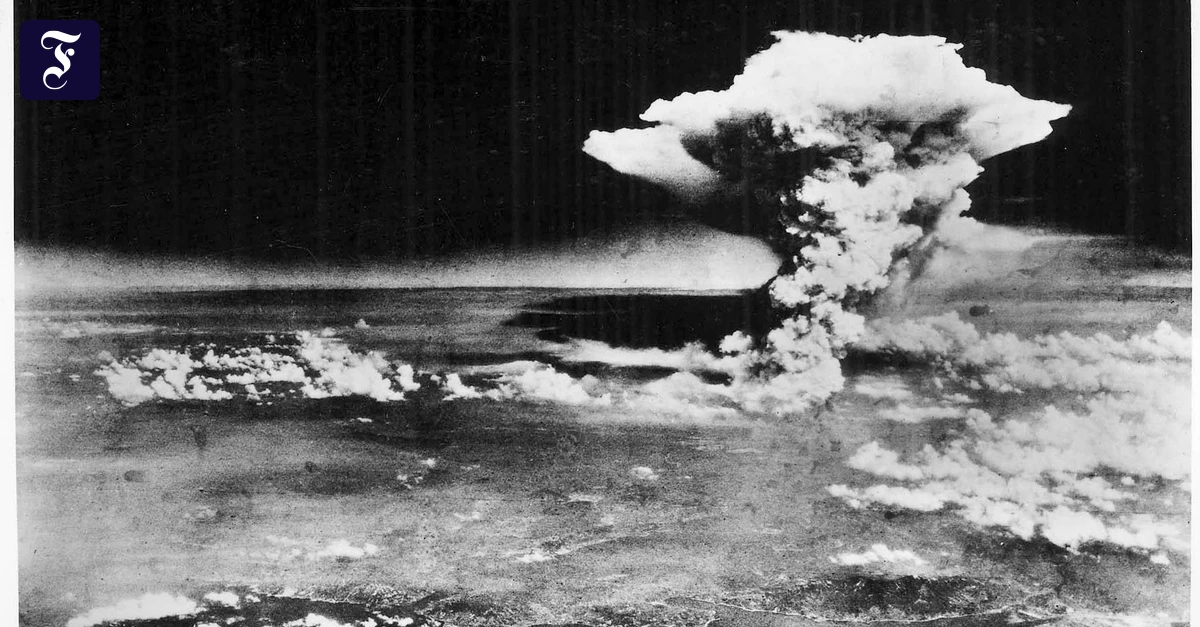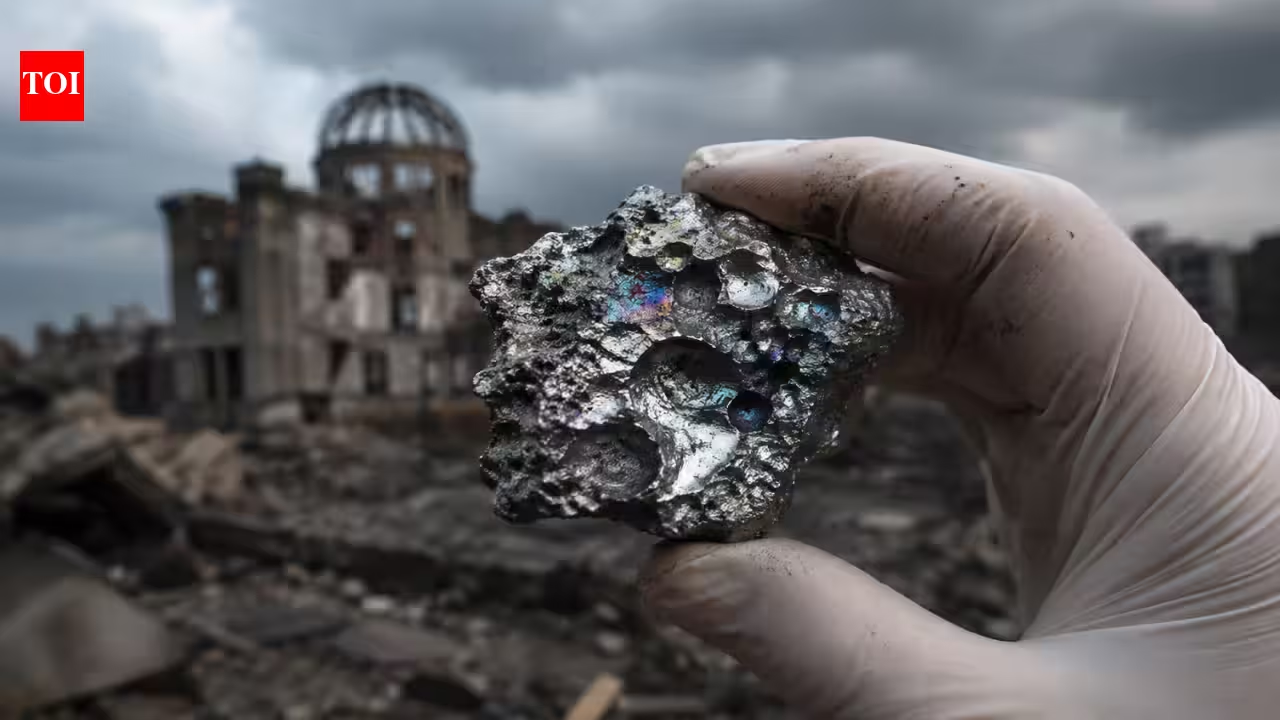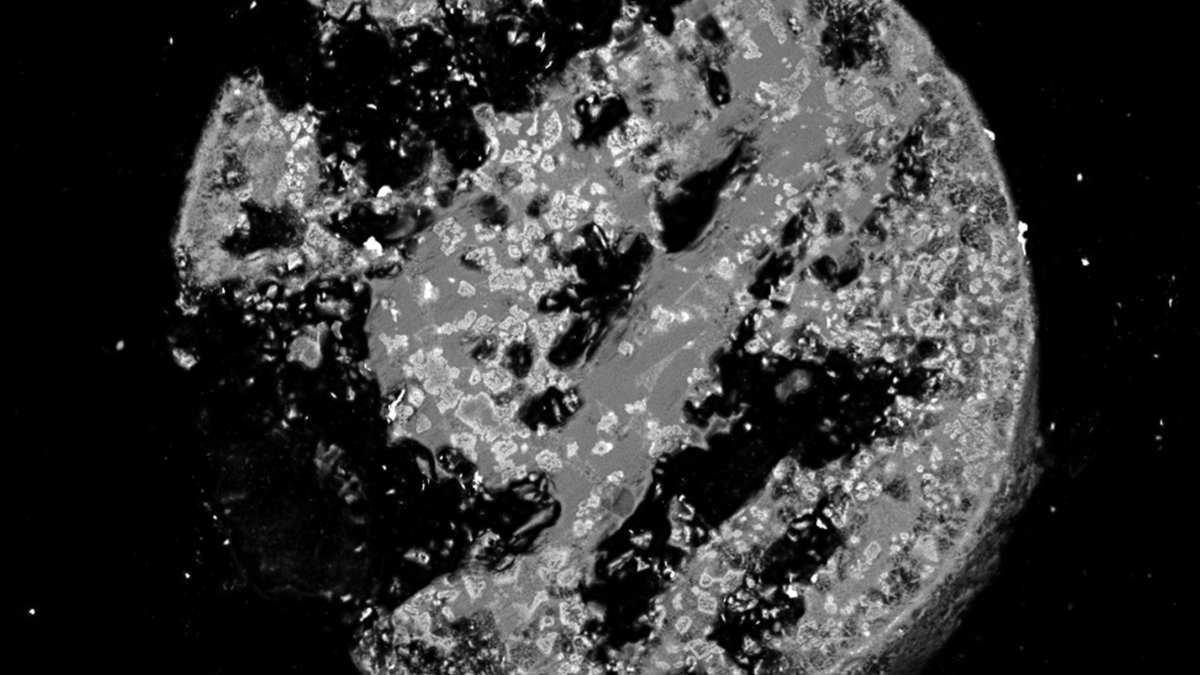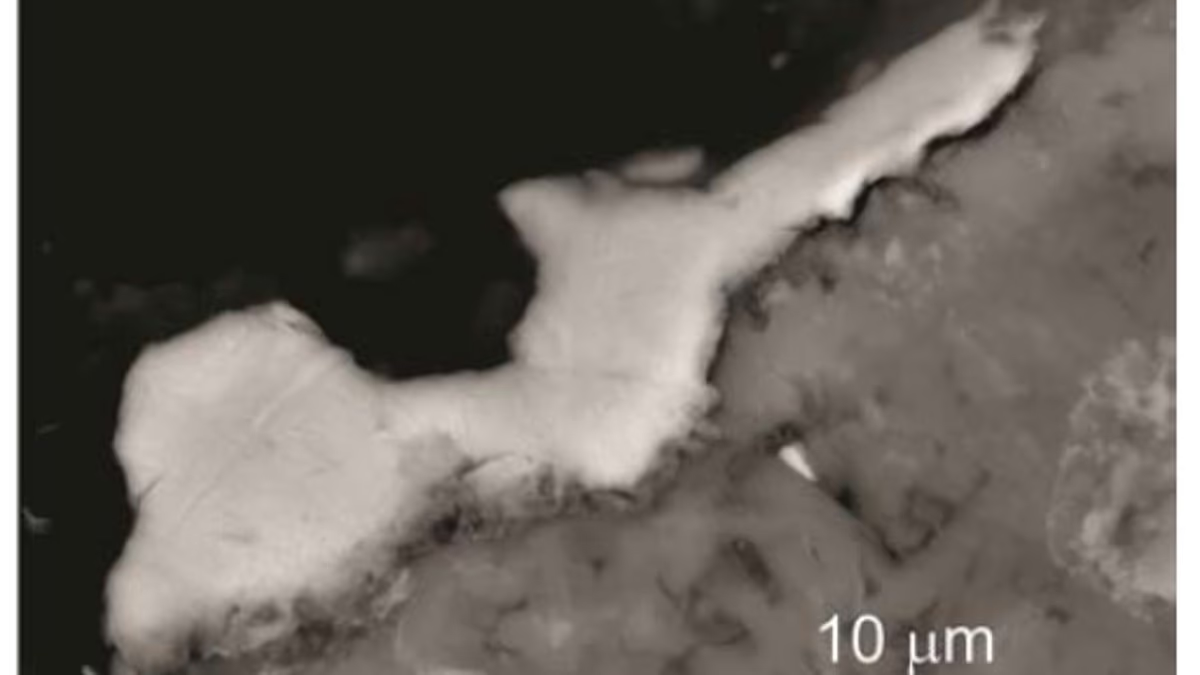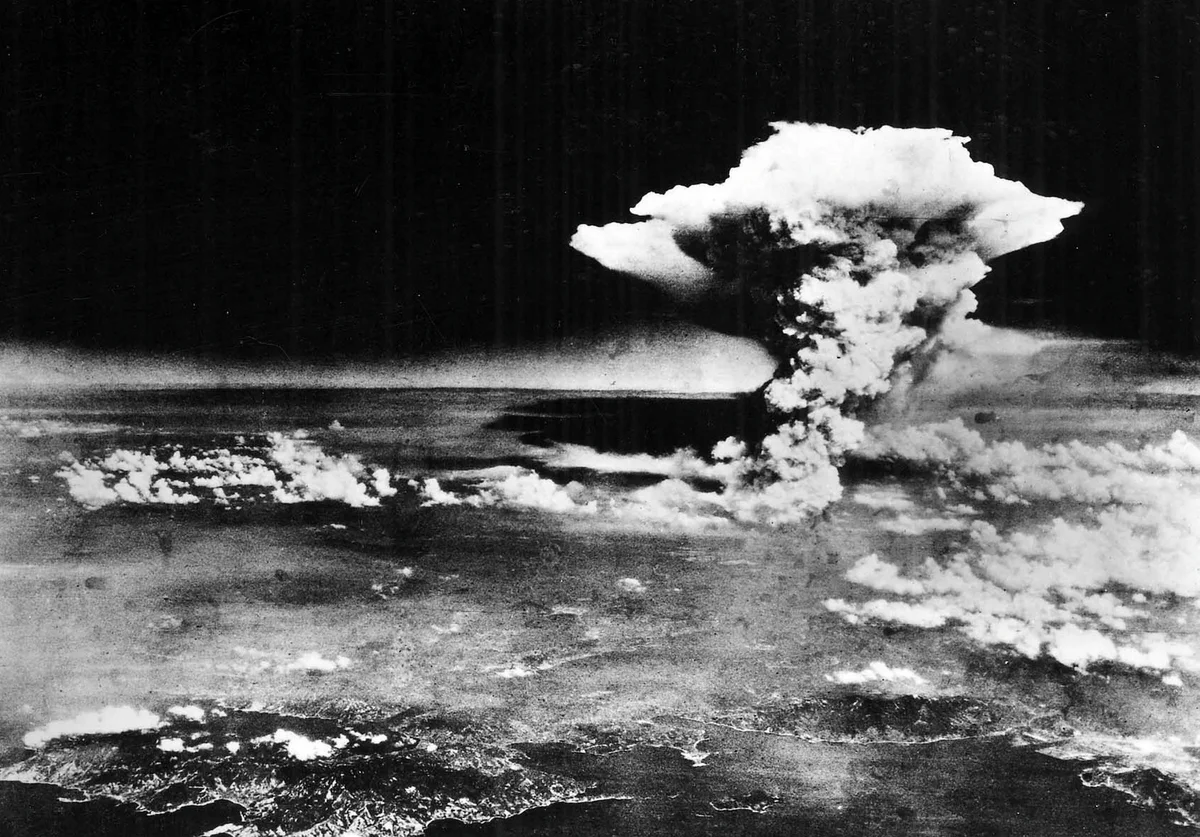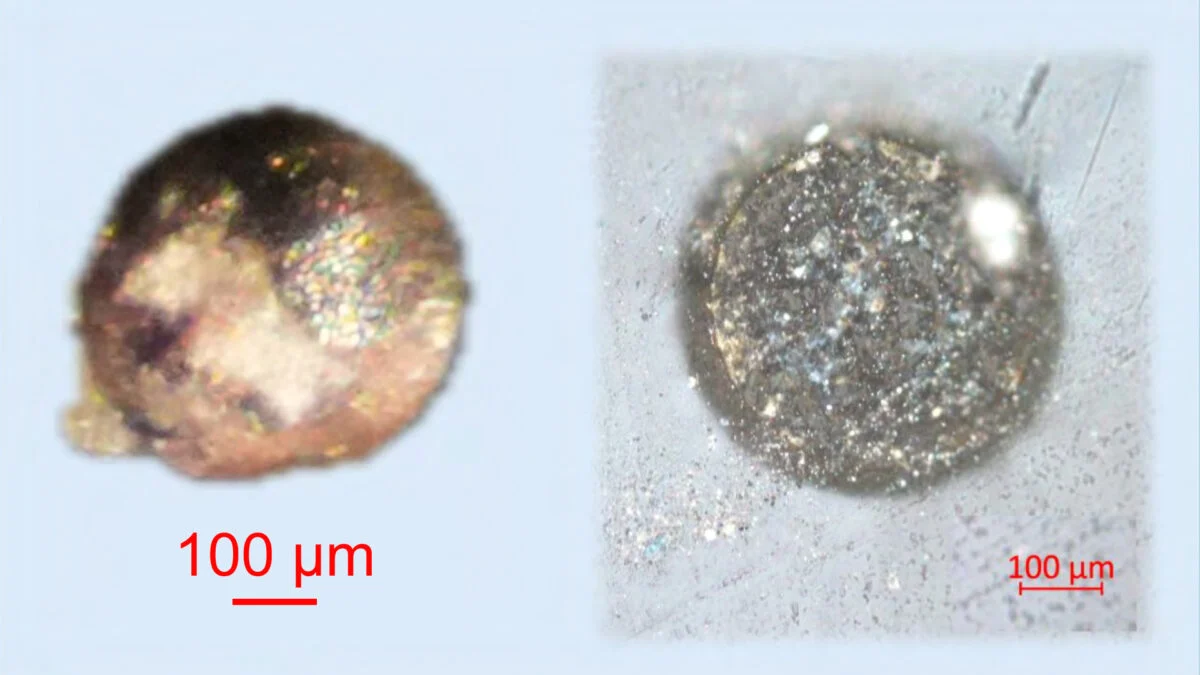
The physical aftermath of a major historical event can sometimes survive in unexpected forms. While the human consequences of the 1945 atomic bombing of Hiroshima remain central to its history, the explosion also produced extreme chemical and physical conditions that transformed ordinary materials in the surrounding environment. Decades later, scientists are still analyzing some of those materials to understand what happened during the brief moments of the blast.Researchers have now investigated tiny glassy particles created in the explosion and found proof of an unusual multicomponent alloy with an earlier unreported crystal structure. The material was discovered inside one of the microscopic particles collected from the Hiroshima area. Its existence gives scientists an unusual opportunity to examine how matter behaves when exposed to extraordinary heat, rapid mixing and almost instantaneous cooling.The research also illustrates how materials formed during extreme events can become scientific records. Although the particles are tiny, their chemical composition and atomic structure can preserve clues about conditions that existed for only fractions of a second.What Happened in Hiroshima in 1945?On August 6, 1945, the United States dropped an atomic bomb on Hiroshima, Japan, in the final stages of World War II. The explosion produced an enormous release of energy, resulting in a fireball and extreme temperatures that impacted buildings and materials across the surrounding area.The intense heat melted and vaporized substances that included metal, glass, soil and water. These materials became incorporated into a turbulent mixture before cooling and condensing.The procedure was extraordinarily fast. Materials that would normally remain separate could be mixed together, melted and then quickly solidified. That unusual sequence created microscopic particles with chemical and structural characteristics that scientists would not ordinarily anticipate to find in naturally occurring materials.The Discovery of HiroshimaiteScientists had earlier discovered unusual glass particles in sandy areas around Hiroshima Bay. Researchers determined that these particles were connected with the 1945 atomic explosion and gave them the name hiroshimaite.The particles differ in size, ranging from microscopic grains to larger fragments. Their origins make them valuable to researchers as they contain material produced directly during the explosion and its immediate aftermath.Rather than being ordinary pieces of glass, these particles can have mixtures of material drawn from the environment around the blast. Their composition therefore provides a microscopic record of the extreme conditions through which they were formed.Scientists Examine 34 Microscopic ParticlesFor the latest research, scientists analyzed 34 hiroshimaite particles using sophisticated analytical techniques. The researchers used powerful microscopes and high-energy electron beams to investigate their composition and internal structures.One particularly significant technique was single-crystal X-ray diffraction. This approach allows scientists to determine how atoms are arranged within a crystalline material.The researchers were looking not merely for familiar elements but for unusual combinations and structures that might have formed in the rapid heating and cooling connected with the explosion.Their analysis produced an unexpected result.An Unusual Alloy Hidden Inside One ParticleOne of the glassy grains contained what researchers explain as a previously unknown multicomponent alloy. The material contained iron, chromium, nickel, manganese, molybdenum, silicon and aluminum.Multicomponent alloys vary from conventional alloys because several elements can occur in substantial proportions rather than having one primary metal with only small additions of other elements.The discovery is particularly interesting because of the material's atomic organization. Researchers identified a crystal structure that had not earlier been reported in this family of materials.However, the material seems to be extremely rare. The researchers detected it in only one of the 34 particles they analyzed.A Microscopic Record of an Instantaneous ExplosionStudy co-author Luca Bindi, an Earth scientist at the University of Florence, emphasized the remarkable ability of these particles to preserve information about the explosion.“Even decades later, a grain only a few micrometers across can retain a detailed record of conditions that existed for only fractions of a second,” Bindi told Scientific American. “These particles are not simply melted debris. They are physical archives of the explosion.”This helps explain why the particles are scientifically significant . The explosion itself was over almost immediately, but the resulting materials preserved proof of what happened during those extremely brief moments.By analyzing their chemistry and crystal structures, scientists can investigate how matter responded to the extraordinary conditions.Why Scientists Study Multicomponent AlloysThe discovery is important beyond its connection to Hiroshima as multicomponent alloys are an active area of materials research.These alloys can potentially combine several useful characteristics, including strength, resistance to corrosion and wear, flexibility and the ability to tolerate high temperatures.Traditional alloys often depend heavily on one main metal with smaller amounts of additional elements. Multicomponent systems allow scientists to explore much broader combinations of chemical elements and atomic arrangements.The Hiroshima material therefore offers researchers another example of how unusual combinations can emerge under extreme conditions.Why the Discovery Is SignificantThe discovery illustrates that extreme events can create materials that ordinary manufacturing processes may not easily produce.It also shows why scientists sometimes investigate unusual or historically significant samples. A tiny particle that seems to be insignificant can contain a surprisingly comprehended record of the physical conditions that produced it.In this case, researchers have used advanced analytical tools to examine material created more than eight decades ago. Their findings suggest that the microscopic particles formed in the Hiroshima explosion still contain information capable of revealing previously unknown chemistry.What These Glass Spheres Tell Us About ScienceThe discovery of an unusual alloy inside Hiroshima glass illustrates how scientific knowledge can emerge from unexpected proof.The researchers did not require a large sample. Instead, they were able to extract information from microscopic grains whose structures had been preserved for decades.Modern analytical techniques made it possible to examine the particles at a level of detail that earlier researchers could not have achieved. Techniques like X-ray diffraction can reveal the arrangement of atoms and help distinguish ordinary materials from earlier unknown structures.A Discovery Preserved for 81 YearsMore than 80 years after the Hiroshima bombing, scientists continue to find new information in materials produced during those few extraordinary moments.The newly identified alloy appears to be rare, occurring in only one of the 34 particles analyzed. Nevertheless, its unusual composition and crystal structure could provide researchers with new ideas regarding how complex materials form under extreme conditions.The broader lesson is that materials can preserve physical history in remarkable ways. A microscopic glass sphere can have evidence of an event that lasted only fractions of a second, allowing scientists many decades later to investigate the chemistry and physics of that moment.As materials scientist Ángelo Oñate Soto, who was not involved in the research, stated Chemical & Engineering News, the discoveries “open up entirely new research directions and deepen our understanding of how materials form and behave.”The Hiroshima particles are therefore more than remnants of a historic explosion. They are microscopic records of extreme physics, offering scientists a rare window into how elements can combine and form unfamiliar structures when ordinary rules are pushed to extraordinary limits.Source: Smithsonian MagazineFAQs:Q1. What was discovered in the Hiroshima glass particles?Scientists found evidence of a previously unknown multicomponent alloy in one of the examined glass particles. The material contains several metallic elements arranged in a distinctive crystalline structure.Q2. What is hiroshimaite?Hiroshimaite is the name given to tiny glass particles associated with fallout from the Hiroshima atomic explosion. These particles formed when material affected by the blast cooled and condensed.
In 1945, Hiroshima’s atomic blast vaporized metal, glass, soil and water; 81 years later, scientists studying the cooled material found strange glass spheres that may preserve a never-before-seen alloy
After decades of 1945 Hiroshima atomic bombing, scientists studying tiny glass particles found around Hiroshima Bay have identified evidence of an unusual multicomponent alloy. Known as hiroshimaite, the particles formed after the explosions extreme heat vaporized surrounding materials before they rapidly cooled and condensed. Researchers examined 34 particles using advanced microscopy and single-crystal X-ray diffraction, discovering an alloy containing iron, chromium, nickel, manganese, molybdenum, silicon and aluminum in a distinctive crystal structure.
1,207 words~5 min read