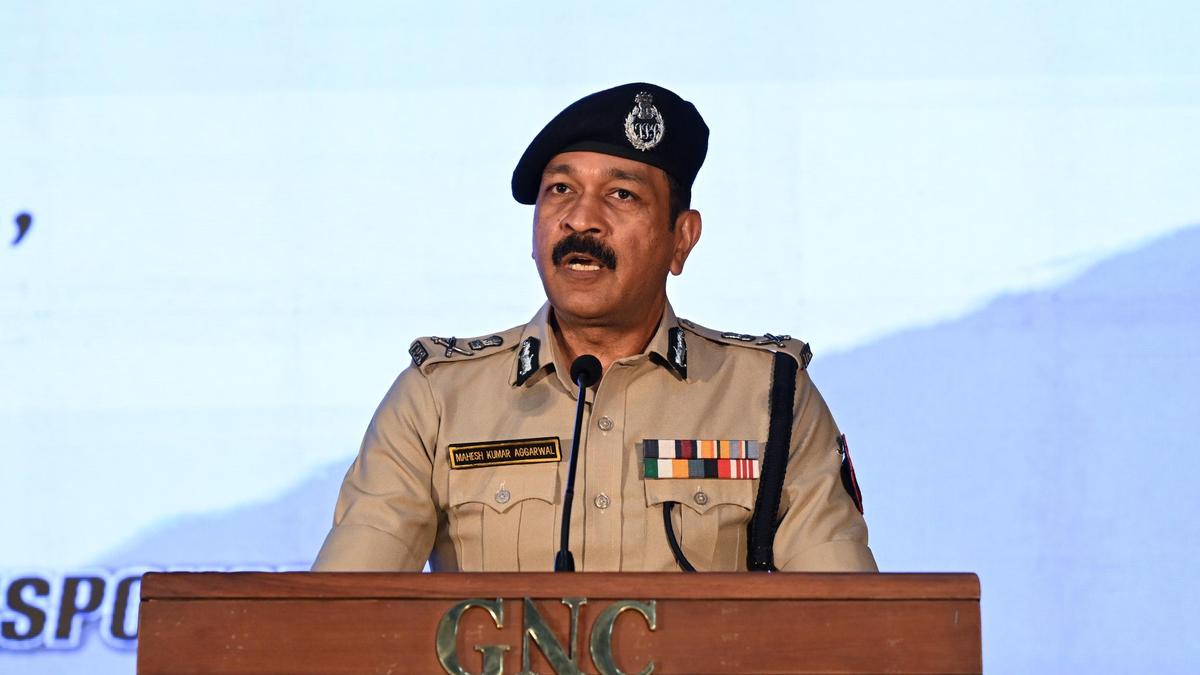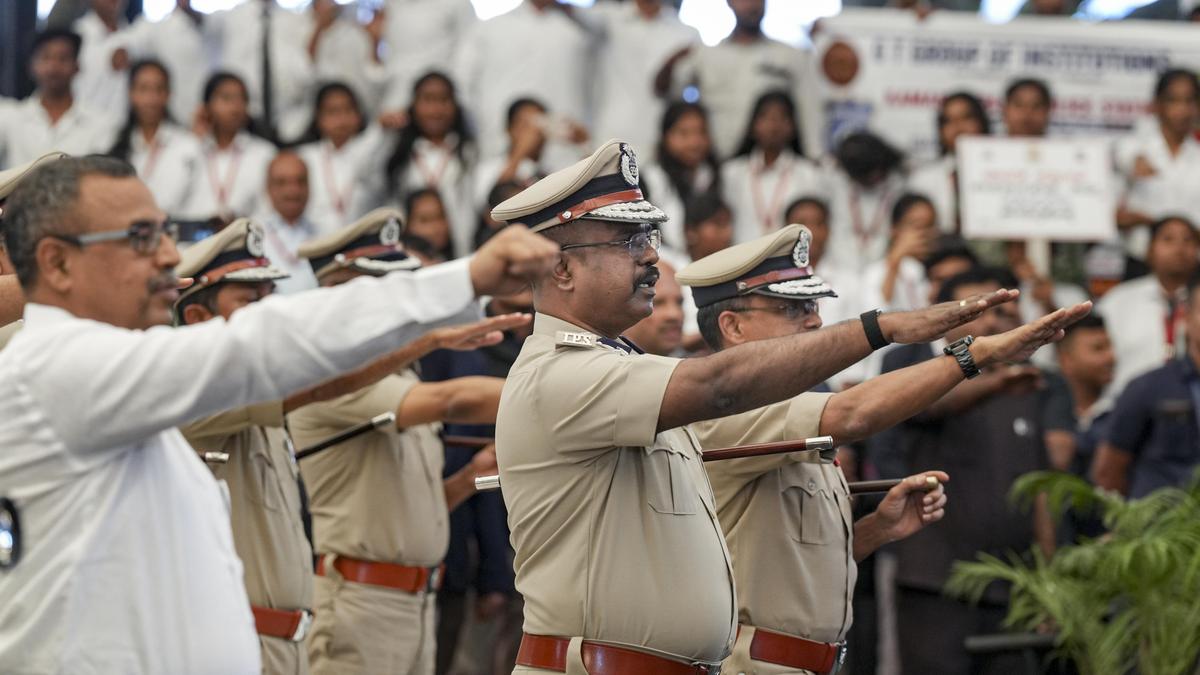
The Tamil Nadu Police have launched a multi-pronged strategy to eradicate substance abuse in the State. The launch of a new force, Anti Narcotics Task Force (ANTF), does not seem to be just another initiative in rhetoric but a concerted effort to end the prevalence of drugs, especially ganja, by taking on drug syndicates, smugglers, and others involved in the high-stakes illegal business.Three months after the Tamilaga Vettri Kazhagam (TVK) assumed power, it has taken the first big step towards fulfilling Chief Minister C. Joseph Vijay’s election promise that he would end the drug culture in the State.Since May 10 this year, 5,082 drug-related cases have been registered in the State and 7,214 suspects have been arrested on the charges of trafficking, possession, and distribution of drugs. More than 7,000 kg of ganja, 112 kg of other drugs, and 3.4 lakh tablets (prescribed drugs obtained without authorisation) were seized.The special force has been formed in the wake of reports of youth, including college students, getting addicted to ganja and drugs such as methamphetamine or meth, a highly addictive synthetic stimulant, freely available in rave parties. The link between crime and drug addiction is also proven. It is in this context that the government constituted the ANTF, involving multiple stakeholders and law-enforcement agencies.Though attempts were made in the past to dismantle inter-State drug syndicates and neutralise their supply chain and manpower, the unlawful activity continued to thrive with the suspects adopting newer means of transport and distribution. Even as the State police managed to curtail ganja cultivation in the tri-junction forest area of Tamil Nadu, Kerala, and Karnataka, the flow of the drug continues from Andhra Pradesh and Odisha.After intensive search operations on train and road routes along inter-State borders, smugglers have stopped moving ganja in large quantities. Now, they engage small-time peddlers to smuggle less than 4 kg to 5 kg per consignment, mostly by train.Flowing from neighbouring StatesWhile the Narcotics Intelligence Bureau-Criminal Investigation Department (NIB-CID) and the local police have been working in coordination with Central agencies, such as the Narcotics Control Bureau, to contain the prevalence of drugs, the efforts did not yield the desired result. The police suspect that the inflow of ganja or marijuana or cannabis continues from neighbouring States, Andhra Pradesh in particular. Besides local consumption, ganja and other synthetic drugs are smuggled to Sri Lanka with the help of illegal boat operators for further transhipment to South-East Asian countries.The high-capacity ANTF is a dedicated force. It was born out of a major overhaul of the State’s strategy to combat drug trafficking and substance abuse aimed at achieving a ‘Drug-Free Tamil Nadu’. The new architecture, sanctioned through a Government Order issued on August 8 this year, seeks to replace the existing enforcement framework with a dedicated, technology-driven, and intelligence-led system. The initiative combines specialised policing with financial investigations, cyber-surveillance, treatment and rehabilitation of drug addicts, youth engagement, and community participation.It seeks to significantly expand the State’s dedicated anti-narcotics field force by strengthening it with technology. As many as 65 specialised ANTF police stations have been sanctioned; they will cover 37 police districts and eight city police commissionerates. Each of these stations will have one Inspector of Police, four Sub-Inspectors, and 20 police personnel. Together, they will provide 1,625 dedicated personnel for field-level narcotics enforcement across Tamil Nadu.Not meant for routine policingA key feature of the new arrangement is that ANTF personnel would not be deployed for routine policing to make sure that the force remains an exclusive deployment agency tasked to maintain sustained surveillance, intelligence-gathering, and investigation of organised drug trafficking networks.Before the creation of the dedicated ANTF, narcotics enforcement was largely handled by 15 NIB-CID units that functioned under the Enforcement Bureau-CID. While these units played an important role in preventing and detecting narcotics offences, the government realised that the relatively limited manpower and infrastructure available with the 15 NIB-CID units had made it difficult to maintain continuous State-wide surveillance and penetrate sophisticated trafficking networks.What was needed was a sufficiently strong centralised headquarters with specialised capabilities for State-wide intelligence analysis, cyber-analytics, darknet monitoring, and financial investigation. But none of this was present; the NIB-CID largely relied on local police for intensive combing operations. Further, personnel attached to the local police stations were required to deal with law-and-order duties, regular crime investigation, and other responsibilities. This often limited the sustained attention that could be devoted to organised narcotics networks. However, the ANTF intends to overcome these hurdles and address these gaps through a centralised command structure and specialised field units.The ANTF headquarters will be headed by an Additional Director-General of Police and an Inspector-General of Police, assisted by two Superintendents of Police (SP-I for Operations and SP-II for Intelligence and Administration). The headquarters will have 10 specialised wings to integrate intelligence, investigation, technology, operations, legal support, and administration.Among the key components is a dedicated cyber lab equipped to undertake digital forensics, mobile-data extraction, darknet monitoring, open-source intelligence, and cryptocurrency and blockchain analysis.A centralised crime records bureau will profile drug offenders, track repeat offenders, map trafficking routes, and identify drug hotspots. A special operations and investigation unit will focus on high-value cases, synthetic drug laboratories, international connections, and complex darknet distribution networks. Field intelligence units will collect information on cultivation sources, inter-State transit corridors, and maritime and coastal smuggling routes.Legal team to help in searchesThe ANTF will also have a dedicated legal unit to provide guidance on search and seizure procedures, investigation, filing of chargesheets, and trial proceedings. A 24x7 control room and helpline will provide real-time operational coordination. The police have solicited information from members of the public on drug-related offenders through the designated toll-free number 10581, while a WhatsApp chatbot facility will be available on 9498410581.“One of the most significant changes in the State’s anti-narcotics strategy will be a greater emphasis on financial investigation. Instead of limiting enforcement to the seizure of drugs and arrest of individuals involved in street-level distribution, the ANTF will identify the financial networks supporting organised trafficking,” says Director-General of Police and Head of the Police Force Mahesh Kumar Aggarwal.Investigators would trace illicit financial flows, identify key players and alleged kingpins, and pursue the freezing and attachment of movable and immovable properties belonging to traffickers and their accomplices under applicable legal provisions. “The objective is to weaken the financial foundations of organised drug syndicates and make trafficking increasingly difficult and unprofitable,” Dr. Aggarwal said.
Retrofitting Tamil Nadu to strike at drug menace
Tamil Nadu's new Anti Narcotics Task Force aims to combat drug trafficking and promote community awareness for a drug-free state.
1,579 words~7 min read