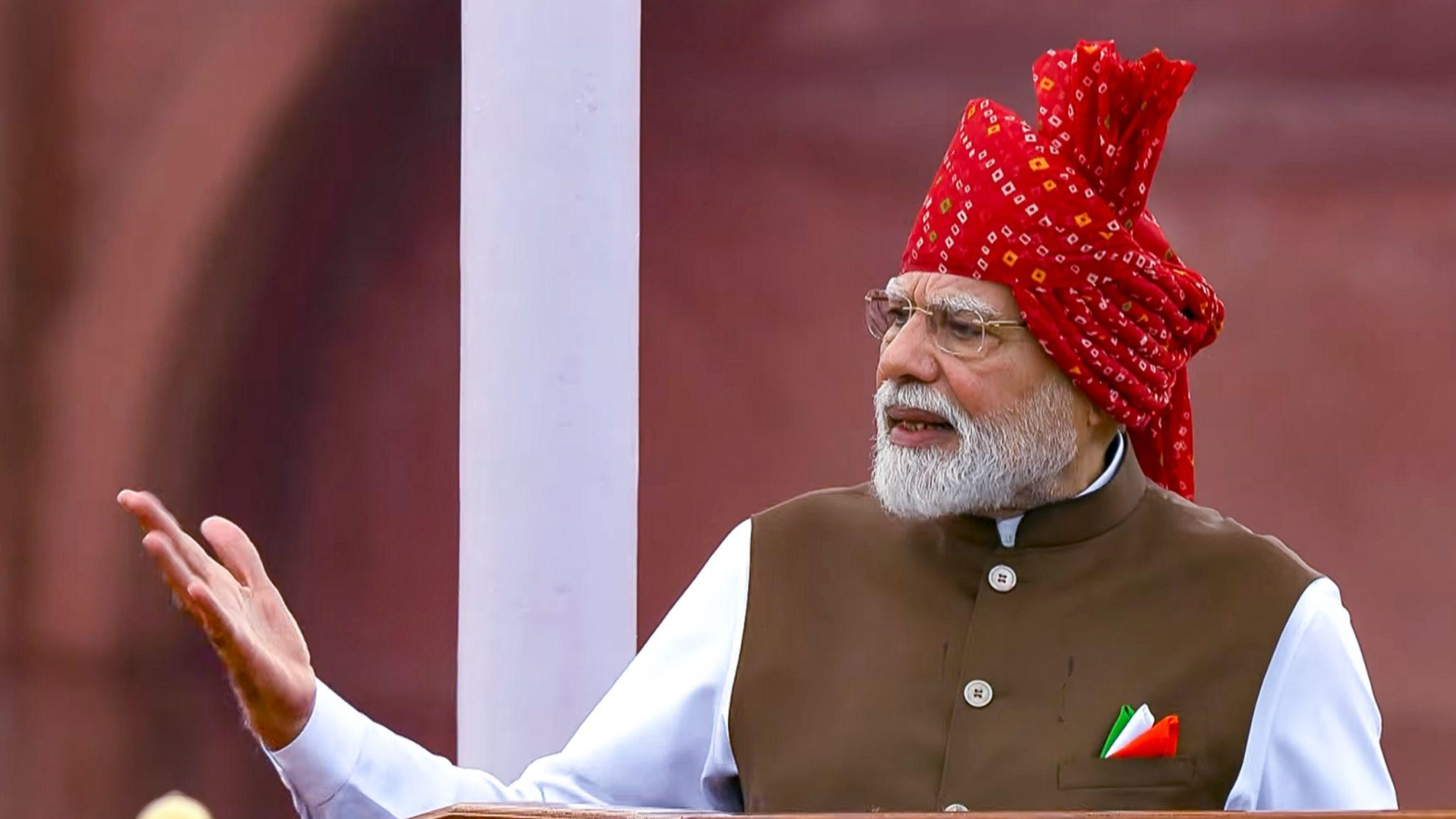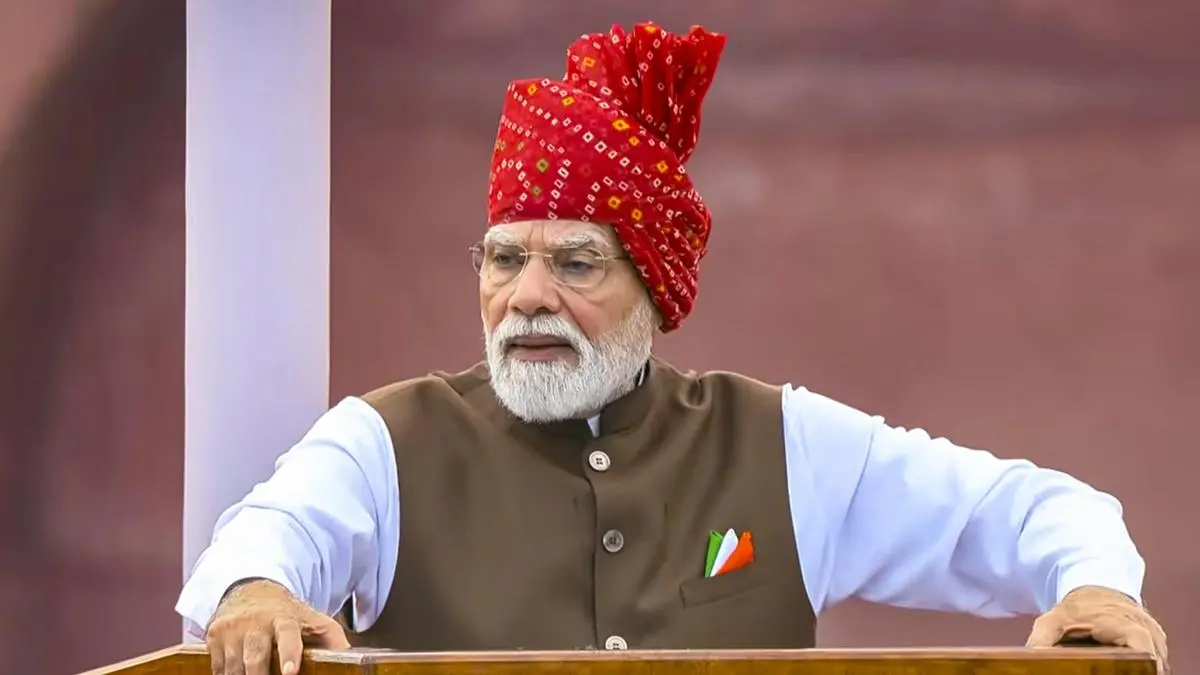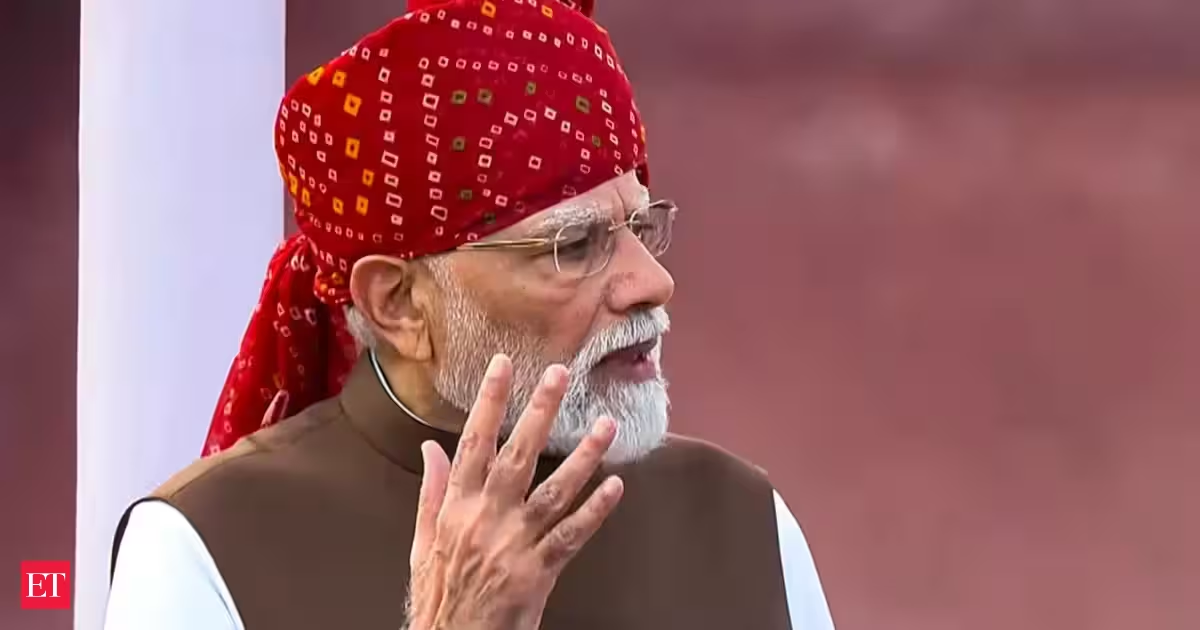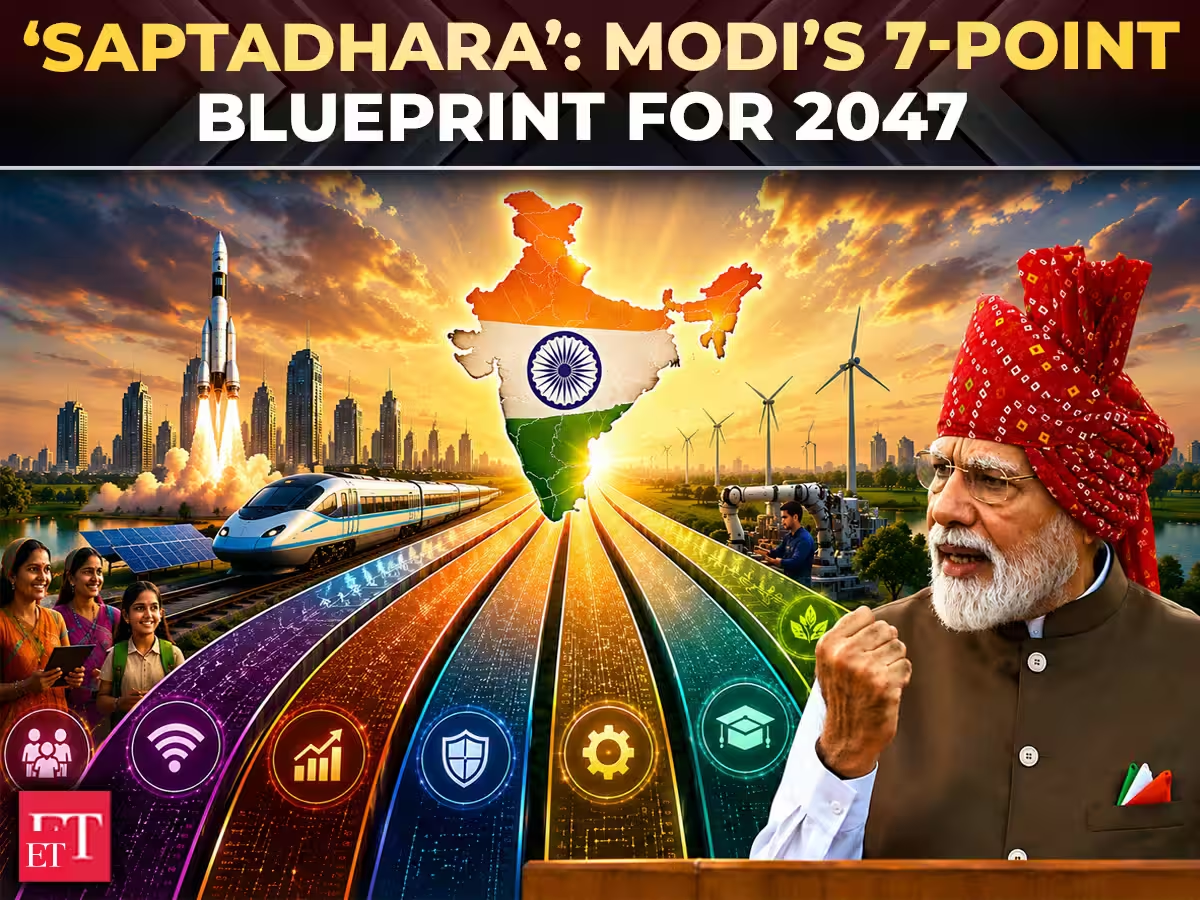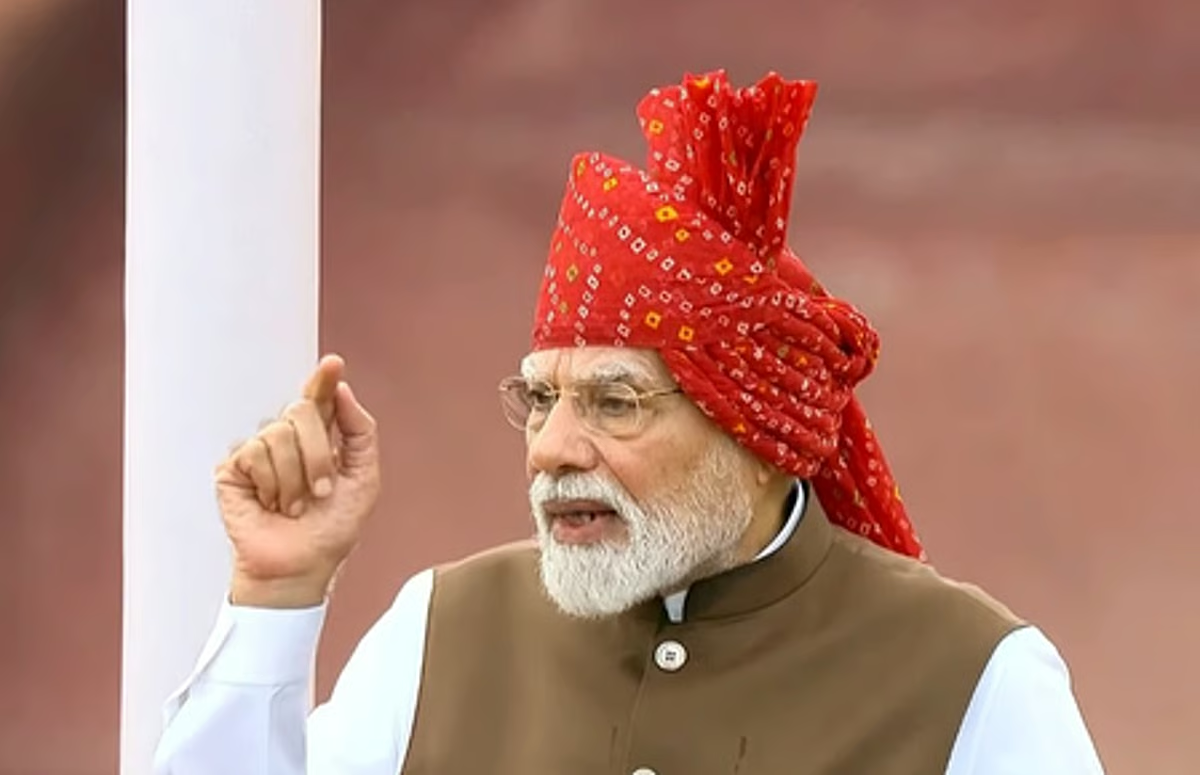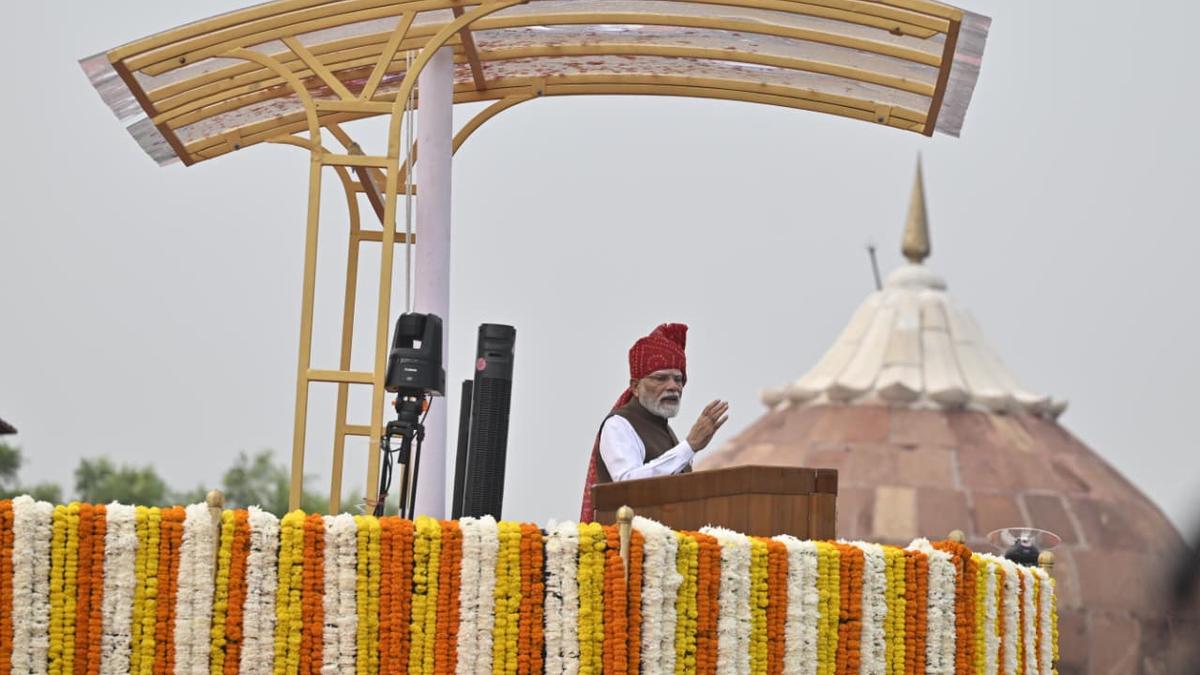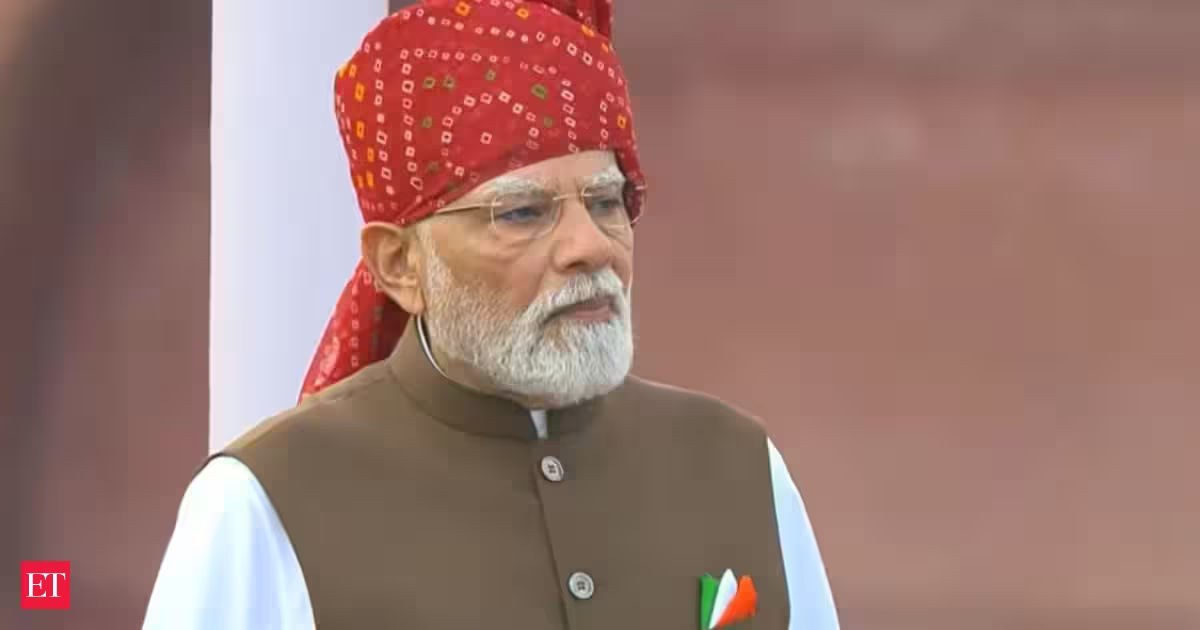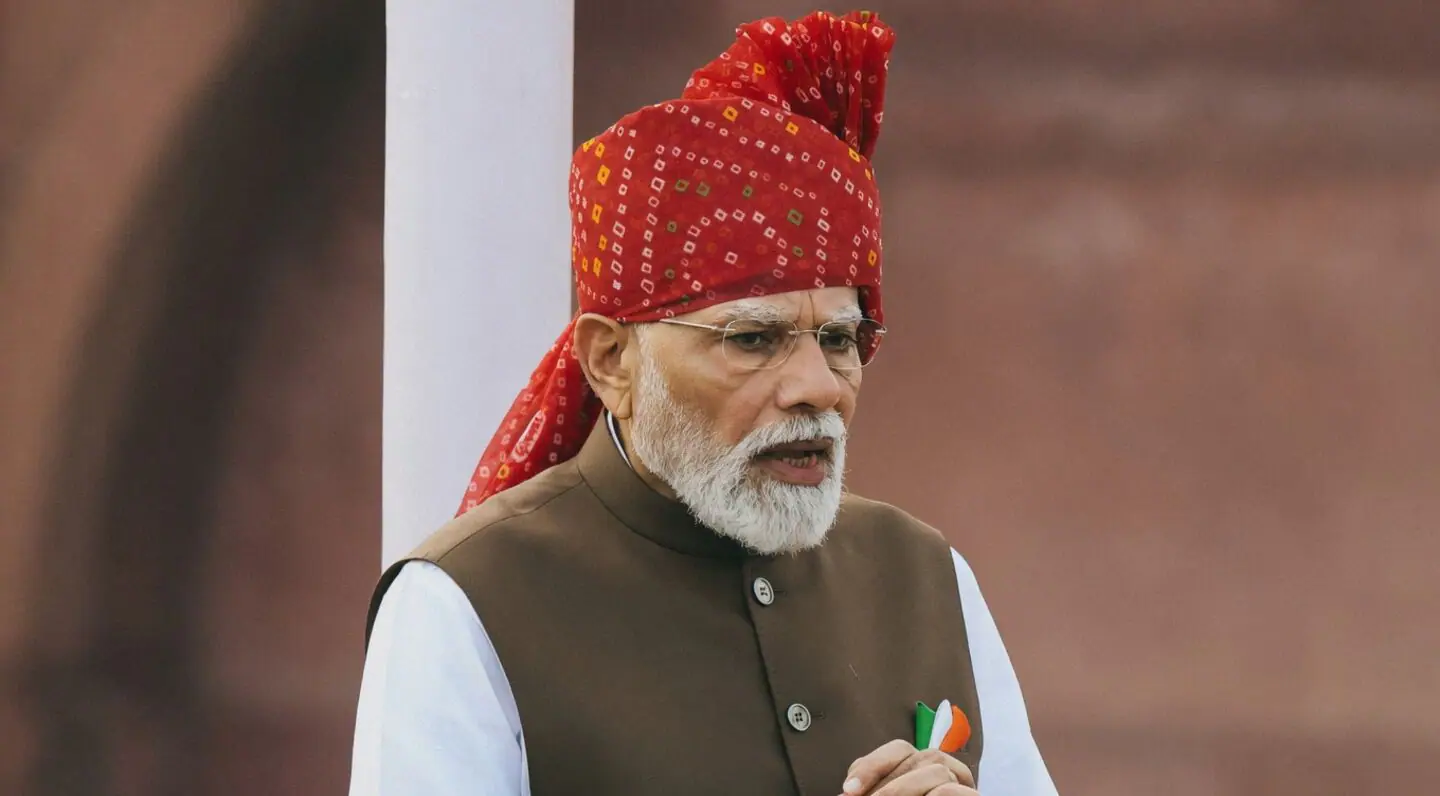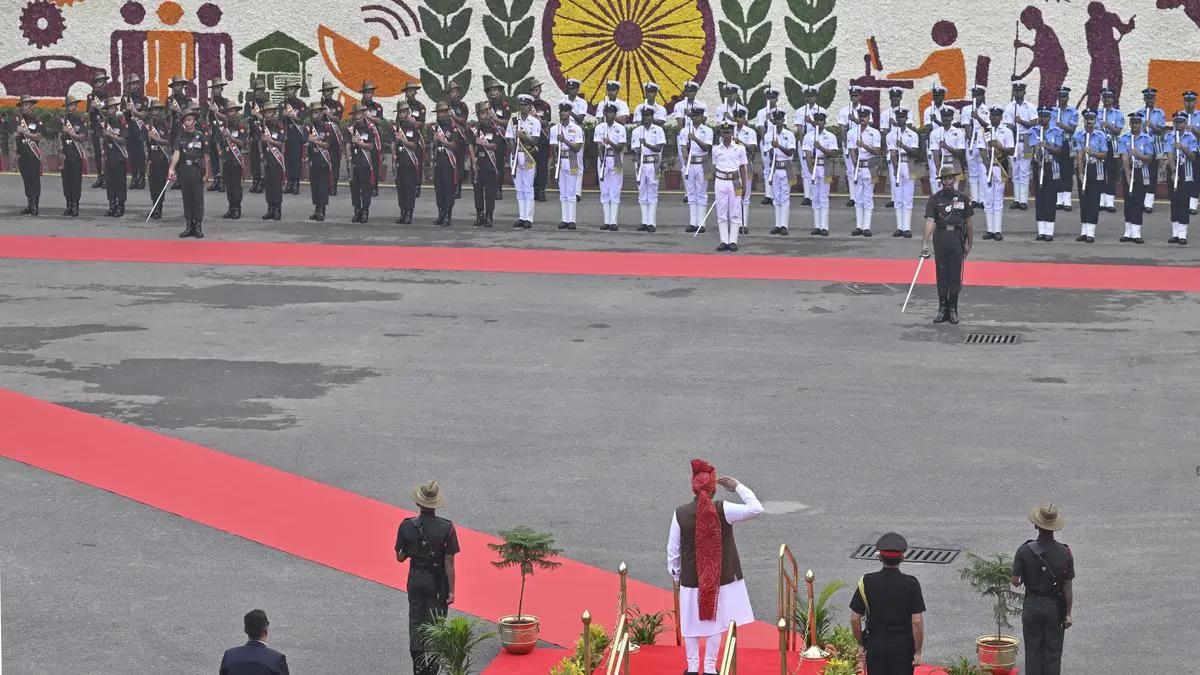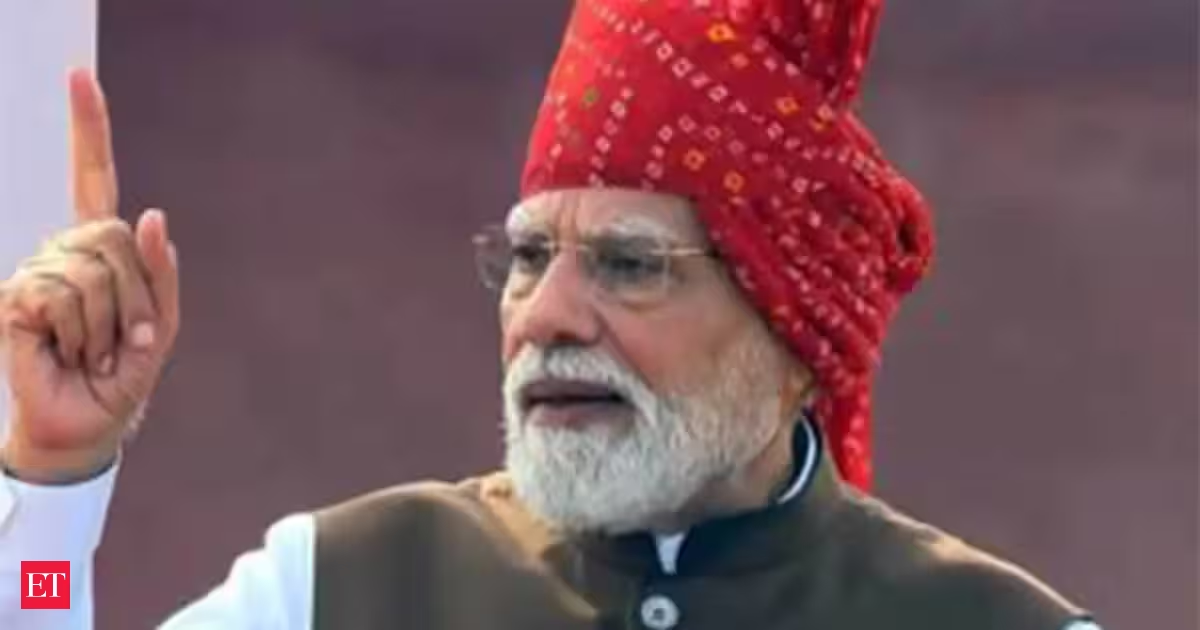
In his address to the nation on the 80th Independence Day, Prime Minister Narendra Modi outlined a seven-pronged framework — Saptadhara — to help India become a developed country, built around seven focus areas from manufacturing to soft power, and sought the engagement of youth to realise the vision.In his 13th consecutive address from the ramparts of Red Fort, Modi combined a long-term economic and development vision with political and social messaging, and appealed to the opposition to cooperate in implementing 33% reservation for women. The Saptadhara or Sapt Shakti include manufacturing power; agriculture and food processing; technology and innovation; Gati Shakti; defence Shakti; green and blue economy; and India’s soft power, the prime minister said.He said every Indian is embracing the spirit of ‘Make in India’ and ‘Vocal for Local’ initiatives. To boost manufacturing, India should “build complete domestic end-to-end value chains, from design to components, focusing on zero-defect quality, cost, and global scale,” he added.In agriculture and food processing, he called for integrated farm-to-export supply chains for millets, spices and fruits, and a transition to chemical-free farming. On technology, the prime minister said, “The country needs to evolve from a tech market into a global innovation hub leading in AI, quantum, space, robotics, DPI, and Made-in-India 6G.” Through Gati Shakti, a concept he had envisaged earlier, the country is establishing high-speed, seamless multimodal logistics connecting cities, highways, rail, airports and modern industrial seaports. Modi also emphasised that India needs to become Atmanirbhar in defence. “Through Defence Shakti, the country should achieve complete strategic self-reliance by pioneering and exporting next-generation defence technologies like drones, counter-drone systems and hypersonic,” he said.Also Read | India is unstoppable: Global embassies and missions send heartfelt greetings on 80th Independence DayModi called for a stronger push towards green and blue economy through scale across green hydrogen, renewables and energy storage alongside full utilisation of ocean, coastal and marine potential.He stressed the need to harness India’s soft power by globalising Indian culture, yoga and Ayurveda, promoting tourism, and establishing global leadership in gaming, VFX, animation, and creative economy. He also urged the industry not to compromise on quality “as it builds trust in Indian products.”For the first time, the full version of Vande Mataram was played at flag hoisting, followed by unfurling of the national tricolour and the national anthem. “India has a stable political mandate, a stable government, a vibrant democracy, a strong judicial system and a Constitution that guides us all,” the prime minister said. “Places once affected by Naxal violence are witnessing peace, development and a new hope.”He appealed to all political parties to respect women’s aspirations and cooperate in implementing the one-third reservation for women in parliament and state assemblies.Also Read | PM Modi sets target of 6 crore ‘Lakhpati Didis’ on Independence Day, hails women’s role in nation-buildingThe prime minister also touched upon issues ranging from youth skilling and cooperative federalism to drug abuse and the preparations for the 2036 Olympics.Under AI Youth Skilling, 10 million youth will be trained in AI over the next year through nationwide mission mode. Also, free online coaching will be offered to youth preparing for various examinations. Modi sought the involvement of youth in the ongoing Census exercise saying they should help the elders fill the forms correctly. He urged every family to join the Nasha Mukt Yuva Abhiyan campaign to eliminate the menace of drugs.He also mentioned Sports Talent Hunt, a nationwide campaign targeting children aged 5-15 years across villages and cities for the 2036 Olympics likely to be held in India.He said both state and central governments should come together for the next level of reforms with a whole of government and whole of society approach. Under Civil Defence Reform, modernised training and enhanced capabilities to address evolving security needs. Modi said five new nuclear reactors are likely to be operational within 6-7 years as the country moves towards the target of 100 GW nuclear energy capacity by 2047. The PM appreciated the changing scale of India’s ambitions that include 50 companies are in the Fortune 500 list, an Indian bank is among the top global banks, an Indian pharma company among the world’s top five, an Indian law or rating agency achieving global leadership, an Indian consulting or accounting firm joining the ranks of the world’s top firms, and an Indian tech firm among the world’s top companies.
India celebrates 80th Independence Day: PM Modi lists 'Saptadhara' plan for Viksit Bharat
Prime Minister Modi unveiled a seven-pronged framework for India's developed nation status. This Saptadhara plan focuses on manufacturing, agriculture, technology, and defense capabilities. It also emphasizes green economy, blue economy, and India's growing soft power globally. The prime minister urged youth engagement and political cooperation for women's reservation. India aims for self-reliance and global leadership across various sectors.
727 words~3 min read