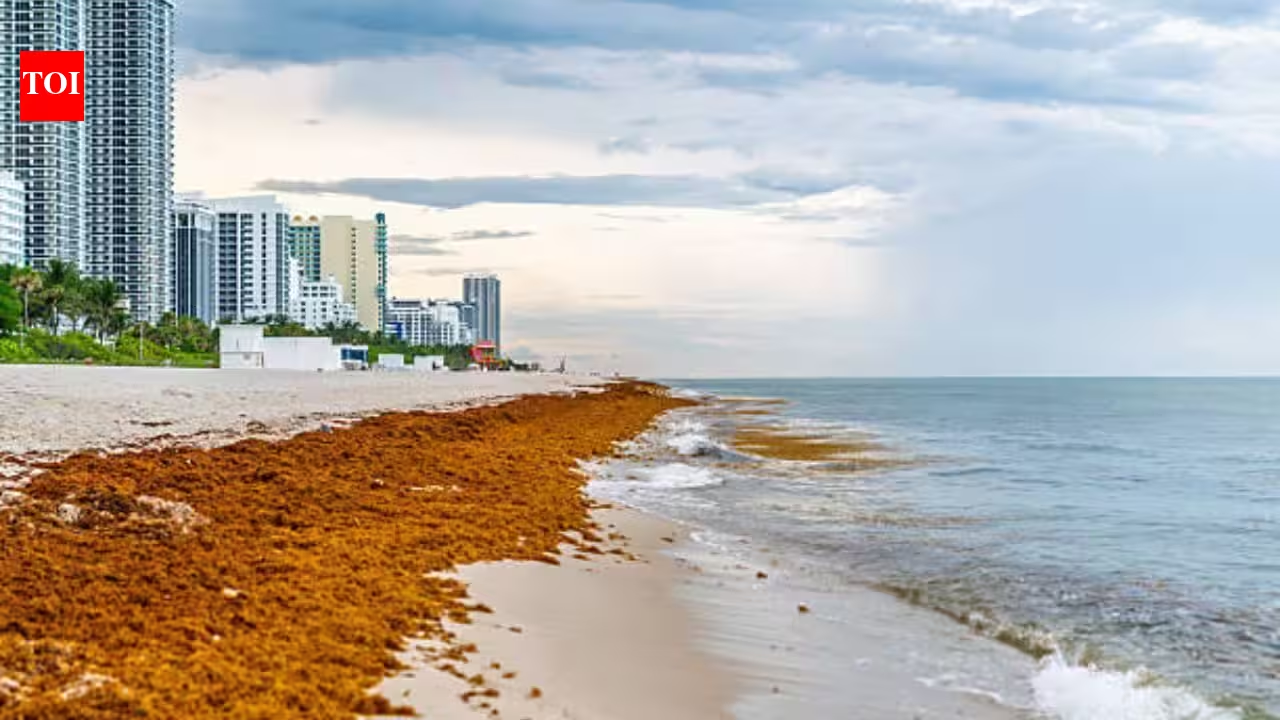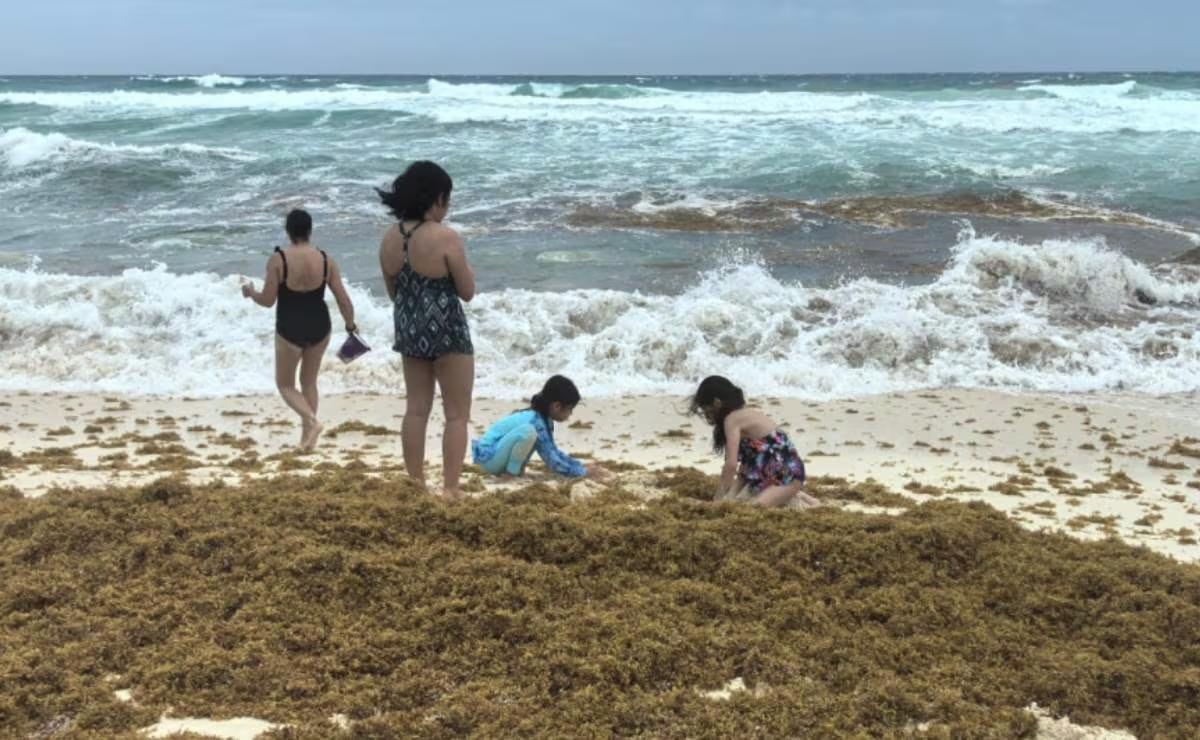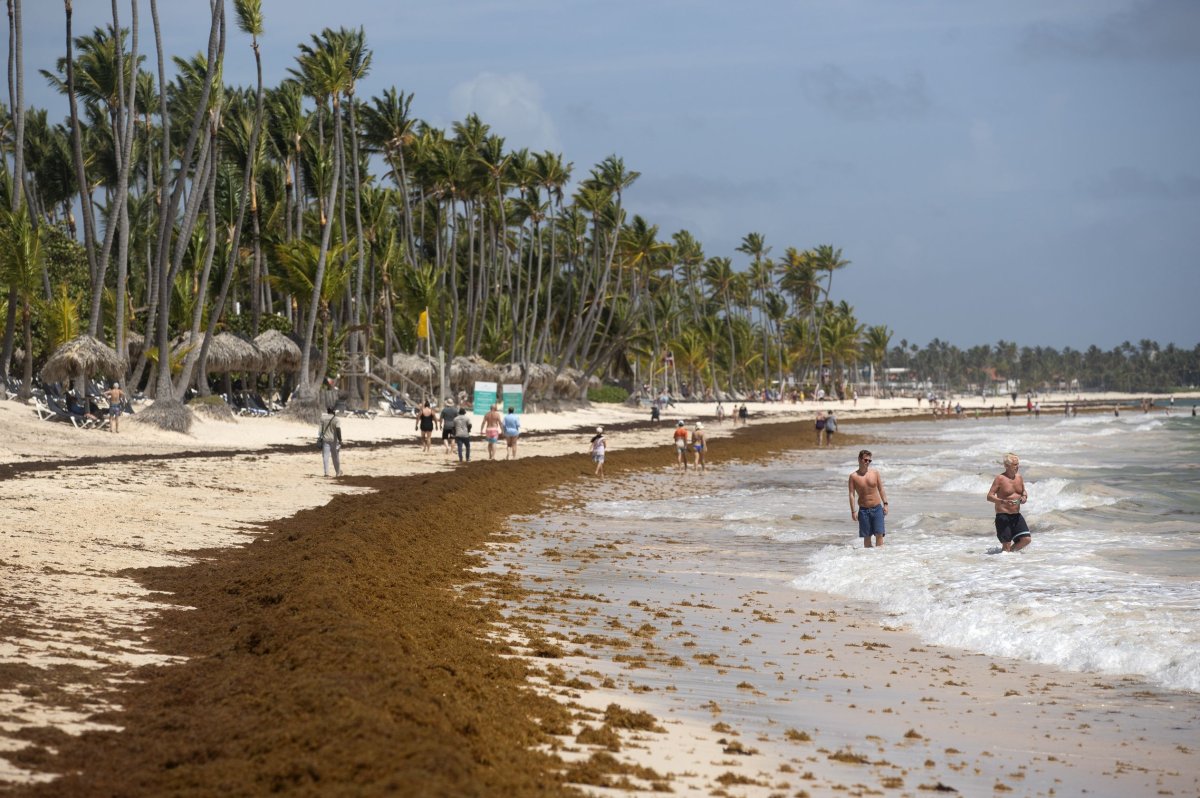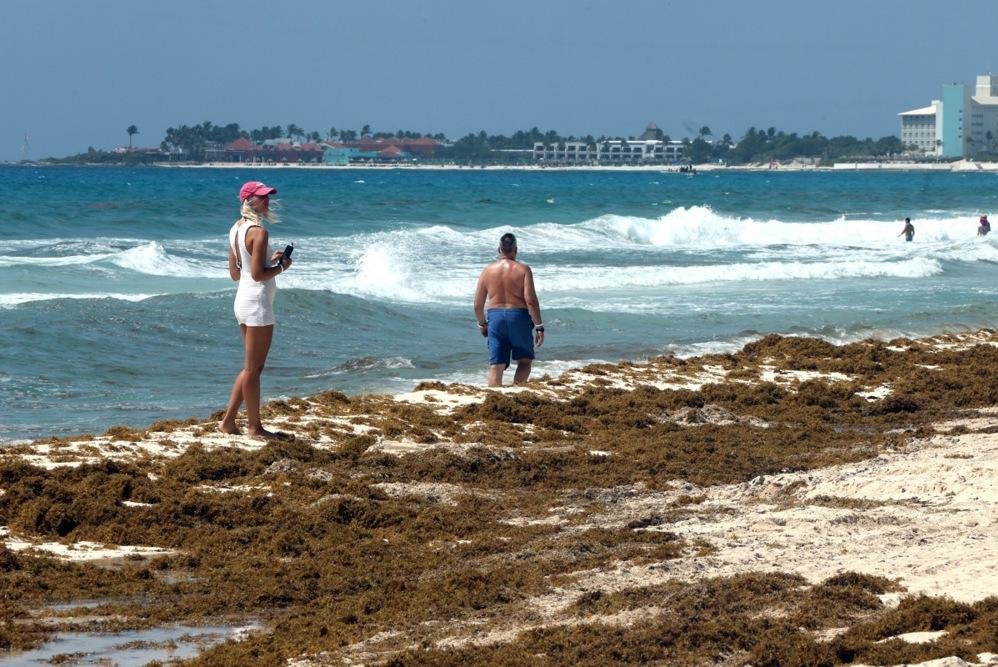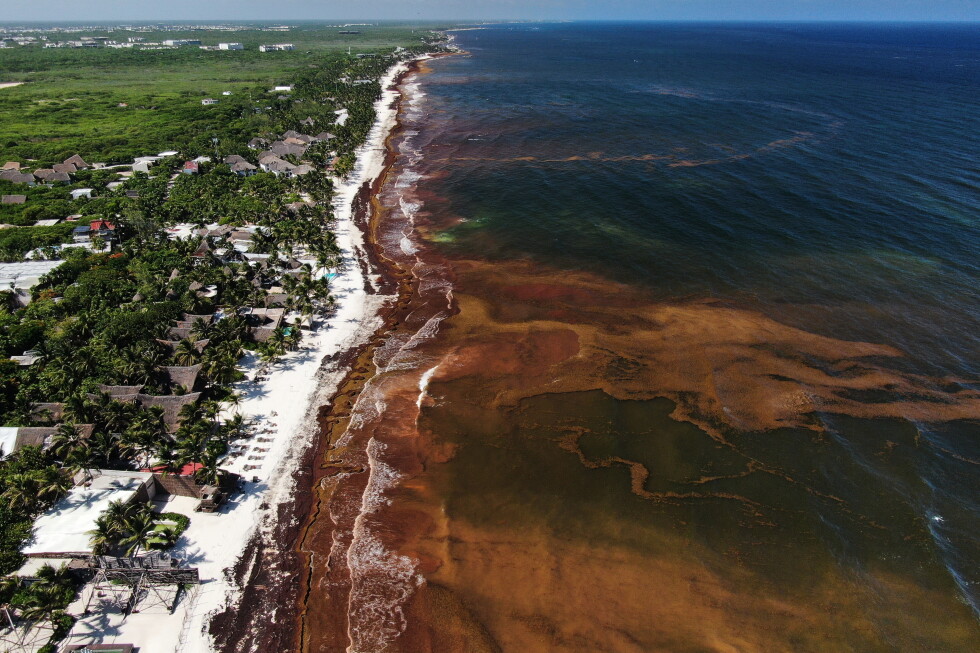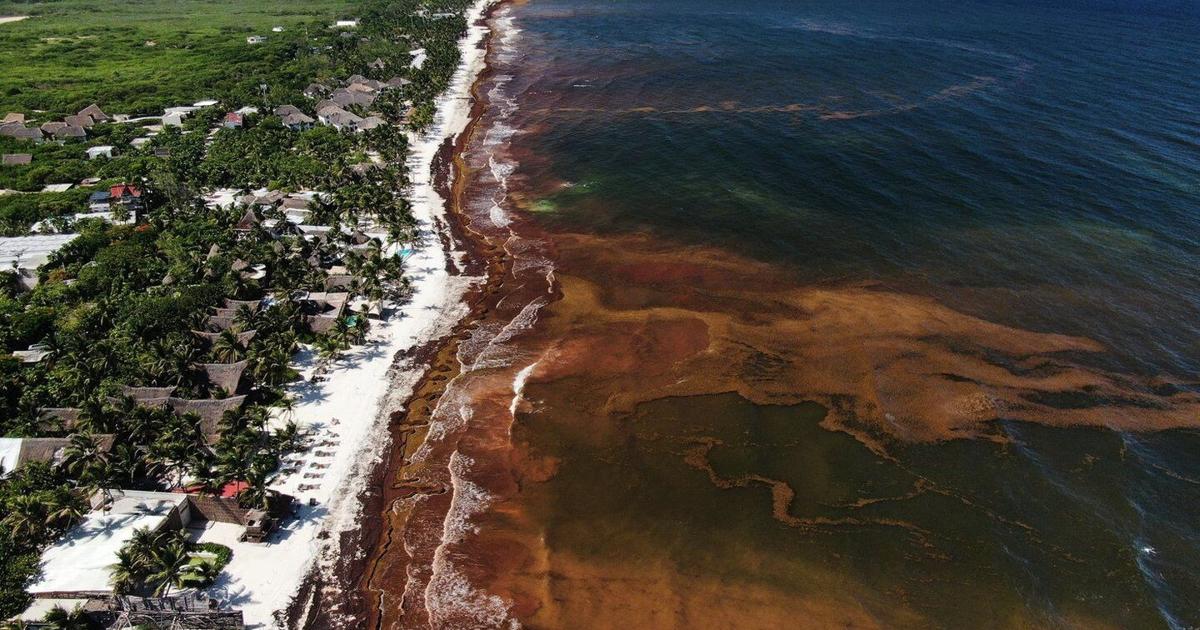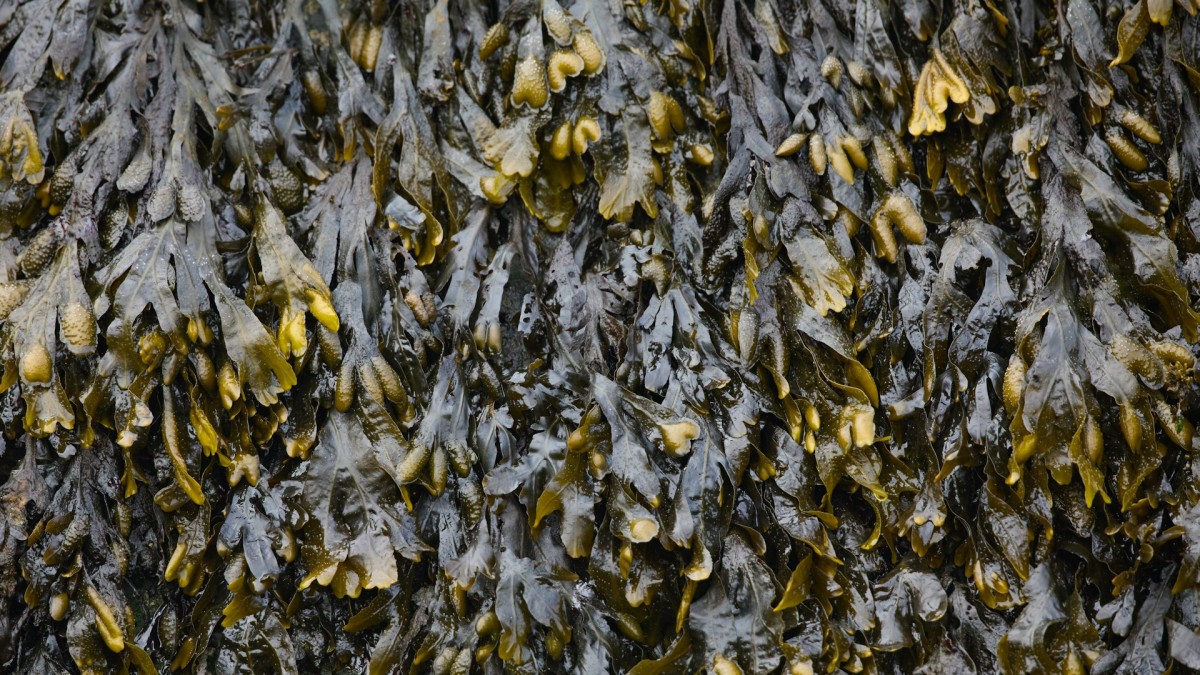
Over the past 15 years, Mexico has faced a severe seaweed problem, with vast quantities of a brown seaweed known as sargassum washing up on beaches along the Caribbean coast and hitting the tourism industry hard. Researchers are yet to find an effective way to prevent the seaweed from washing ashore or to effectively predict its movement. As the Mexican government attempts to manage the huge quantities of seaweed each year, researchers are exploring potential uses for the algae, such as biofuel or fertiliser.As much as 9,000 tons of seaweed is washing up on Mexico’s beaches every day along the Caribbean coast, a popular spot for tourists who contribute heavily to the region’s revenue. Governments across major destinations such as Cancun, Tulum, and Playa del Carmen are fighting to keep beaches clean by using industrial equipment, such as diggers, to clear the seaweed so visitors can continue to use the beaches and swim in the sea. However, this is a daily battle and annual expenditure on sargassum management stands at around $2 billion, roughly equivalent to 11 per cent of the local GDP.Sargassum smells like rotten eggs and releases methane as it decomposes. While it is not thought to significantly threaten public health, it can affect the health of vulnerable populations and workers who are regularly exposed to the seaweed. Meanwhile, tourists often avoid beaches where the seaweed washes up because of the smell, the inability to swim, and the weed’s visual impact. This has driven many visitors to explore alternative destinations that have not yet experienced sargassum problems, such as Mexico’s Pacific coast.In July, Mexico’s President Claudia Sheinbaum announced a $115 million plan to combat surging sargassum in the Caribbean. The government plans to deploy two large ships to capture the seaweed before it reaches the coast. Mexico’s navy is also expected to install 30 miles of containment barriers to trap the sargassum at sea in the most critical areas, including Playa del Carmen, Cancún, Tulum, Puerto Morelos and Mahahual.Meanwhile, workers will continue to shovel up the seaweed that does make it to shore. “The effort so far has been titanic, but we have to do more to prevent sargassum from reaching the beaches,” Sheinbaum said.Mexican authorities and the private sector currently have the capacity to collect almost 2,200 metric tonnes of sargassum each day at sea and on beaches. The government intends to increase this capacity to around 4,000 tonnes by 2027. In addition, the government is partnering with Japan to tackle the problem. Japan will provide ocean-monitoring technology, specialised equipment including robotics and sensors, and financial cooperation as part of clean-up efforts.Sargassum has become a major problem in several regions, with parts of the Caribbean and South Florida also reporting large quantities of the seaweed on their shores. As part of the project between Mexico and Japan, researchers will explore the potential to convert the sargassum into commercially viable products, such as fertiliser, biofuels, building materials, and soap, which could help these regions regain access to their beaches.Mexico’s Environment Minister Alicia Barcena said that out of almost 200 sargassum-related projects, at least 11 had the potential for scaling up industrially and 39 were already making products, including fuel, fertilisers, laminates, and bioplastics to produce sandals.In July 2025, the Quintana Roo state government announced plans to develop a new facility to monitor and manage Mexico’s sargassum and eventually convert it to biofuel. A Dutch consortium will finance, construct, and operate the Sargassum Centre with the aim of developing new technologies for the biodigestion of sargassum and organic waste to produce biomethane. If successful, it could provide the blueprint for other regions dealing with sargassum to follow.The chemical composition of the sargassum found along Mexico’s Caribbean coast could also make it suitable for use as an agricultural input. A 2026 assessment by the Inter?American Development Bank (IDB) and the Mexican Institute for Sustainable Fisheries and Aquaculture Research studied the seaweed closely to better understand its potential as an economic opportunity rather than a burden.Researchers from the Technological Institute of Santo Domingo and the IDB have developed methods to produce energy from sargassum while separating the arsenic contained in the algae. Mexican government departments and university research centres are also exploring the potential to use sargassum as an organic construction material to produce blocks, bricks, paving stones, and asphalt mixtures.Mexico has invested heavily in cleaning up the huge influx of sargassum over the last decade. Now, the government and private sector hope to effectively analyse the brown seaweed to better understand its potential as a biofuel, fertiliser, or other product, and to develop economic opportunities from something that has so far been seen as a plague that disrupts regional tourist activity and revenue.By Felicity Bradstock for Oilprice.comMore Top Reads From Oilprice.comU.S. Backs X-Energy Reactor With Up to $2.15 BillionRussia Rebuilds Nuclear Workforce at Iran’s Bushehr PlantEgypt and Libya Near $1 Billion Oil Pipeline Deal
Mexico Is Betting on Biofuel to Tackle Its Seaweed Crisis | OilPrice.com
Mexico is stepping up efforts to intercept record amounts of sargassum while exploring ways to turn the troublesome seaweed into biofuels, fertilizers, construction materials and other commercial products.
814 words~4 min read