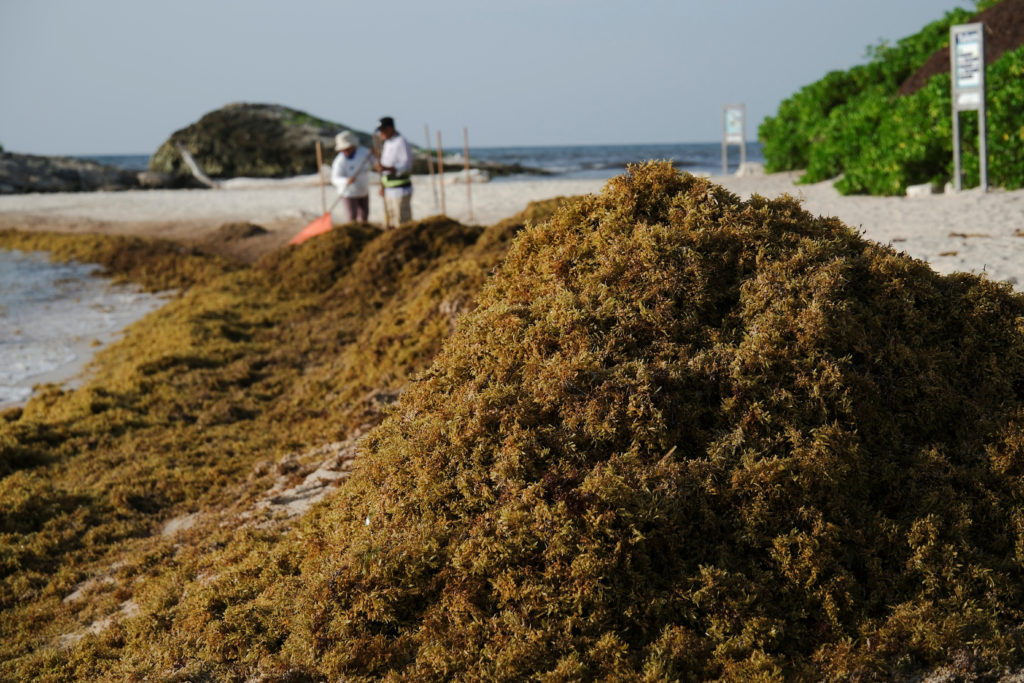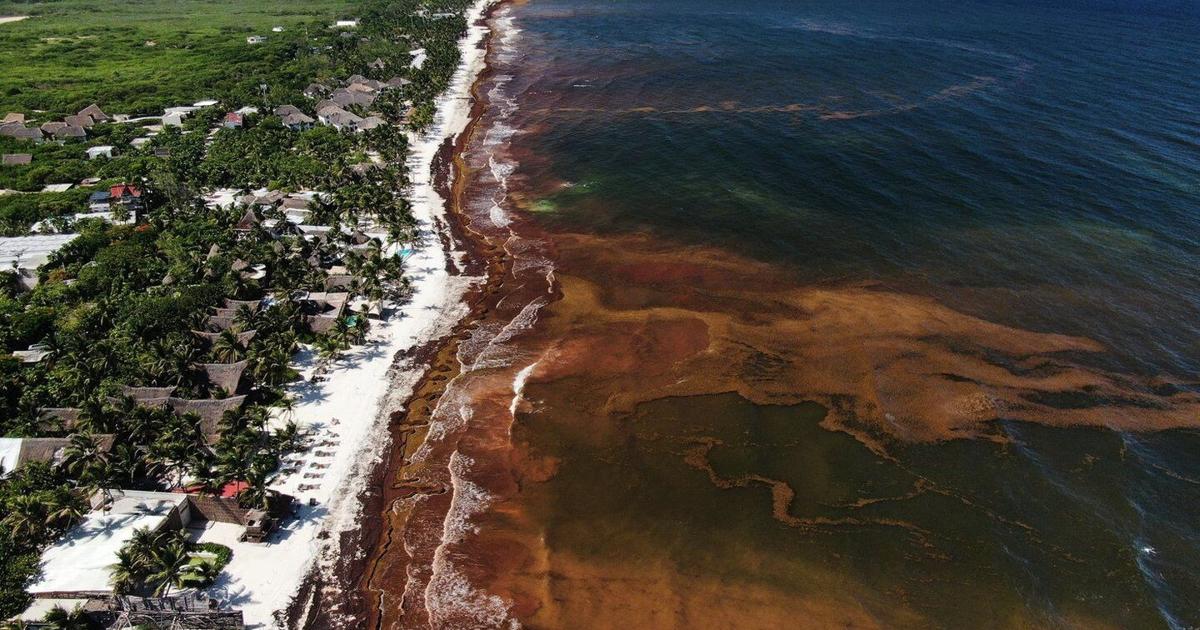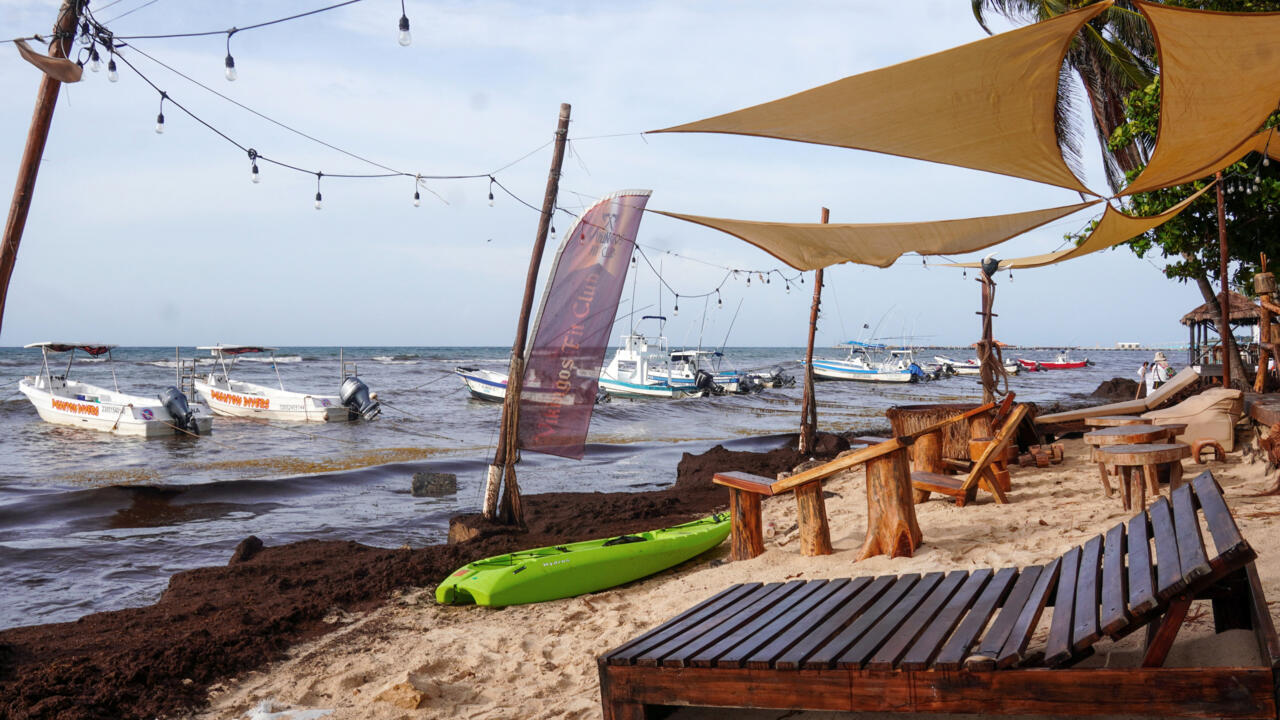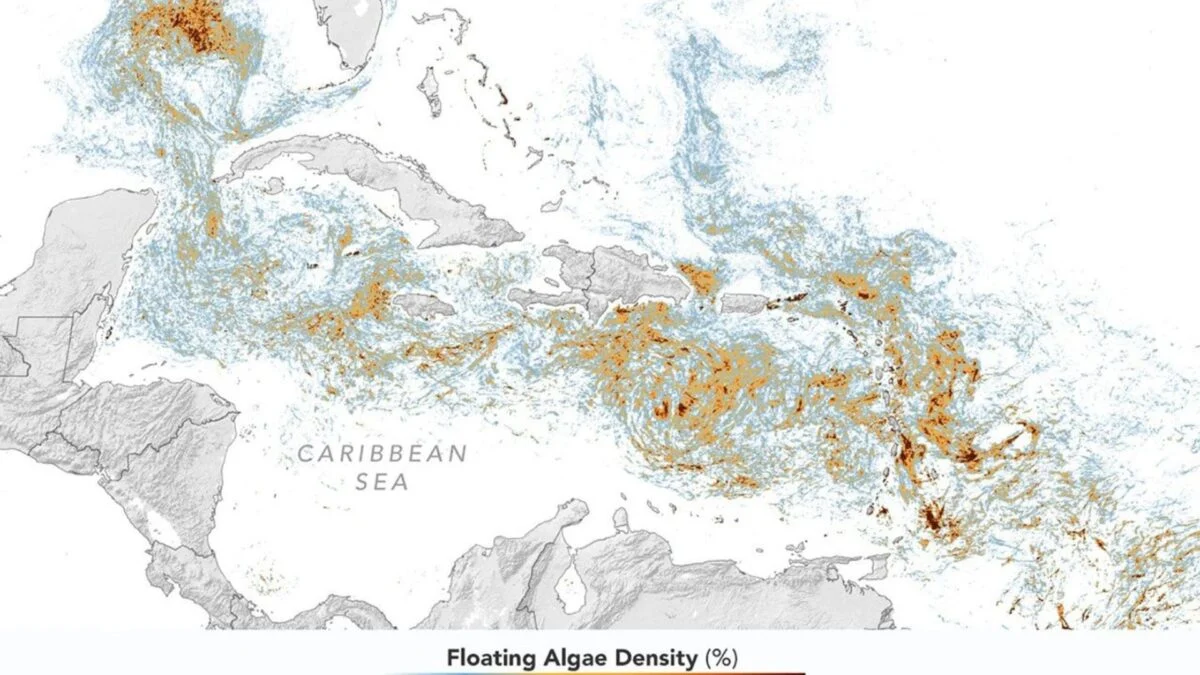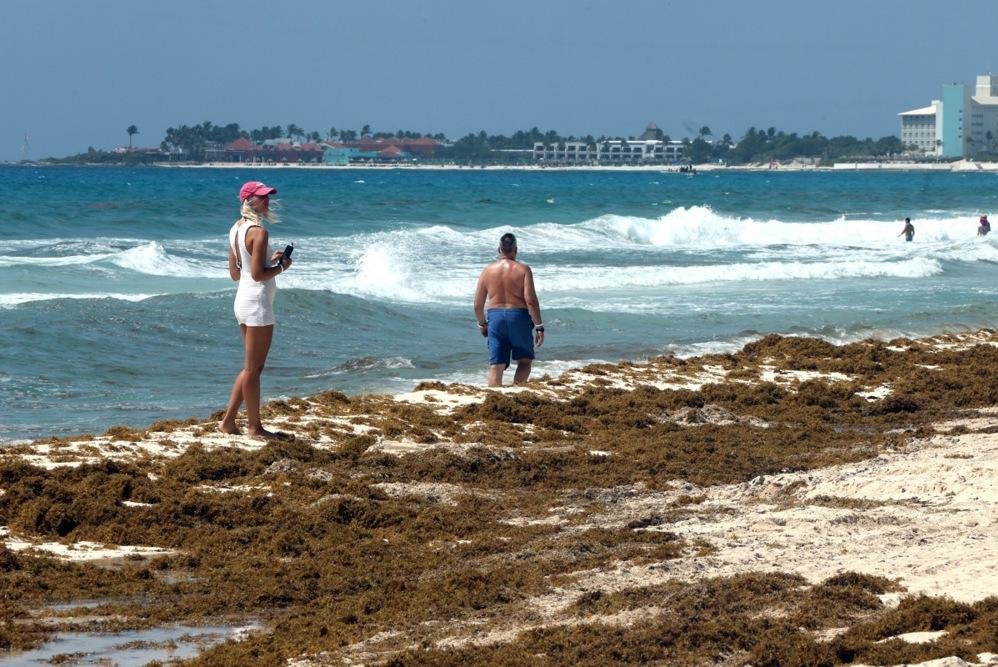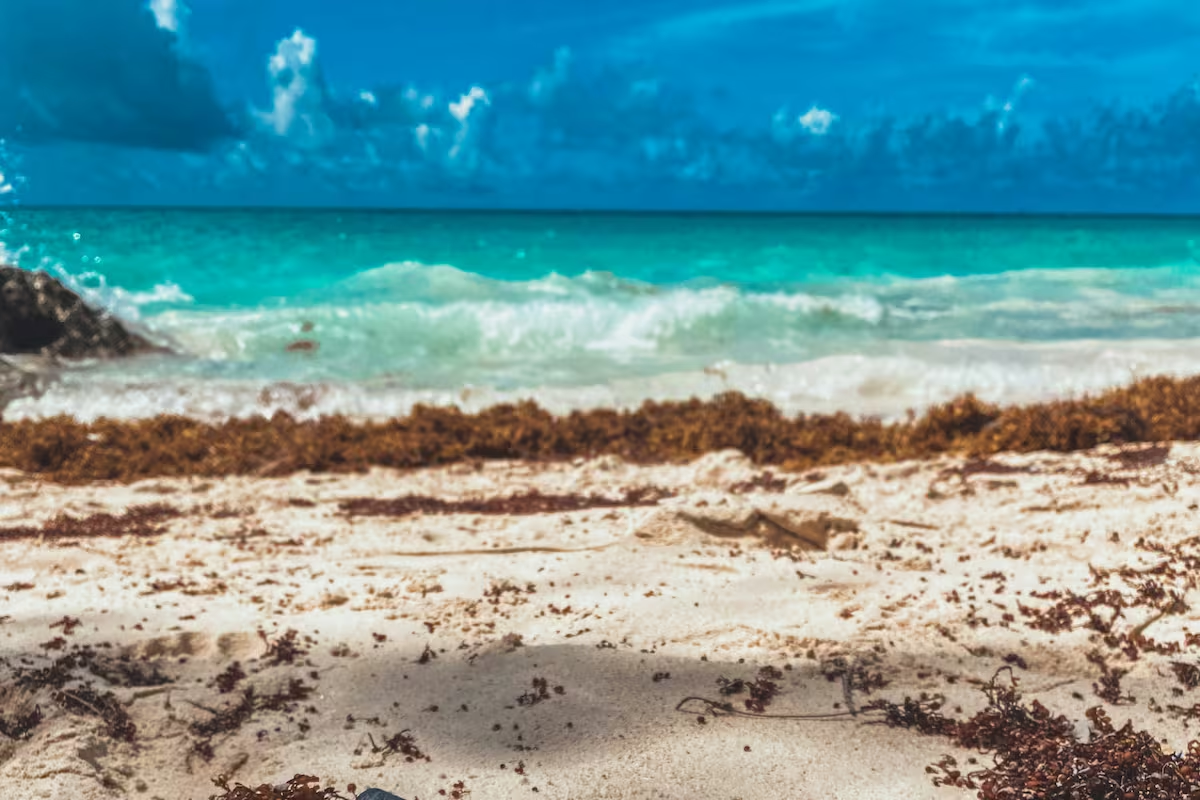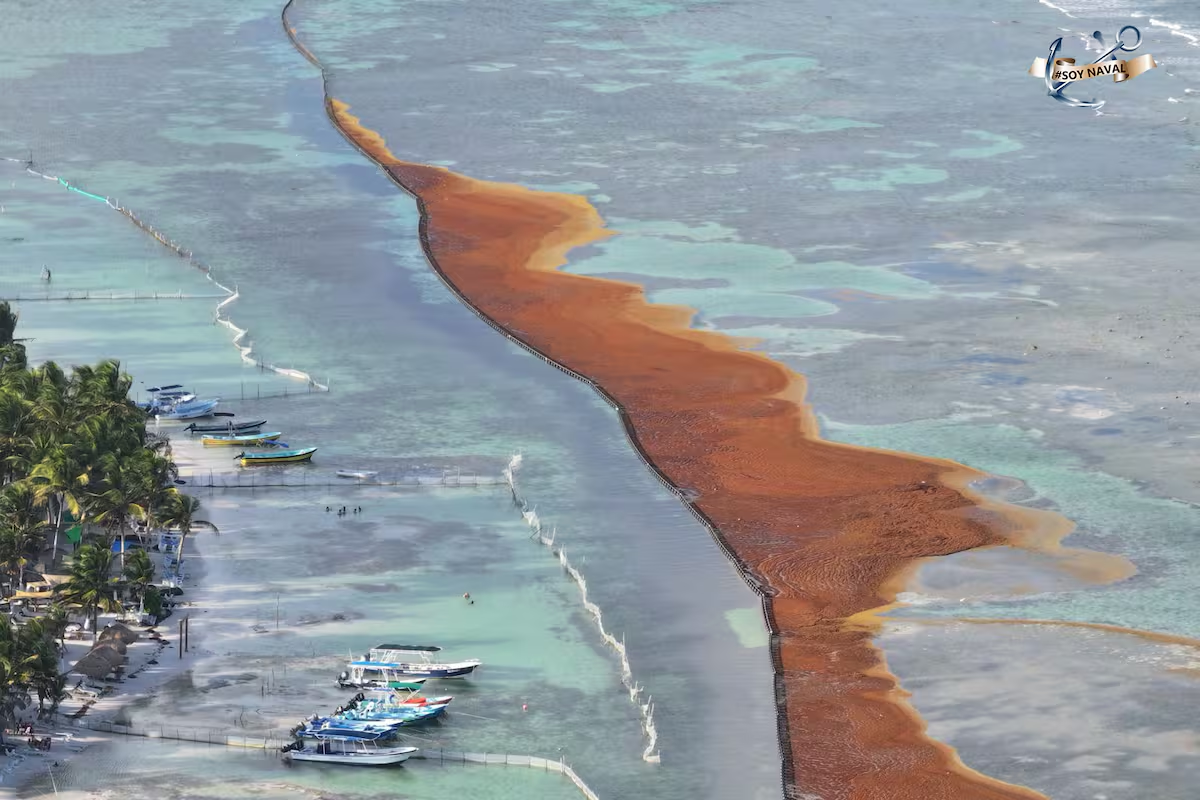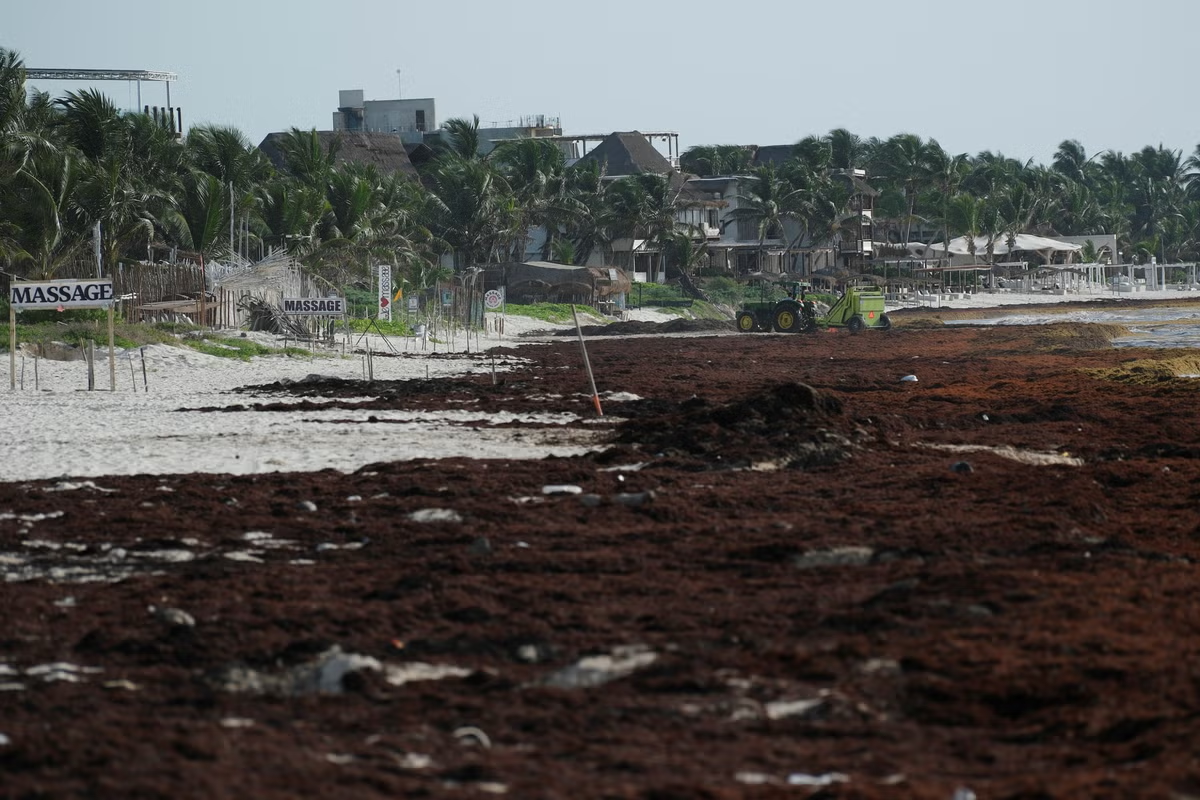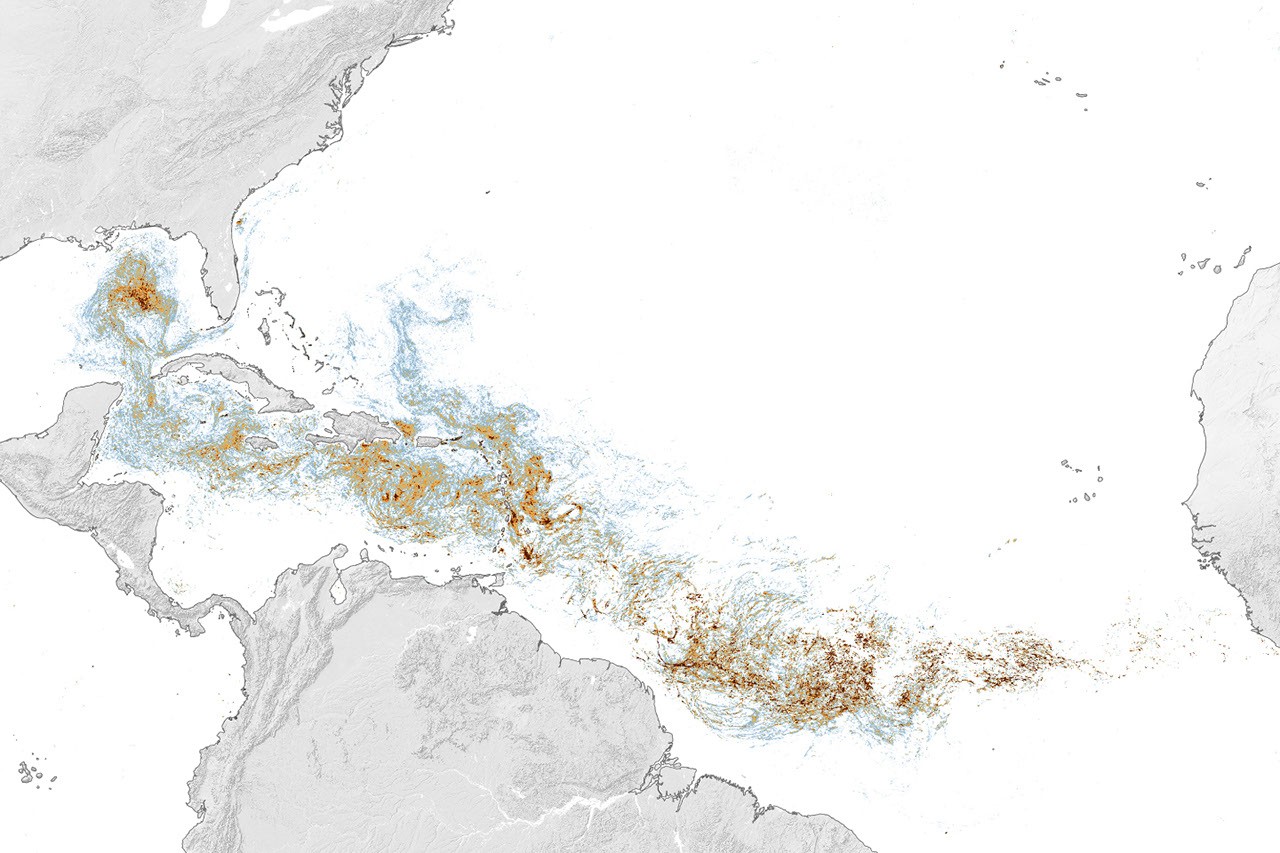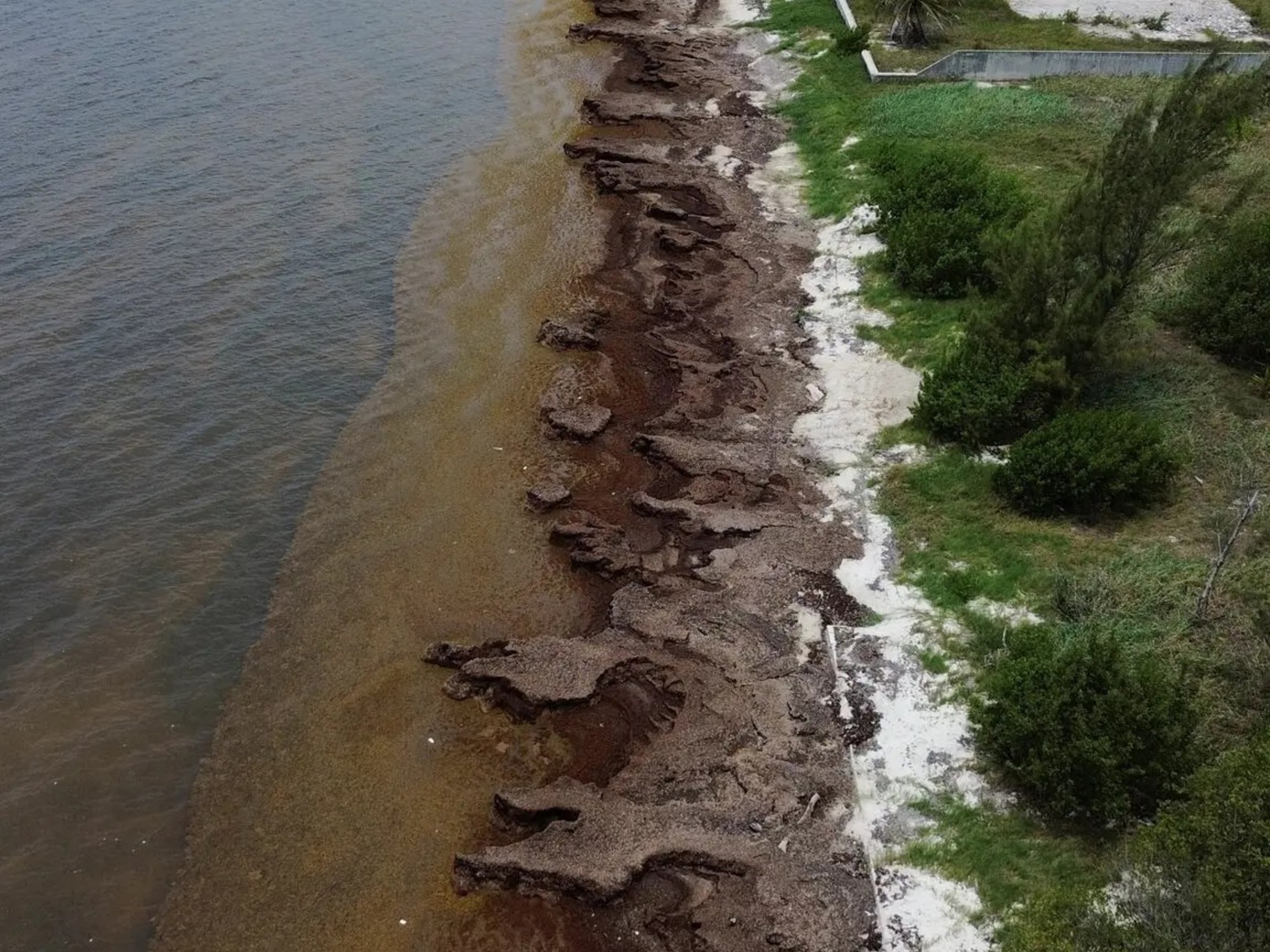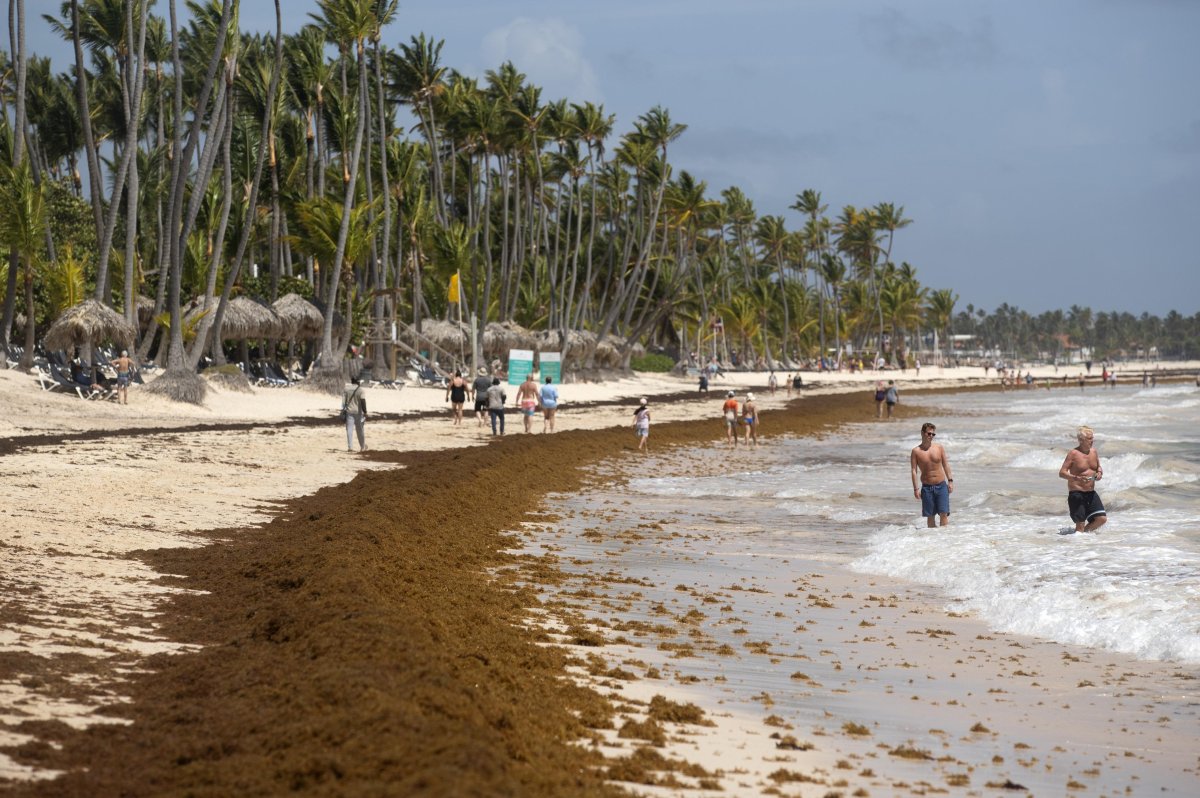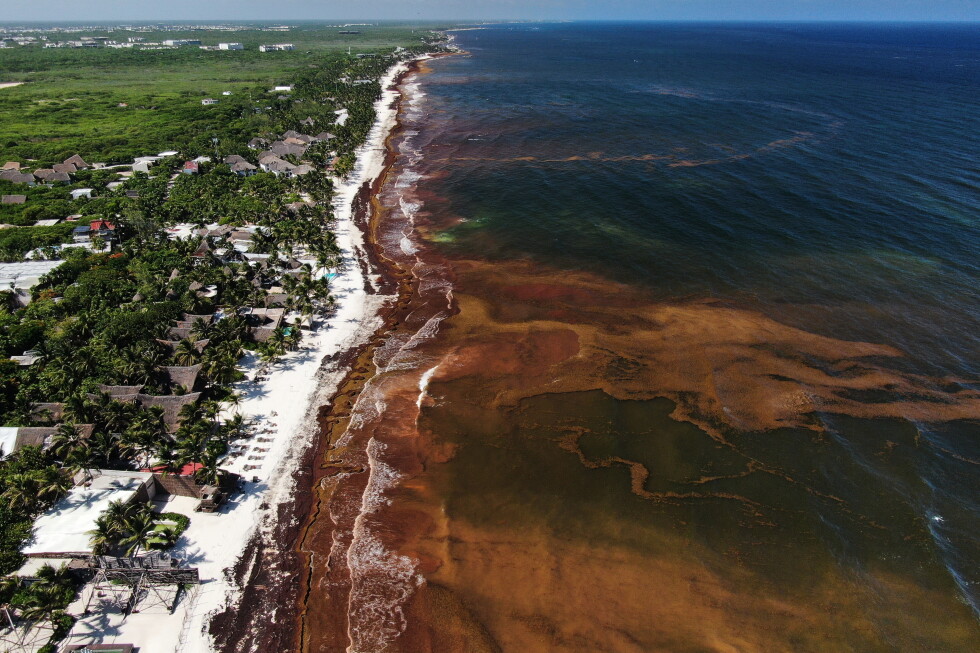
PUERTO MORELOS, Mexico (AP) — Swaths of seaweed are blanketing the beaches and coastlines of the Caribbean and Gulf of Mexico, suffocating shorelines and snuffing out marine life while spooking visitors in areas that depend heavily on tourism.Some 27 million metric tons of self-sustaining sargassum have been recorded in the Atlantic, Caribbean and Gulf of Mexico in July, according to a report released Friday by the University of South Florida’s Optical Oceanography Lab.The prickly seaweed covers miles of coastline, releasing a foul smell as it rots onshore. This year marks the first time that scientists have observed sargassum growing in large quantities in areas including the Caribbean and Gulf of Mexico, instead of being swept into those areas by ocean currents. The algae usually reproduces asexually as it travels from Western Africa, said Brian Barnes, a marine scientist and research assistant professor at the University of South Florida. “None of this is normal,” he said. “Every year is a little bit of a new story.”
The Great Atlantic Sargassum Belt has been growing since 2011, dumping an increasing amount of seaweed along coastlines in the Caribbean and Gulf of Mexico. Experts have said that agricultural runoff, warming waters and changes in wind, current and rain could be factors.The sargassum that began reproducing in the region earlier than usual this year stems from a record 40 million metric tons reported last year.“The 2025 bloom was so big it never really left,” Barnes said. “It was enough to start a new bloom locally.”