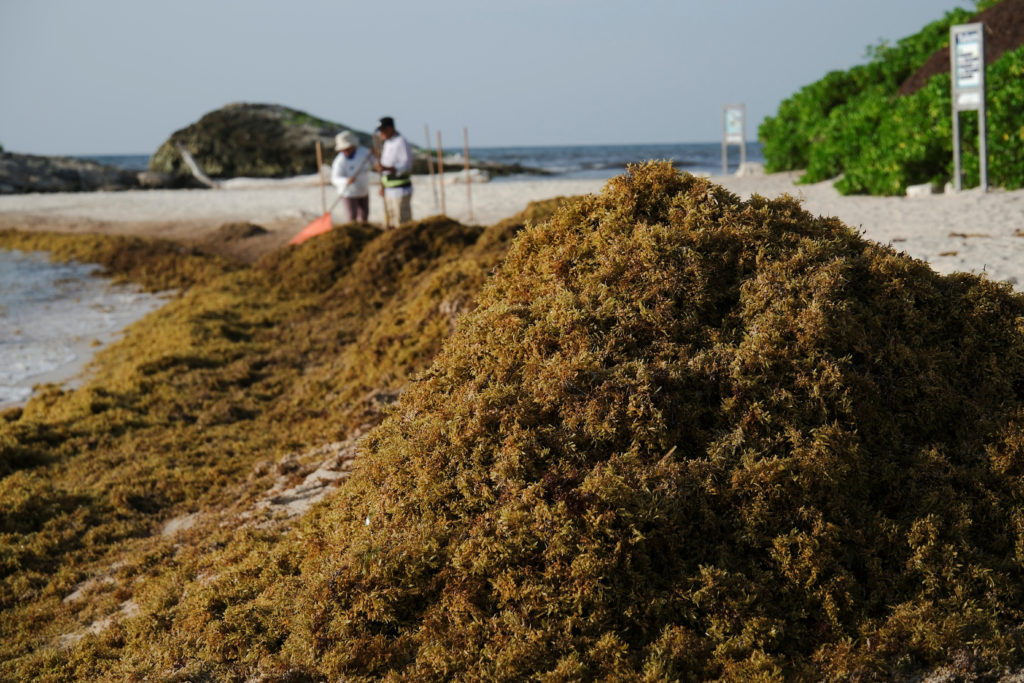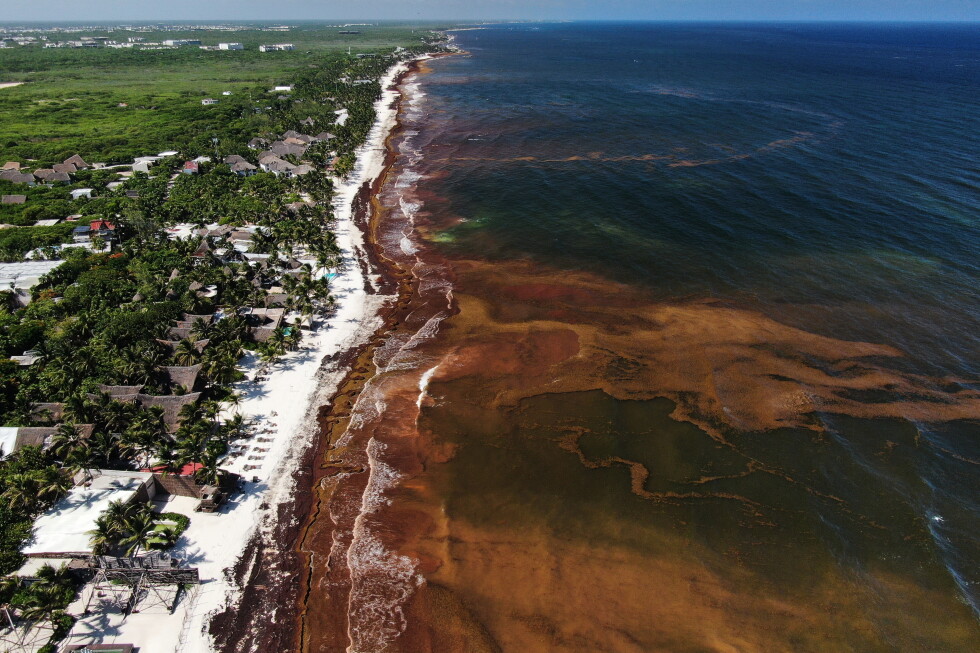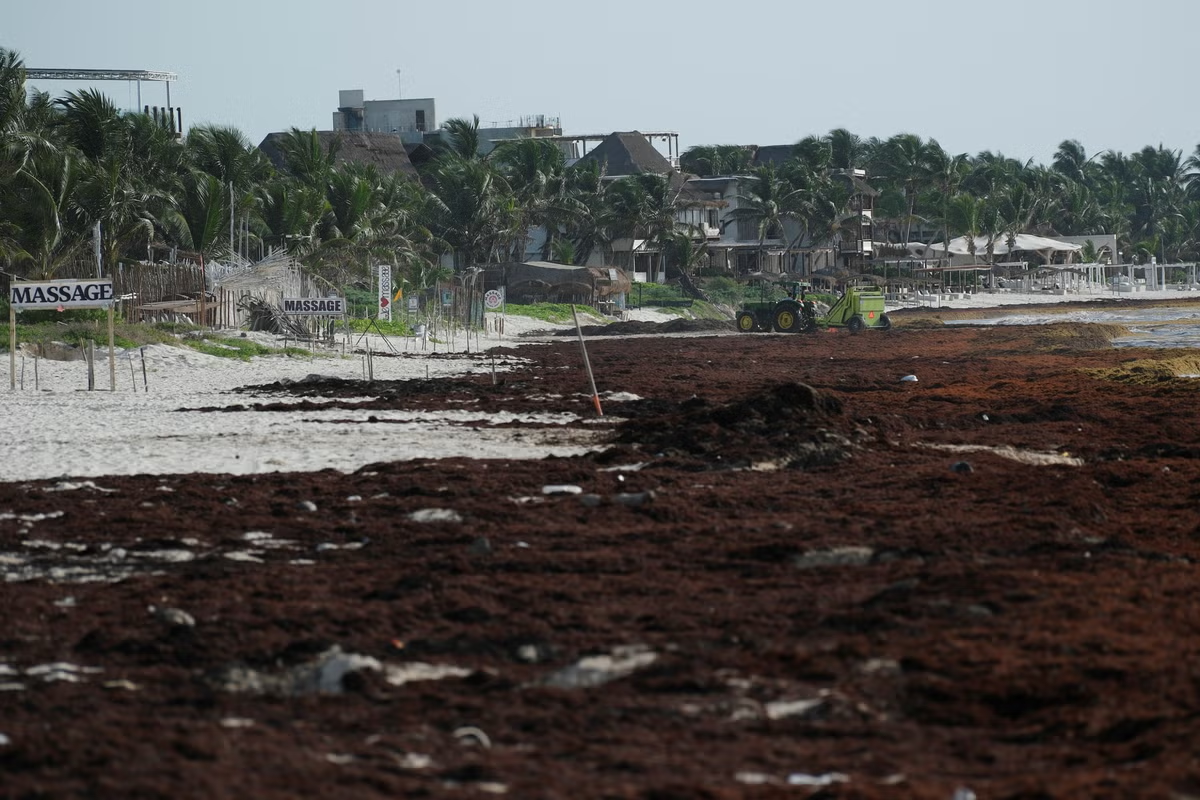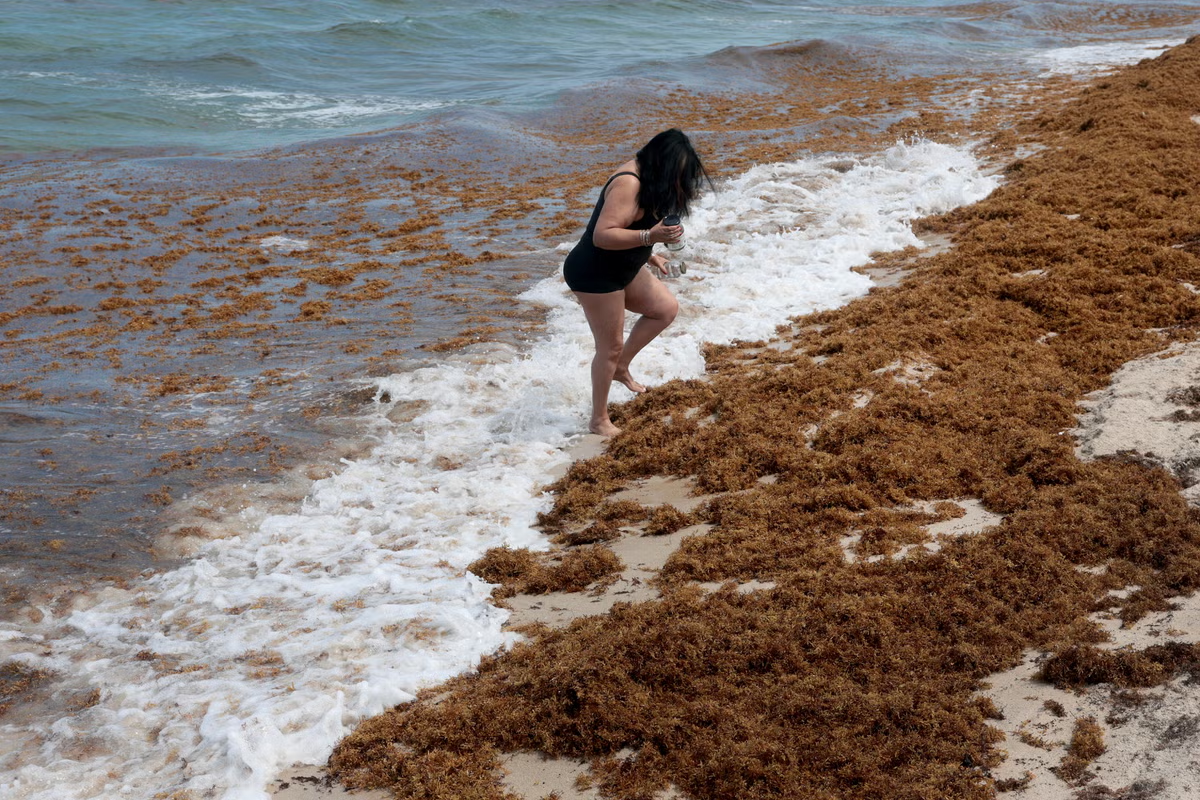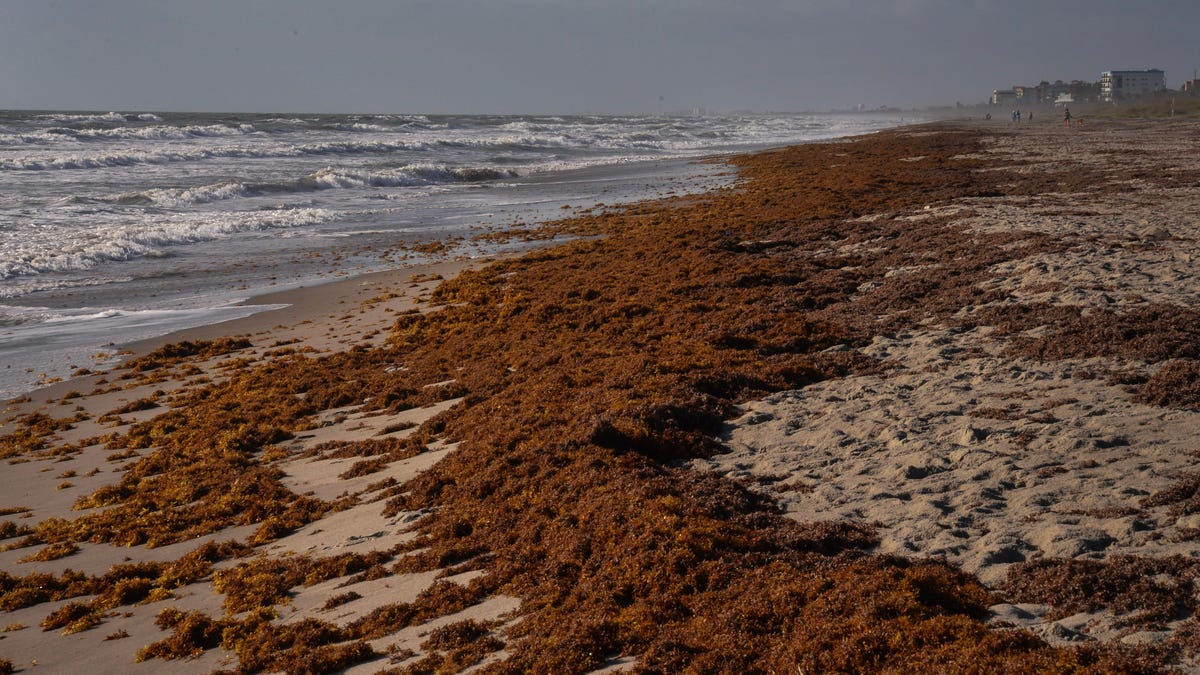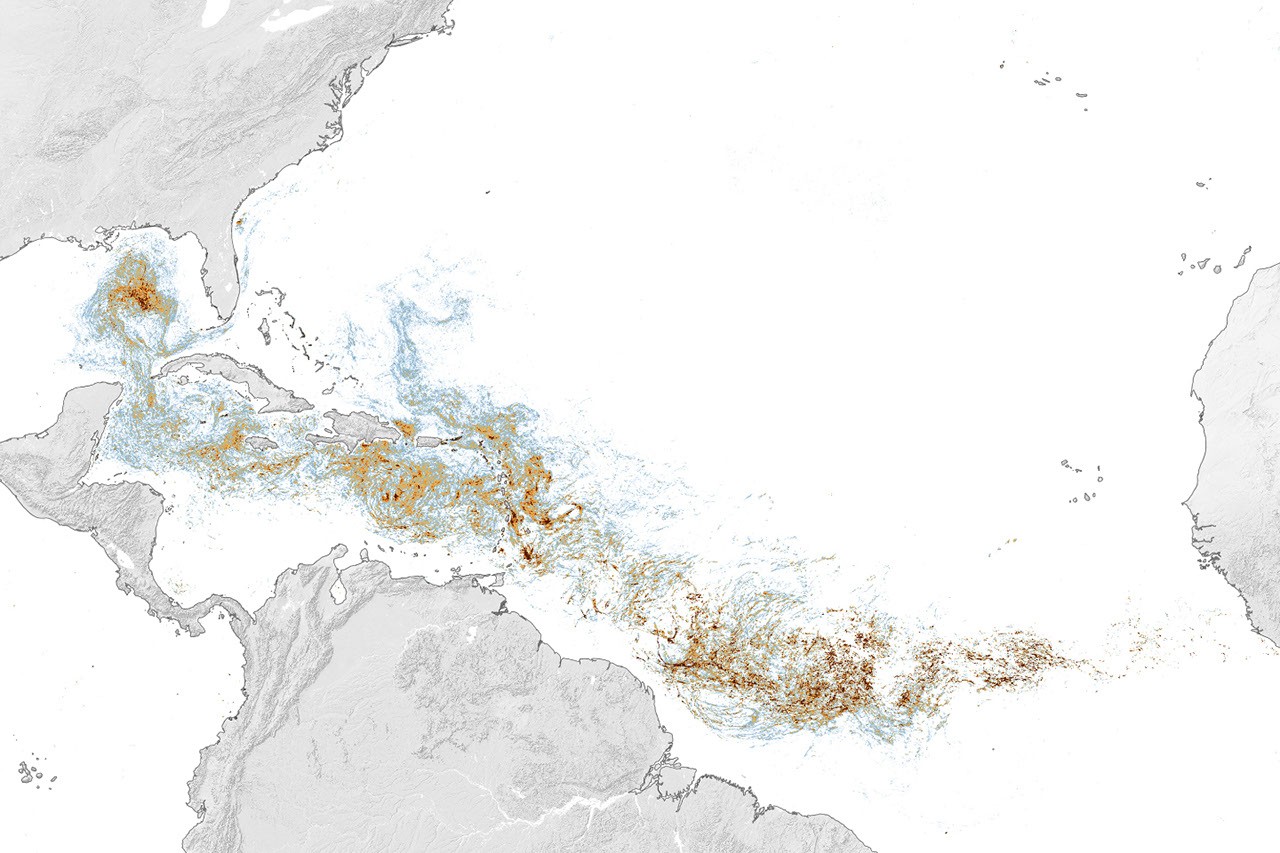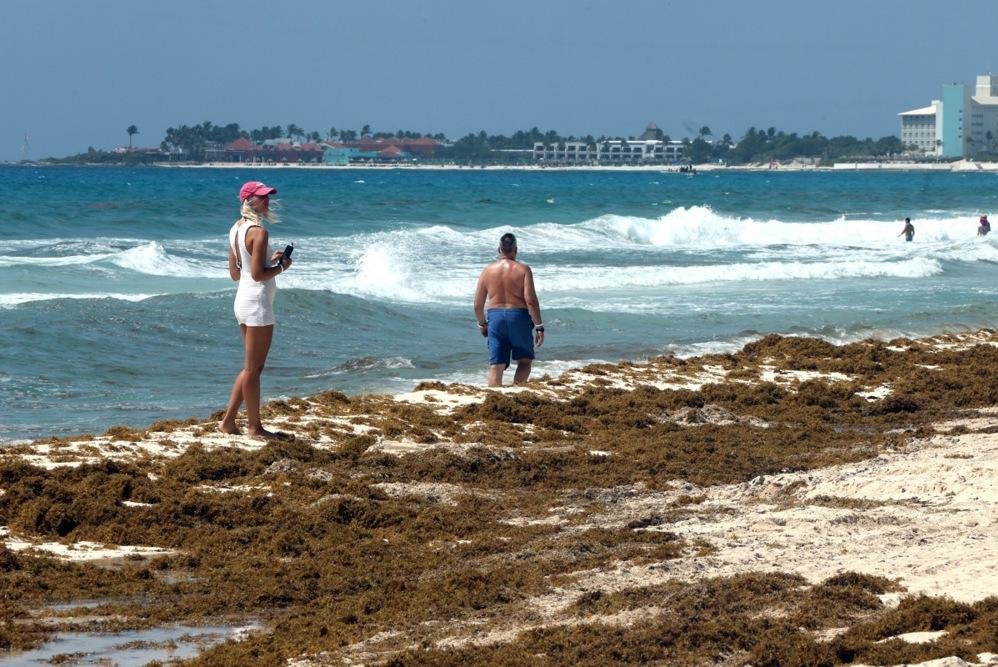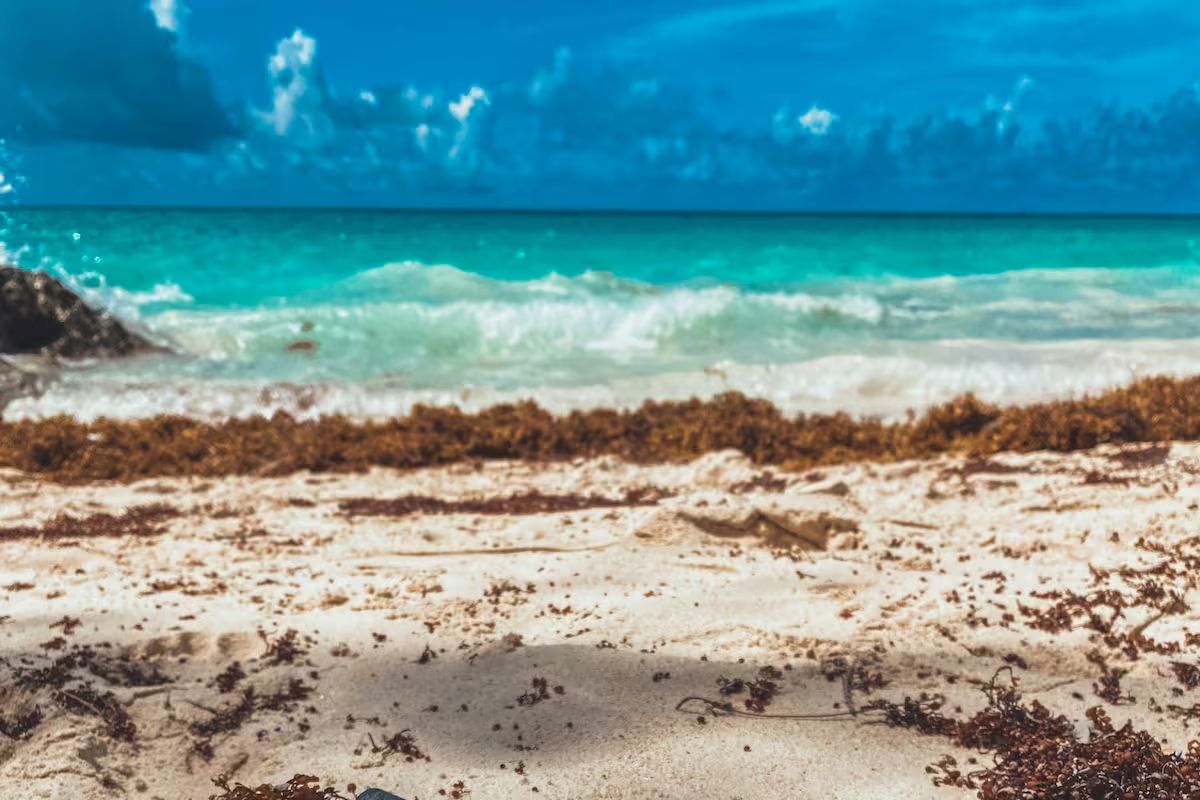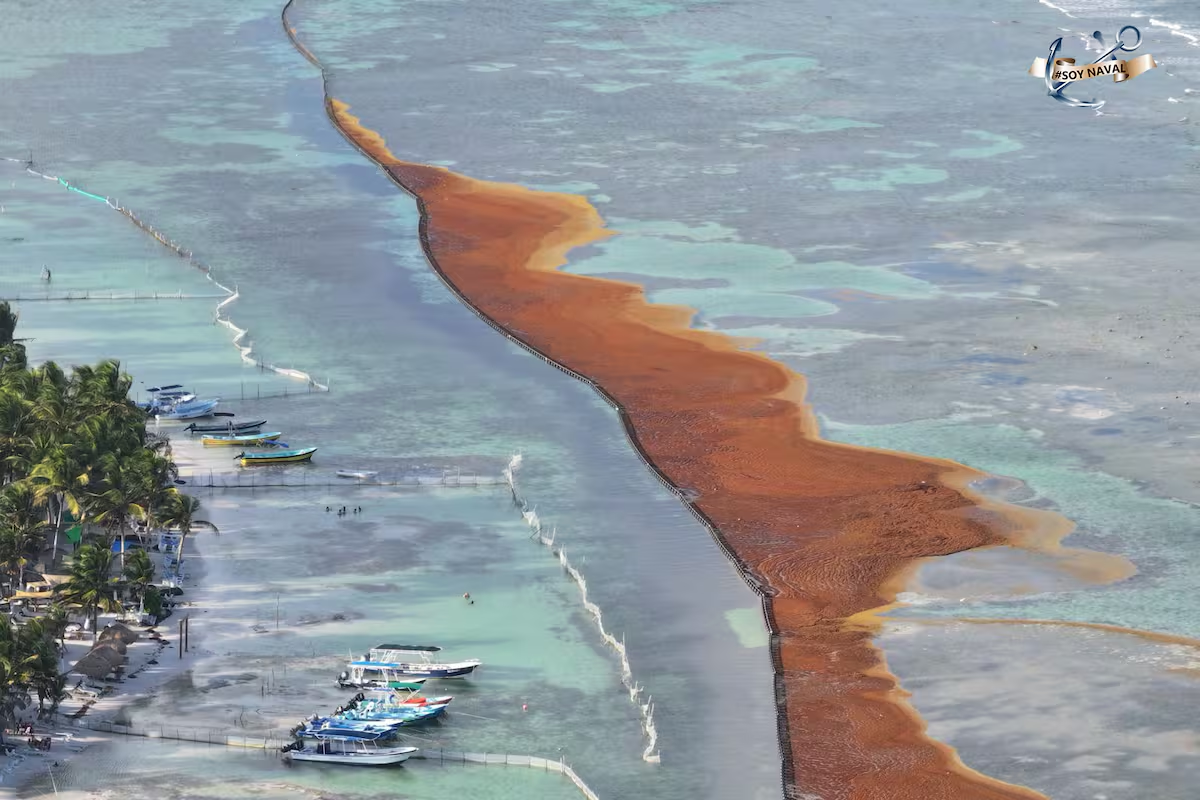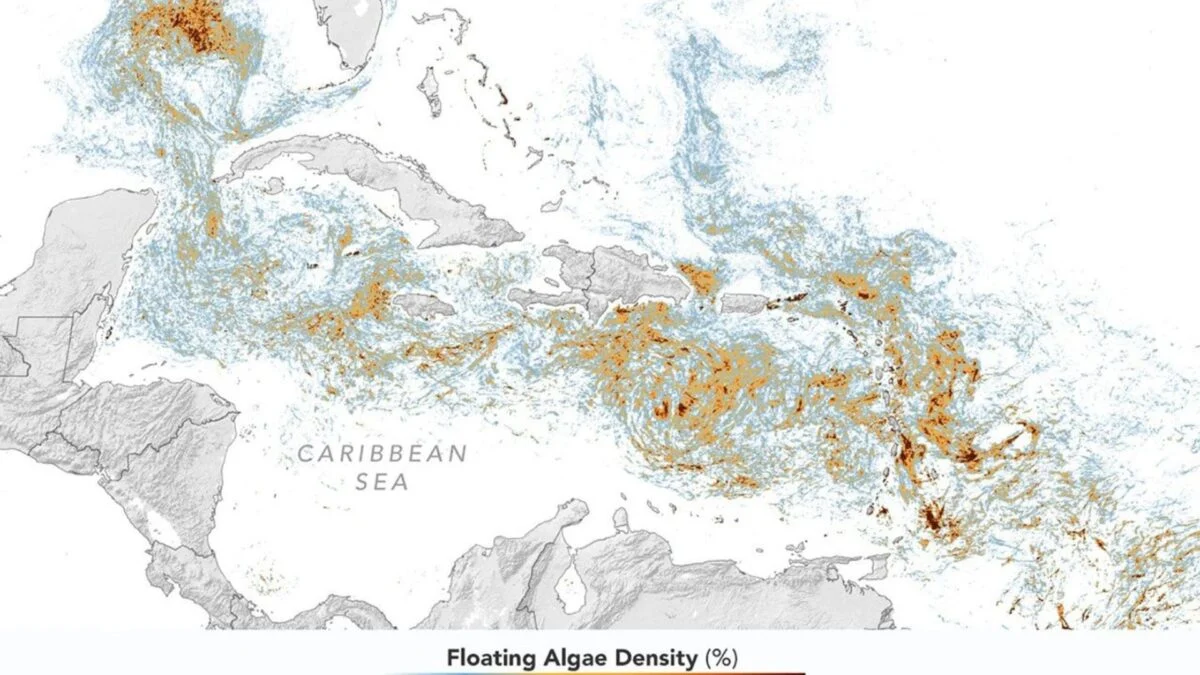
Picture this: You’ve been waiting weeks for your tropical vacation, only to find the beach covered in piles of brown seaweed that reeks of rotten eggs. The water is full of it too, and swimming through it could put you in contact with organisms that cause skin irritation. According to new data from NASA, this problem is particularly pervasive this summer. In June, the agency’s Plankton, Aerosol, Cloud, ocean Ecosystem (PACE) satellite observed near-record levels of seaweed in the Great Atlantic Sargassum Belt, which stretches across the Caribbean Sea and the Gulf of Mexico. The belt’s sargassum abundance last month made 2026 the second-highest sargassum year in the satellite record, just behind 2025, scientists at the University of South Florida (USF) College of Marine Science report. They are collaborating with NASA to produce sargassum maps based on data from PACE. Last month, the total amount in the Gulf nearly doubled the historical record, reaching 5 million metric tons, according to a bulletin from the USF Optical Oceanography Laboratory. The Caribbean Sea also saw record-high sargassum levels.
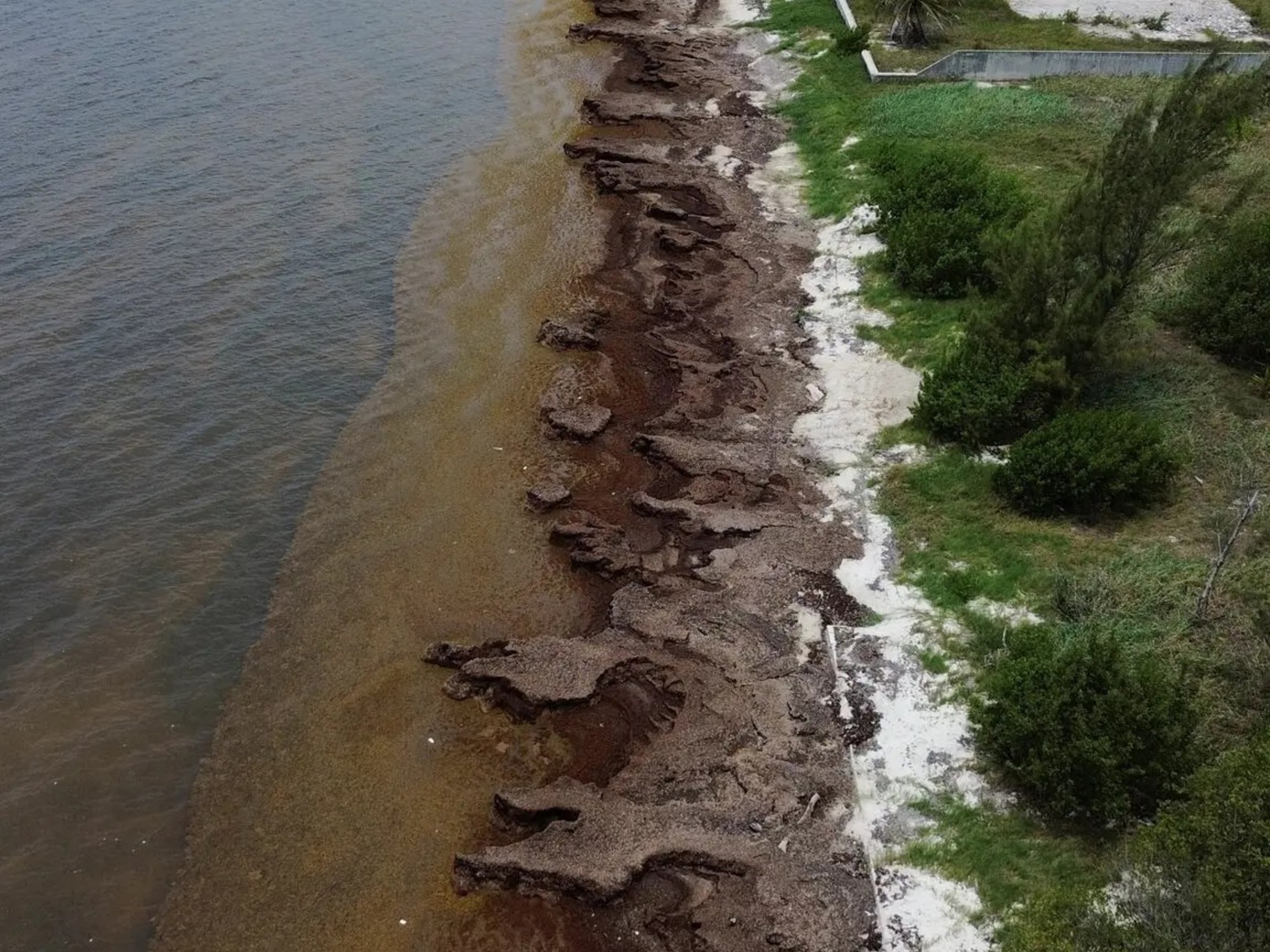
“Major beaching events have occurred and will continue to occur along the southeast coast of Florida as well as around the Caribbean,” the bulletin states. This is when massive mats of sargassum wash ashore, clogging shallow waters and covering beaches. Mats can entangle and suffocate marine life, and those that sink can also smother corals and seagrasses, according to NASA.