With household bills continuing to soar and the cost of living piling on the pressure, many families are feeling the pinch.Nearly half of all British households are forced to dip into their savings, sell their possessions, or borrow money to cover the basic costs of everyday living, according to a recent study.Lisa Johnson, 49, from Bedfordshire, knows exactly what it feels like to struggle financially, after finding herself £35,000 in debt following her divorce in 2014 as she struggled to raise her two beloved children alone.Working as a personal assistant at an IT firm, she earned £28,000 a year. But her salary didn't come anywhere near covering the cost of living – just her childcare bill alone was higher than her yearly income.But she refused to be a 'drain on the system', and instead of quitting work and taking benefits from the government, she maxed out credit cards. Soon, she was thousands and thousands of pounds in debt.She'd limit herself to a £40-a-week food shop, say no to meeting up with friends for a coffee and would hardly ever be able to let her hair down after work and go out for drinks.'Mentally, it really affected me. I felt like I was working for free for a start, because I wasn't getting any money from working.'But I had to carry on otherwise I would have been a drain on the system, and I didn't want that. Every month I was a bit more in debt. There was a bit more on the credit card.' Lisa Johnson, 49, from Bedfordshire, knows exactly what it feels like to struggle financially, after finding herself £35,000 in debt following her divorce in 2014 (pictured with her twins)Stretching every penny, Lisa said she capped her food bill at £40 a week, which was made harder by the fact she had two babies to feed and clothe – one who required specialist baby milk and the other, who developed asthma. 'It's two of everything all the time,' she said. 'One of them was ill and needed a different type of baby milk. And then when they got older, one had asthma, and there were constant doctor's appointments. There was always something that I was needing to try and work out.'The tipping point wasn't one single moment; having maxed out the maximum amount of credit cards she could get, Lisa was running out of options.She says: 'There were a few times when I couldn't pay the credit card bill per month, and so I wouldn't be able to get more credit. I could see there would be a time I wouldn't be able to put the food bill on a credit card any more. I knew I had to get out of this somehow.'Lisa looked at conventional ways to bring in extra money – a second job, shop work – but every option she found simply created a new expense, including extra childcare.So she decided to build something from her own kitchen table. She'd seen someone else online talking about running a 'side hustle' alongside their main job, and it started an idea.To kickstart her plan, she started an online business course from her home computer ten years ago.'I thought, "Well, I'll become a wedding planner, because I'm good at organising, I'm good with people, and I've been married twice, so surely I can do that!"' she said. Now, Lisa is a successful entrepreneur - and her business, called One To Many, has generated £20million in salesHowever, despite securing clients – as well as working full-time – Lisa said the wedding planning business did not fix her finances overnight – in fact, it made things worse financially to begin with because she was learning on the job with no formal business knowledge.The turning point came when she decided to study the business properly, for free, using her local library.'I went to the library and got out every business book, every self-development book, and I just read and read and read. That's how I turned it around.'That reading didn't clear the debt but it allowed Lisa's wedding business to grow to around £60,000 a year – enough to stop her sinking further into the red.'People started asking me how I'd made the wedding business work,' she says. 'I started telling them all the things I'd read in the books, but in a way that made more sense and was less jargon-based – and it started working.'Some of them came back and said, "I got my first three clients because of that thing you told me," or "I did that thing you said about budgeting and my business is making a profit."'Lisa realised she could be on to something. She made the decision to give away her wedding business, which was taking up too much of her time, to someone who otherwise couldn't afford it, and started a free Facebook group – offering business advice.'I started doing live videos every day, teaching people the mistakes I'd made with my business and the things that had worked – for free,' she says, and the group grew fast, reaching 600 members within the first three months and 1,200 within six. Millionaire Lisa now takes her family on luxury holidays (seen with partner Sam and children)'They started saying, "Can you teach us how to do this on social media? Can you do a masterclass on this?" And then they said they were willing to pay for it. I had no idea that this could be a thing!'Lisa started small, with one-hour masterclasses, priced at around £50, on specific topics such as SEO. Every pound went straight towards clearing the debt.From there, she built an online business course – Fabulous Foundations. It was priced at £997.Lisa was shocked when it made £60,000 in a week the first time she ran it.Realising the same course could be resold, she repeated the launch and made similar sums again. All the while, Lisa built her email list – she had thousands of people on it who wanted to learn her expertise.Wanting to help people who couldn't afford the full course, she also launched a low-cost recurring membership, priced at £15 a month for people starting a business from scratch.It reached 169 members and gave Lisa, for the first time, reliable monthly income rather than one-off spikes – earning around £2,000 a month.'People started asking me, "How have you made money on that course?"' she says. 'So I knew I could now teach others how to do what I'd done.'The first version of that offer, called Passion for Passive, made around £200,000 in its first year in 2018 – with people paying £2,000.Crucially, the profit from that one launch – roughly enough to cover what she owed – was what finally cleared the debt completely.She says: 'I still wasn't frivolous – the first thing I bought myself was new makeup, because I'd had the same makeup for ten years.'Lisa then started growing an email list, filled with people who wanted to learn from her. By year three, she made her first million. It wasn't until year two in business that Lisa allowed herself something bigger: a Marc Jacobs handbag, bought on a trip to LA's Rodeo Drive, costing around £300.'That seemed massively extravagant for me at the time,' she says.Even then, old habits died hard. Despite having roughly £80,000 spare after clearing the debt, Lisa kept shopping at Tesco rather than Waitrose, and admits she wasted money in those first two or three years simply because she didn't yet understand investing.'I still had money issues, so I'm thinking it will disappear at any second,' she says. 'I wasted a lot of money in those first two or three years, because I didn't know any type of investing.'It wasn't until year three, in 2020, when a single online launch of her course made £1million in an hour, that Lisa began treating her finances like a business in their own right.She says: 'Once that happened, I knew I needed to hire a team, and I needed to invest properly - that's when I got a financial advisor.'Now a millionaire, Lisa takes her friends and family on holiday, she bought a £2.2million house, buys designer clothes and enjoys travelling on luxury holidays with Sam and the kids.Looking back, she's clear about what actually changed her circumstances, and it wasn't luck.'I didn't get the GCSEs that other people got,' she says. 'But I'm a fighter. The kids changed everything - had it just been me, I'd still be in that cycle of debt - that generational poverty I've always been in. But when you don't want the same for them, it's necessity that drives you to do things.'Now, for Lisa, it's looking at what's next, and this month, TEDx speaker Lisa signed a deal worth seven figures to sell her flagship course, believed to be the first of its kind in the UK.The buyer is entrepreneur Sophie Foote, 40, from Dorset, who two years ago paid £1,997 to take the course herself, and has used what it taught her to make £100,000, including by moving her property business online.Lisa said: 'From being bullied out of school to being in debt, I've overcome so many challenges. 'What the sale of this course proves is that it is possible to write your own fortune. I've learned so much about making money and how to get out of debt effectively along the way; hopefully that advice can now help others.' In a financial rut? Follow Lisa's top tips... Know exactly what you owe - all of itWith buy now, pay later schemes, interest-free finance and credit cards now available at the click of a button, accessing money has never been easier. But while these options can be helpful when used carefully, it's also easy for small amounts to build up across multiple accounts before you realise how much you actually owe. Keeping track of all your payment plans, credit cards and loans can quickly become overwhelming, but Lisa says the key is to write everything down in one place and push through the initial discomfort to face the reality of what you really owe.Lisa said: 'It may seem like £10 here or £15 here, but the total can quickly add up. The first step I always advise is to write everything down on paper. 'Every credit card, every loan, every overdraft and every buy now, pay later purchase you've quietly pushed to the back of your mind. 'It can feel incredibly uncomfortable, especially if you've been avoiding looking at the total. But you can't tackle a problem you're pretending isn't there. 'Seeing the full picture might be daunting, yet it also gives you something invaluable: clarity. 'Knowledge is power, even when the number is scary. Once you know exactly what you're dealing with, you can stop guessing, start making a plan and take back control of your finances.'You can't fix the wound before you've stopped the bleedingTrying to get out of financial difficulty while still spending is like a band-aid for a bullet wound, Lisa insists. Even small habits, like subscriptions you've forgotten about or daily coffees on the go, can add up.'Before you start paying anything off, you need to make sure you're not adding to the problem,' she says. 'Take an honest look at your outgoings. I'm talking about subscriptions you've forgotten you're paying for, habits you're funding on credit and everyday spending that's become so routine you barely notice it. 'Even small expenses can add up over the course of a month, making it that much harder to get on top of your finances. 'To turn your finances around, you have to stop the unnecessary spending. Plug the gaps first, or you'll just be filling a leaking bucket. 'Once you've stopped the bleeding, every pound you put towards your debt will have a much bigger impact.'You can use the avalanche or the snowball - just pick one and stick to itLisa says there are two main ways to tackle debt. To decide which is right for you, think about the approach you're most likely to stick with in the long term.'The avalanche method means you focus on the debt with the highest interest rate first while continuing to make the minimum payments on everything else. 'This saves you the most money over time because you're reducing the debts that cost the most. 'The snowball method, on the other hand, focuses on paying off your smallest debts first. 'Clearing those balances quickly gives you a sense of progress and can help you stay motivated. So decide which one feels the most realistic.'Talk to someone - you'd be amazed what's possibleAs the saying goes, don't suffer in silence, and the same can be said for your finances. Lisa says while some people may feel too embarrassed to ask for help, it's often worth having the conversation, as many creditors are willing to offer some flexibility.It can feel daunting to ask, but there's nothing to lose by exploring your options.'Many people don't realise that creditors are often willing to negotiate if you're struggling financially,' Lisa explains. 'Depending on your circumstances, they may agree to lower interest rates, freeze charges, set up affordable payment plans or, in some cases, accept a reduced settlement. 'It can feel intimidating to start those conversations, but ignoring the problem usually makes it harder to resolve. 'You can also seek independent support from organisations like StepChange, which offers free, impartial debt advice without judgement. 'You don't have to work through debt on your own. And remember, asking for help isn't a sign of failure; it's a smart, proactive step towards regaining control of your finances.'Try to build a financial cushion, no matter how smallIt might sound counterintuitive to start saving while you're still paying off debt, but Lisa insists even a small emergency fund can make a big difference.'Unexpected expenses are part of life, whether it's a broken appliance, an urgent car repair or an unexpected bill. 'Without a financial buffer, it's all too easy to reach for a credit card and undo the progress you've worked so hard to make. 'Even putting aside £10 a week can soon add up and provide valuable peace of mind. Don't wait until you feel ready. Start small and build from there.'Turn what you already know into incomeIt can be easy to feel like you've run out of options when you're struggling financially, but difficult moments can also be the catalyst for positive change. Challenges can often push us to think differently and discover opportunities we might never have considered otherwise. For Lisa, taking stock of her skills, experience and knowledge, and recognising that people would pay for them, proved to be life-changing.'So many people who are in debt already have skills, knowledge and experience that other people would genuinely pay for; they just don't realise it,' she says. 'It could be a professional skill you've built over years, a hobby you've mastered or knowledge you take completely for granted because it comes so naturally to you. 'The truth is, what feels ordinary to you could be incredibly valuable to someone else. 'There's almost certainly a way to package what you know into something people will happily pay for. 'You don't need a huge social media following, a fancy website or a perfect business plan to get started. You simply need to identify what you know, find one person who needs it and begin. 'Don't wait until everything feels perfect, because it never will. Taking that first step could completely change your financial future, just like it changed mine.'
I was left in £35k of debt after my divorce - now I'm a millionaire
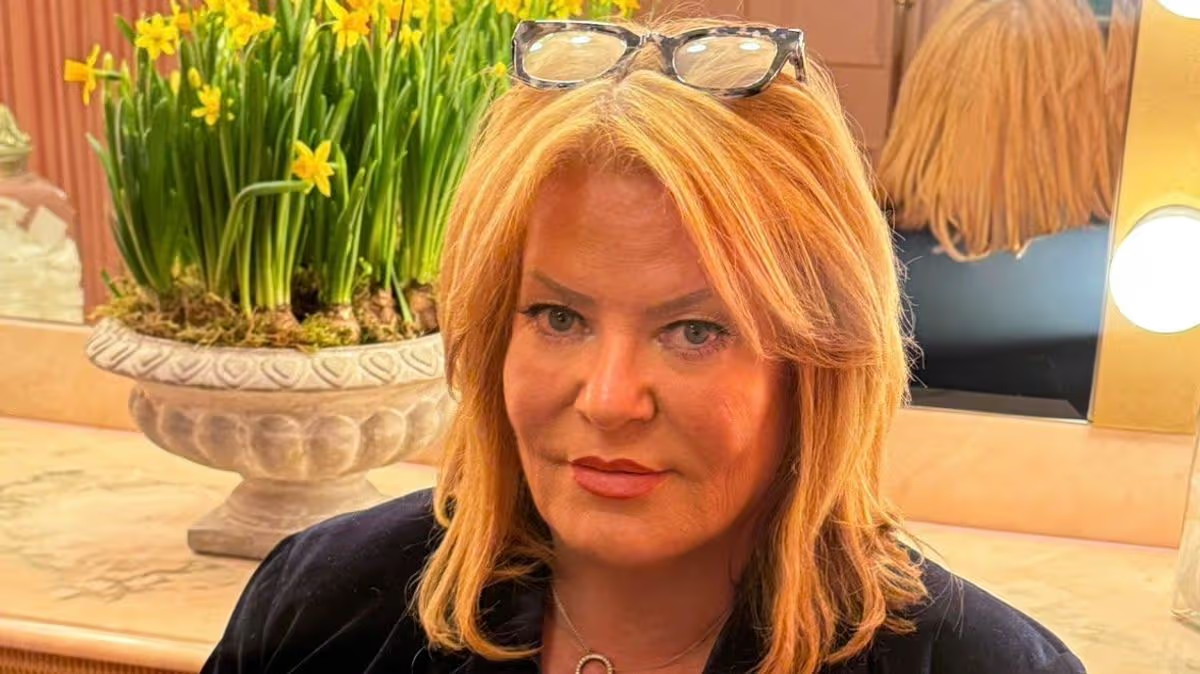
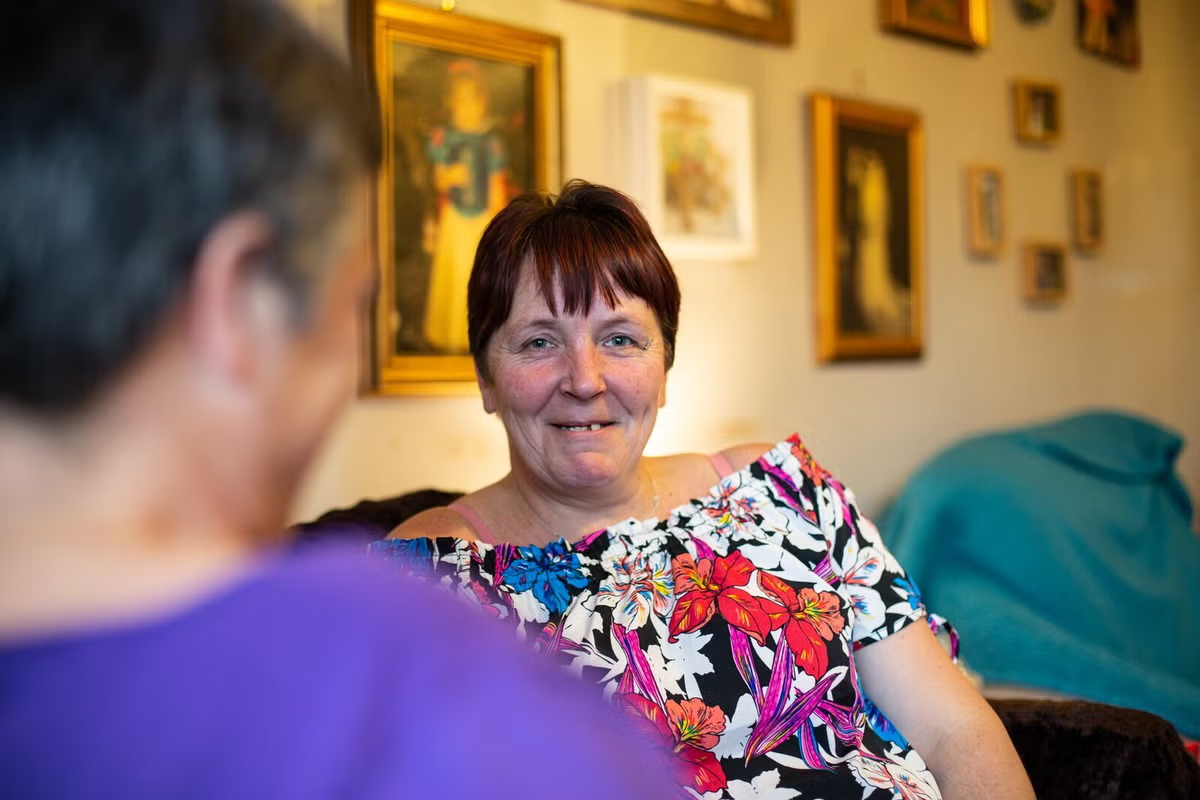
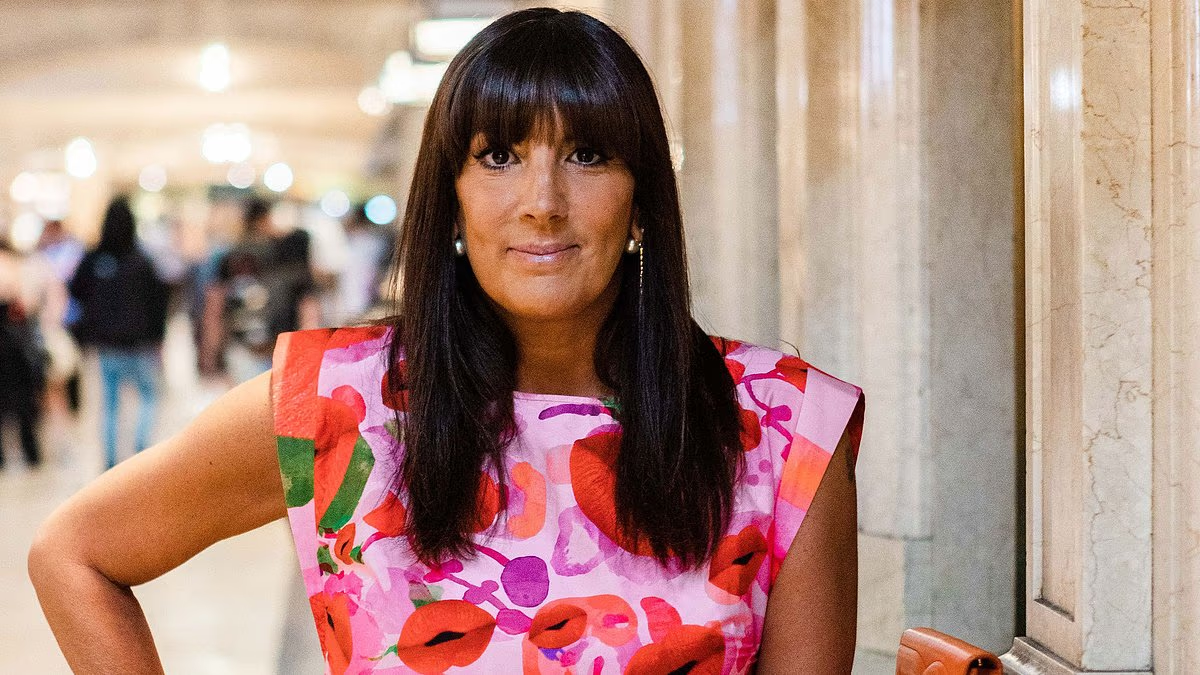
Lisa Johnson, 49, from Bedfordshire, knows exactly what it feels like to struggle financially, after finding herself £35,000 in debt following her divorce in 2014.
2,596 words~12 min read