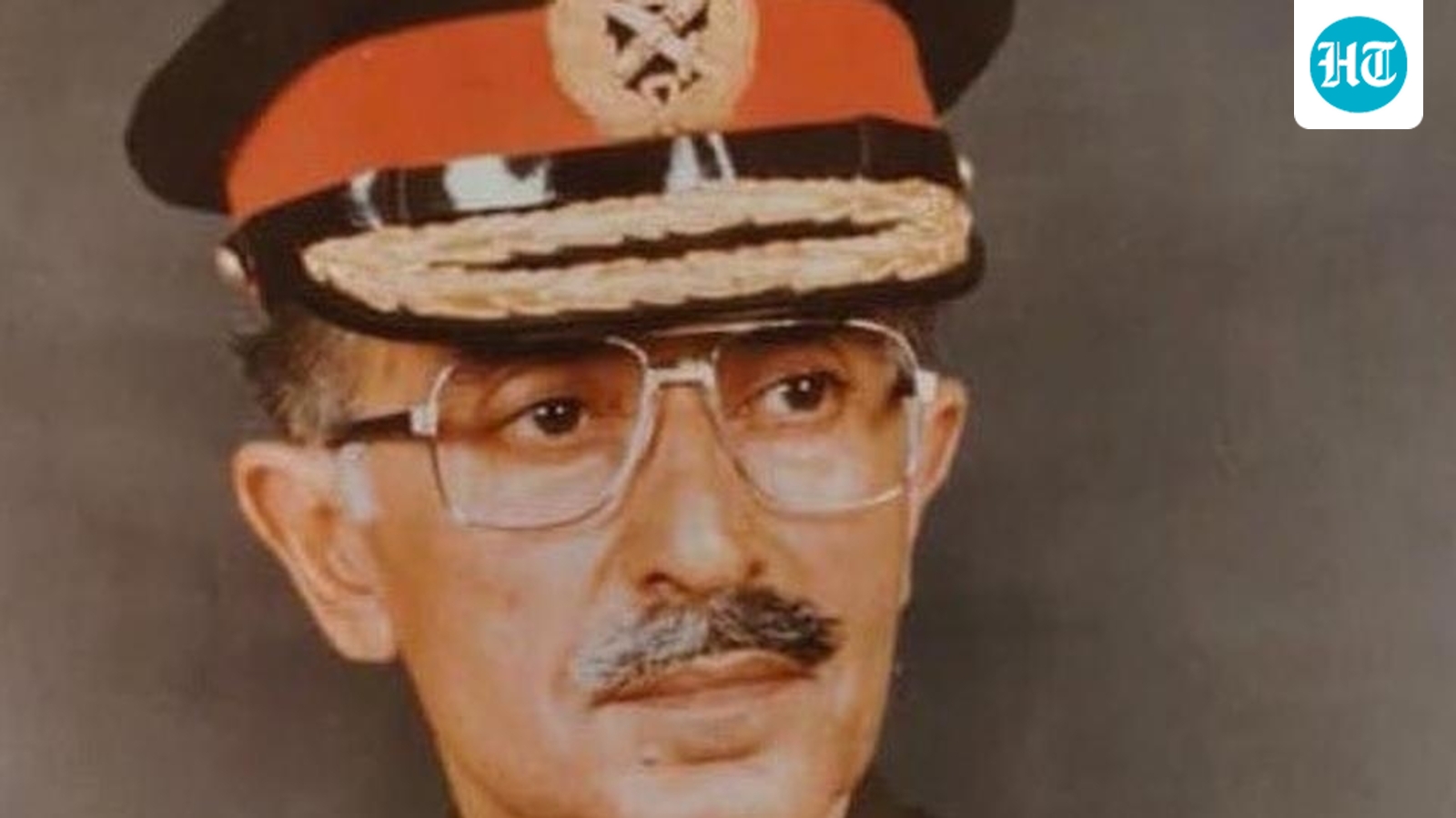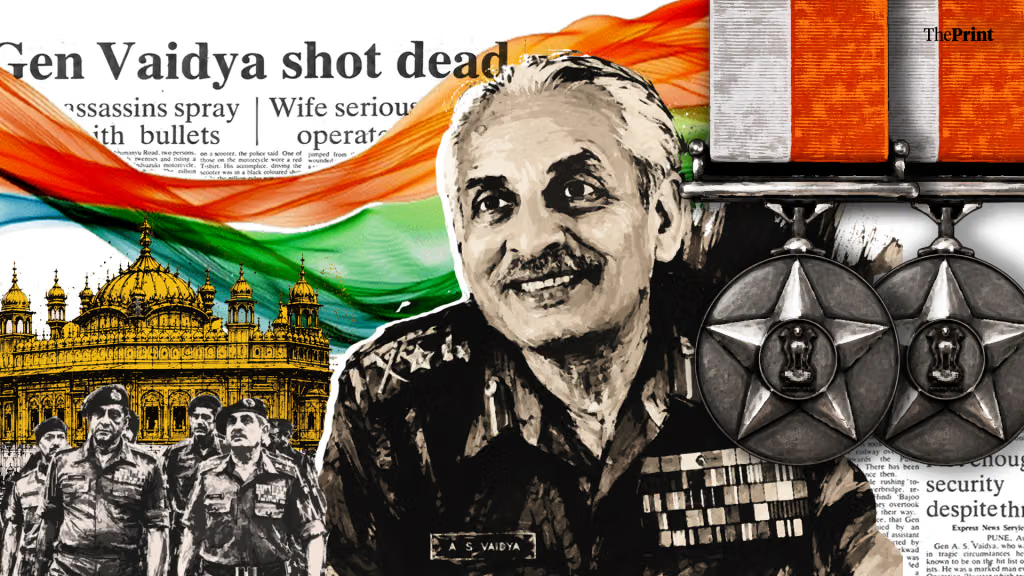
General Douglas MacArthur immortalised the line ‘old soldiers never die, they just fade away’. This week, however, an Indian soldier, among the greatest and most decorated, personified this irony. Just that he did die to hostile fire, and was then allowed to fade away. It should raise some questions.
Some more facts. He was one among only six Indians to be awarded two Maha Vir Chakras (MVCs). His MVCs were earned in the most intense battlefields, 1965 and 1971. He rose to be India’s 13th Army chief. He retired on 31 January, 1986 and yet died in the line of duty on 10 August later that same year as two assassins shot him at the wheel of his Maruti 800 in Pune.The 40th anniversary of his assassination passed unnoticed. No commemoration, no memorials, not even a tweet from the ever-so-active Army handles. It’s as if there was a ‘corporate’ call to erase all memory of General Arun Shridhar Vaidya.
Vaidya commanded his 9 Cavalry (Deccan Horse) with elan in the battle of Asal Uttar (Khem Karan) where the pride of Pakistani Army, its 1 Armoured Division, was decimated. He then followed up as commander of 16 (Independent) Armoured Brigade in the withering tank battles of Basantar, and Chakra and Dehira with even greater distinction.Somewhat more importantly, it was under his watch that two most storied cavalry regiments, 17 (Poona) Horse and 4 (Hodson’s) Horse, collected a Param Vir Chakra (2nd Lt Arun Khetarpal, posthumous, whose story featured in Hindi film Ikkis), three more MVCs besides Vaidya’s, and six Vir Chakras (VrCs). Clearing minefields under fire is as dangerous as fighting from inside a tank, if not more.If Basantar was the battle of all tank battles, Asal Uttar/Khem Karan is the most fateful and decisive battle in the Subcontinent’s warfare. Vaidya’s regiment was in the forefront though its Shermans were outranged, outgunned and out-protected by the Pakistani Pattons. Indira Gandhi’s government cited this “battle experience” to make him the chief in 1983, superseding Lt-Gen S.K. Sinha, although the decision was likely political. Sinha, a brilliant mind, was punished for his proximity with J.P. or Jayaprakash Narayan.