His sister was Major Dr Kamla Tewari, who served in the Army Medical Corps.Apart from the challenges in Punjab and Sri Lanka, he also inherited an active internal security scenario amid heightened tensions with Pakistan and the growing unrest in Jammu and Kashmir.
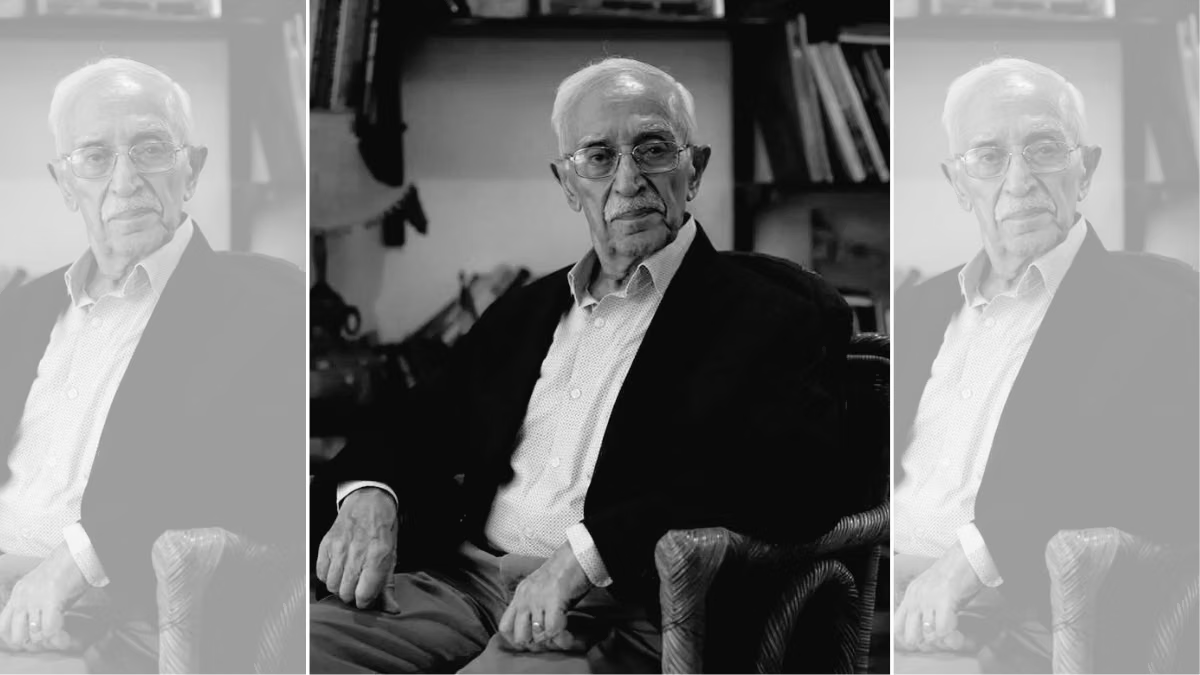
GeneralDhirajSeth, #COAS, and All Ranks of the #IndianArmy express profound grief on the passing of General Vishwa Nath Sharma, PVSM, AVSM, ADC, former Chief of the Army Staff. The Indian Army extends its heartfelt condolences to his bereaved family and loved ones. A… pic.twitter.com/tSeOyqxjS0— ADG PI – INDIAN ARMY (@adgpi) July 31, 2026
He took over as Army Chief from General K Sundarji, the architect of Operation Brasstacks and one of the Indian Army’s foremost military reformers.While Gen Sundarji’s tenure saw a push for mechanisation and technological modernisation of the force, Sharma’s tenure was more measured, with a strong operational focus on both internal security and conventional warfare.Managing IPKF in Sri Lanka
The biggest operational challenge Gen Sharma faced during his tenure was the IPKF operation in Sri Lanka. By the time he assumed office, the IPKF had already been deployed to fight the Liberation Tigers of Tamil Eelam (LTTE) and the Army was embroiled in an intense fight with the guerrilla group.From what was meant to be a peacekeeping operation, it had turned into a full-fledged counter-insurgency campaign against a deadly guerrilla force. Under him, the Army had to adapt from conventional warfare tactics to jungle warfare, urban operations and intelligence-driven counter-insurgency.The withdrawal of the IPKF began towards the end of his tenure and was completed in March 1990.Punjab insurgency