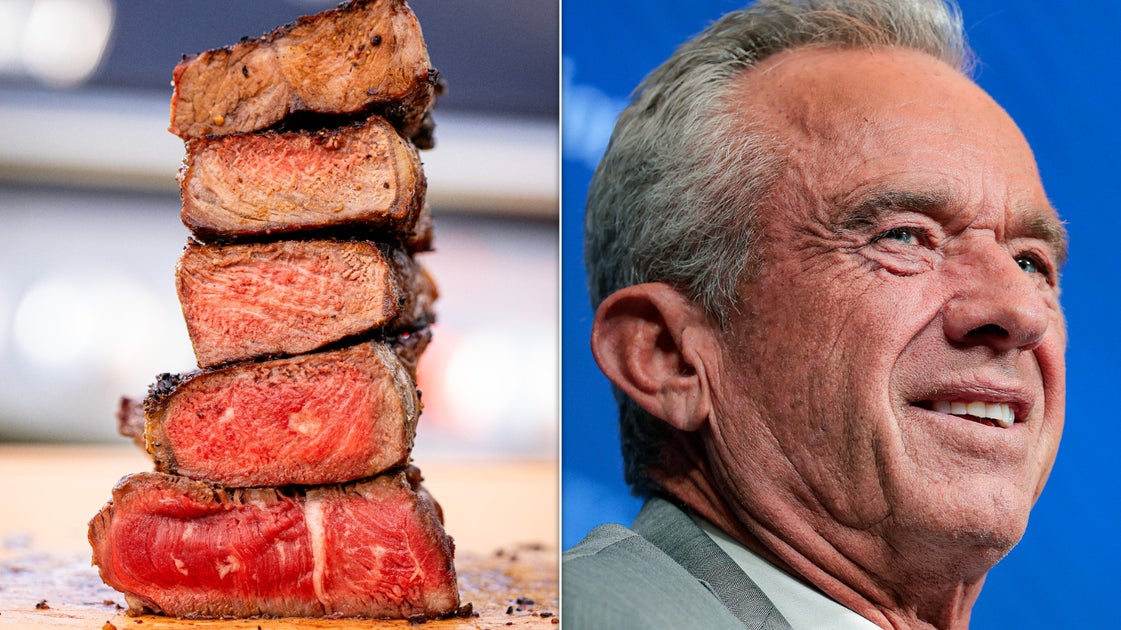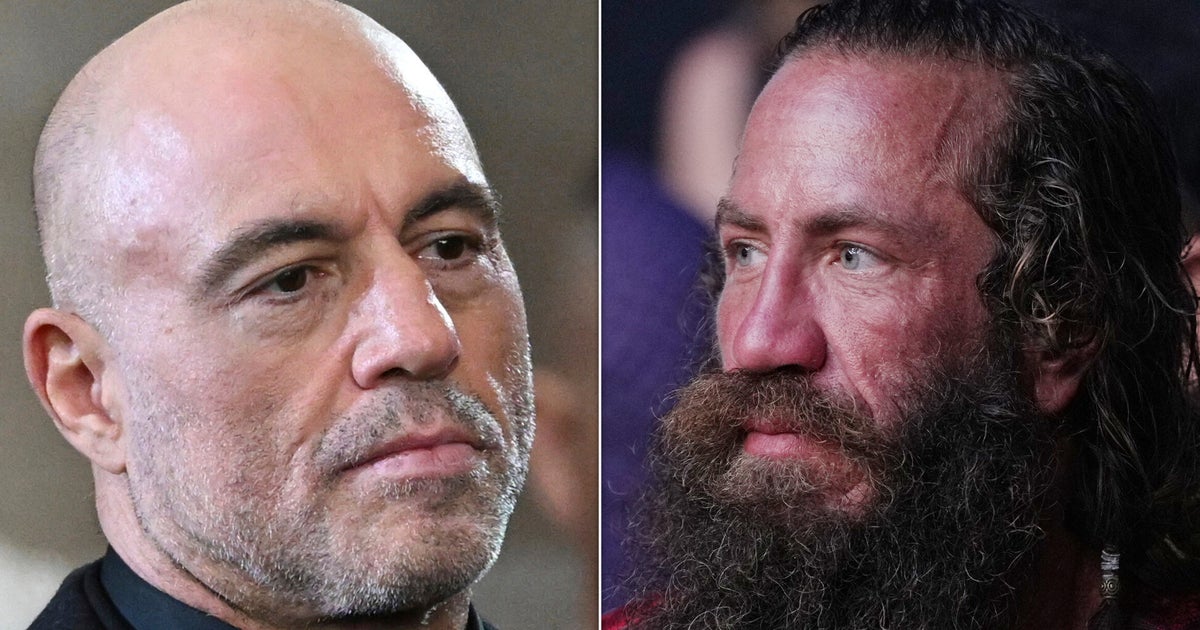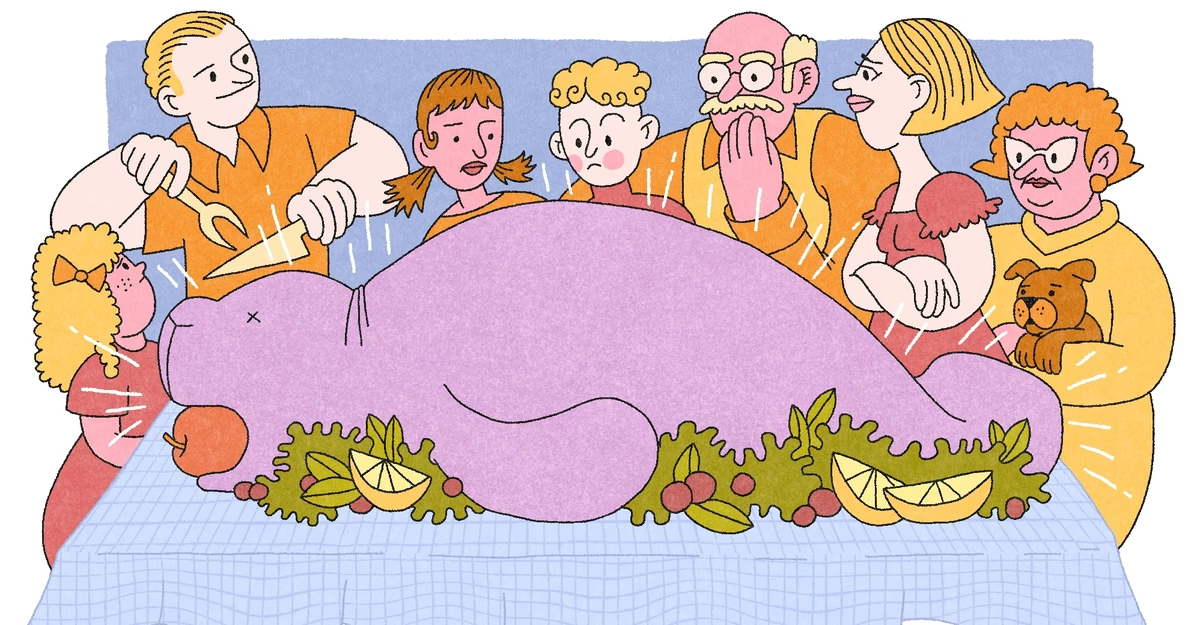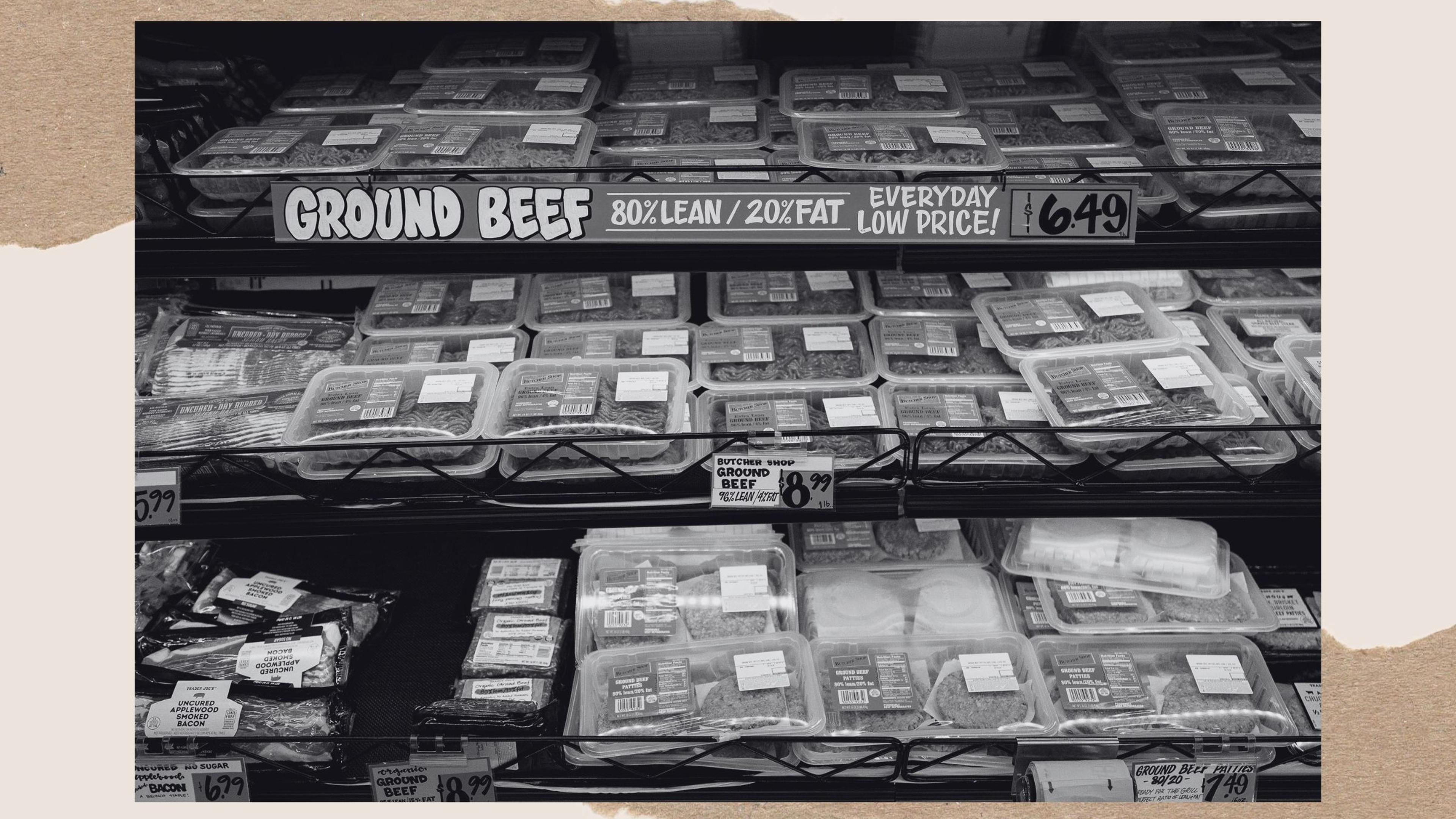
He sits shirtless, muscular, and shaggy, baseball hat turned backwards (of course) as he bites into a hunk of raw liver the size of a Shih Tzu. Brian Johnson, known as the Liver King, consumes and advocates for a steady diet of raw organ meat to maintain an “ancestral lifestyle.” Johnson has millions of followers on Instagram and TikTok who tune in specifically for this content. Johnson’s fans are not alone. As economic anxiety reshapes American masculinity, a growing subculture of young and working-class men is turning to maxxing out their bodies as a way to reclaim value in a labor market that increasingly devalues physical work. Working out isn’t enough. It’s how they eat, dress, and sculpt—especially how they eat. And their staple food isn’t expensive biohacker supplements; it’s ground beef, the cheap, protein-dense “boy kibble” endlessly promoted by fitness influencers. The rise of carnivore aesthetics, lifting culture, and hyper-protein diets reflects a deeper crisis of identity among men who see the traditional beacons of secure manhood—having a well-paying job, owning their own home, being a dad—dimming before their eyes. They’ve come to feel their bodies are one of the few forms of capital they still control. And, perhaps most interestingly, this obsession is nothing new. And, like the fads that came before, they’re following a path that is certain to leave them unfulfilled. The history of America’s beef obsession The history of our obsession with beef and masculinity goes back at least 140 years. In 1886, the great novelist Henry James published his novel The Bostonians, in which the unsympathetic Southern patriarch Basil Ransom thunders: “The whole generation is womanized, the masculine tone is passing out of the world; it’s a feminine, nervous, hysterical, chattering, canting age, an age of hollow phrases and false delicacy.”Later, in 1909, Woods Hutchinson, a physician and health writer, wrote a bestselling book of health advice for young men, Instinct and Health, advising that men consume: “Meat! R-r-red meat, dr-r-ripping with b-l-lood, r-r-reeking of the shambles!” Then, as now, economic changes, fundamental shifts in family life, and evolving domestic relations all combined to make many young white American men feel anxious about their identity, and desperate to prove their masculinity in a world they perceived as increasingly sapping their virility. The solution? Beef. And this isn’t the first time Americans have sought to eat their way out of an existential crisis of identity. These observations sound familiar because at several times in our history, observers have declared a veritable crisis among American men. The transition from farms, the open range, and artisanal workshops to offices and large, impersonal, factories was seen as sapping virility—just as our tiny cubicles and remote workstations are said to do today. Rapid immigration, alongside the entry of women and people of color into new sectors of the workforce in the early 1900s, arguably caused as much alarm as those same groups do today. So, as now, many men followed the adage that when the going gets tough, the tough, well… toughen up. The first YMCA gym was built in 1869, the first dude ranch a decade later. An estimated one in five American men belonged to a fraternal order in the early 1900s, where they could relax in an all-male and all-white social space. The Boy Scouts of America (co-founded in 1910 by Ernest Thompson Seton), and the Boone and Crockett Club (founded in 1887 by Theodore Roosevelt before becoming president) heralded the “strenuous life” as virtual boys’ liberation movements. Even the great psychologist and early manfluencer G. Stanley Hall, coiner of the term “adolescence” in 1904, wrote, “you cannot have a firm will without firm muscles.”Today’s manosphere revives an old scriptOld, bad ideas do not simply fade away. Sometimes they return as viral content. And that’s quite clear today, as the internet is awash with advice about what to eat, wear, pump up and slim down. Today’s masculinist influencers warn that masculinity is under siege and argue that modern society has made men dangerously weak. British-American social media personality Andrew Tate claims that, “Society as a whole is telling men to be weaker and weaker, saying it’s somehow the solution to everything because being a man is toxically masculine. Being a strong man is bad,” he said on Tucker Carlson’s podcast. “To be a good man, you have to be a very weak one.”Canadian psychologist Jordan Peterson insists that “The masculine spirit is under assault. It’s obvious,” and, ““If you are not capable of cruelty, you are absolutely a victim to anyone who is.” Podcaster Joe Rogan echoes the familiar maxim that “Hard times create hard men. Hard men create easy times. Soft times create soft men. Soft men create hard times,” while fitness influencers like Liver King declare bluntly, “We have a soft man problem today.”Together, these men, alongside others including Myron Gaines, David Goggins, and Hamza Ahmed, compose the “manosphere,” a group that doles out advice online about how to toughen up and seduce women—in other words, to become “real men.” They’ve swallowed The Red Pill, and like their early 20th-century forbears, they’re incredibly nostalgic. They look back towards a mythic time when real men roamed the earth like dinosaurs—brawny men, physically strong, emotionally stoic, effortlessly dominant—men who worked with their hands, fought in wars, sacrificed for their families and endured pain and hardship without blinking. The fact that such men are in short supply, and that this romanticized myth didn’t even remotely compare with the lives such men actually lived, is of little concern to today’s masculinists. Indeed, the language of conservatism is often the language of nostalgia. It’s not just to “conserve” what’s there, but to return, retrieve, reclaim, and restore what has been lost.How beef became a symbol of masculinityWhen it comes to what is perceived as the increasingly enfeebled and emasculated bodies of American men, today’s manosphere influencers hark back to the words of bodybuilder Bernarr MacFadden from 1900. Think of MacFadden, “America’s foremost health crusader,” as America’s first masculinist influencer. Instead of podcasts and Instagram reels, MacFadden’s popular magazine, Physical Culture, and his best-selling books like The Virile Powers of Superb Manhood: How Developed, How Lost, How Regained helped instruct men to man up through diet and exercise. He even invented a “peniscope,” a small vacuum tube that was said to enlarge the male organ and thus help men feel more manly. Then, as now, manfluencers seem to believe that you are what you eat. And beef is the most masculine of all foods. Enough with the vegetables! No more broccoli! No more sushi! That’s surely a diet for “soy boys.” (Many proclaim that long-debunked association of soy products, like tofu, with increased estrogen, therefore making men more feminine, and therefore, turning them gay). The manosphere is drenched in blood-red carnivorous encomiums. “They don’t want you strong. They want you weak. And that’s why they’re promoting this veganism garbage,” says Tate. “I eat beef and salt and water,” proclaims Peterson. “That’s it.” (A British journalist followed that regimen. It did not go well.) Something called “the lion diet” eschews even dairy in favor of water, salt, and meat from ruminant animals. (Monogastric chickens do not qualify.) Popular podcaster of “FreshandFit”, which boasts over 1.5 million subscribers on YouTube and close to 300 million views, Myron Gaines mixes raging misogyny and anti-Semitism with suggestions about a carnivorous dietary regimen. You can’t eat your way to manhoodOf course, masculinity is complex. Beef is no longer “what’s for dinner,” as the old Beef Industry Council ad told us. Nor the ingredient about which one was always asking its whereabouts: “Where’s the beef?” To be sure, you can not eat your way to manhood. But Americans have been struggling to learn this lesson for decades. At the turn of the century, health reformers like J.H. Kellogg, C.W. Post and Sylvester Graham (he of the cracker) promoted whole grains and unprocessed foods as a sure way to prevent the scourge of masturbation. One concern, of course, is the cost of such carnivorous gorging. At a popular neighborhood restaurant on my block, a grass-fed sirloin goes for $46. At a time when prices are hurtling upwards and men’s labor force participation is falling, meat prices have been climbing steadily, from an average of around $3.55 a pound for ground beef when President Trump first took office to about $6.75 a pound in 2026, and steak prices to over $11 per pound.Combine these carnivorous cravings with the compulsive bodybuilding and muscle-maxxing, and you have a cardiovascular nightmare. And add to that the newest craze of “looksmaxxing” by which men sculpt their physiques and faces (through cosmetic surgery, extreme diets, and even surgical altering of facial bone structures) and you can feel the desperation like anxious sweat. The fantasy that masculinity can be recovered through diet is as old as the United States. Every generation discovers its own version of “boy kibble.” Every generation eventually learns that strength of character cannot be bought by the pound.Just as American men discovered a century ago, masculinity is not a diet nor a fashion accessory. It comes from within, being morally and emotionally strong enough to serve one’s family, community, and nation. That’s the meat of the issue.
You Are What You Eat: Beef, Boy Kibble, and the Search for Manhood
The rise of carnivore aesthetics, lifting culture, and hyper-protein diets reflects a deeper crisis of identity, writes Michael Kimmel.
1,537 words~7 min read