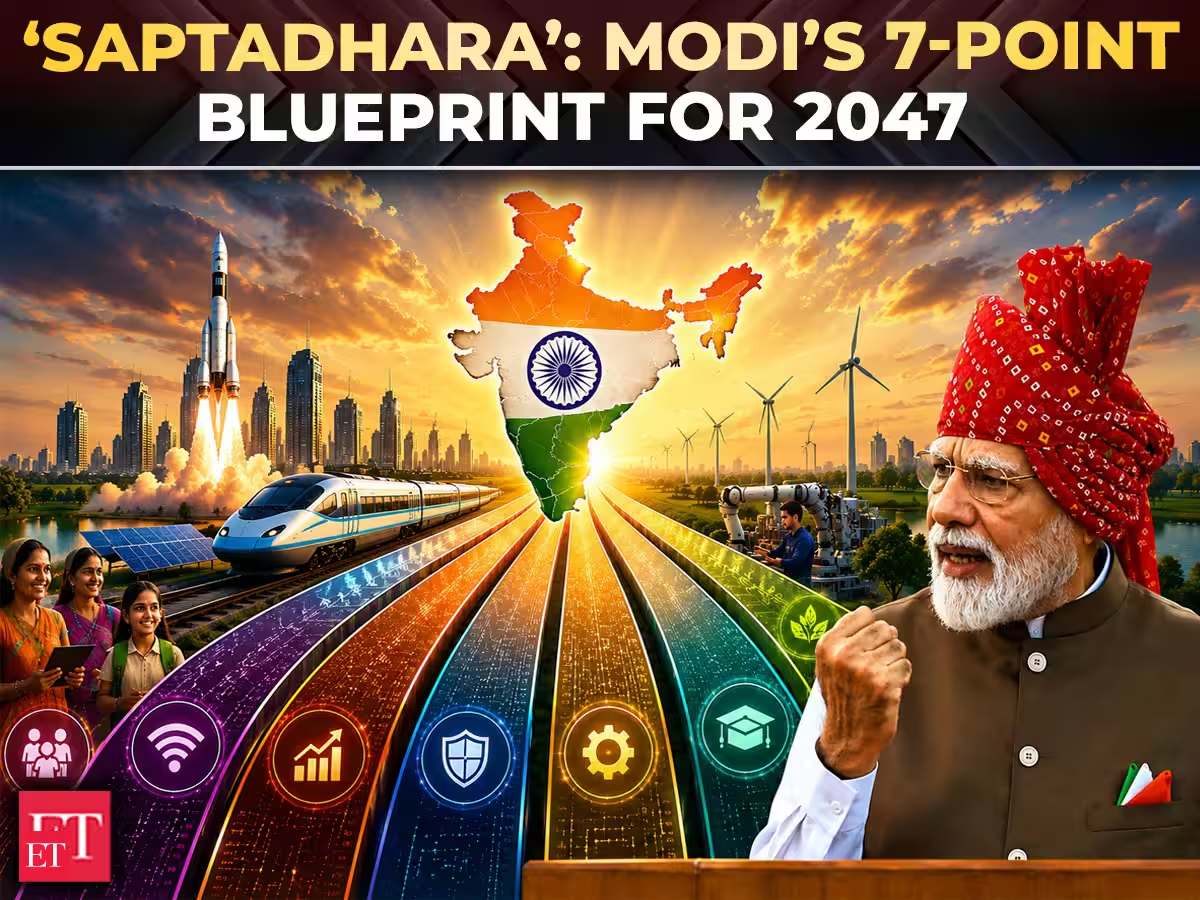
UNDER Prime Minister Narendra Modi’s leadership, India is pursuing an ambitious vision to become a fully developed nation by 2047, its first Centenary year of independence from British colonial rule. The writer examines what it will take for India to become Viksit Bharat (Developed Nation).
It is creditable that the Government of India has set for itself and the nation a crucial goal: That India should become Viksit Bharat by 2047, which would be the one hundredth year anniversary of India’s independence. While there is general agreement that the term Viksit Bharat denotes a developed country, it is still necessary for public policy purposes to break the concept down to know what it entails. What follows is an attempt to do so.
While India can be legitimately proud of being the fourth largest economy in terms of Gross Domestic Product (GDP) in the world, the fact remains that for a population that is approaching 1.5 billion, the present GDP of $4.5 trillion is a little below par. So, if India must become “Viksit” in the real sense of the term, the GDP must grow significantly to attain the figure of at least 10 trillion dollars.
This is entirely achievable if we can do a couple of things. First, 40 per cent of our GDP is foreign trade, so our share of international trade must simply double. In particular, our share of global exports, which hovers around 2 per cent, should rise to 10 per cent. Second, our Foreign Direct Investment (FDI), which for the latest year is a little short of $ 100 billion, must also grow manifold. In order for the above two things to happen, Government of India must carry out deep seated economic reforms in areas such as land, labour, power, agriculture, infrastructure and regulatory obstacles.