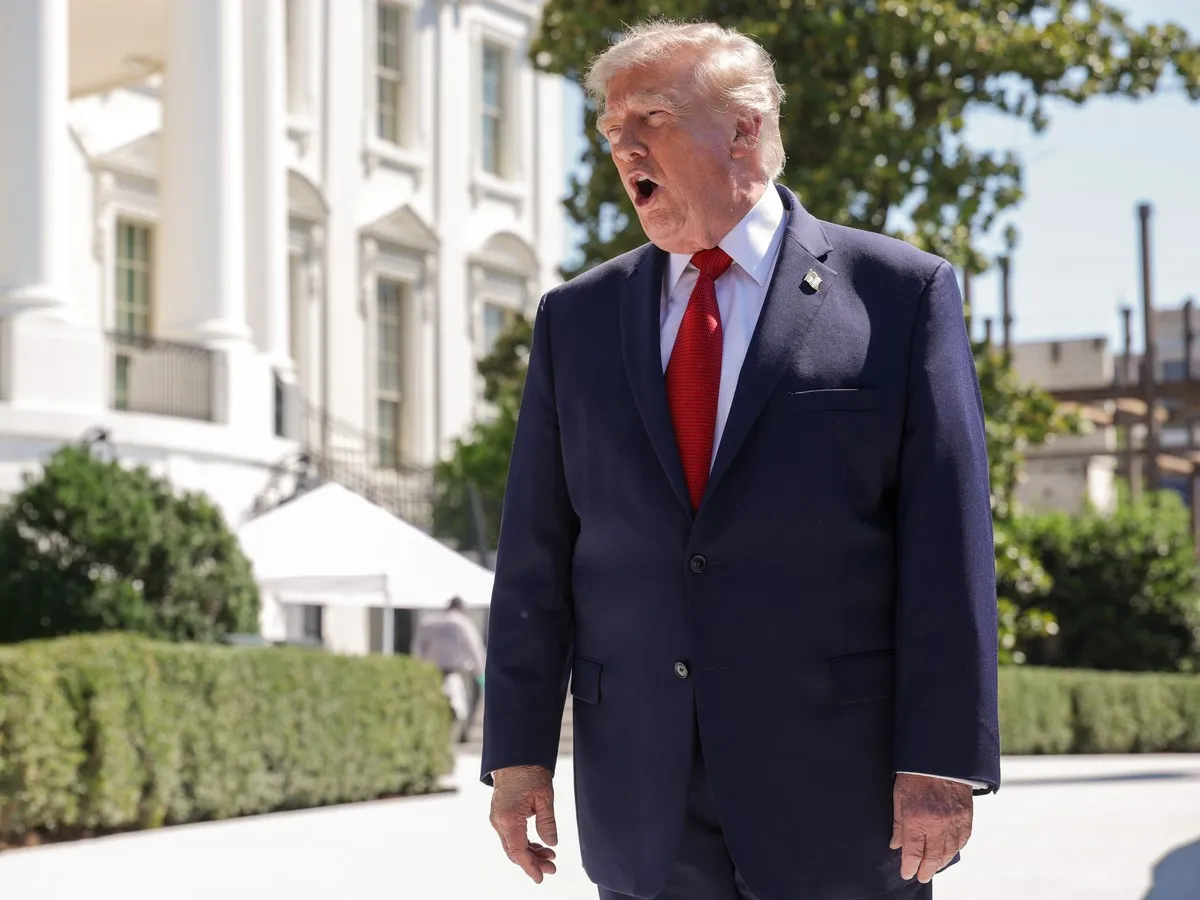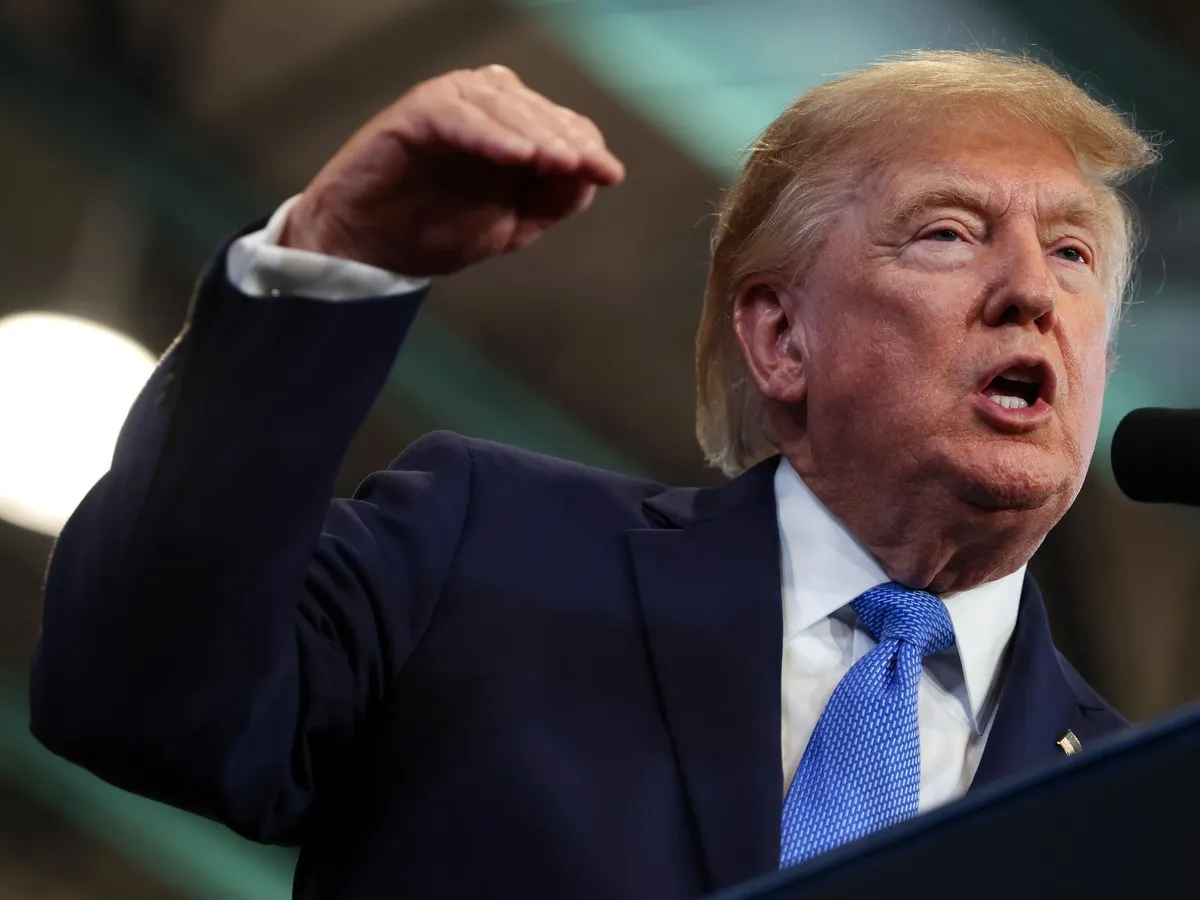
Skip to Content Subscribe Our Offers My Account Manage My Subscriptions FAQ Newsletters Canada Canadian True Crime Canadian Politics Health World Israel & Middle East Financial Post NP Comment Longreads Puzzmo Diversions Comics NP News Quiz New York Times Crossword Horoscopes Life Eating & Drinking Style Sponsored Play for Ontario Travel Travel Canada Travel USA Travel International Cruises Travel Essentials Culture Books Celebrity Movies Music Theatre Television Business Essentials Advice Lives Told Tails Told Shopping Buy Canadian Home Living Outdoor Living Kitchen & Dining Tech Style & Beauty Personal Care Entertainment & Hobbies Gift Guide Travel Guide Amazon Prime Day Deals Savings National Post Store More Sports Hockey Baseball Basketball Football Soccer Golf Tennis Driving Vehicle Research Reviews News Gear Guide Obituaries Place an Obituary Place an In Memoriam Classifieds Place an Ad Celebrations Working Business Ads Archives Healthing Epaper Manage Print Subscription Profile Settings My Subscriptions Saved Articles My Offers Newsletters Customer Service FAQ Newsletters Canada World Financial Post NP Comment Longreads Puzzmo Diversions Life Shopping Epaper Manage Print Subscription HomeNP CommentRaymond J. de Souza: Trump doesn't care if he loses, as long as Canada also losesIt is hard to see what kind of agreement would be worth makingLast updated 14 hours ago You can save this article by registering for free here. Or sign-in if you have an account.U.S. President Donald Trump delivers remarks at the David S. Mack Center for Training and Intelligence on August 14, 2026 in Garden City, New York. Photo by Samuel Corum /Getty ImagesCanadians are awaiting a potential trade agreement with the Trump administration before the implementation of 50 per cent tariffs next week. The world is waiting for an agreement between Iran the Trump administration on the Strait of Hormuz.Enjoy the latest local, national and international news.Exclusive articles by Conrad Black, Barbara Kay and others. Plus, special edition NP Platformed and First Reading newsletters and virtual events.Unlimited online access to National Post.National Post ePaper, an electronic replica of the print edition to view on any device, share and comment on.Daily puzzles including the New York Times Crossword.Support local journalism.Enjoy the latest local, national and international news.Exclusive articles by Conrad Black, Barbara Kay and others. Plus, special edition NP Platformed and First Reading newsletters and virtual events.Unlimited online access to National Post.National Post ePaper, an electronic replica of the print edition to view on any device, share and comment on.Daily puzzles including the New York Times Crossword.Support local journalism.Create an account or sign in to continue with your reading experience.Access articles from across Canada with one account.Share your thoughts and join the conversation in the comments.Enjoy additional articles per month.Get email updates from your favourite authors.Create an account or sign in to continue with your reading experience.Access articles from across Canada with one accountShare your thoughts and join the conversation in the commentsEnjoy additional articles per monthGet email updates from your favourite authorsSign In or Create an AccountorMeanwhile there have been no shortage of recent agreements of significance. The Trump administration concluded a nuclear energy agreement with Saudi Arabia, opening the door to Saudi enrichment of uranium — a necessary, though not sufficient, step toward a nuclear weapons program. After careful overnight thought, U.S. President Donald Trump then effectively cancelled the agreement unless the Saudis joined the Abraham Accords.The Saudis, for their part, took a pass on the Abraham Accords and surprised everyone last week with the Mecca Accords, a mutual defence pact with Turkey and Pakistan, employing language similar to NATO’s article 5 — an attack on one is considered an attack on all.The National Post newsletter that doesn’t hold back, giving readers the unvarnished truth on media, politics and culture.By signing up, you consent to receive the above newsletter from Postmedia Network Inc.A welcome email is on its way. If you don't see it, please check your junk folder.The next issue of Right? will soon be in your inbox.We encountered an issue signing you up. Please try againAn interesting question arises. If in future Iran were to hit a Turkish catering truck in which Trump was hiding, would NATO and Pakistan both declare war on Iran given that Turkey is both a NATO and Mecca member?The Mecca Accords were preceded last September when Saudi Arabia and Pakistan — which has nuclear weapons — concluded a mutual defence pact between just the two of them. The same month Trump, enraged by an Israeli assassination attempt on Hamas officials in Qatar, signed an executive order declaring that any attack on Qatar would be considered an attack on the United States — a NATO-like guarantee to a non-NATO country.Trump also announced a peace plan for Gaza, promising Hamas disarmament and Israeli withdrawal. Prime Minister Benjamin Netanyahu took several days before rejecting that plan outright.Agreements aplenty then, announced but not always honoured, awaiting the next agreement to be announced and maybe not honoured.The world is watching that dynamic regarding Trump and Iran. The former announces an agreement, or a near-agreement, or a desire-for-an-agreement, and the latter insists that they will never be an agreement except on its extortionary terms.The president huffs and puffs, exasperated that whilst commanding the far mightier military force, he cannot force Iran to capitulate. Meanwhile he takes cover in a catering truck as Iranian threats make not one, but two, Air Force One planes too dangerous to use. The metaphor is illustrative.The reality is that Iran is willing to penalize itself — sanctions, blockades, bombing — in order to inflict damage on the United States, its Gulf neighbours and the world economy. A negotiation usually seeks to achieve something of a win-win, but Iran is content with a lose-lose; specifically a we-lose-more-as-long-as-you-lose-something.Coupled with technology that allows a much weaker power to inflict meaningful disruption on a greater power — whether preventing ships from transiting Hormuz or the president abandoning his plane — it makes it difficult to make a lasting agreement.In the Persian Gulf it is Iran that is willing to penalize itself, resulting in the absurd spectacle of one of the world’s most reviled regimes being able to hold hostage one of the world’s most crucial shipping routes. The lose-lose mentality is making the world more dangerous.The lessons of Hormuz are not entirely unrelated to the lessons of the Gordie Howe bridge. There it was the Trump administration who took the shipping route hostage until Canada paid the ransom. There was no option for a win-win, as the Trump position opened with a lose-lose — the bridge does not open — and maintained a willingness to make American citizens and businesses lose until Canada agreed to lose too.Canadian trade negotiators are feverishly working to get some kind of agreement ahead of the latest threatened tariff imposition. Good luck to them, but it is hard to see what kind of agreement would be worth making.There can be no expectation that Trump will abide by any agreement he makes, as his trade aggression against Canada both violates the very free trade agreement he signed in 2018, and simple honest conduct — “fentanyl tariffs,” “forced labour tariffs.” As Europe, Israel, Saudi Arabia and Iran have discovered, no agreement means what it says if the president changes his mind.More fundamentally, the entire tariff strategy is that Trump will make Americans pay in order to inflict pain on others. That’s what tariffs do. Smoke getting in American eyes? Raise taxes on Americans who import goods. Brazil puts a corrupt, autocratic former president in jail? Make Americans pay more for coffee. Americans like to buy Canadian goods because it makes their lives better, more comfortable and affordable? Make them pay!How then to get to a win-win, which is the principal goal of trade negotiations, if the other party opens by gleefully inflicting losses on itself? Trade negotiations thus go from a gain-spreading exercise to a loss-reduction project. Perhaps Canada can reduce the losses suffered by our aluminum producers so that American consumers of beer cans and automobiles also suffer less. Perhaps our lumber producers can suffer less so that young American families don’t have to pay thousands more for their homes. Perhaps, but the very perversity of the negotiations reduces confidence in a good result.The possibility for a Canadian-American trade deal remains better than for a American-Iranian deal. In the former case, at least one party can be trusted to keep its word.National Post Join the Conversation This website uses cookies to personalize your content (including ads), and allows us to analyze our traffic. Read more about cookies here. By continuing to use our site, you agree to our Terms of Use and Privacy Policy.
Raymond J. de Souza: Trump doesn't care if he loses, as long as Canada also loses
It is hard to see what kind of agreement would be worth making
1,429 words~6 min read