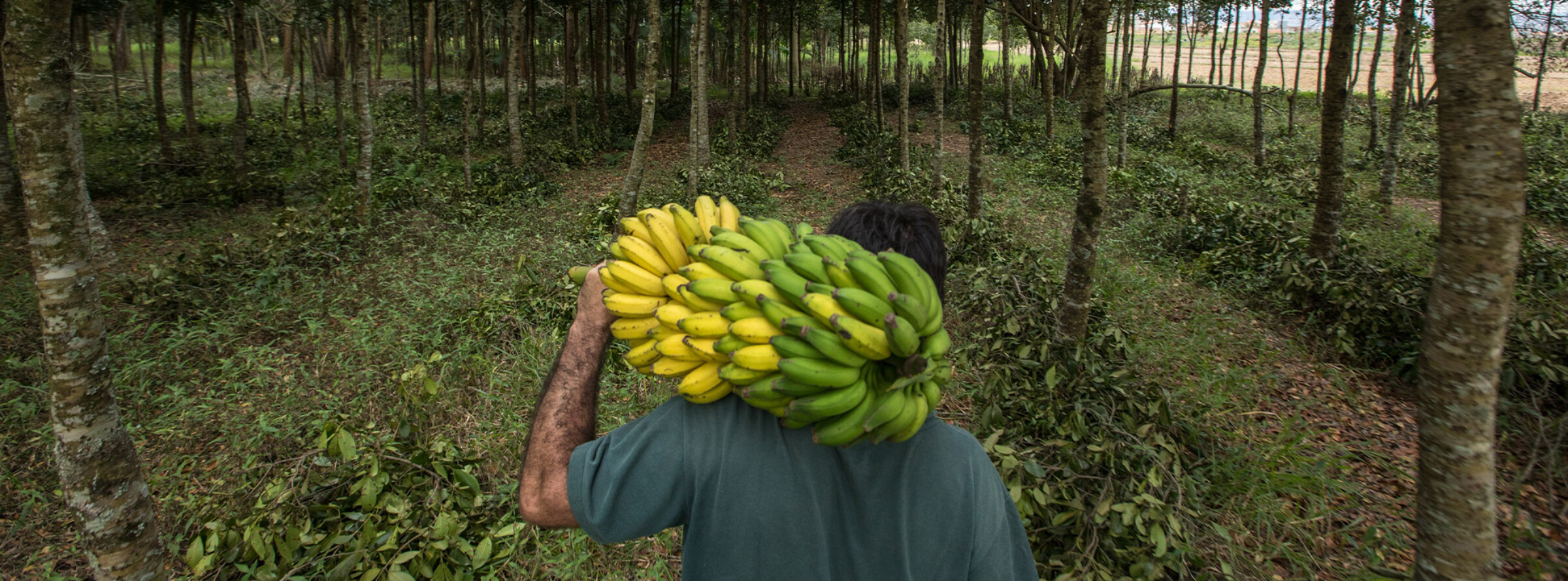
A Yale School of the Environment research collaboration is testing how food crops can thrive alongside trees in the nation’s most forested region. By blending Indigenous knowledge with modern science, the project aims to build a more resilient future for farmers and forests alike.
On a bright October day as a chill breeze signals the coming of winter, Yale School of the Environment scientists are deep in the soil preparing field experiments for this spring’s growing season. They are at a linear gap in Yale-Myers Forest studying how light gradients and tree root competition are affecting crop germination, soil moisture, and nutrients. There are six microzones within this gap and each crop, including sunchokes, fiddleheads, and assorted herbs, is planted within each zone. In some areas, the trees that line the sides of the gap are providing shade, in other areas, full sun.
Nearby, at Hidden Blossom Farm in Union, Connecticut, forests are being thinned to create silvopastures, where trees, forage, and livestock are integrated, and fruit and nut trees are being planted in open fields.
Top-right, center, bottom-left Bob Handelman; Others images iStock
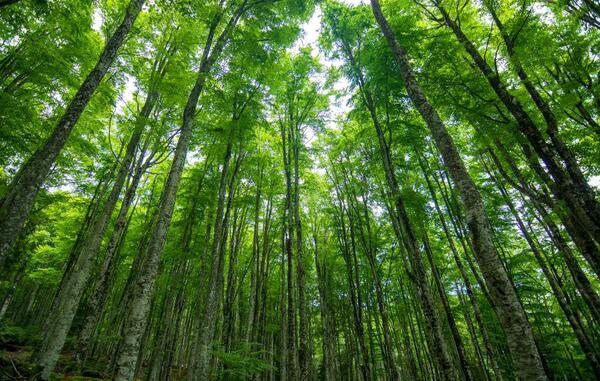
New England is the most heavily forested region in the U.S., with more than 80% of the region covered by forests. It is also the most densely populated and agriculturally limited area in the country. While only 8% of farmland nationwide is wooded, half the farms in New England directly abut or contain forestlands. Yet less than 2% of farmers in the region practice agroforestry.