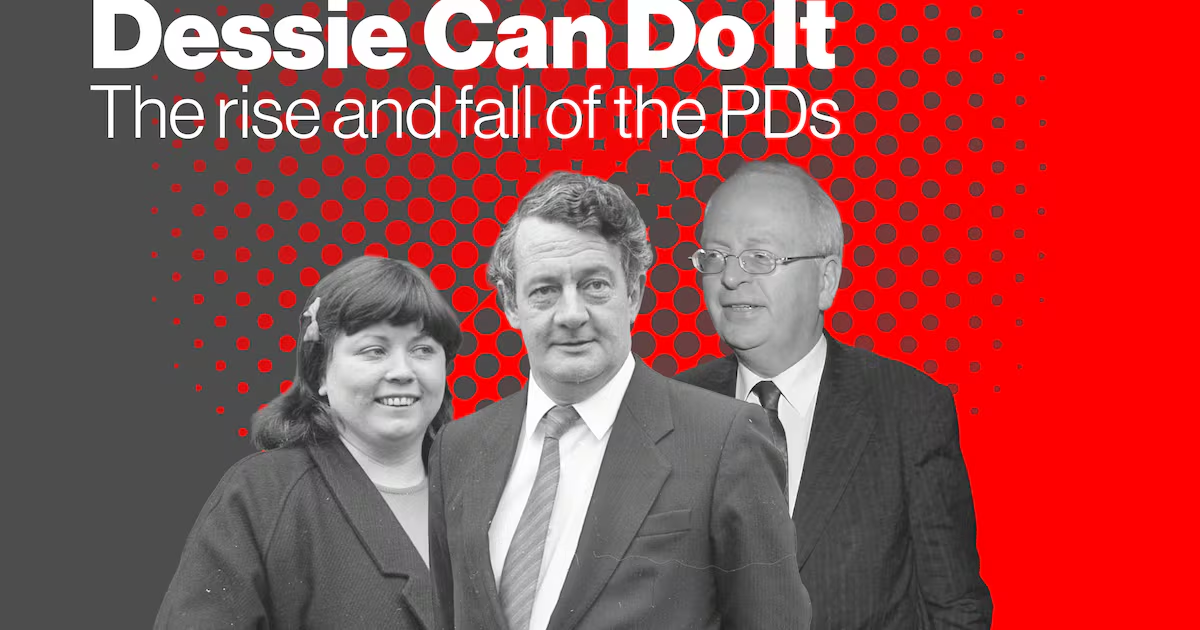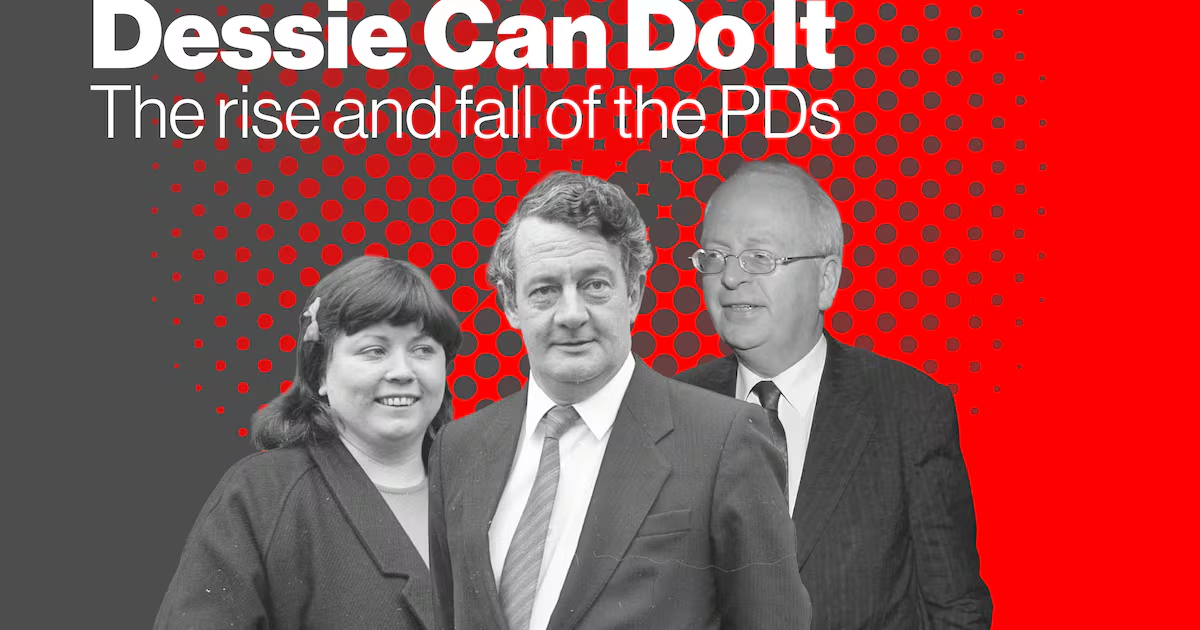
“Everybody needs a break, climb a mountain or jump in a lake,” sang Christy Moore.“Some head off to exotic places, others go to the Galway Races ... Summer comes around each year, we go there and they come here. Some head off to Frijiliana, but I always go to Lisdoonvarna.”Here at the politics department in The Irish Times our holidays are of the culturally improving sort, as you’d expect. Wagner at Bayreuth. Touring the great cathedrals of Europe. The Camino. Golf in Puerto Banus. You know yourself.But before we head off, we also like to give listeners to the Inside Politics podcast a chance to recollect and ruminate upon an episode from recent political history.In the last few years, we’ve covered Garret (FitzGerald) vs Charlie (Haughey), the Bertie (Ahern) Years, the Fall of Brian Cowen and Labour’s Pains in Government 2011-2016. This year, it was the Rise and Fall of the Progressive Democrats. (You can pick it up on irishtimes.com or wherever you get your podcasts, as they say.)Dessie Can Do It, part one: the birth of a new political force Listen | 55:24 This week, I’ve been pondering the history of arguably Ireland’s most influential small party ever. Here are five lessons from the history of the PDs:1. The public finances won’t fix themselves: it takes government action to do itThis is the lesson of the entirety of Irish politics in the 1980s. It took two governments led by the Haughey and two led by FitzGerald, both failing to get to grips with the public finances, before it was learned by Haughey – with the PDs and Dessie O’Malley breathing down his neck – in time for his third and fourth administrations. When the public finances are squeezed, it drains confidence from the rest of the economy, strangling investment and growth. Government action to cut spending is almost always necessary. That is painful, but inevitable. And if inevitable, then it is better done sooner rather than later. This lesson may not be relevant to Irish politics right now; but it will be if and when there is a slowdown in tax revenues and the public finances move into deficit.[ From boom to bust: how the Progressive Democrats unravelledOpens in new window ]2. Starting a new party is hard, but not impossibleO’Malley was doubtful the PDs would be viable right up to the time they were founded. Only weeks before the new party was launched, key figures were still agonising about whether to fully commit. There had been months of planning and organising in the background; inevitably, it requires – like so many other worthwhile things – a small group of committed people. But then it requires the courage to take the leap.O’Malley subsequently reflected that it might have been impossible to start the PDs in the 2000s because of how the State had moved in as the funder of political parties, based on their vote at the previous election. But two new parties, Aontú and the Social Democrats, have since established a foothold. In both cases, it has been a hard slog – but in a fractured political system, the space for new parties has expanded rather than contracted. It ain’t easy, but it is possible.How the PDs broke the mould of Irish politics - Dessie Can Do It, part two Listen | 59:543. Leaders matterO’Malley was a remarkable politician, something that was evident from his early days in Leinster House. He had an ability to make people want to follow him, a rare quality. He had integrity, skill, charisma – though he was famously grumpy – intelligence and judgment. He knew he could push Haughey into accepting a coalition, and he knew when he had to break with Albert Reynolds. These were do-or-die decisions for the PDs.Mary Harney, who succeeded O’Malley in 1993, had a different style but the same combination of toughness and judgment. Her great insight was to understand that Ahern was a different type of Fianna Fáil leader, and that he needed the 1997 coalition government to work. This gave her the latitude to implement the PD policy agenda in conjunction with Charlie McCreevy, Ahern’s finance minister and the most effective PD minister ever (even though he was technically still in Fianna Fáil).4. Stay in your laneMore than any other single policy prescription to deal with the economic depression of the 1980s, the PDs promised tax cuts. At the time people on very ordinary incomes were paying a lot more than half their income to the State. O’Malley promised to change that, and when he got into government, he did. There were lots of things that contributed to the PDs’ appeal – but that was the biggest one.The tax cuts were huge. During the PDs’ first coalition with Fianna Fáil, the standard rate of income tax was cut by 5 points while the top rate was reduced by 8 points. Back in government between 1997-2002, the standard rate fell another by 6 points to 20 per cent and the higher rate by 6 points to 42 per cent. Corporation tax came down to 12.5 per cent from a general rate of 32 per cent. Capital gains tax was halved, from 40 per cent to 20 per cent. It was revolutionary.In the 2002-2007 government, the focus went off tax cuts. Michael McDowell was in the Department of Justice and Harney moved to the Department of Health in 2004. The tax-cutting project ended. Soon afterwards, so did the PDs.5. Get into governmentHarney famously said the worst day in government was better than the best day in opposition. That, of course, was before the financial crisis. But it remains true that the place to be if you want to achieve change (or prevent unwise change) is government. It’s not true that you can do nothing without power; but you can do an awful lot more with it. For 14 of their 23 years of existence, the PDs were in government. Whatever you think of their ideology, they came with an agenda and they changed Ireland. Social Democrats, take note.
Pat Leahy: A brief history of Ireland’s most influential small party ever
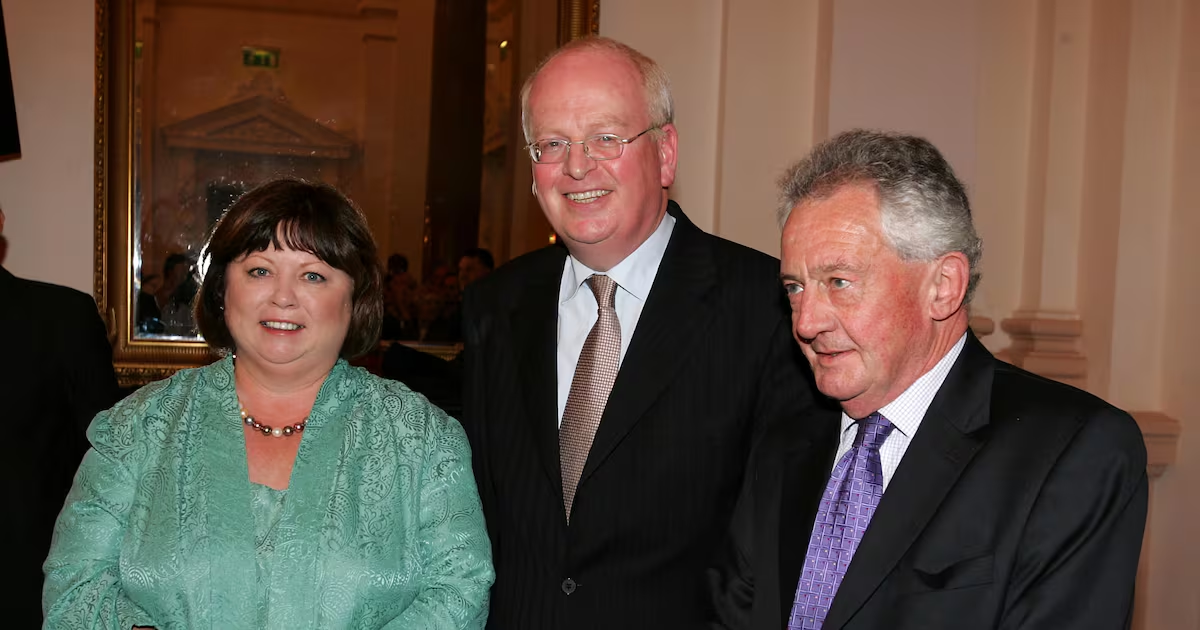
For 14 of their 23 years of existence, the PDs were in government. Whatever you think of their ideology, they came with an agenda and they changed Ireland
1,011 words~5 min read