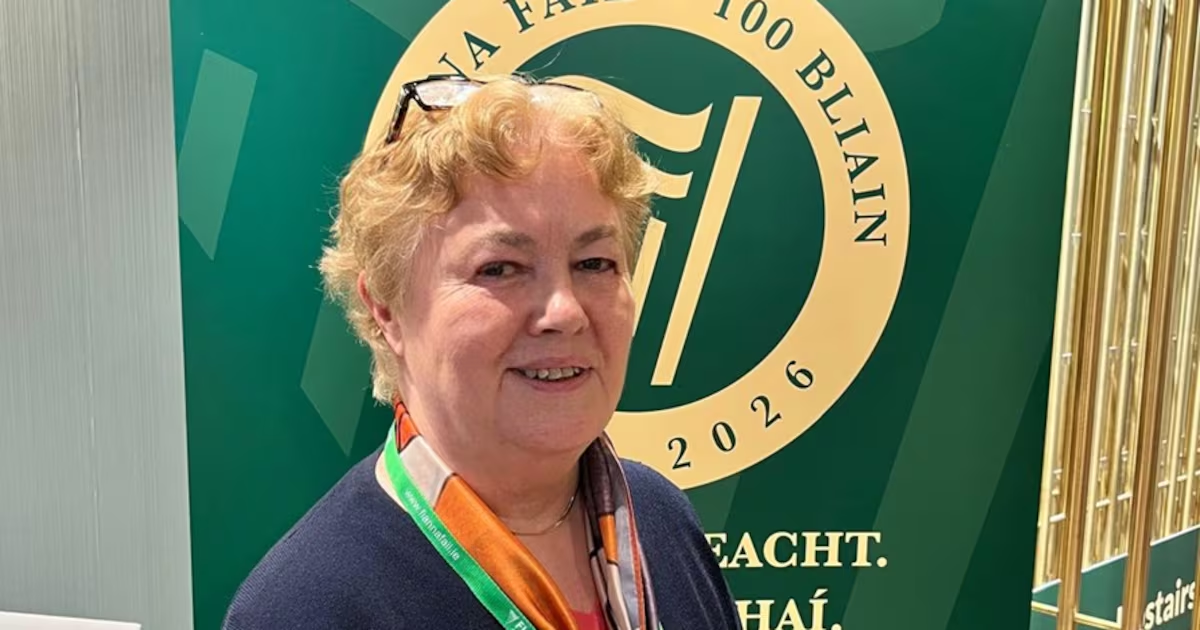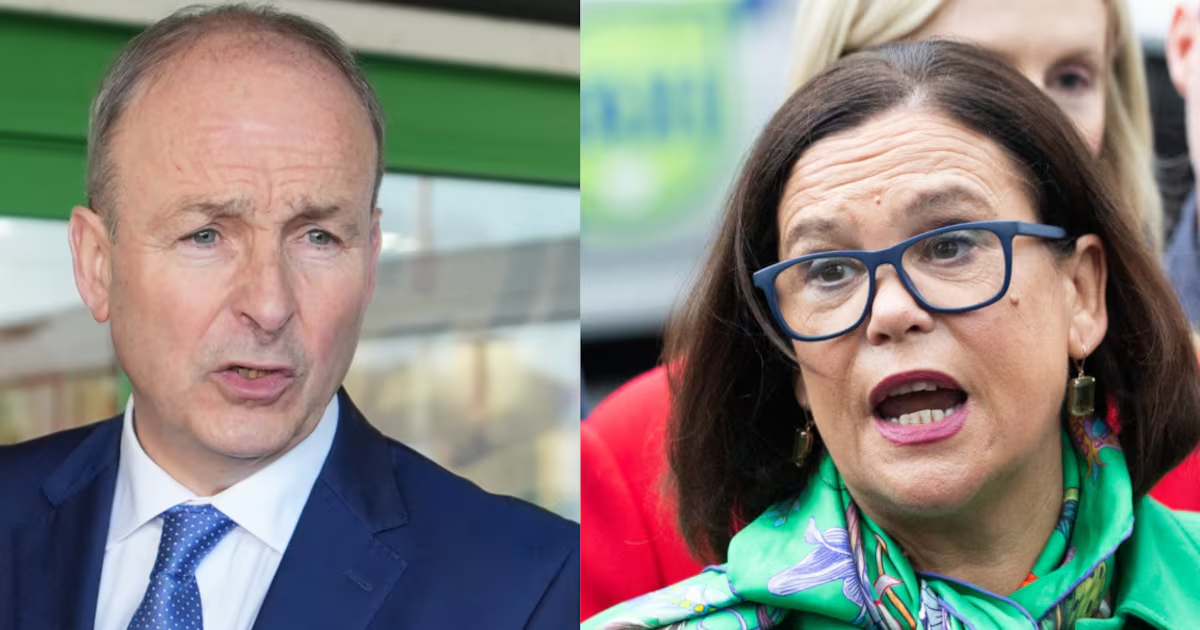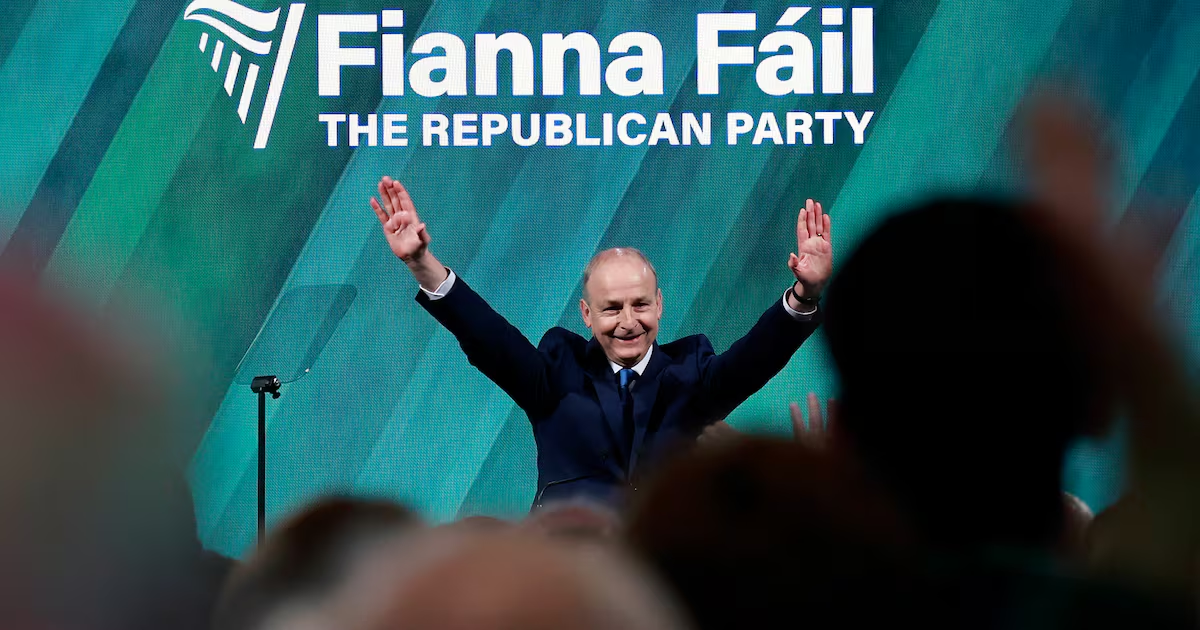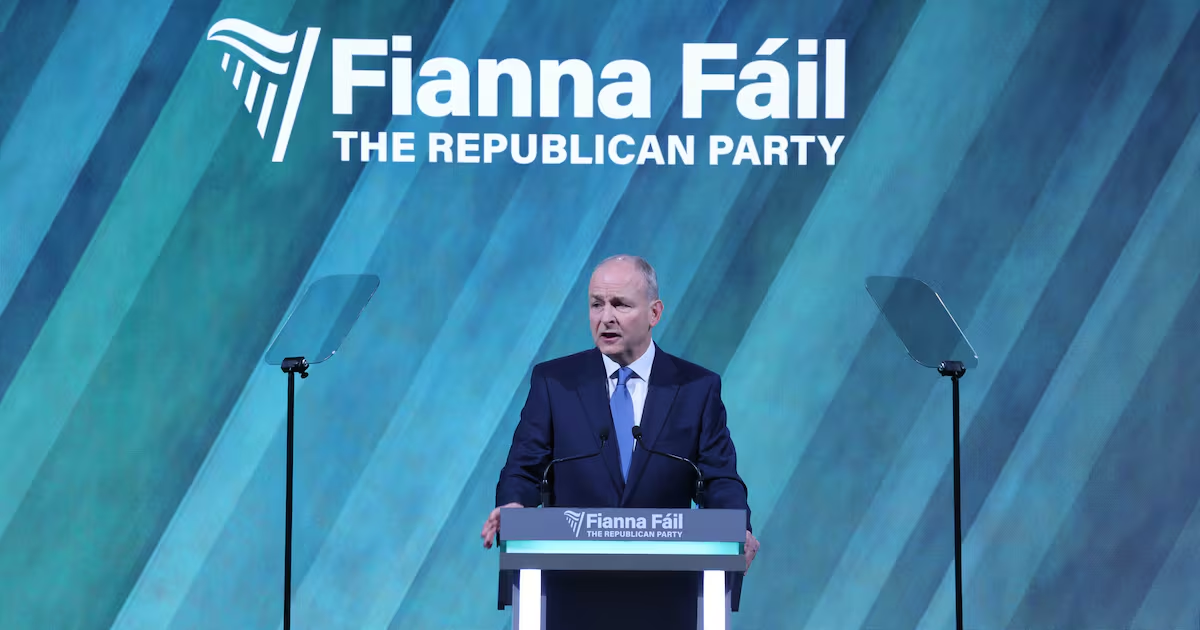
Considering the party is about to get beaten out of sight in two byelections, the mood at the Fianna Fáil ardfheis in Dublin last weekend was chipper. By and large, delegates were pretty pleased with themselves – after all, their leader is Taoiseach, they’re the largest party in the Dáil, they’re the largest party of local government: what’s not to be happy about?Questions about the byelections were cheerfully shrugged off with the sort of self-deprecatory banter that seems to come more easily to Fianna Fáilers than to members of the other political tribes. They are their own most withering critics, and also fiercest defenders. Questions of the basic sanity/mental capacity/psychological equilibrium of colleagues (and indeed the organisation as a whole) are freely bandied about. Those who publicly insist that their excellent candidates are working hard on the ground and getting a great reaction on the doors wonder privately: “Who the f**k is our candidate anyway? Where did we find him? Has anyone ever heard of him?” Hilarity all round.Reports from the doors were mixed. There was amusement, agreement and exasperation with Bertie Ahern’s escapades, with a few people quietly observing that maybe it wouldn’t have been such a brilliant idea to run him for the presidency after all. But nobody wanted to go back over that particular omnishambles.There was also warmth towards “the Bert”, with the Saturday evening crowd cheering when his image appeared on the giant screen. Lustily, too, they cheered for Brian Cowen – and for Micheál Martin, who has always been more popular with the broad membership than among his own parliamentary party. That grassroots popularity is one of the things that has enabled Martin to stay a couple of moves ahead of his enemies in the parliamentary party.But there was a sense among delegates that this era is drawing to a close. Few, if any, expect Martin to lead the party into the next general election. That means it is not a question of if Martin goes, but when. That represents a fundamental, and probably irrevocable, shift in thinking about the leadership.[ The delegates’ views: Fianna Fáil members say ‘leadership in waiting is very patient’Opens in new window ]The consequences are obvious. There were, in recent weeks, some efforts by restless opponents of the Dear Leader to get something going in the wake of the expected byelection flops. Ministers were approached but gave the same answer as before: not now. It may be true that the public doesn’t really care about the EU presidency, which starts in less than six weeks – but politicians do. Plunging Fianna Fáil into a leadership drama now would be extraordinarily self-indulgent, even by the self-centred standards of politics.After the presidency, though, all bets are off. There is a general expectation – certainly evident last weekend, I thought, where the suggestion that this was his last ardfheis as leader met with nigh-universal agreement – that Martin will step down as party leader next year.Now beware: people in positions like mine (though never this writer) have been making this prediction for more than a decade; they have yet to be right. But they will be right eventually. Nothing lasts forever.There were differences of opinion about whether Martin would or should go in the first half of 2027, enabling his successor to occupy the Taoiseach’s office, or wait until the big switcheroo in November when Fianna Fáil and Fine Gael swap the top job. Much will depend, as it always does, on the political context at the time. But it also depends on what Martin wants to do. He has generally got his way with his party. My guess is he will devote some time to planning how to exit.No matter what the substantial anti-Martin faction says, his will be big shoes to fill. Martin has led his party to an astonishing comeback since the pit of despair into which the party had flung itself (and everyone else) in 2011. He is its second longest-serving leader after its founder and by any measure, among a pantheon of political heavyweights, is one of the most consequential figures in its 100 years of history.[ Fianna Fáil at 100: ‘They could certainly teach the Tories and UK Labour a thing or two’Opens in new window ]During the course of his leadership, Martin has established a relationship with the public that sees him top the ratings of political leaders regularly. They know he can do the job of taoiseach. He did it during Covid, when people were desperate for leadership. Then they re-elected him. He is the adult in the room. At present, there is no sign that Fianna Fáil has a leader-in-waiting who can slip into that role easily, much less do the job better than Martin.But change will come, as it must. At present the front-runner is Jim O’Callaghan, but Darragh O’Brien and Dara Calleary have legitimate cases too. Norma Foley sort of put her hand up last weekend; James Lawless has previously done so. Jack Chambers is risking unpopularity among public and colleagues by trying to govern well.What should the contenders do between now and Martin’s departure? Simple: show they have the chops for the most difficult job in Ireland.Can they connect with voters and be an electoral asset for their party? Can they run the Government with Fine Gael, but still beat them in an election (they think about this a lot)? Have they a command of policy and a knowledge of how to work the great machine of government so that it produces the desired results? Can they take tough decisions and sell them to the public? Have they experience but also good new ideas? Have they the temperament (more than anything else, perhaps, essential) the job requires? Have they the mental and physical stamina? And then there will be a whole set of other questions about the politics. Among them will be: would you enter government with Sinn Féin?Starters, take your marks. Busy year ahead.
Pat Leahy: Who would want the most difficult job in Ireland? Quite a few people
No matter what the substantial anti-Micheál Martin faction says, his will be big shoes to fill
994 words~5 min read