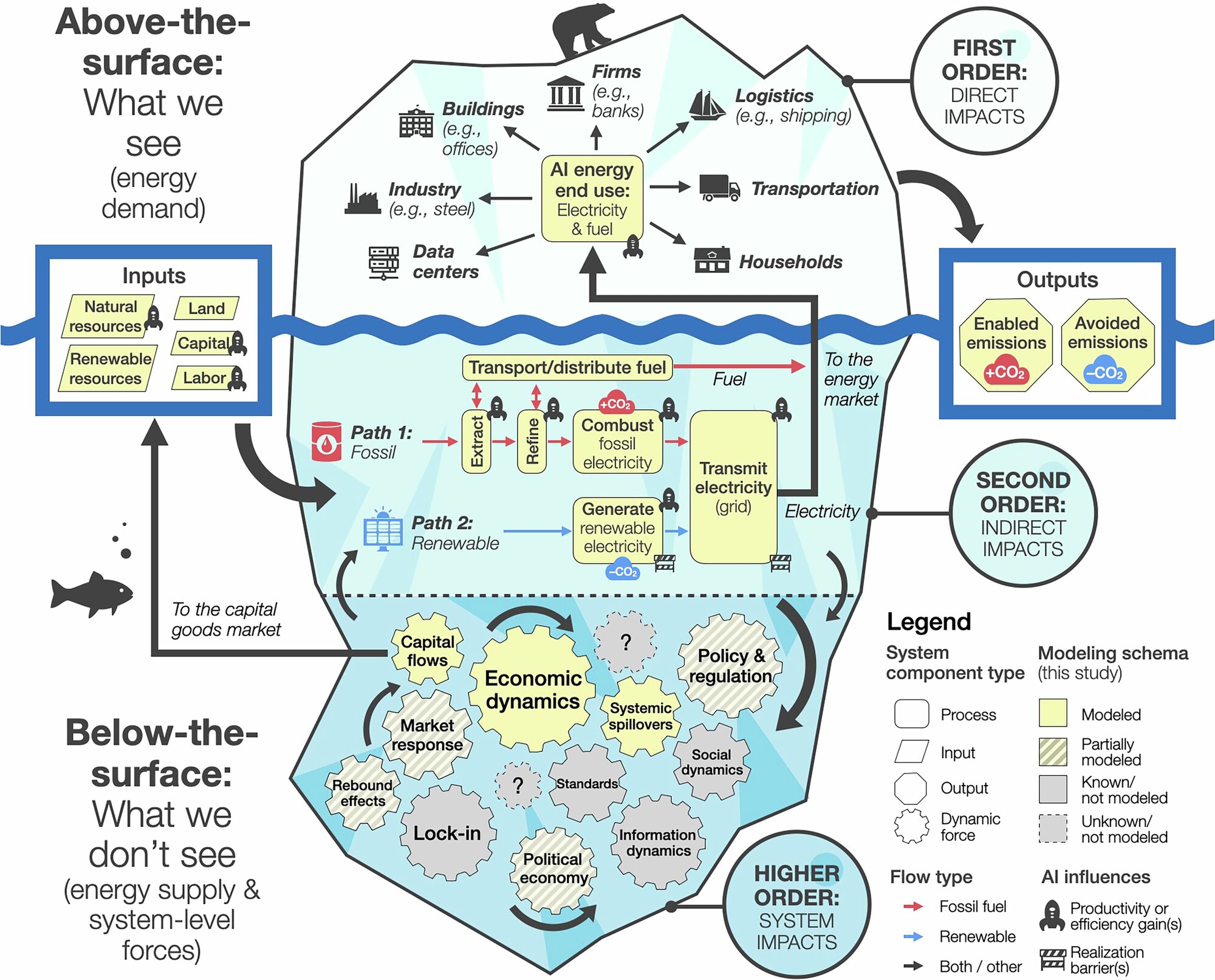
Conceptual systems diagram of AI–energy market dynamics across first-, second-, and higher-order effects. Credit: npj Climate Action (2026). DOI: 10.1038/s44168-026-00411-0
AI data centers get a bad rap, not least because of concerns that they drive climate change by consuming massive amounts of electricity. But one potentially larger impact of AI on global carbon emissions may be that it's helping the fossil fuel industry become more productive. That's the main finding of a paper published in the journal npj Climate Action that looked at how boosting productivity across both clean and dirty energy sources affects net CO2 emissions.
Modeling the global economy
Researchers in the U.S. built a complex computer model of the global economy to compare AI-driven productivity gains in clean power generation with those in fossil fuel production. They tested 64 different scenarios and applied various levels of AI adoption, from low to high, to fossil fuels, renewable energy, power grids, and selected areas of shipping and heavy manufacturing.
According to the model's scenarios, when AI productivity gains are applied across both fossil fuel and clean energy sectors, global annual CO2 emissions rise by 0.47 to 1.8 billion tonnes (0.52 to 2 billion tons). That increase roughly equals 1.2% to 4.8% of total global energy-related CO2 emissions in 2024. So what is AI doing to help fossil fuel productivity? The main drivers included its ability to increase the productivity of fossil fuel extraction and lower production costs.