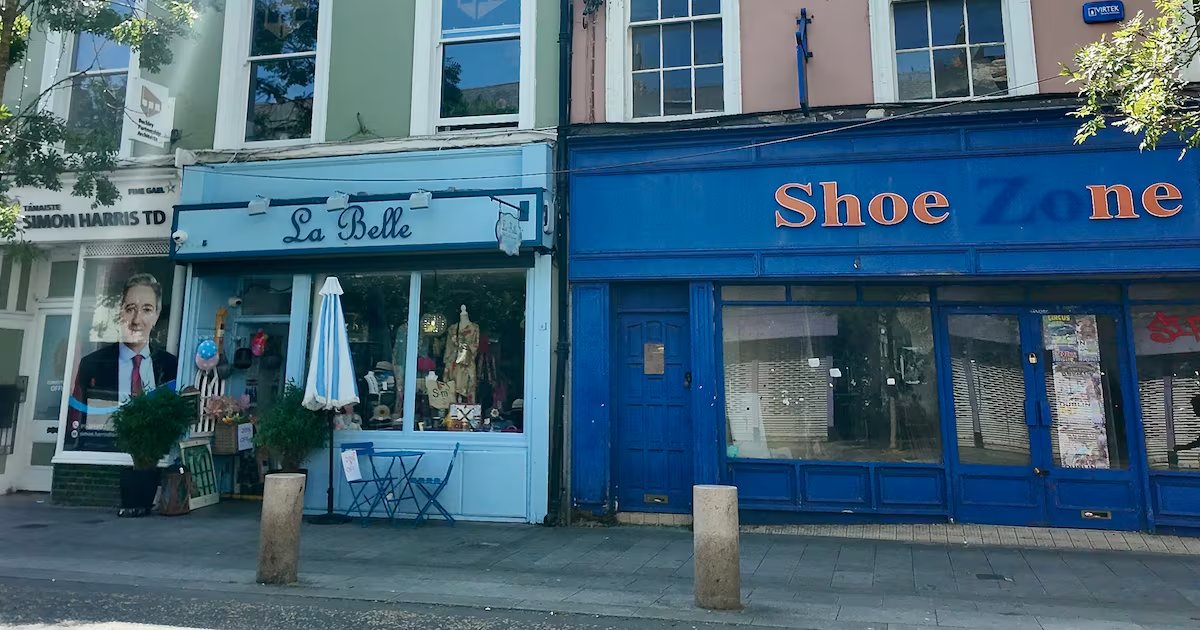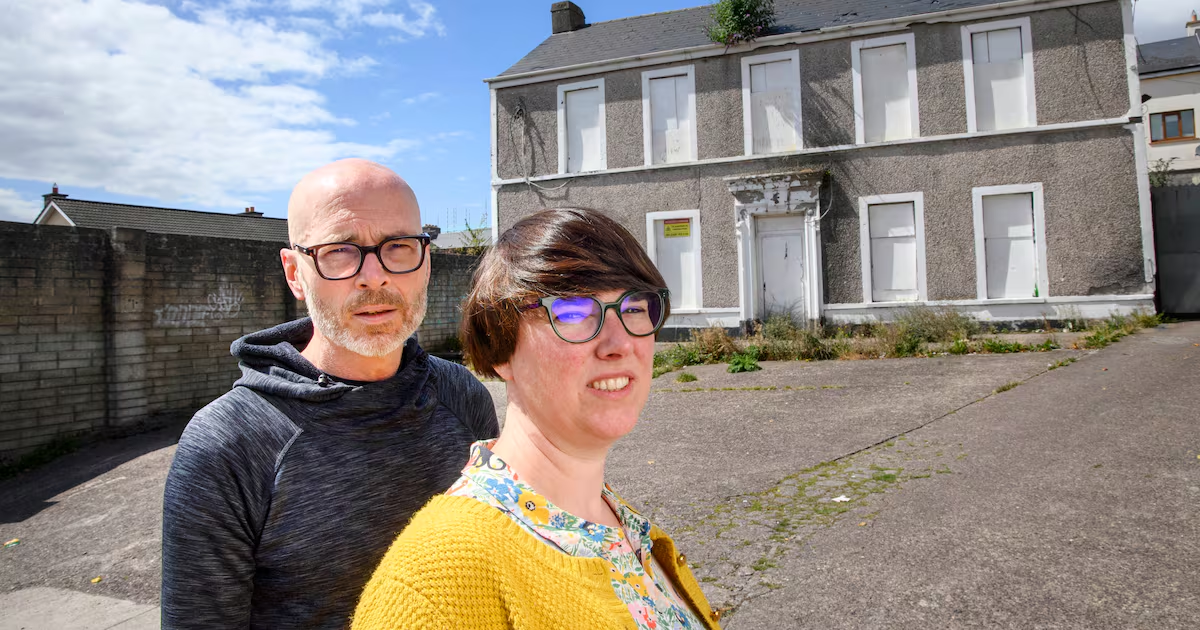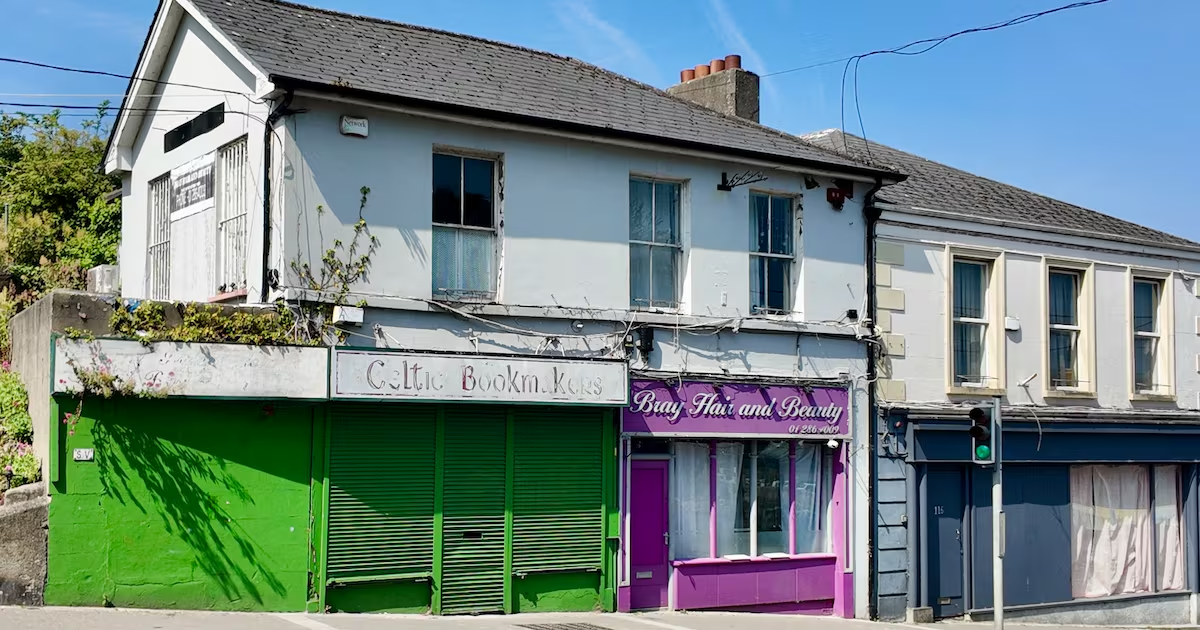
The Irish Times today begins a series, Derelict Ireland, examining the vacancy and dereliction that have taken hold in many town centres across the country. It opens in Bray, a large and prosperous commuter town on the north Wicklow coast, with further reports to follow from towns in Munster, Connacht and Ulster. As the series shows, these problems are not confined to one region or to one kind of town.Bray illustrates how uneven decay can be. Its seafront is thriving while its main street features a lengthening line of shuttered units, some empty for years. None of them are on the county’s near-empty derelict sites register. The town has a vacancy problem rather than a dereliction one, and much of what afflicts these streets falls below the legal threshold that triggers official action.The State is not short of instruments to address the problem. A derelict sites levy, soon to be replaced by a tax collected by the Revenue Commissioners, is meant to penalise owners who let buildings rot. A vacant homes tax targets empty dwellings. Refurbishment grants encourage people to bring old properties back into use, and tax reliefs and above-the-shop conversion schemes aim to put residents back in the heart of towns. A national Town Centre First policy coordinates the effort. Yet progress has been slow. Levies go uncollected, grant approvals far outnumber completed homes, and the reliefs aimed at reviving main streets reach only a handful of designated towns.This is not simply a failure of Ireland’s administration and legislation, although that is a significant contributory factor. The same hollowing out can be seen across the industrialised world. Britain’s high streets and America’s downtowns are contending with the same forces: the growth of online retail; out-of-town shopping; the retreat of bank branches and the shift to remote work. There is little chance any of these trends wuill be reversed.The international picture exposes a factor Irish debate can sometimes fail to confront. The urban centres that struggle most are often the ones with weaker local economies, thinner demand and spending that has drained away elsewhere. Bray’s difficulties differ in kind from those of a depopulating western town, and the solutions will also be different.The most promising responses are not about restoring the main street to what it once was. The shops that online commerce has made unviable will not return. The realistic future lies in transformation, converting empty retail and the dead space above it into homes, services and cultural and community uses, and filling idle units in the meantime with temporary occupants paying reasonable rents. Regeneration is possible, but can only be achieved by accepting that the town centre must become something new.
The Irish Times view on the future of towns: new vision is required
Derelict Ireland series highlights hollowing out across the country
444 words~2 min read