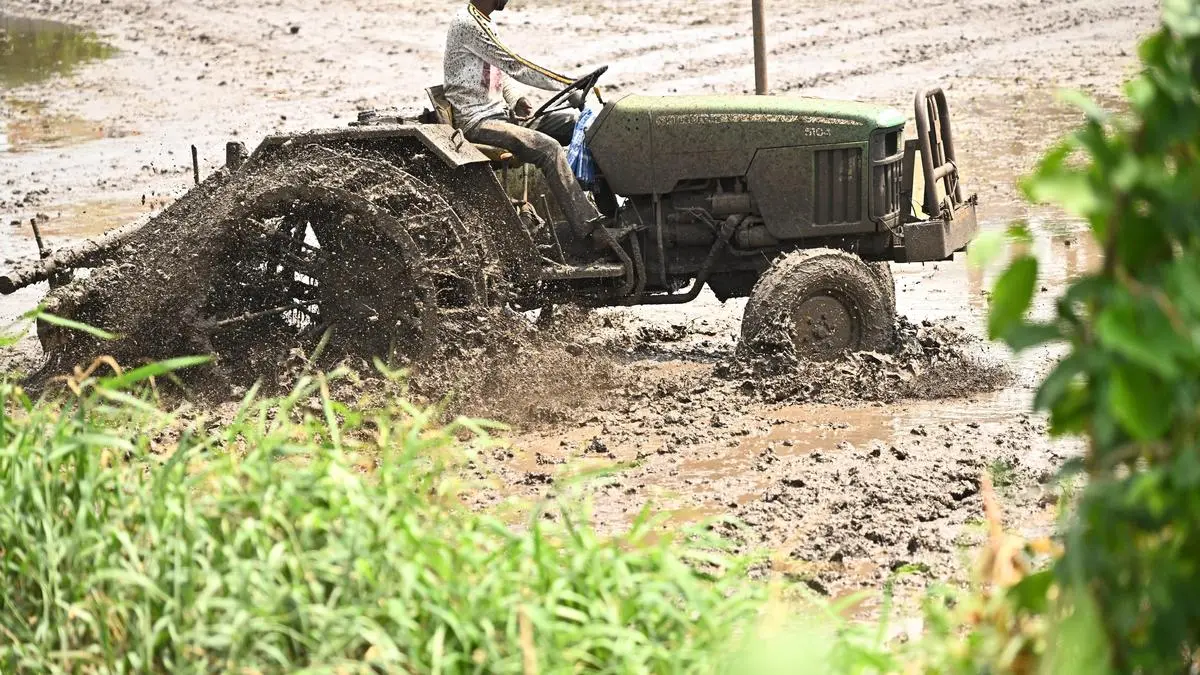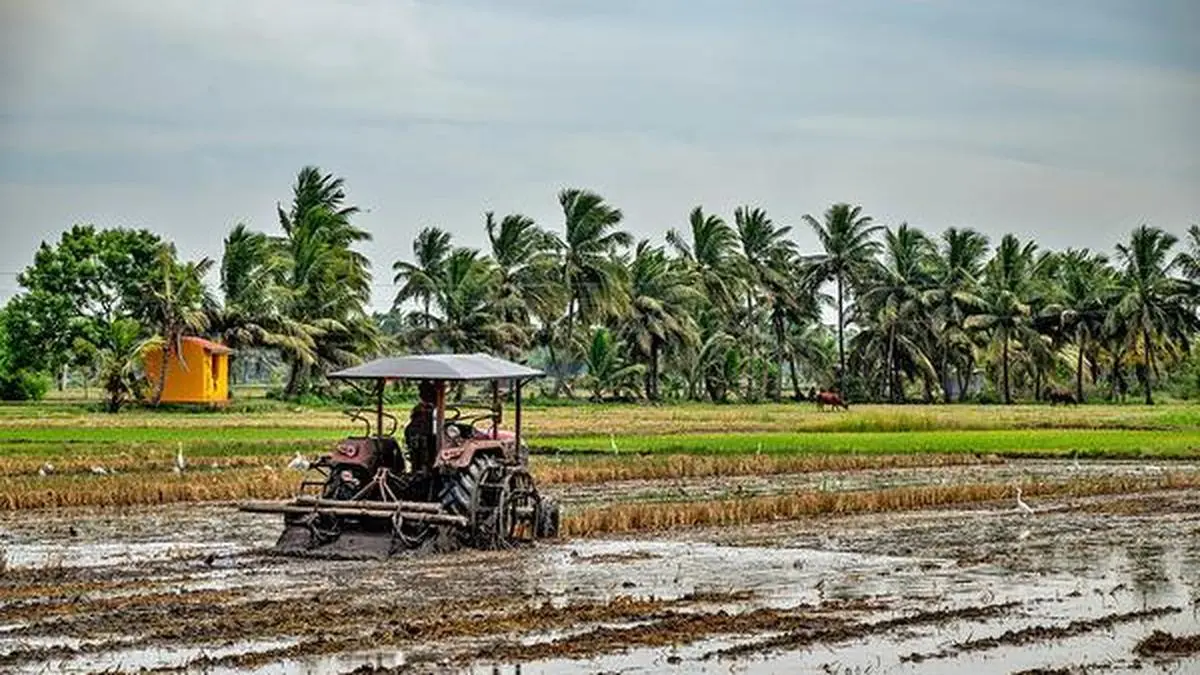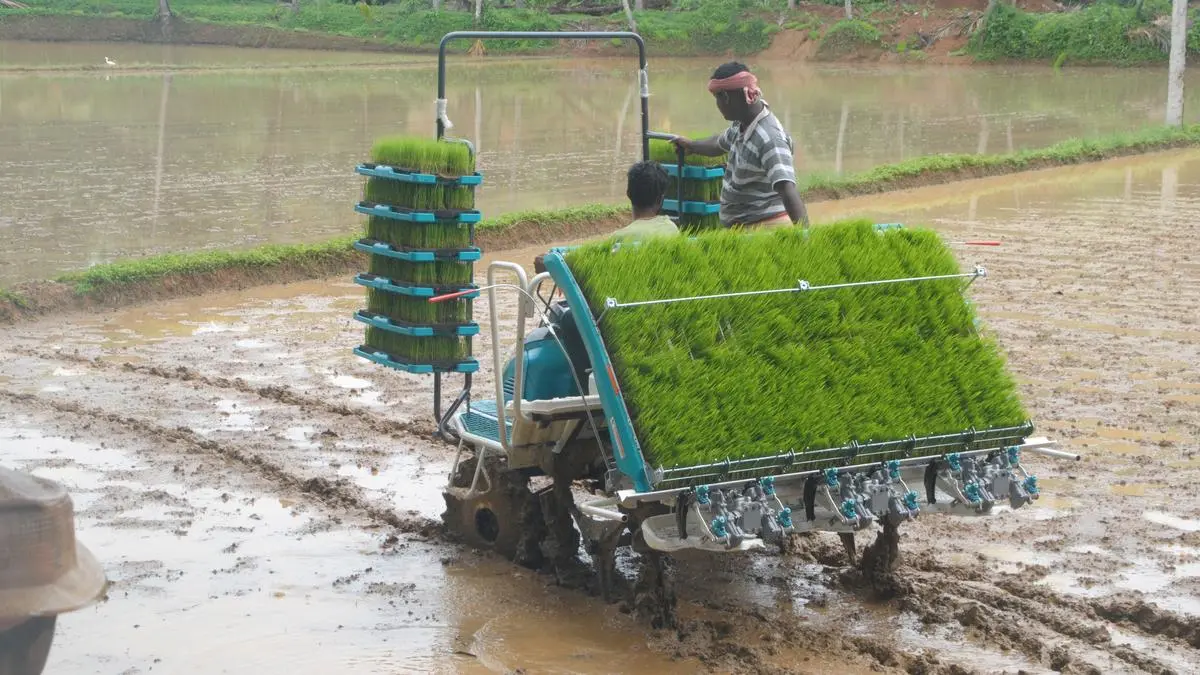
Roughly 53 per cent of India’s non-tractor agricultural machinery imports come from China, and the cost gap is real.
| Photo Credit:
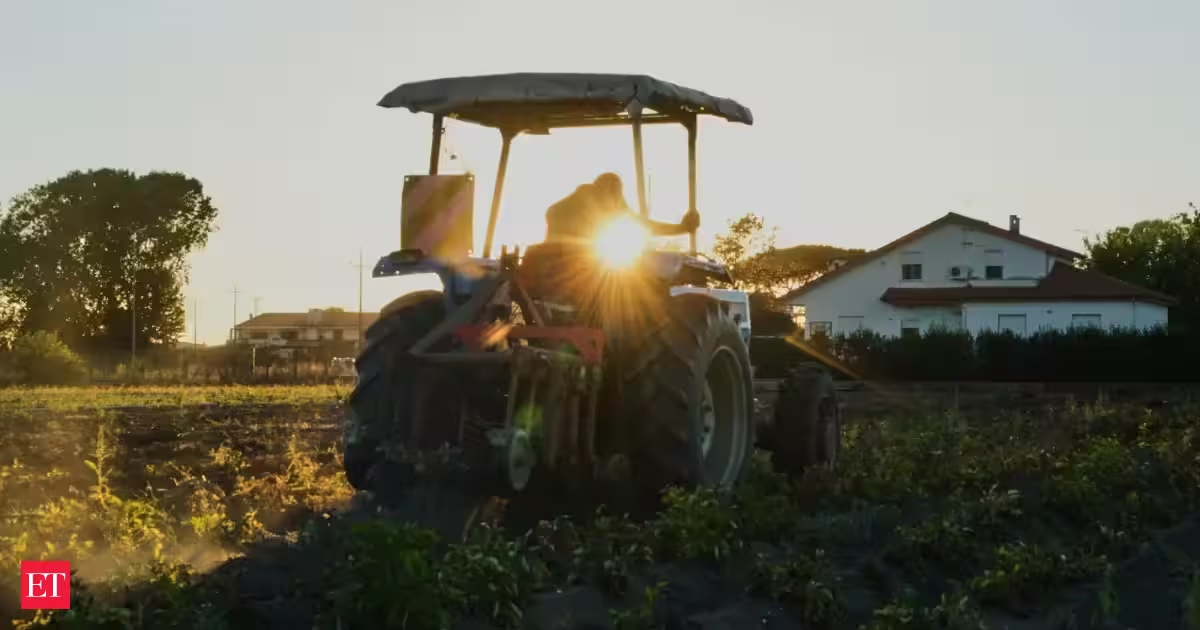
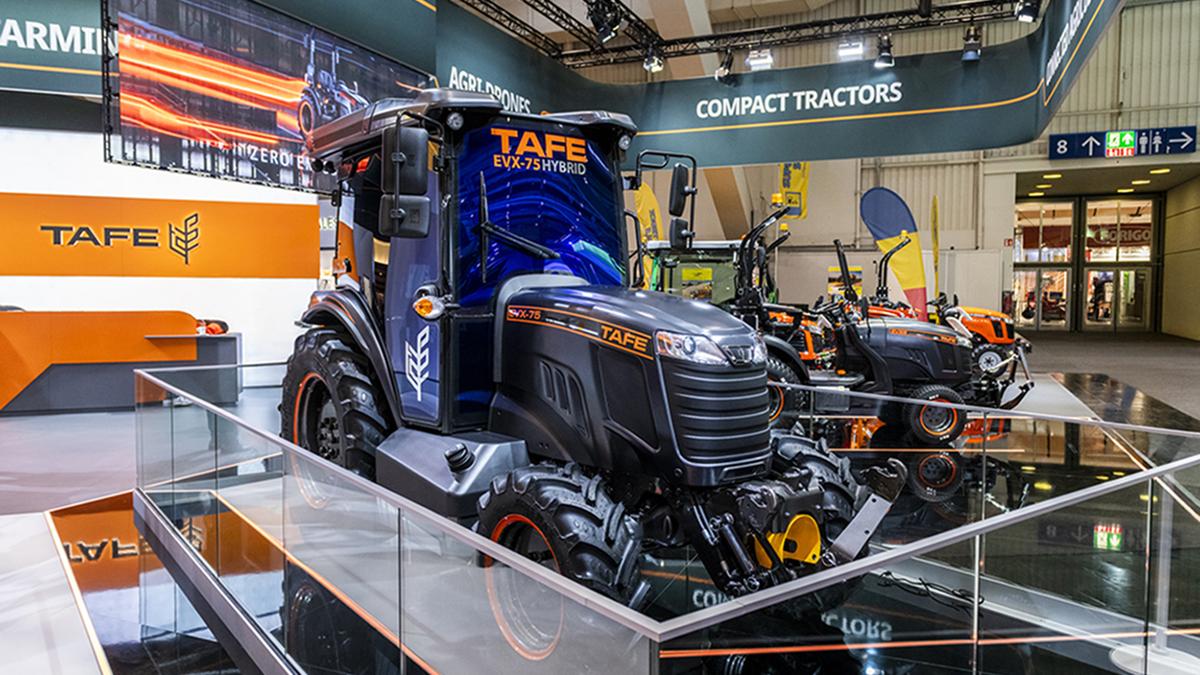
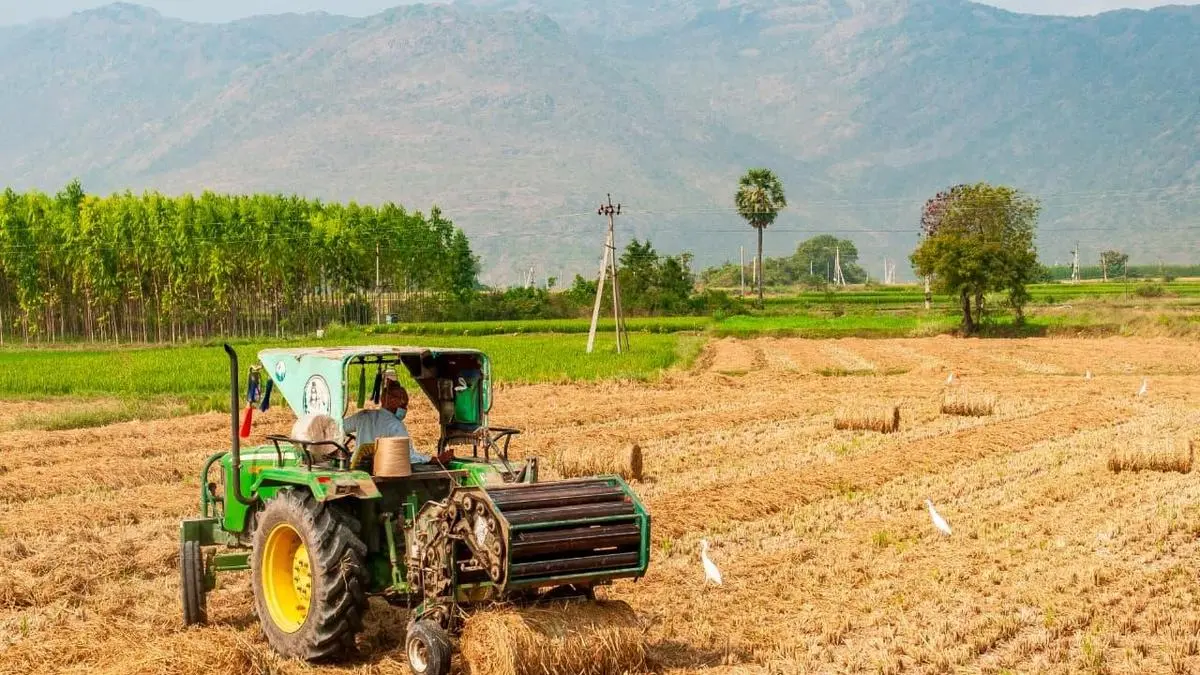
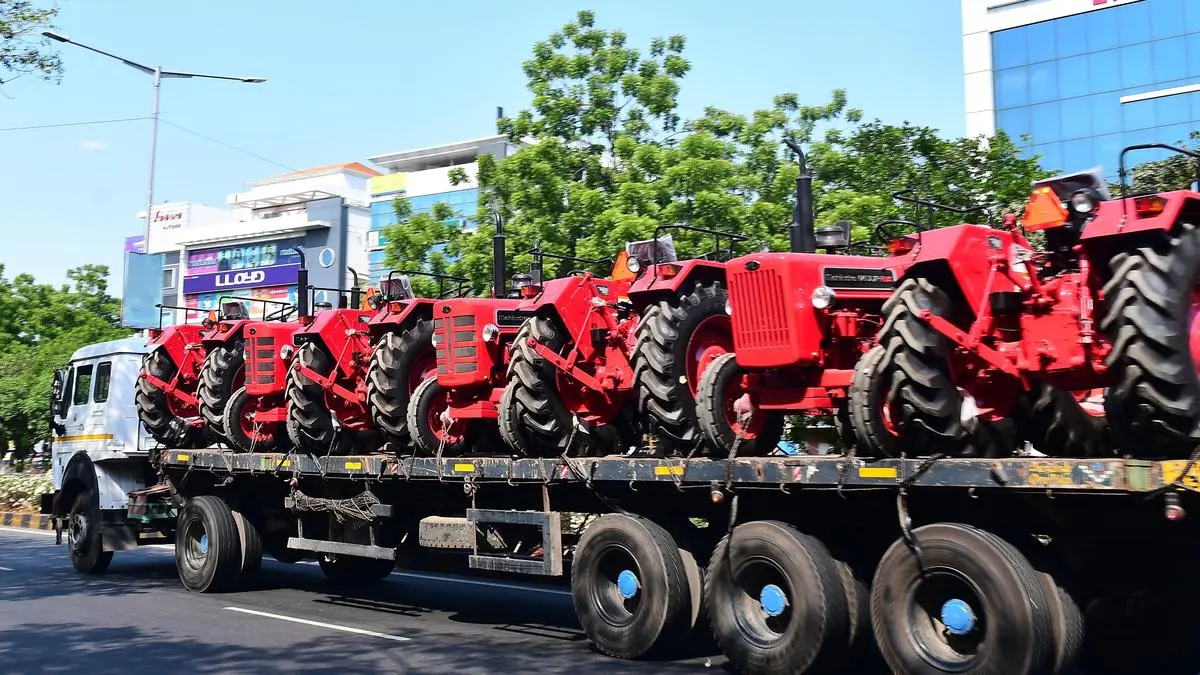
India has just recorded its best tractor year ever. Domestic wholesales in FY26 touched 11,60,231 units, up 23.5 per cent, and retail volumes crossed ten lakh for the first time. Going by the number the industry has always used to keep score, Indian agriculture is mechanising rapidly.Going by every other number, it is not. Overall farm mechanisation is stuck around 47 per cent, against roughly 60 per cent in China and 75 per cent in Brazil. A parliamentary committee put it bluntly: at current rates, reaching 75-80 per cent would take 25 years. The problem is structural. About 86 per cent of India’s operational holdings are under two hectares, and a 45 HP tractor solves nothing on a plot that size.The numbers worth watching sit elsewhere in the catalogue. India’s largest small-farm machinery maker sold over 11,000 power weeders in FY26, up 52 per cent, and grew reaper volumes 44 per cent, against 18.6 per cent growth in its domestic tractor business. The fastest-growing category of farm equipment in India today is the machine of 1.5 to 7 kW that one person walks behind.No self-propelled combine or boom sprayerElectrification is arriving in exactly this band, from the bottom of the power range upward rather than from the tractor down. In November 2025, a major Indian manufacturer unveiled its first electric power tiller and power weeder; smaller firms have been selling battery weeders for a while now. There is still no battery-powered self-propelled combine or boom sprayer on the market, and there won’t be soon, because above 40 kW the energy arithmetic does not close. Below 7 kW, it does.The physics happens to suit these machines. An electric motor delivers full torque from zero speed, which is exactly what breaking compacted soil demands. It carries no partial-load penalty, whereas a small diesel spends much of its working day at its least efficient. Speed control is finer, which matters when working between crop rows. There is no exhaust, which matters inside a polyhouse. And noise and vibration drop sharply on a machine somebody holds for six hours at a stretch.Policy, whether by design or not, has converged on the same segment. The Sub-Mission on Agricultural Mechanisation has released ₹9,404 crore since 2014-15 and set up over 27,500 Custom Hiring Centres and 25,600 Farm Machinery Banks. GST on farm machinery came down to 5 per cent in September 2025, taking roughly ₹11,875 off the price of a 13 HP power tiller. And 10.9 lakh standalone solar pumps now run under PM-KUSUM. None of this takes the cost of farm power to zero; batteries are capital, and batteries get replaced. But on a farm already generating its own electricity, the marginal cost of the next hour of machine work approaches nothing, and shared ownership absorbs the capital a smallholder cannot carry alone.Tougher question that it looksWho wins this segment is a harder question than it looks. In a diesel weeder, the engine is a catalogue item. Bolt a rated 5 HP engine onto a frame and the machine performs more or less as the engine does. Electric machines do not work that way. Runtime, stall behaviour in hard soil, how hot the motor runs by the third hour: these come from the motor, controller, battery and cooling path working together, not from any component alone.Component-level import substitution misses this entirely. A motor’s rated output is quoted at a stated ambient temperature, cooling condition and duty cycle. Put the same motor in a field at 45°C, under continuous load, with dust caked on its fins, and usable output can be a fraction of the datasheet figure. Whether the machine pushes through a hard patch or stalls depends on how the controller’s current limits and thermal fold-back are tuned to that particular motor. Source the two from different catalogues and nobody owns the derating curve. The machine underperforms, and each supplier points across the interface at the other.Roughly 53 per cent of India’s non-tractor agricultural machinery imports come from China, and the cost gap is real. It will not be closed by swapping one imported part for a domestic equivalent. It will be closed by manufacturers who design motor, controller, battery packs and thermal management as one system, against an actual agricultural duty cycle.India’s next decade of farm mechanisation will not be counted in just tractor units.The writer is Co-Founder and CEO of Naxatra Labs, which designs and manufactures traction motors and controllers.Published on August 15, 2026