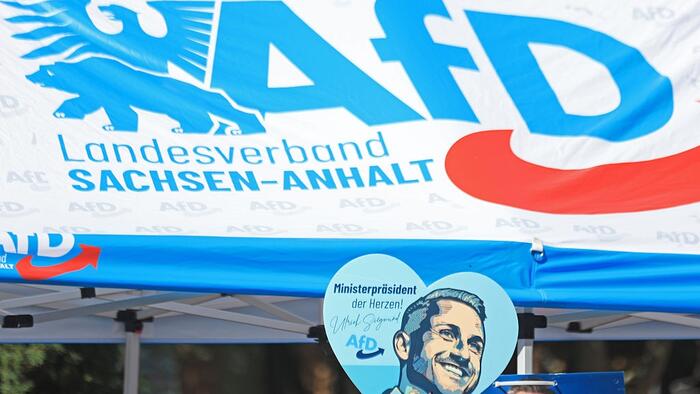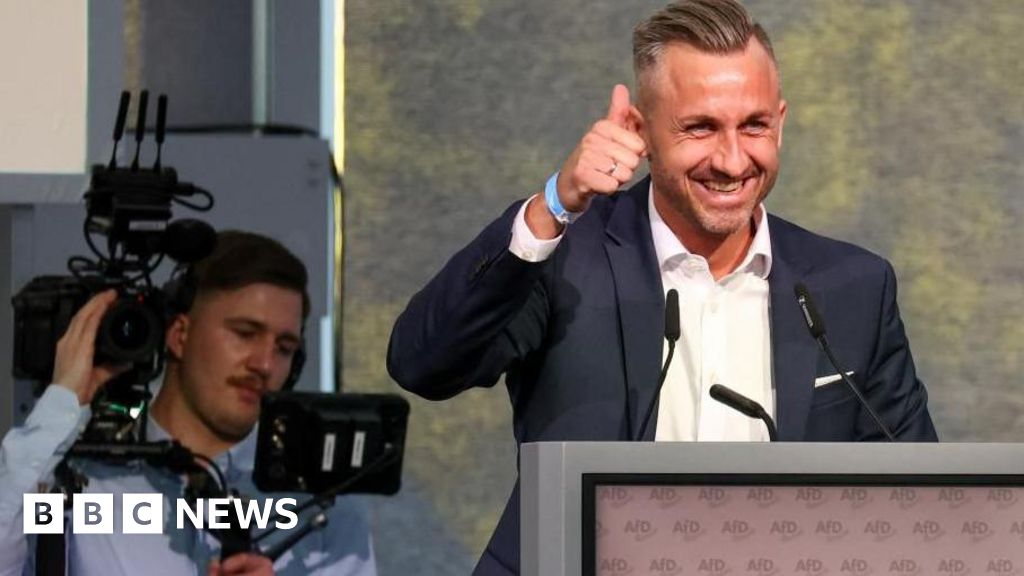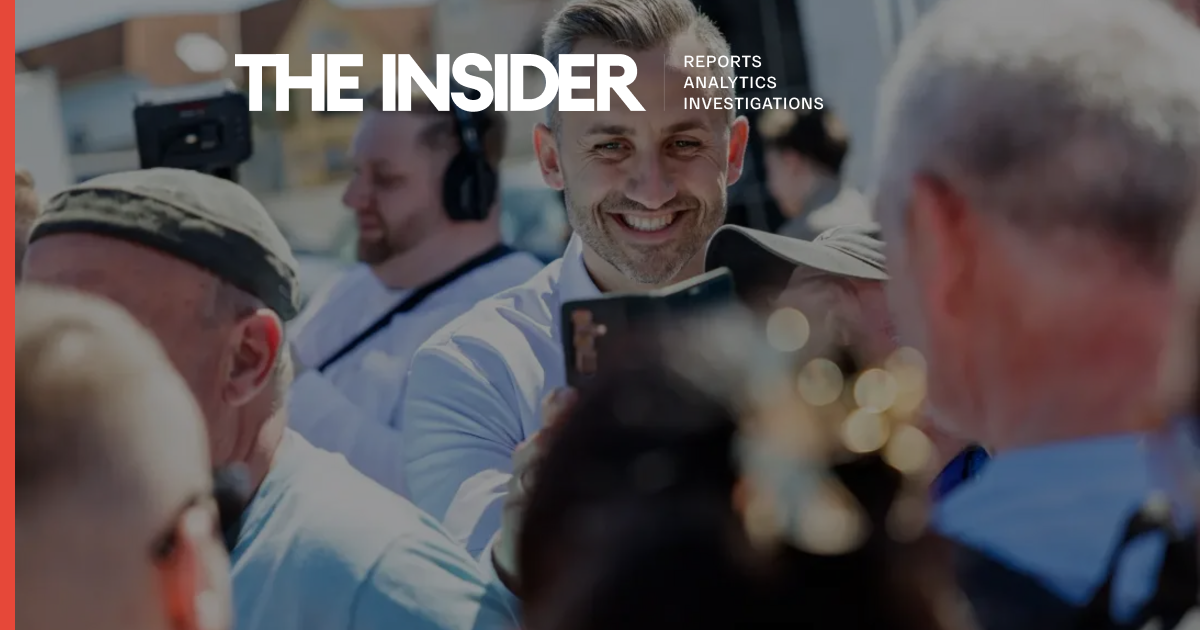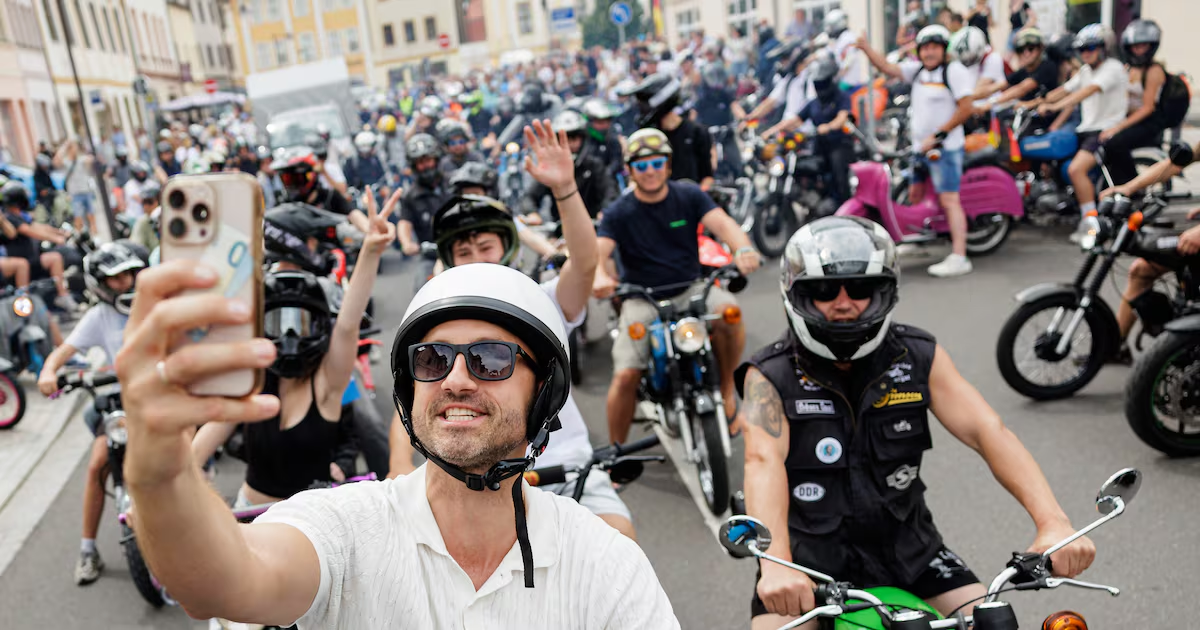
Germany’s earliest risers live in the eastern federal state of Saxony-Anhalt, home to 2.2 million people and the century-old Bauhaus design school.Surveys show people here rise at 6.39am, nine minutes before the German average, though no one rises as early as Saxony-Anhalt’s bakers – for now at least.Master baker Manfred Stelmecke, who is 59, has worked nights for 43 years in Borne, 20 minutes south of the state capital, Magdeburg, to supply his neighbours with fresh bread and breadrolls.Now these rolls are part of a culture war that could swing the Saxony-Anhalt state election next month – and shatter postwar German democratic norms.The far-right Alternative for Germany (AfD) is on course to win the September 6th election with 41 per cent support in polls, the highest in the country. It is ahead by running a campaign less about facts than feelings: of humiliation and anger at being the losers of unification.In this narrative the AfD has positioned itself as defenders of local pride against western German arrogance and heartless political elites in Berlin.And that is where the rolls baked by Manfred Stelmecke and other eastern craft bakers come in.These East German-style breadrolls, or Ostbrotchen, are firmer and more compact but were largely replaced in the post-unification years by inferior western German breadrolls packed with additives and air.These days Stelmecke, head of the Saxony-Anhalt bakers’ guild, says surviving eastern German bakeries such as his – and their Ostbrotchen – are facing extinction. Rising labour, welfare and energy costs have forced them to increase prices, triggering in turn a defection of remaining customers to cheaper supermarket in-store bakeries.“The politicians do their politics with no thought for bakers,” said Stelmecke, listing the names of fellow ex-bakers behind abstract bakery insolvency headlines. “It’s emotional all right, but when you’re working night and day, you have no time to brood on it.”Not so the Saxony-Anhalt AfD: its 156-page election programme bristles with brooding over wrongs done by established parties to the people of Saxony-Anhalt – in particular their small businesses. To halt the insolvency wave, it is promising lower taxes and to push for Germany’s return to cheaper Russian gas, switched off after the 2022 invasion of Ukraine.Economists say the plan, with generous extra social spending alongside tax cuts, would blow a €2 billion hole in the annual state budget, €1,000 extra debt per citizen.But such numbers are abstract for people in a state with Germany’s second-lowest average monthly gross income of €4,000. At nearly 9 per cent, meanwhile, the state jobless rate is well above the 6.4 per cent national average.AfD's main candidate in the Saxony-Anhalt state election, Ulrich Siegmund. Photograph: Ronny Hartmann/AFP via Getty For the AfD’s youthful state leader, Ulrich Siegmund, facts and figures have no place in his campaign, which has been run on feel-good and feel-bad emotions.The 35-year-old, born a year after the Berlin Wall fell, has 640,000 followers on TikTok, the most of any German politician, and his feed shows why. A particular hit have been clips of rides on vintage Simson-branded motorbikes, once manufactured in East Germany.“We want to bring back the old German strength,” he promised this week. “A Germany where Christmas markets don’t have to be refashioned as fortresses, where we are safe and where things get better.”Other political parties in Saxony-Anhalt insist they will not co-operate with the AfD, though the AfD won’t need them if it secures an absolute majority. That in turn depends on a series of variables, including turnout and the number of parties elected to the new parliament.Political observers see Siegmund’s success in a two-prong approach: driving a fresh wave of East German nostalgia or “ostalgia” for a simpler and better time, shot through with its own radicalised and emotionalised online rhetoric and framing.“They are profiting from a general bad atmosphere in the state,” says Dr Benjamin Hohne, a political scientist, who sees an extra boost from established parties adopting AfD hardline rhetoric on key issues such as immigration. “That means that the AfD can no longer as easily be stigmatised and put in the far-right corner.”Three weeks to election day, Berlin politicians have sounded the alarm, fearing Germany’s first AfD-led state could hobble federal co-operation.Some want an outright AfD ban while others want public debate on the post-unification years that, with three decades’ distance, reflects more empathetically on the East German experience.“In West Germany, democracy began with the economic miracle; in East Germany, with mass unemployment,” said Julia Klockner, Bundestag president, on Thursday. “Fear of losing social status, combined with the hopelessness and lack of prospects felt by many families, became deeply ingrained in the collective consciousness.”Tapping that collective consciousness of wounded pride, through cultural touchstones such as Ostbrotchen and Simson motorbikes, is the AfD’s winning strategy.Back at his bakery outside Magdeburg, Manfred Stelmecke says the AfD is “unelectable” for him because of its pro-Moscow policies, in particular its refusal to back Ukraine in its four-year war against Russia.“We’ve had enough decades here where Russia set the tone,” he says, a nod to the cold war era, “and we don’t need a party in power that will give us more of the same.”
Right-wing AfD on a roll ahead of crucial election as it taps into East German nostalgia
Berlin politicians fear Germany’s first AfD-led state could hobble federal co-operation
853 words~4 min read