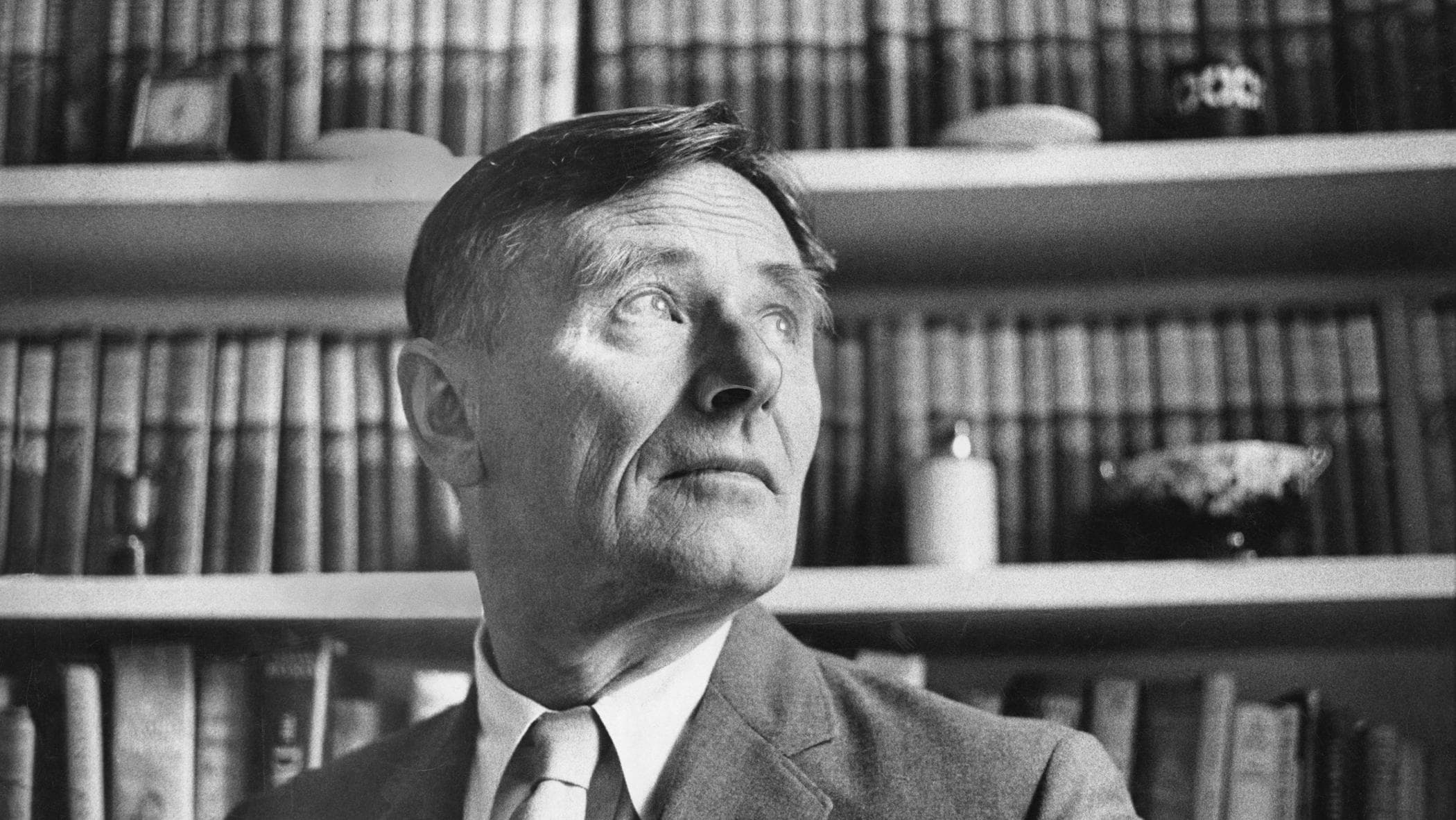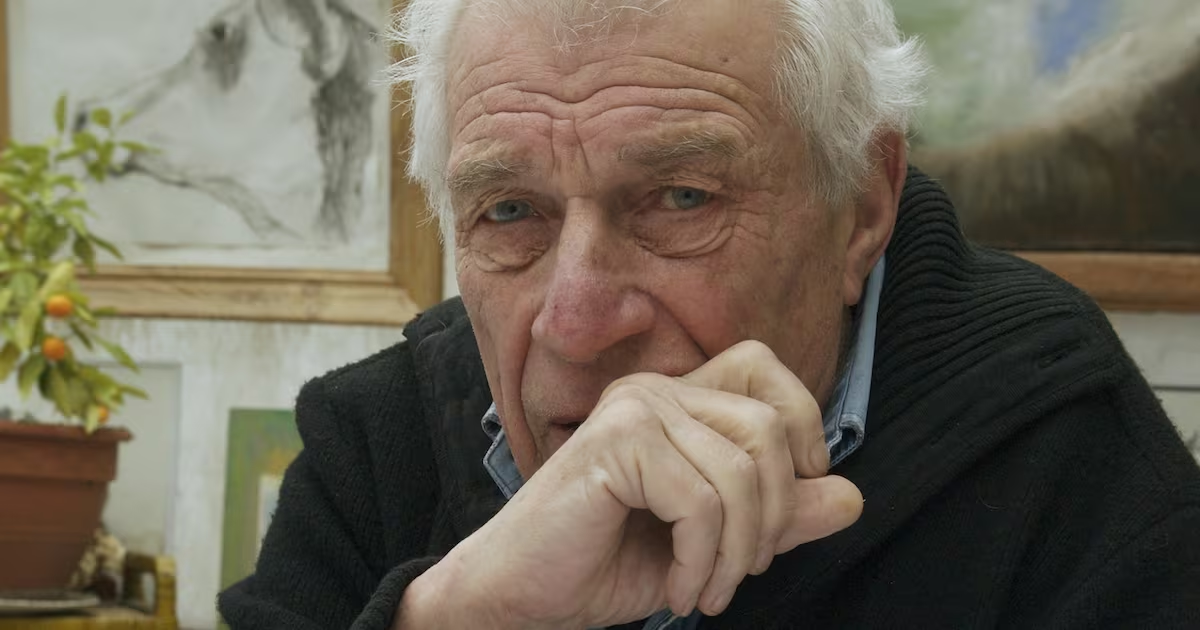
John Berger: From Life Author: Tom Overton ISBN-13: 978-0241262528Publisher: Allen LaneGuideline Price: £ 25; 400ppI first met John Berger in the pages of his novel G. as I read them on Gola Island in the summer of 1973. He was 46, living in Geneva and known primarily as a Marxist writer on art. G. had just won the Booker Prize. He’d shocked the room and the publishing industry at the ceremony by pledging half his prize money to the London Black Panthers. G. had been spun into life by his listening to Mozart’s version of the story of Don Juan. I didn’t know any of this. I was just taken over by the hardness of his thought, the sensuality in his perceptions, the grace and scale of his imagination, his epical depictions of mass action and aeronautical heroics, his clarity about desire and the way he did things in this book I’d never seen done before (or since). Amid the narrative there appeared as if from the sky highly compressed maxims or theses positing truths about history. I didn’t think that was allowed. And you really do meet him, for he too appeared amid the narration, telling you of his struggle to make the book and reach us, sometimes candlelit in a room in Paris. The book was not a performance seeking admiration; instead, he broke the fourth wall of the page in an effort at communion with those who were reading him. Aesthetically it was revolutionary; ethically it was democratic. Though I was a long way from writing one, he opened the form of the novel for me. It was a kind of permission.I went on reading him, and still do. Each time, whether essay, documentary, fiction or something unclassifiable, I feel him bearing down on his subject, going further and deeper, opening the form, reaching for essence. Michael Ondaatje said of him that his works had “broken the vessel they were written within”. And each time he is there in the fore- or background. When he moved to the Alps and began to write of the last peasants there, he was nervously present in the first book, Pig Earth, as the urban English writer learning of the life along with his readers, sensing his distance and ignorance as he looked at the killing of a pig or the mating of goats. He stayed, he helped with the harvests, he attended weddings, he had a child. By the time he wrote the stories in Once in Europa he was more at ease, more knowledgeable, and in the novel Lilac and Flag he was confident enough to disappear into the voice of an old village woman. These three books, collectively known as Into Their Labours, are a record of the leakage of village into metropolis, of meaning into humiliation and incoherence. It was tenderly and tragically rendered, but when he vanished I missed him.There is a profound and rare seriousness in his work. In About Looking and the television series Ways of Seeing, but almost everywhere else too, he examines the fundamental human act, that of perception, the passage of the imprisoned self into the outer world. He strives to see the other – nature, art, people – in their particularity, in their own light, as autonomous, while paradoxically seeking union with them. The act of perception is sensual, sometimes sexual, nearly always political. Is it one of reduction and appropriation, or of solidarity? It is up to us to choose. He sees and names the sprawling, endlessly engorging monstrosity of corporate capitalism. He describes the destruction and pain it brings about, and hopes for deliverance through resistance. Susan Sontag wrote of him, “...not since Lawrence has there been a writer who offers such attentiveness to the sensual world with responsiveness to the imperatives of conscience. Less of a poet than Lawrence, he is more intelligent and more citizenly, more noble.”There is in the openness of his forms, their lack of fixedness, his striving to get ever closer while telling you of his efforts to do so, an invitation to companionship. He leaves room for you. In Ways of Seeing, he even suggests to his audience that they be sceptical of what he has said. Once, after not reading him for a while, I arrived late at a house in Dublin where I would stay for a few days. Everyone was asleep, but they’d left out a glass of wine for me. I saw a copy of Portraits, a collection of Berger’s writings on art put together by Tom Overton, author of the biography under review, and began to read his essay on Goya. It both shocked and exhilarated me. I’d somewhat forgotten the tremendous force of his intellect, the weight of a life of seriously looking and thinking being brought to bear on his subject, and his accompanying modesty. Let us look at Goya together, the essay said.Overton came into contact with him when the British Library put him in charge of the papers John had donated. When I heard that an archivist who had not previously written a book was to be the author of the official biography, I wondered what he might make of it. Knowledge of the minutiae of a life doesn’t guarantee an illuminating biography. I’d taken more to Anthony Cronin’s biography of Samuel Beckett than the academic James Knowlson’s because Cronin, like Beckett, had faced the blank page in an attempt at a creative act. [ John Berger: a tribute by Timothy O’GradyOpens in new window ]But you sense from the opening of From Life that Overton has not only thrown aside reverence or being intimidated, he has carried out the task by breaking the biographical vessel he is writing within. He faces Berger, politically and philosophically, as an equal. In this it too is a democratic text. He interrogates, as well as records. His book is less a receptacle of information about a life, an important life for many around the world, than a set of open engagements. Sometimes John becomes “you”; sometimes the fourth wall is broken and the biographer becomes “I” amid the narrative, as John does in his fiction. It is a biography written, to a degree, in its subject’s manner. There is a feeling of fluidity to this book, of dialogue, of it moving towards John while leaving an opening for the reader to move with it, with the possibility of all, biographer, subject (or subject’s reputation), and reader, being changed in the process. From Life is an apt title. A drawing from a photograph is flat, abstract, virtual, a collection of details rather than possessed of the unity of a living face. A drawing from life is the record of an encounter.Overton met John in 2010. That gave him nearly seven years with his subject and another eight years to complete the research and writing. Sometimes late at night a call would come from the Alps or Paris. “Let me tell you a story ...” John would begin. That’s a long labour. To write the book, Overton gave himself the task of knowing the art, the thinking and the people that most impacted his subject. This allowed him to keep before himself the question: what drove him? It was, from the evidence of this revealing book, a search for essence and for unity, a dissolving of barriers between bodies, between the striving living and the dead, and between himself and the readers of his creations.I did not agree with, or understand, everything in From Life. Some passages, just a few, seemed a draft short of clarity. I thought he might have been better off just depicting, and not judging, the profusion of John’s romantic liaisons or his unusual, oft-repeated conducting of two fully fledged romantic domestic relationships simultaneously with the full knowledge of all parties involved. The assessment in From Life that John is a more important essayist than storyteller seemed both harsh and wrong when he likely felt that more was at stake in his fiction and when, in my opinion, the stories in Once in Europa can be mentioned with Chekhov’s. And though the dead were both politically and personally important to him, there may be too much preoccupation with them in a book about someone who was so intensely alive. But I do not agree with or understand everything in John’s work either.[ Obituary: John BergerOpens in new window ]He reached 90 years. He drew and thought and wrote to the end. His work lost some of its earlier hardness, becoming warmer, rounder and maybe sweeter. He perhaps laboured less but risked more. He said so himself, twice, in Here Is Where We Meet, a late work: “I risk to write nonsense these days.”About six months after he died I went to visit Nella Bielski, the Russian actor and writer who was his last great love, in the house they shared in Antony, a suburb of Paris. His motorbike, ready, it seemed, to be mounted, was in the basement, his pens, notes and drawings were on the table in his work room made of glass. His jackets hung on a rack. On a bookshelf beside the table where I ate a fish dinner with Nella was a small image propped against the spines of books, not of Marx or Walter Benjamin, but of Charlie Chaplin. The feeling of a man and woman living intimately was still present. “I feel he’s still here,” Nella said. She told me he would come from the glass room with newly written pages and, when she had read them, ask, “Am I mad?”In Here Is Where We Meet he walks in the cities of Europe with departed souls who were important to him – a teacher, his mother, a lover, Rosa Luxemburg. He sees that their understanding of experience differs from that of mortals. Despair is the enemy of the living while hope is the enemy of the dead, his mother informs him. The dead know things he doesn’t and aren’t always easy on him. “I always put life before writing,” he says to his mother. “Don’t boast,” she replies. Perhaps both the simplicity and the enigmas of his late work are the products of his efforts to understand things the way he imagines they do. He doesn’t penetrate, or burrow for the root analytically, as he once did. Instead he reaches for something not quite in focus. He risks foolishness. “Supposing now I don’t understand what I note down[?]” But as he says himself to his dead teacher in Krakow, “About mastery there is something sad, indescribably sad.”Timothy O’Grady’s works include Motherland and I Could Read the SkyFurther reading This is the centenary year of John Berger’s birth and publishers are responding with new editions of many of his books. Several have introductions from younger generations. Ben Lerner introduces G. for a New York Review of Books publication; Jo Hamya, not yet 30, offers a vivid and imaginative response to the same book for Bloomsbury. Bloomsbury is issuing five titles, including a collection of non-fiction selected and introduced by Teju Cole. Berger collaborators Simon McBurney and Anne Michaels introduce And Our Faces, My Heat, Brief as Photos and Here Is Where We Meet respectively. Verso is sending out 13 titles from across Berger’s writing life. Tenement Press is republishing poems by Brecht on the theatre translated by Berger and his wife/collaborator Anya Bostock. John Christie, who co-made with Berger the unusual, intimate and very beautiful I Send You This Cadmium Red, is publishing through his Objectif Press a record of himself and Berger visiting, in the company of two Benedictine nuns, Le Corbusier’s Notre-Dame du Haut chapel at Ronchamp.
John Berger: From Life. Biographer Tom Overton, like his subject, breaks the vessel he is writing within
Revealing book is the record of an encounter with a life that was important for many around the world
1,950 words~9 min read