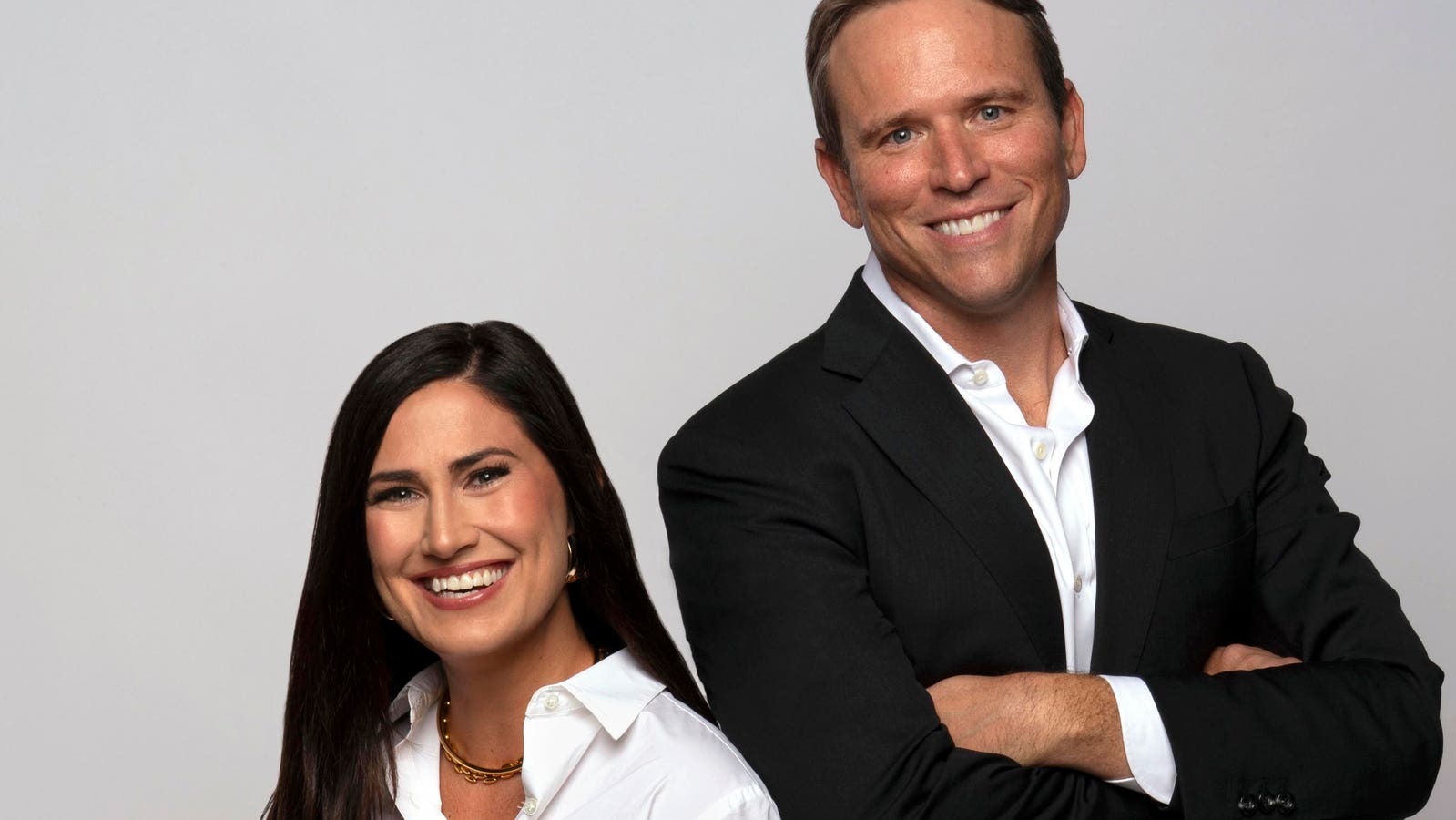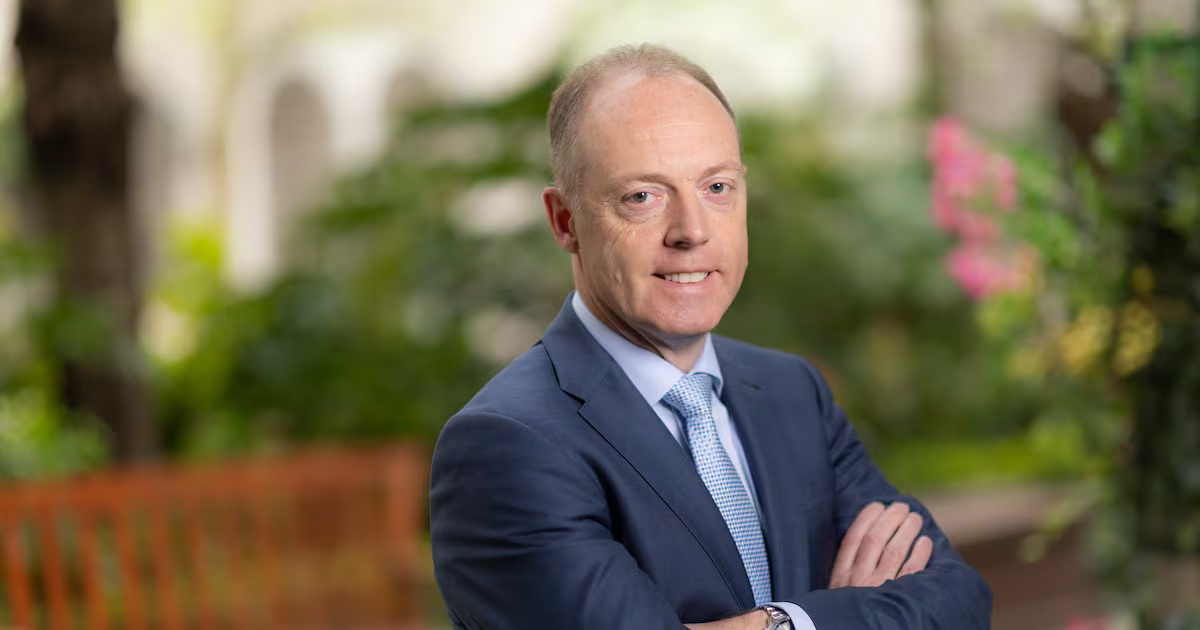
Paul, Gary and Mike Martin, Martin Group: ‘We were fortunate to grow up in an entrepreneurial family’Paul, Gary and Mike Martin are the three co-founders of Martin Group As brothers and business partners, Paul, Gary and Mike Martin are the driving forces behind Martin Group. Having grown up in a family of entrepreneurs, they developed a passion for business from an early age, launching small ventures while still at school.Martin Group invests in and develops large-scale residential and commercial real estate, as well as operating a wide range of businesses, including hotels, shopping centres, food production, manufacturing, construction, car parks and technology platforms, as well as travel. The group operates throughout the UK, Ireland and, more recently, has expanded into continental Europe.What vision/lightbulb moment prompted you to start up in business?Our mum and her family owned hairdressing salons, and our dad and uncle built and ran a construction business, so business was discussed around the kitchen table constantly. It felt natural to follow the same path and, from the age of 10, we were encouraged to start small ventures, from grass-cutting and car-boot sales to producing and selling Christmas calendars.What was your back-to-the-wall moment?The financial crisis from 2008-2012 fundamentally changed our business. At the time, we were almost entirely focused on real estate, so the downturn forced us to rethink everything. We basically had to start over again. Rather than standing still, we reinvented ourselves and relocated from Northern Ireland to London in search of new opportunities. That experience taught us the importance of diversification, resilience and never becoming complacent.To what extent does your business trade internationally? Today, most of our activity is across the UK and Ireland. However, as we’ve expanded into new sectors over recent years, we’re increasingly working across other markets in Europe.We still feel we’re at the beginning of that journey and see considerable opportunity to build on it. In particular, within our travel business we’re looking to establish a presence in the Americas over the next six months.How much has your company invested in AI and how has it impacted on the performance of the business?We’re early but active. We’ve taken a ground-up approach, auditing every role to find where AI can take out repetitive work, and building it into daily operations. However, a core part of our business is relationships and conversation, which sits outside what AI can do. AI does allow our teams to free up their time, so they can focus on what drives the business forward.What is your greatest business achievement to date?Having built a diversified group that employs around 1,000 people is something we’re incredibly proud of. Equally important has been creating a talented central leadership team that can support businesses across multiple sectors. Seeing people develop careers within the group, while continuing to grow and diversify the business, has been our greatest achievement.What were the best and the worst pieces of advice you received when starting out?Two principles have stayed with us throughout our journey: always think carefully about protecting the downside, and surround yourself with capable, experienced people who challenge your thinking. The least helpful advice has generally come from people whose incentives weren’t fully aligned with ours. Particularly in property, there can be pressure to proceed with a transaction regardless of whether or not it stacks up. We’ve learned that patience and discipline are often more valuable than simply doing the next deal.What piece of advice you would offer to an entrepreneur starting out?Build a great team that you trust, then spend your time on what truly moves the business forward. And stay hungry and humble. Chris Horgan, Dexgreen: ‘It’s difficult to scale purely within Ireland’Chris Horgan is the managing director of Dexgreen, a Cork-based manufacturer of connectivity components for digital infrastructure Chris Horgan is managing director of Dexgreen, a Cork-based company that designs and manufactures connectivity components for digital infrastructure – including broadband networks and data centres.The company works closely with telecom operators and network builders to develop solutions aimed at improving reliability, reduce faults and lower long-term costs. Over time, Dexgreen has expanded from its roots in copper connectivity into newer technologies such as optical fibre connectivity, adapting its products to suit the needs of different markets and investing significantly in its manufacturing base in order to underpin its growth.What prompted you to start up in business?Dexgreen was founded by my father in 1994. Our core business model has always been to develop product solutions collaboratively with customers. The company has worked across many sectors throughout this time. However, it has always had a strong focus on telecommunications utility networks in order to improve the efficiency and effectiveness of materials and ensuring that they were fit for purpose for use in external networks. Over the years many different products and technologies have been developed, which have resulted in the company expanding into multiple overseas markets working with a diverse and growing range of customers. What moment or deal was a game-changer for the company?Securing an initial but relatively small business for our newly developed fibre-optic connectivity offering in 2017.This was vital in order to start building and growing our relationships with key stakeholders and building a fundamental expertise. We have continued to invest further in product development and scale our operations to meet growing international demand. This has been key to scaling our business globally.To what extent does your business trade internationally? Most of our business is international, as it’s difficult to scale purely within Ireland.We’ve built strong positions overseas and intend to continue that growth by expanding our product range and developing new technologies while staying close to rapidly evolving market needs.Describe your growth funding path.Growth has been funded through internally generated cash flow throughout the years.Our approach has been shaped by the 2008 financial crisis, leading us to prioritise disciplined capital allocation. This model has provided resilience and flexibility, allowing us to invest strategically in products, markets and innovation. This is key to our agility in capitalising on new opportunities whenever they emerge.What are you doing to disrupt, innovate and improve the products or services you offer?In collaboration with a separate business founded by my brother Mark and me (SkillsBase), we have developed an in-house AI platform that provides real-time feedback on installation quality in the field of critical network components. Through thousands of field installations, this has been proven to improve standards and minimise costly repeat visits. In addition, our engineering teams are constantly building in additional product features.What is the most common mistake you see entrepreneurs make?Many entrepreneurs can underestimate the importance of cash flow as a result of various other issues in their business, such as placing a strong focus on pursuing operational excellence and growth/scaling.Maintaining strong financial discipline is more important now than ever as market trends can change rapidly. Constant reinvestment is vital to maintain relevance in order to adapt offerings to address these changes.What was your back-to-the-wall moment and how did you overcome it?When I joined the business in 2015 there was a major technological shift in the telecoms industry from copper to fibre-optic connectivity networks.This resulted in major uncertainty for the future of our business as our product mix at that time was entirely focused on copper connectivity.By staying close to customers and adapting quickly, we successfully repositioned the business for long-term growth through the innovation and expansion of our offering to support a vast array of next-generation networks.Maire Claire Reid, TST Group: ‘I would never ask someone to do something I haven’t done myself’Maire Claire Reid is the managing director of TST Group and chairperson of Logistics UK Northern Ireland. Maire Claire Reid is the managing director of TST Group and chairperson of Logistics UK Northern Ireland.TST Group is a family-owned, integrated third-party logistics company delivering transport, warehousing, customs and supply-chain solutions across the UK and Ireland.Headquartered in Ballymena, it employs more than 400 people and operates a fleet of more than 300 trucks, 500 trailers and about 140,000sq m (1.5 million square feet) of warehousing across Ballymena, Birmingham, London and Manchester. TST supports manufacturers, retailers and fast-moving consumer-goods businesses across the UK and Ireland, helping to simplify supply chains through innovation, technology and service. What lightbulb moment prompted you to start up in business?Business fascinated me from a very young age, long before I understood what entrepreneurship really meant. I was the little girl sitting in our transport office with a yellow typewriter, determined to be involved and endlessly curious about how businesses operated. When my family founded TST Group in 2013, we shared a vision to build more than just another logistics company. We wanted to create a business that people were proud to be a part of.What makes your business unique?We provide customers with one trusted partner for transport, warehousing, customs and distribution across the UK and Ireland. Our integrated model removes complexity, while our size allows us to stay agile, make decisions quickly and deliver genuinely personal service. We don’t aim to be the biggest; we aim to be the partner our customers couldn’t imagine operating without.What was your back-to-the-wall moment and how did you overcome it?Losing my brother John when he was just 21 years old was our family’s back-to-the-wall moment. We lost not only a son and a brother, but also a founding member of TST. Rather than let grief define us, we turned it into resilience, building a legacy in John’s name that gives our work a purpose far greater than business alone.What were the best and the worst pieces of advice you received when starting out?My father always told me: “The train can’t go so far off the tracks that we can’t get it back on.” It taught me not to fear making decisions from an early age.The worst advice was to compete on price. We built our business by creating value backed by service, not by being the cheapest.To what extent does your business trade internationally? Our foundations are in the UK and Ireland but Brexit opened new opportunities. By mastering an entirely new customs landscape, we have developed the capability to move freight globally, making it as straightforward for us to ship a pallet from China to Dublin as from London to Dublin. As we grow, our ambition remains clear: to become the UK and Ireland’s premier third-party logistics provider.What are your annual revenues and profits?Revenue increased from £26.5 million in full-year 2024 to £35 million (€41 million) in full-year 2026, delivering 32 per cent organic growth over two years and £4.7 million Ebitda (earnings before interest, tax, depreciation and amortisation). None of this would be possible without our outstanding team, whose commitment, resilience and dedication have driven every stage of our growth. With acquisitions currently under way, TST is positioned to surpass £50 million in annual revenue in full year 2027.What makes your company a good place to work? Although we have grown significantly, TST has never lost its family-business ethos. Today, we are proud to have brothers, sisters, husbands, wives, sons and daughters choosing to build their careers together across TST. Having worked in almost every department myself, I would never ask someone to do something I haven’t done myself. We invest in our people, promote from within and create a workplace where people feel valued, supported and feel a sense of belonging. What is the most common mistake you see entrepreneurs make?Early in my career, particularly as a young woman in a male-dominated industry, I felt I had to prove myself by having all the answers. I have since learned there is real strength in asking for help, listening to others and admitting you don’t know everything. That has helped me become a better leader, and TST is stronger because we have succeeded together.Dermot O’Shea, Taoglas: ‘For 2026, we’re on track to exceed $100 million in annual revenues’Dermot O’Shea is the chief executive and co-founder of Taoglas. Dermot O’Shea is the chief executive and co-founder of Taoglas.Established in 2004 in Ireland, Taoglas is a global provider of antennas, advanced IoT components, and custom design services that help customers navigate complex RF and wireless systems and bring connectivity solutions to market. With more than 370 employees worldwide, the company maintains strong Irish roots with its operational headquarters in Wexford and an engineering facility in Dublin.Taoglas operates globally with locations across Ireland, the UK, Vietnam, India, Taiwan, and Minneapolis and San Diego in the United States. The company serves many Fortune 500 companies, 22,000 customers worldwide, shipping millions of antennas per week across its portfolio of 3,000-plus products.What lightbulb moment prompted you to start up in business?I wanted to build something of my own, but the real catalyst was spotting a gap in the market. In the late 1990s and early 2000s, Irish electronics retailers were buying individually through UK sales offices. I saw an opportunity to consolidate demand for the Irish market, work directly with global brands, and create a more efficient distribution model.Describe your business model and what makes your business unique.We match customers with the right antenna for their specific needs, including custom designs if required, providing expert consultation, fast sample delivery and responsive technical support. What sets us apart is our combination of speed, performance and consistent quality at a competitive price. When customers need a connectivity solution they can trust quickly, we deliver.What are your annual revenues and profits?For 2026, we’re on track to exceed $100 million in annual revenues, a milestone that reflects over two decades of hard work and financial discipline. Taoglas consistently generates strong Ebitda, and that foundation gives us the confidence to pursue further acquisitions. Growth through acquisition has become a core part of how we scale.What was your back-to-the-wall moment and how did you overcome it?Covid-19 hit us hard. Our factories shut down overnight, supply chains collapsed and customer demand became impossible to predict. We had to make incredibly difficult decisions quickly to protect the business and our people. It tested every part of our resilience as a company, but we came through it stronger.What moment or deal would you cite as the turning point for the company?Moving to the US in 2011 to establish Taoglas America was a game-changer. North America now accounts for over half of our sales and 20 per cent of our workforce. That decision unlocked a level of growth that has financed our expansion ever since. Without it, Taoglas would be a very different company today. To what extent does your business trade internationally and what are your future plans/ambitions?Taoglas has always been almost entirely international, with North America our largest market. We now serve over 22,000 customers globally, and that number keeps growing. Our ambition is bold: we’re targeting over $1 billion in annual revenues by 2035.What impact have the US tariffs had on your business? The tariffs created major turbulence in 2025. Customers paused orders and took only essential stock while assessing impact. Stability returned in December. We responded decisively, moving production out of China and diversifying across India, the US and Europe. The disruption accelerated a lot of strategic decisions for us.Describe your growth funding path.With Graham Partners as our majority shareholder, we now have access to growth equity and debt financing to accelerate our ambitions. In 2026 alone we have announced one acquisition, are currently completing a second and have a third in planning. Graham Partners’ support is enabling us to scale strategically through acquisitions, R&D investment and expanding our global footprint.What are you doing to disrupt, innovate and improve the products or services you offer?We stay very close to the chipset and module roadmaps, so our antenna products are ready when new technology hits the market – usually before our competitors. Our engineers are the best in the business and love tackling tricky connectivity challenges, and they’re really good at it, too. With over 250 patents filed and several industry awards under our belt, I’d say we’re on the right track.
EOY profiles: From commercial real estate to logistics and antennas
We profile four of the finalists chosen in the international category for this year’s EY Entrepreneur of the Year awards
2,647 words~12 min read