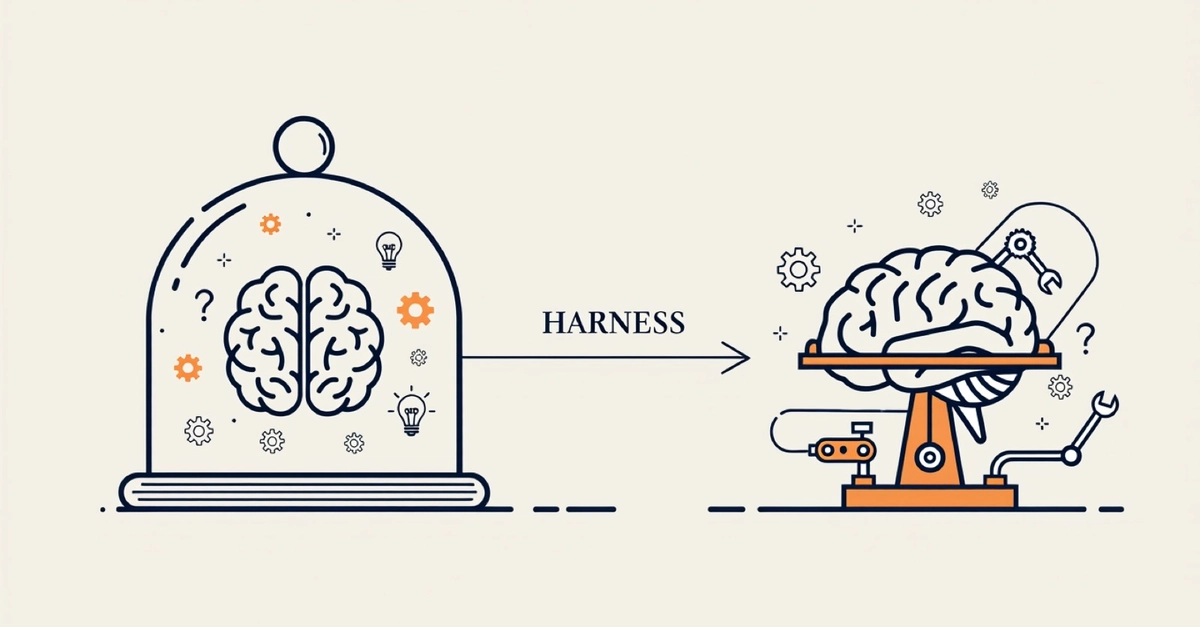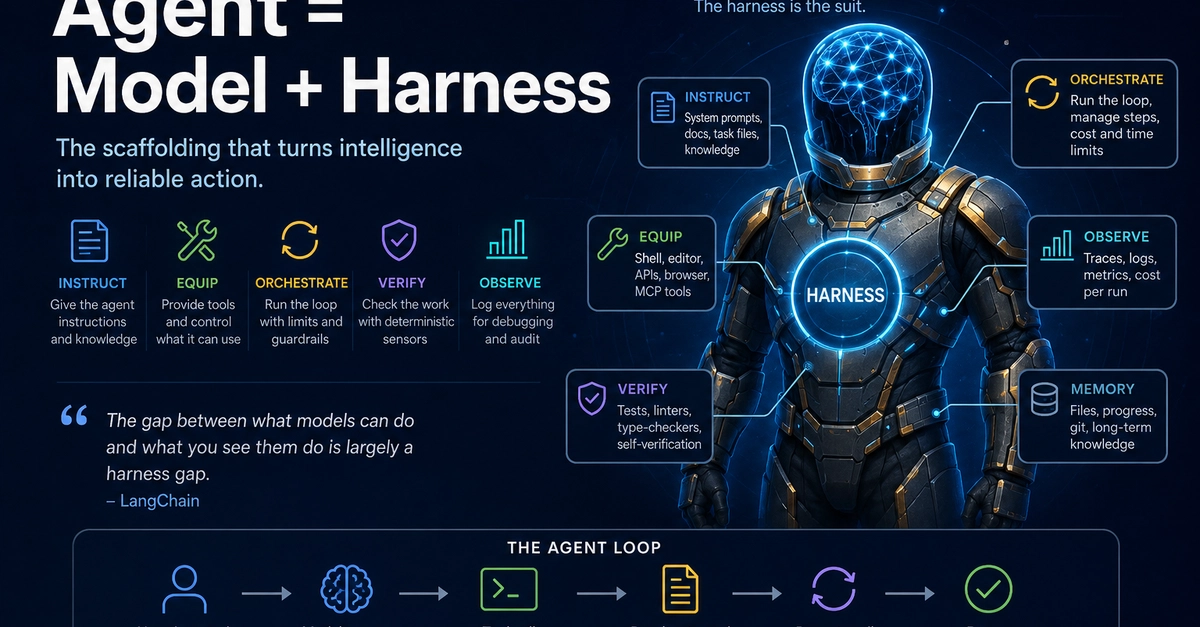
Every agent harness solves the same two problems, and almost every one of them solves both privately.
The first problem is decomposition. A task arrives, the harness breaks it into steps, and those steps live in the harness's own memory in the harness's own shape. You see the plan after the tokens are spent, if you see it at all. When the session ends, the plan is gone.
The second problem is identity. You configure a useful agent, a reviewer that knows your conventions or a researcher that cites the way you want, and that configuration either dies with the session or lives in a format only one tool reads. Nothing carries what the agent learned along the way: the correction you made twice, the convention it finally internalized, the investigation it was halfway through when you closed the terminal.
Both problems have the same shape. Something important is trapped inside a running process, in a private format, with no way to review it, move it, diff it, or hand it to someone else.
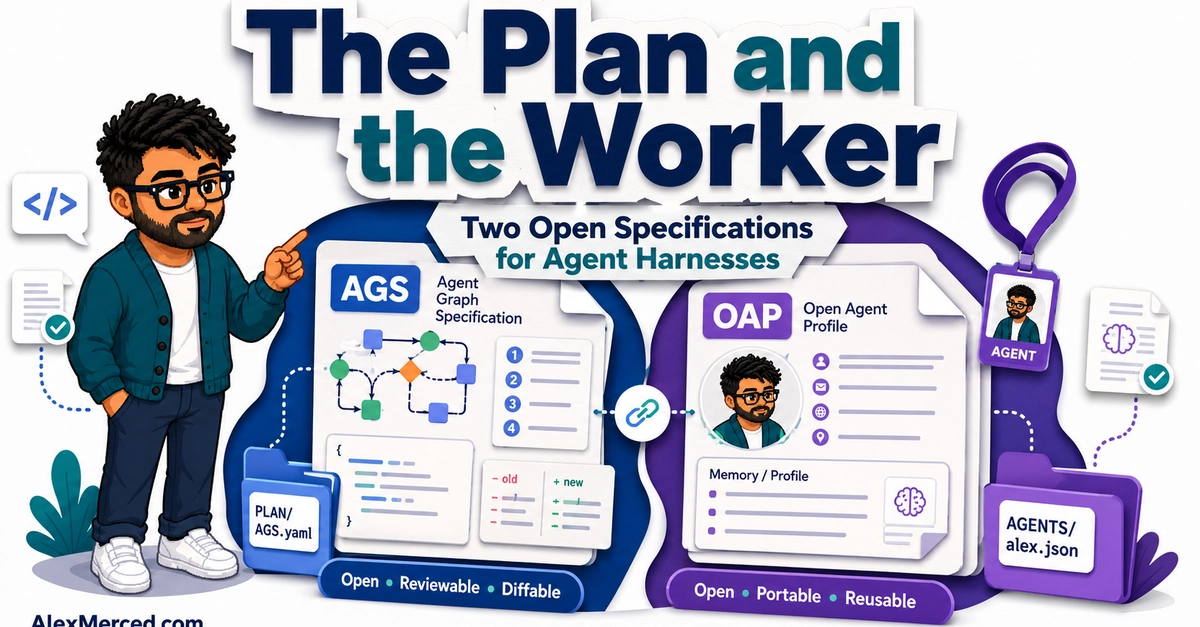
I have been working on two specifications that address these separately, because they are separate problems that deserve separate answers. The Agentic Graph Specification (AGS) makes the plan a file. The Open Agent Profile (OAP) makes the agent a file. Both are open, both are implementation neutral, and both are being implemented first in two harnesses I maintain, Loro and MagAgent, so that the specs get tested against real code rather than staying pleasant on paper.