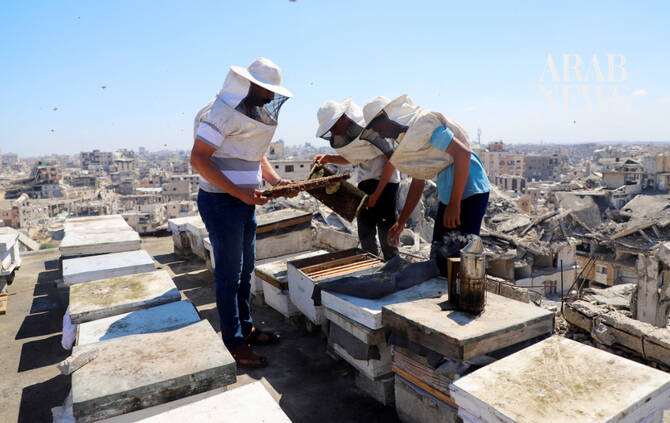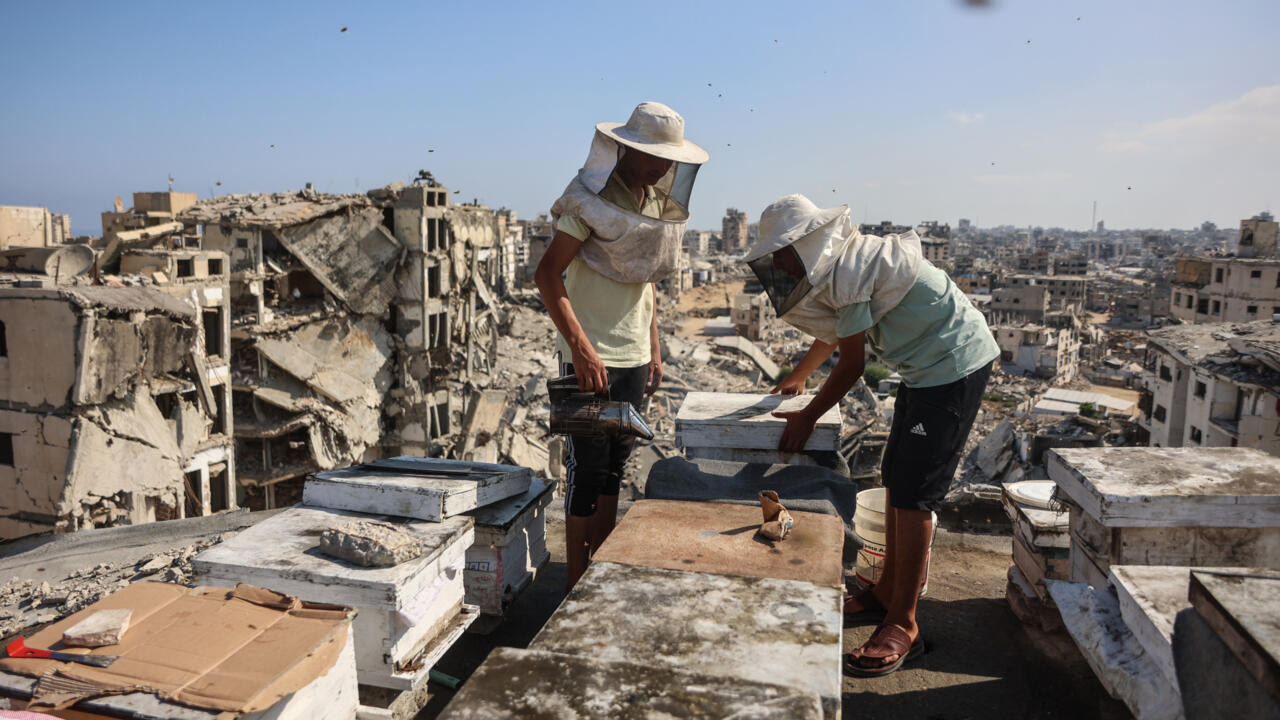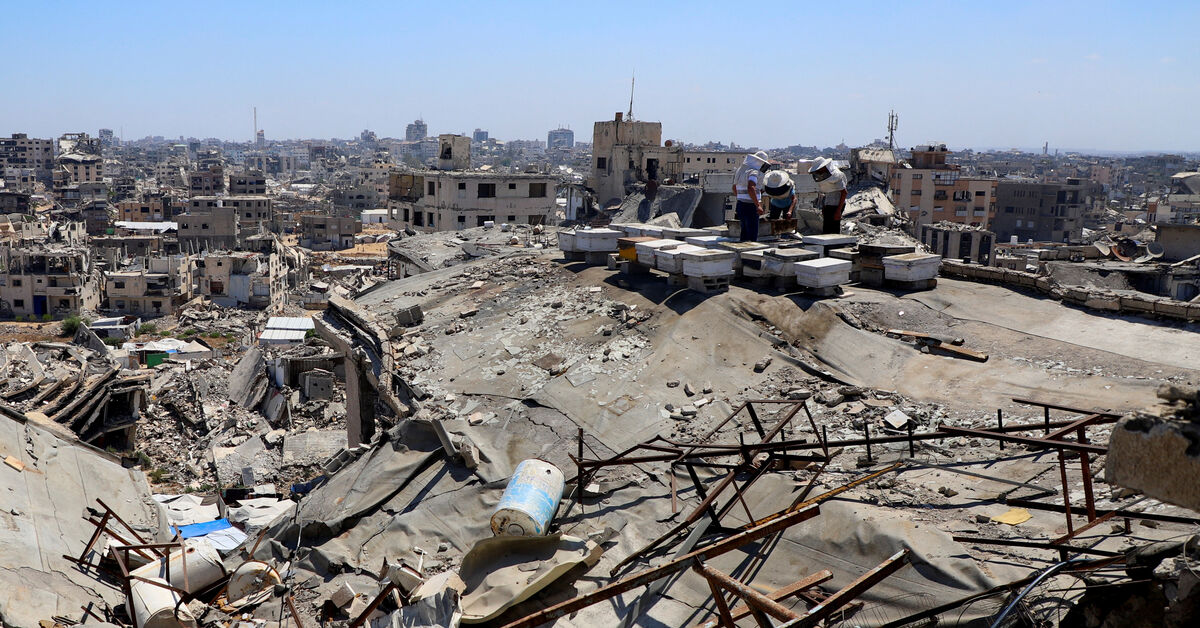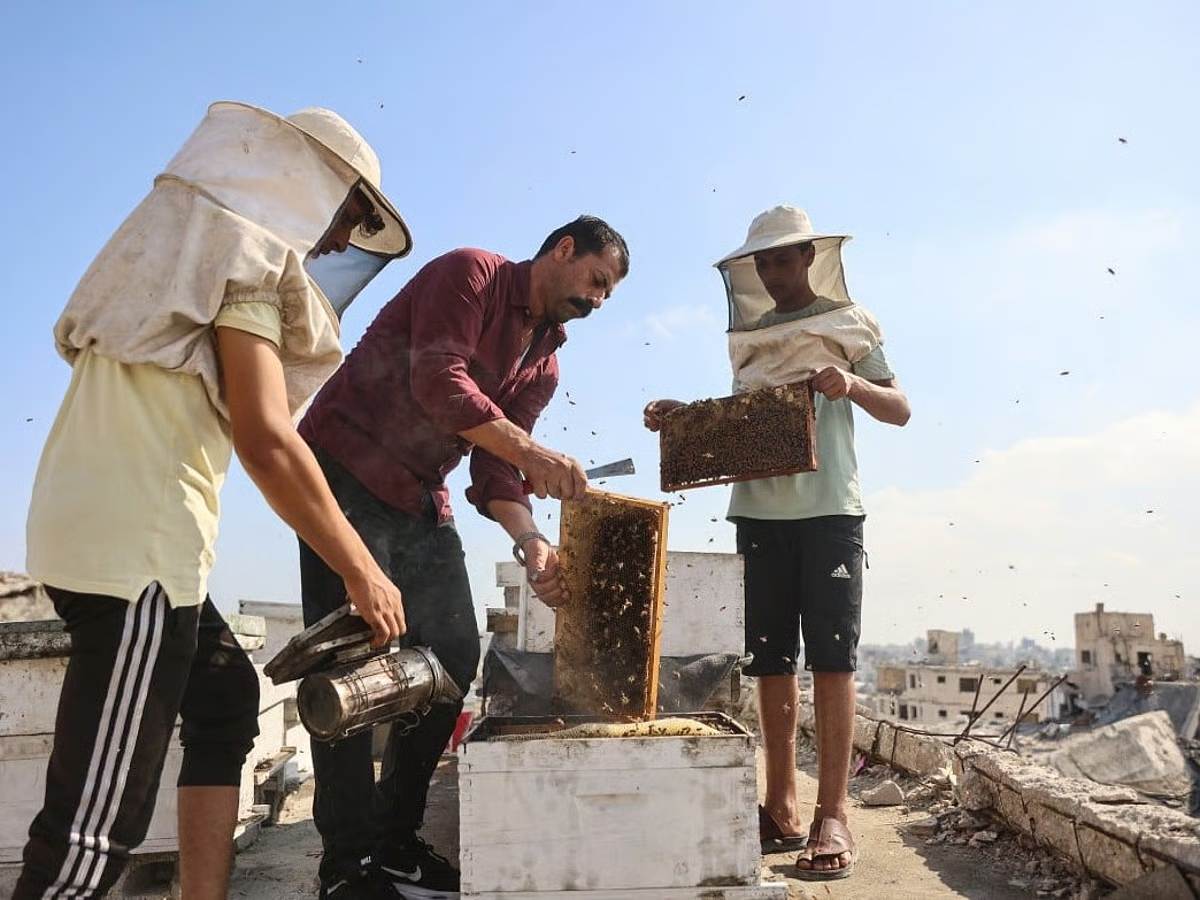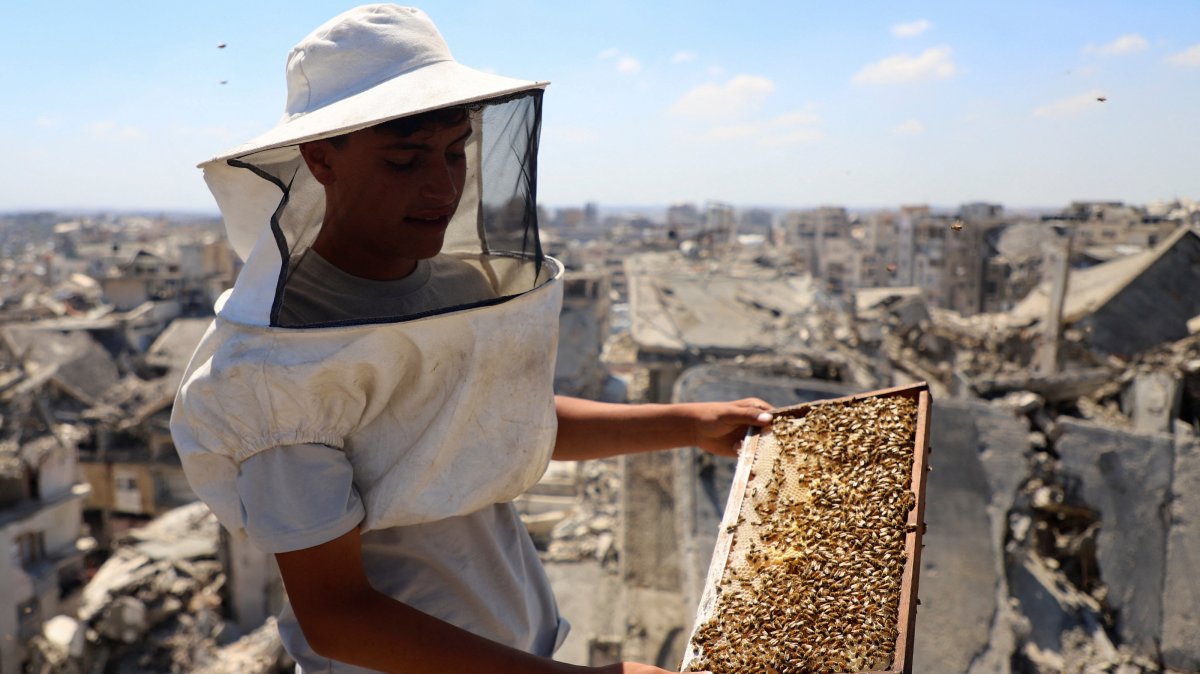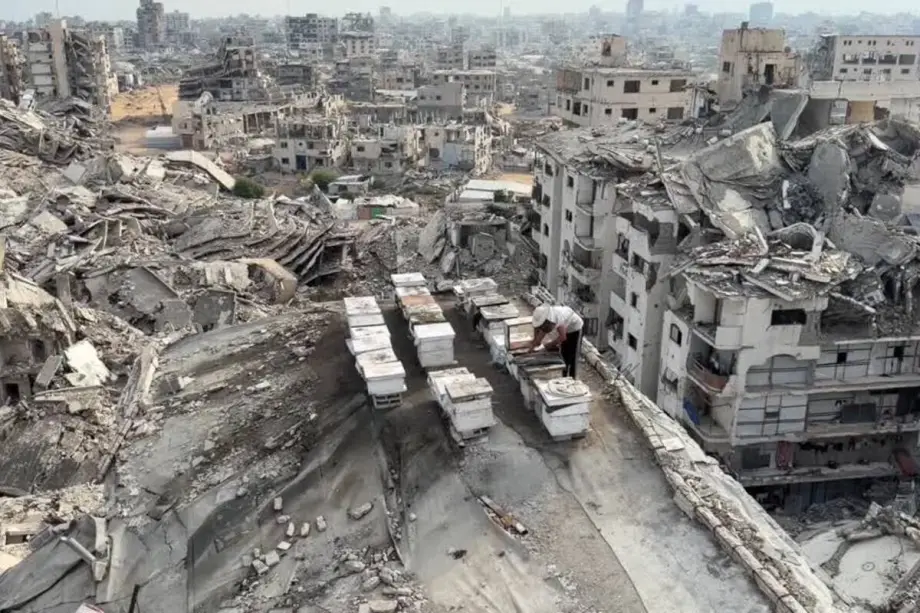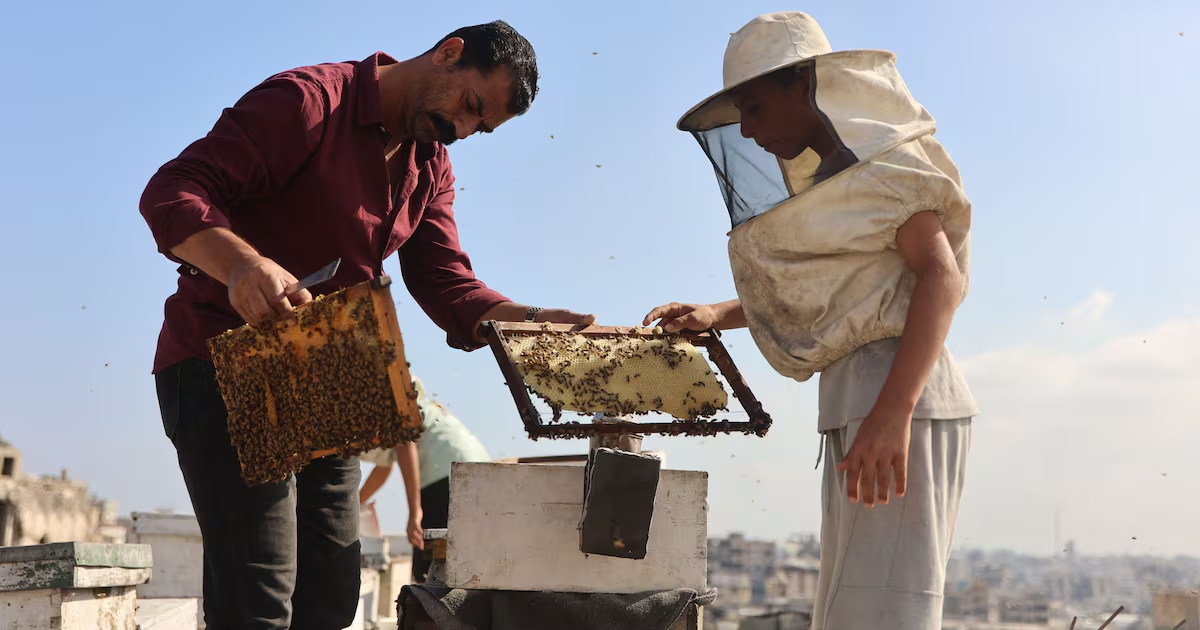
Ibrahim Al Dabba once owned about 400 beehives spread across hundreds of metres of farmland east of Gaza city. War destroyed the majority, but when a ceasefire was signed in January 2025, he rushed back, salvaged and repaired 30. He then moved them closer to his family and began rebuilding his beekeeping business alongside his sons - this time on a rooftop.“I was among the few beekeepers who returned to the profession,” said Mr Al Dabba, head of the Beekeepers’ Co-operative Association in the Gaza strip.Today, his beehives lie on the rooftop of the building he lives in, far from the agricultural fields they were once kept in. Before the October 7, 2023 attacks, Gaza had more than 40,000 beehives tended by about 500 beekeepers producing about 400 tons of honey annually.Mr Al Dabba estimates that more than 90 per cent of Gaza's beekeeping sector was destroyed during the war, causing losses of millions of dollars. Dozens of beekeepers were also killed, he said. Those remaining are fighting to keep the tradition alive.To produce honey, bees require hives, but also flowers, crops and trees for nectar and pollen. With vast areas of farmland damaged or inaccessible, surviving colonies have lost much of their natural food supply.Many of the areas where apiaries were previously located are now east of the Yellow Line, where Israeli troops are stationed, and inaccessible to their owners. Yet, Gaza is producing honey again.A beekeeper in Khan Younis holds a piece of honeycomb. ReutersShow caption: A beekeeper in Khan Younis holds a piece of honeycomb. Reute…“Gaza’s honey was among the finest in the world,” said Shaker Isleem, 58, a Gaza city resident and long-time consumer of locally produced honey. For consumers who once considered local honey a staple of Gaza's markets, seeing it produced again also carries significance, but the quality has changed.“I believe that reflects the changes in what bees and queen bees are now being fed and the loss of the agricultural land and flowering plants they relied on for food before the war,” Mr Isleem told The National.Instead of feeding on the flowers and crops that once surrounded Gaza’s apiaries, the bees sometimes depend on sugar and artificial feed, with beehives installed on rooftops. It is far from ideal, but for Amin Eid, a beekeeper, abandoning beekeeping altogether was never a realistic option.“It is my family’s main source of income, and I do not have knowledge or experience in another profession,” he told The National. “That is why I decided to return to this work despite all the difficulties and challenges.”Challenges to overcomeAttending to beehives is hard in itself in Gaza, where the Israeli army heavily restricts the entry of goods. Beekeeping equipment has also been difficult to bring into Gaza for years due to Israeli-imposed restrictions. “We face difficulties obtaining beekeeping supplies and the materials needed to make and repair hives, including wood and metal,” Mr Al Dabba said. He and the other beekeepers have forgotten about getting new hives; they repair the damage done during the war.“We also no longer have access to the protective beekeeping suits we used to wear while working", he told The National. Now, he works with less protection, or makeshift suits made from clothes. But no challenge will stop him.The sons of Ibrahim Al Dabba tend to beehives with their father in Gaza city. AFPShow caption: The sons of Ibrahim Al Dabba tend to beehives with their fat…Mr Eid adds that a box of beeswax foundation, an essential material used in hives to give bees a base on which to build their honeycomb, cost about 30 shekels before the war. Today it can cost between 1,200 ($400) and 1,500 shekels, if it is available at all. Frames for the hives cost another 15 to 20 shekels each.This reflects on the honey's price, which has risen from 80 shekels ($27) per kilo to around 300 shekels ($100) per kilo, Mr Al Dabba said, turning this previously everyday product into a luxury for many.The current production remains modest compared with the scale of Gaza's prewar honey industry, but for beekeepers such as Mr Al Dabba and Mr Eid, restarting with even a handful of hives is both a source of income and an attempt to preserve knowledge passed through generations.“I never found anything better than Gaza’s pure, natural honey,” Mr Isleem said as he bought half a kilo of honey. “I used to start my day with two spoons of honey, and when I am sick, I drink some with lemon and hot water. I convince people around me to do the same!”
Gaza's beekeepers put the buzz back into their business | The National
Before the war, the enclave was dotted with more than 40,000 beehives - and the honey they produced was a source of sweet pride
764 words~3 min read