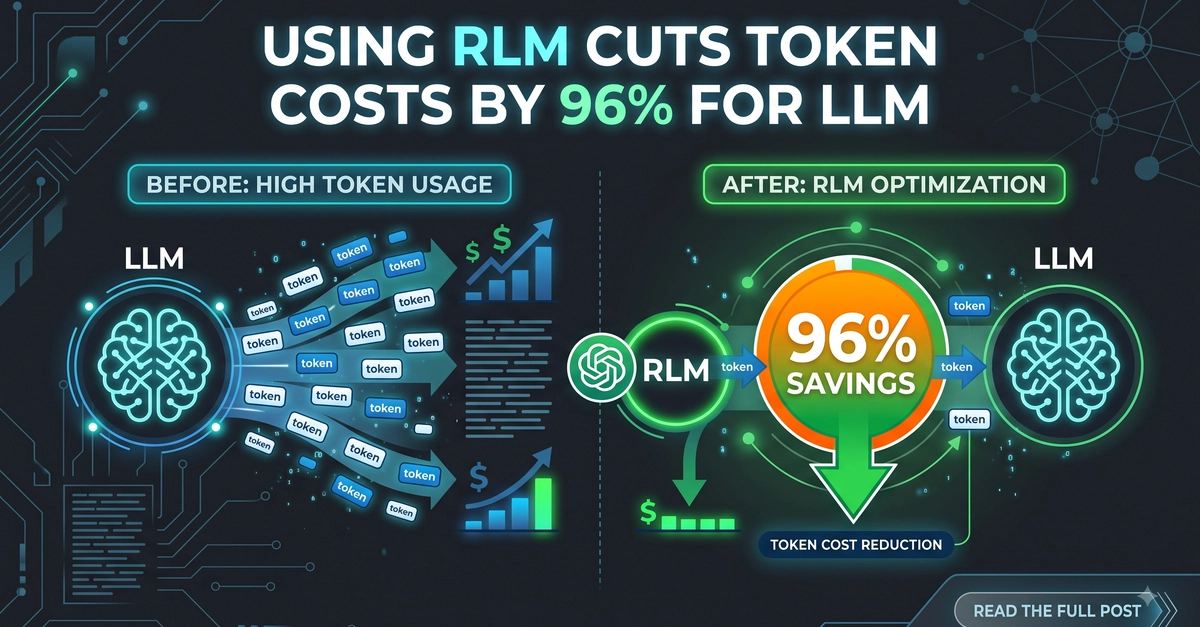
As someone who is constantly exploring ways to make AI applications faster and cheaper, I found myself looking for a solution to a problem that kept slowing me down: processing 100,000+ token context windows without burning through API budgets or waiting through long network delays. That's when I came across the research on Recursive Language Models (RLM).
This blog is a summary of my personal experience building RLM-Rust: how I got started, why I moved away from Python, the challenges I faced, what I built, and the lessons I learned. If you're a developer curious about handling massive context payloads more efficiently, this might help you decide if RLM is worth your time. (Spoiler: it absolutely is.)
A Personal Start: How I Came Across RLM,
I wanted to reduce the cost of running my agents, since more context on every call meant more tokens and more money. While exploring options, I found a repo implementing RLM in Python. I tested it out, but it was super slow — noticeable latency on every query. So I decided to switch it over to Rust, which improved things a lot which includes very less latency which was 37.6% faster than Python.
Starting Out : My First Working Prototype