Originally published on tamiz.pro.
The context window is the single most expensive bottleneck in modern Retrieval-Augmented Generation (RAG) architectures. As Large Language Models (LLMs) evolve from 8k to 128k+ token limits, developers often fall into the trap of assuming "bigger is always better." In production environments, however, bloated context windows inflate inference costs linearly, increase latency quadratically due to attention mechanism complexity, and frequently degrade output quality through the "lost in the middle" phenomenon.
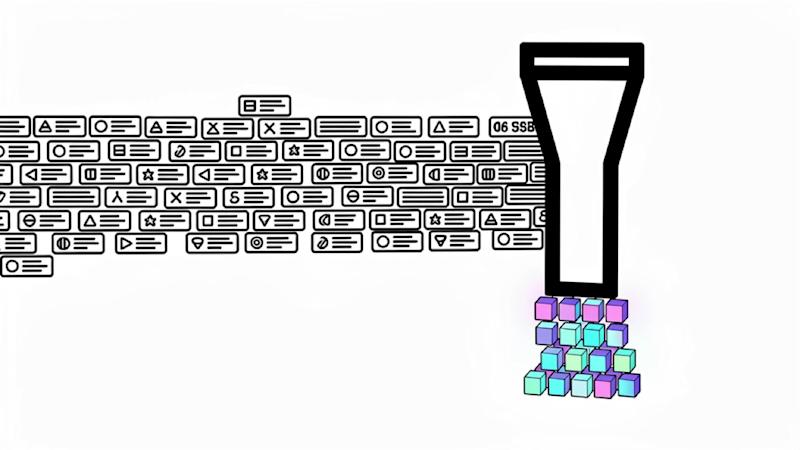
This article explores advanced, lossless (or near-lossless) compression strategies specifically tailored for RAG pipelines. We will move beyond simple truncation and explore semantic hashing, vector-based summarization, and hierarchical retrieval methods that preserve critical information while drastically reducing token footprint.
The Cost of Raw Context
Before implementing compression, we must understand why raw context is inefficient. LLMs use a Transformer architecture with self-attention. The computational complexity of the attention layer is $O(N^2)$, where $N$ is the sequence length. Doubling the context window does not just double the cost; it quadruples the computational load for the attention weights, even if the feed-forward networks scale linearly.