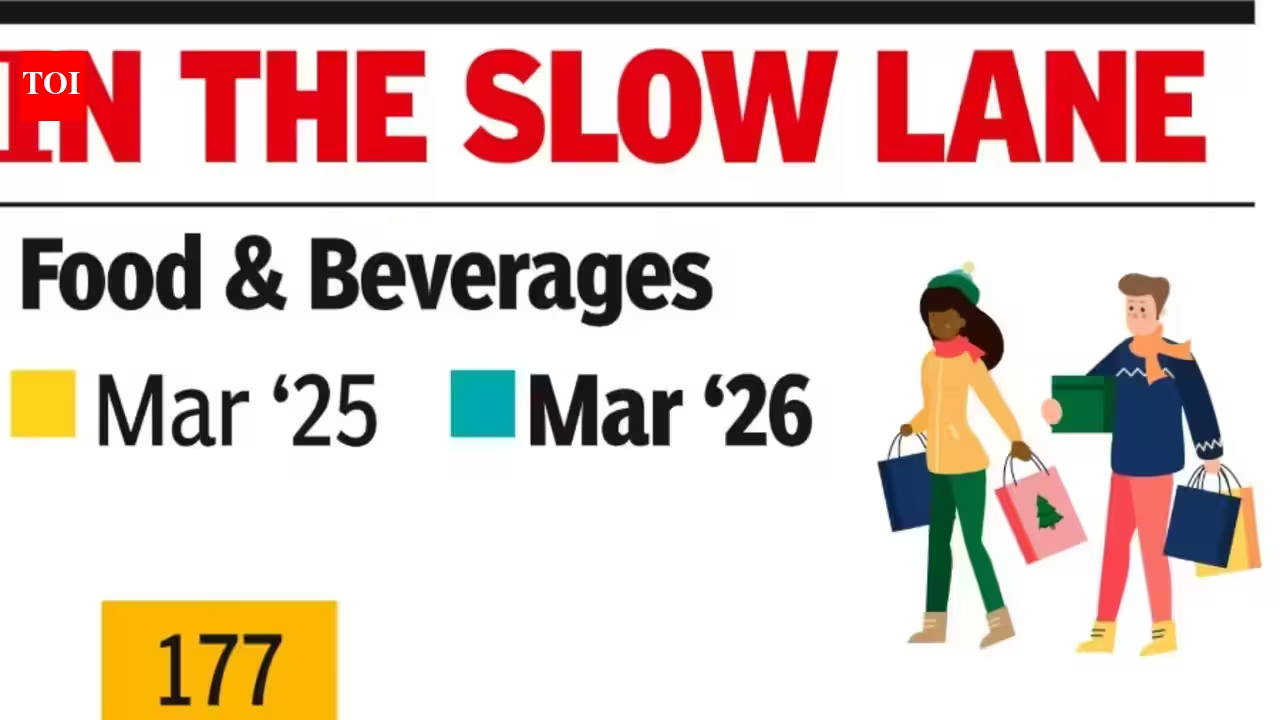
In all, packs purchased across food and beverages dropped to 172 in FY26 against 177 in FY25.Is India’s consumption of household staples holding steady or slowing down? Well, two different stories seem to be playing out. While out-of-home (OOH) consumption led largely by impulse purchases has taken a hit with volumes declining 8.6% in FY26, a new consumer sub-segment of premium boosters has emerged who are splurging on self-care and widening product baskets, studies by Worldpanel by Numerator (formerly Kantar) showed.The average number of biscuit packs bought by a consuming household dropped to 43.3 in FY26 against 46 in FY25, a decline of nearly 6% but in the case of chocolates, itThe average number of biscuit packs bought by a consuming household dropped to 43.3 in FY26 against 46 in FY25, a decline of nearly 6% but in the case of chocolates, it grew by 4%. Juice-based drinks and ice-creams also saw subdued consumption while salty snacks and sports drinks gained. Biscuits make up for the bulk of OOH consumption volumes, weighing on overall growth.“There is a tightness in the market. OOH consumption is very discretionary and people tend to cut back on that segment when their wallets come under pressure,” said K Ramakrishnan, MD, South Asia at Worldpanel by Numerator.In all, packs purchased across food and beverages dropped to 172 in FY26 against 177 in FY25.grew by 4%. Juice-based drinks and ice-creams also saw subdued consumption while salty snacks and sports drinks gained. Biscuits make up for the bulk of OOH consumption volumes, weighing on overall growth.“There is a tightness in the market. OOH consumption is very discretionary and people tend to cut back on that segment when their wallets come under pressure,” said K Ramakrishnan, MD, South Asia at Worldpanel by Numerator.In all, packs purchased across food and beverages dropped to 172 in FY26 against 177 in FY25. Mini-metros, defined as cities with a population of at least 10 lakh but less than 40 lakh saw the largest volume dip of 10%. Besides, store trips as well as average number of packs bought tend to pick up in the last week, indicating that the less affluent may be tapping into their leftover monthly budgets to shop.An industry executive said that consumers are curbing discretionary spending. The prospect of tepid rural growth on the back of monsoon deficit, though, is emerging as a larger concern for the sector this year, the person said on condition of anonymity.Even though broader discretionary consumption has somewhat slowed as indicated by lagging OOH volumes, the overall consumer goods sector is getting a boost from a new sub-segment of premium consumers who are spending on healthier choices, wellbeing and self-care, opening up fresh growth avenues for companies.The spends by this cohort is higher in categories such as olive oil, face scrubs, varied food spreads and air fresheners, the study showed. Even in the case of everyday categories such as bar soaps and tea, they are building larger baskets. “Premium boosters are accelerating the shift towards digital-first FMCG shopping,” analysts said.
OOH staples purchase takes hit in FY26, premium buyers loosen wallets: Report
Is India’s consumption of household staples holding steady or slowing down? Well, two different stories seem to be playing out.
506 words~2 min read