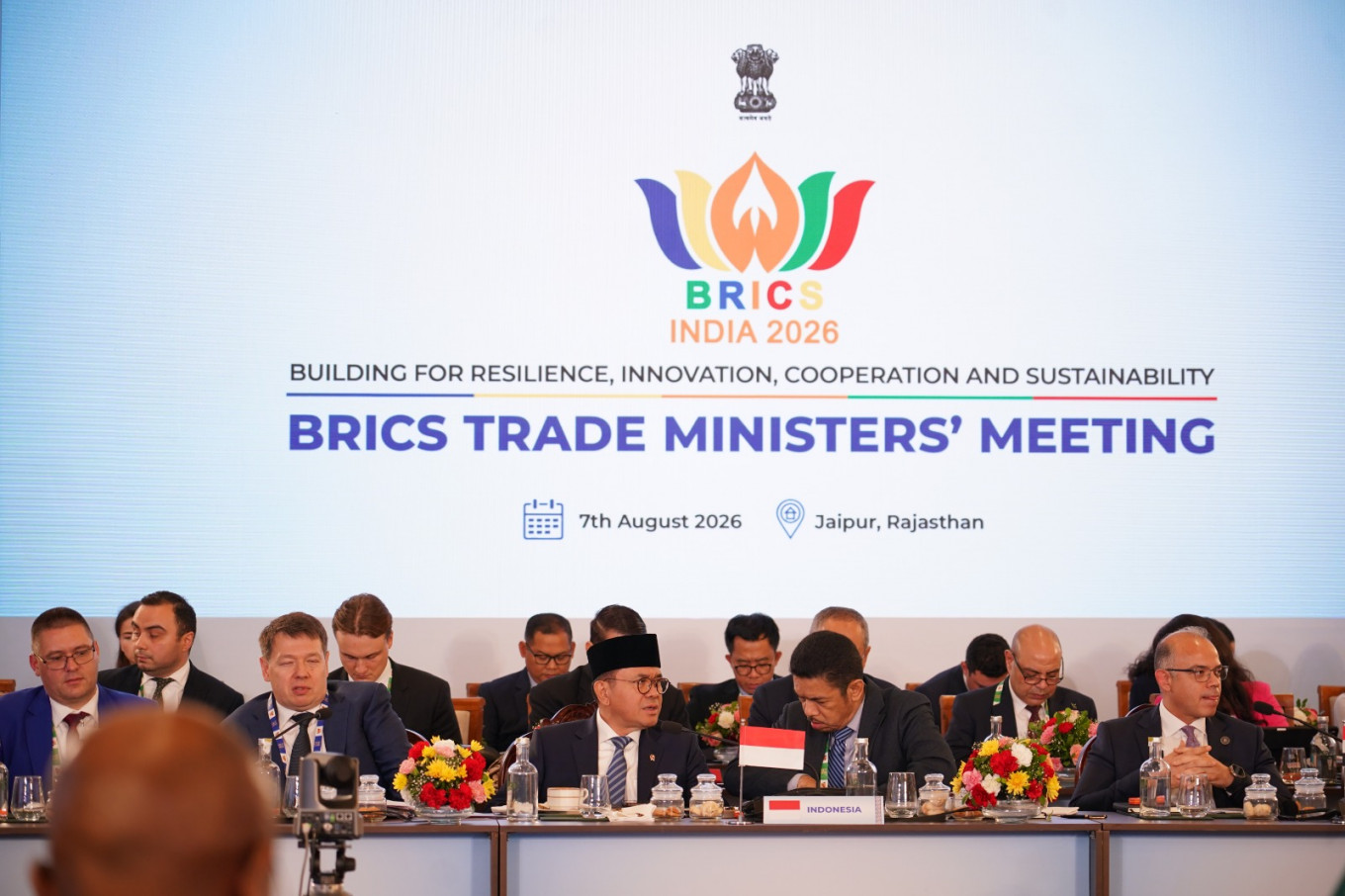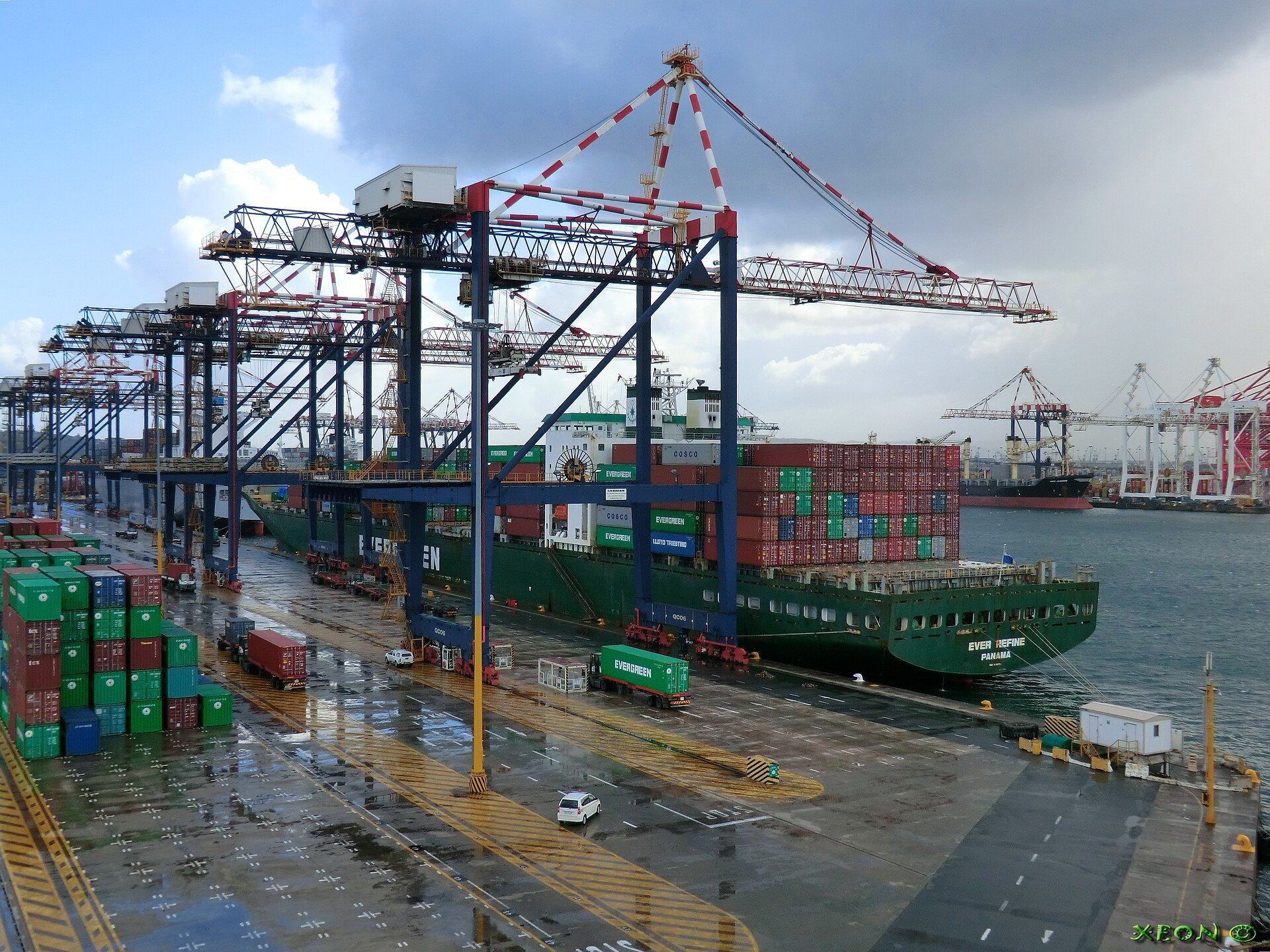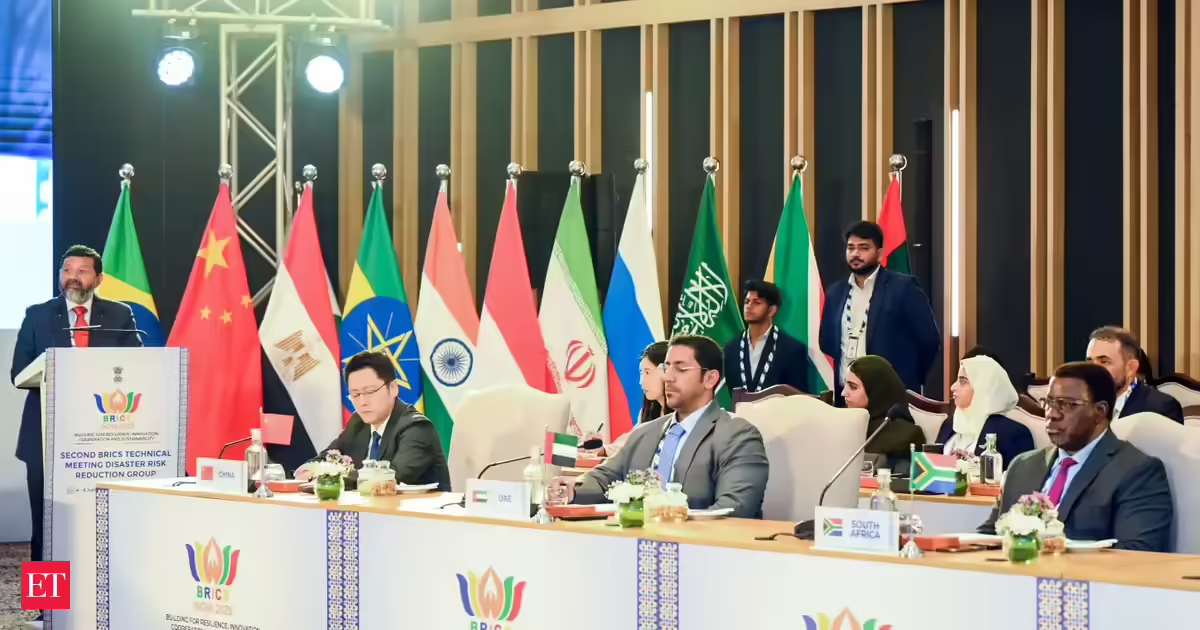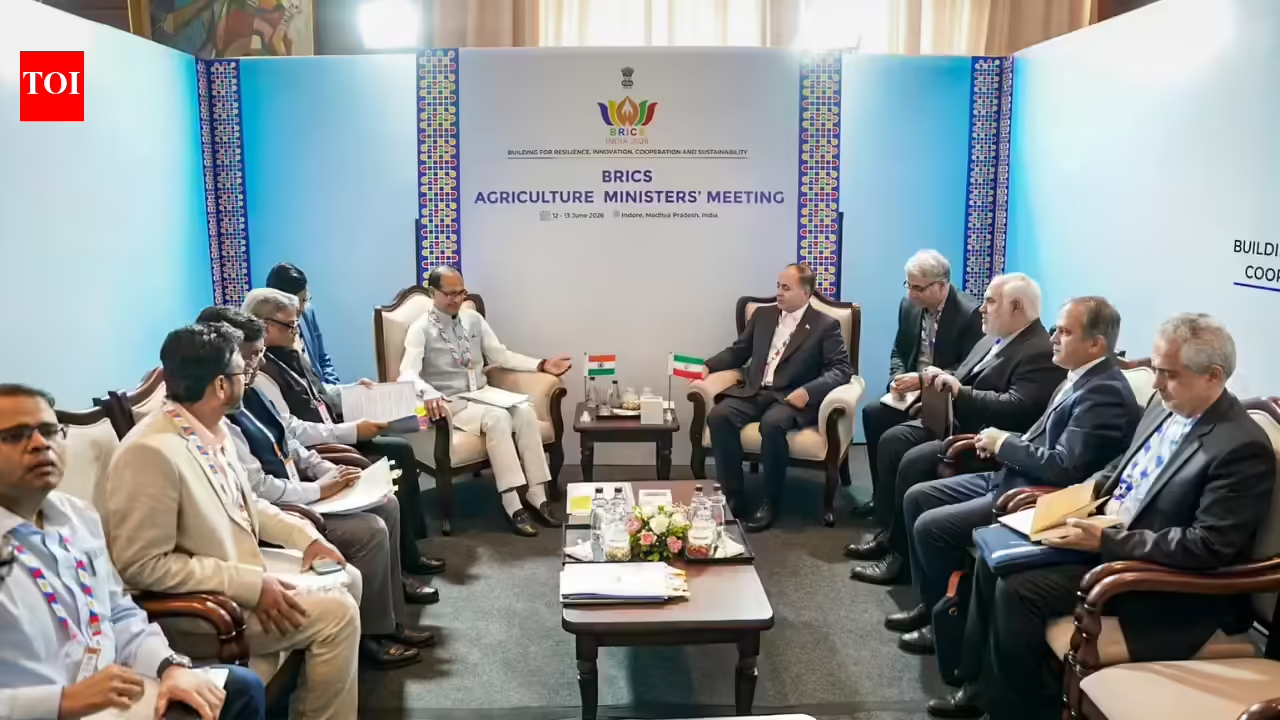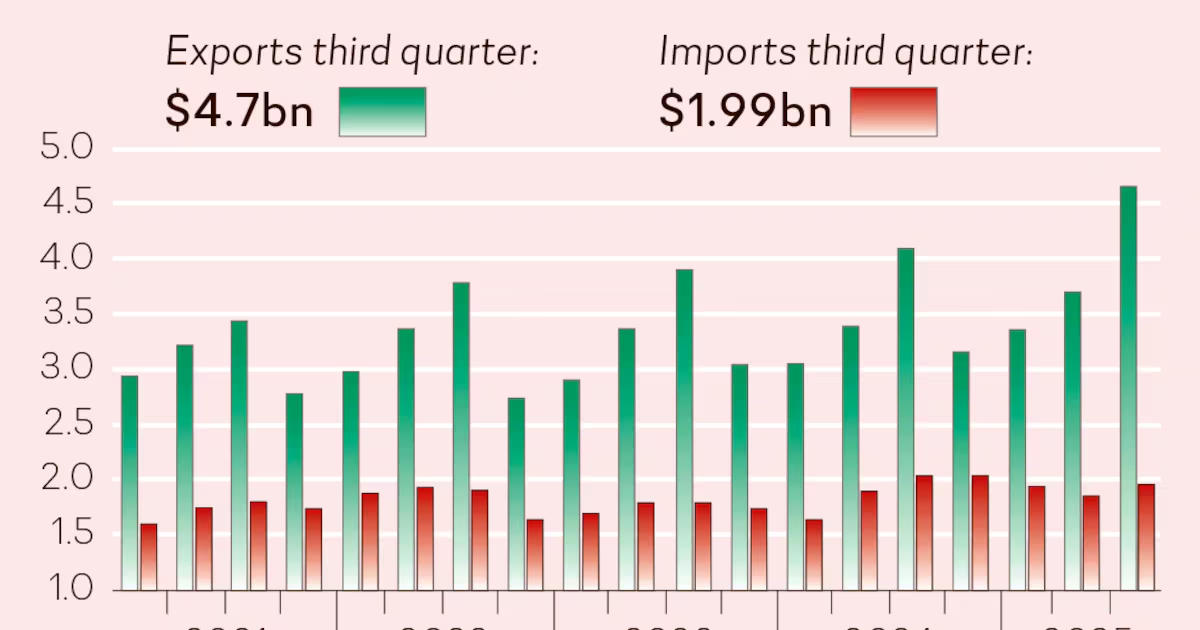
On August 4 the business community in the Brics Grouping (Brics Business Council) met to deliberate on agricultural matters before the conference to be held in New Delhi, India, next month. The grouping reflected on several aspects throughout the year, including climate change challenges in agriculture, regenerative agriculture initiatives, food security, agricultural innovation and research co-operation, and international trade. As South African agribusinesses, we have continued to champion the need to deepen intra-Brics trade. There is no disagreement among South African agribusinesses, commodity associations and organised farming associations that the Brics grouping has potential for export expansion. We have thus consistently pushed for a deeper conversation on this issue. We view the Brics grouping as a crucial market for agriculture and food products. The expanded grouping accounts for roughly half of the world’s agricultural imports. However, these Brics partners, while major agricultural importers, do not generally source agricultural products from South Africa. The original Brics countries, which are among the key global importers, mainly India and China, account for less than 10% of South Africa’s agricultural exports. By comparison, the Southern African Customs Union countries account for about 20% of South Africa’s agricultural exports. Higher tariffs and phytosanitary barriers are major challenges preventing deeper penetration of South African agricultural products in the Brics markets. Remarkably, some Brics countries have far more favourable trading terms with countries outside the Brics grouping. The need to correct this misalignment in trade is more urgent with the expansion of the Brics grouping. The new Brics members mean the grouping’s agricultural market is even broader and thus holds greater potential economic benefits for members. I must state clearly Brics is not a formal trade grouping. However, as the grouping matures politically, deepening regional economic integration and trade is the most logical step towards expanding the ambition of the group, particularly in agriculture. Another vital benefit of advancing agricultural trade is ensuring food security within the grouping. Higher tariffs and phytosanitary barriers are major challenges preventing deeper penetration of South African agricultural products in the Brics markets. Remarkably, some Brics countries have far more favourable trading terms with countries outside the Brics grouping. A Brics comprehensive free trade agreement would be a protracted process, so for the near term some form of trade area that establishes preferential market access to agricultural products among countries, lowers import tariffs and clears phytosanitary barriers is an urgent and appropriate policy step. Brazil, South Africa and Russia typically have a large surplus volume of products that India and China, among others, import from the world market. Reducing import tariffs and non-tariff barriers, or opening up tariff rate quotas for specific agricultural products, would help initiate a process of progressively deepening trade among these countries. Such a step would build on the courageous steps already taken by China. In May China lowered tariffs on goods from Africa through the China–Africa Economic Partnership Agreement. The Brics countries can build on the Chinese step, particularly India. Over the years the South African Agribusiness Working Group of the Brics Business Council has focused on advancing exports in these regions. This recognises more ambitious economic integration through trade is key to the long-term sustainability of this group. South Africa has always argued for a Brics agricultural trade partnership or agreement, or at the very least, more active bilateral agreements that would boost Brics intra-trade. While we have not found much eagerness for this path, we remain focused on it. This will be the primary matter motivating South African agribusinesses as we prepare to go to New Delhi next month.• Sihlobo chairs the Agribusiness Working Group in the South African chapter of the Brics Business Council. He is also chief economist of the Agricultural Business Chamber of South Africa.
WANDILE SIHLOBO | We must deepen intra-Brics agricultural trade
Expansion of the Brics grouping heightens the urgency for preferential trade agreements
623 words~3 min read