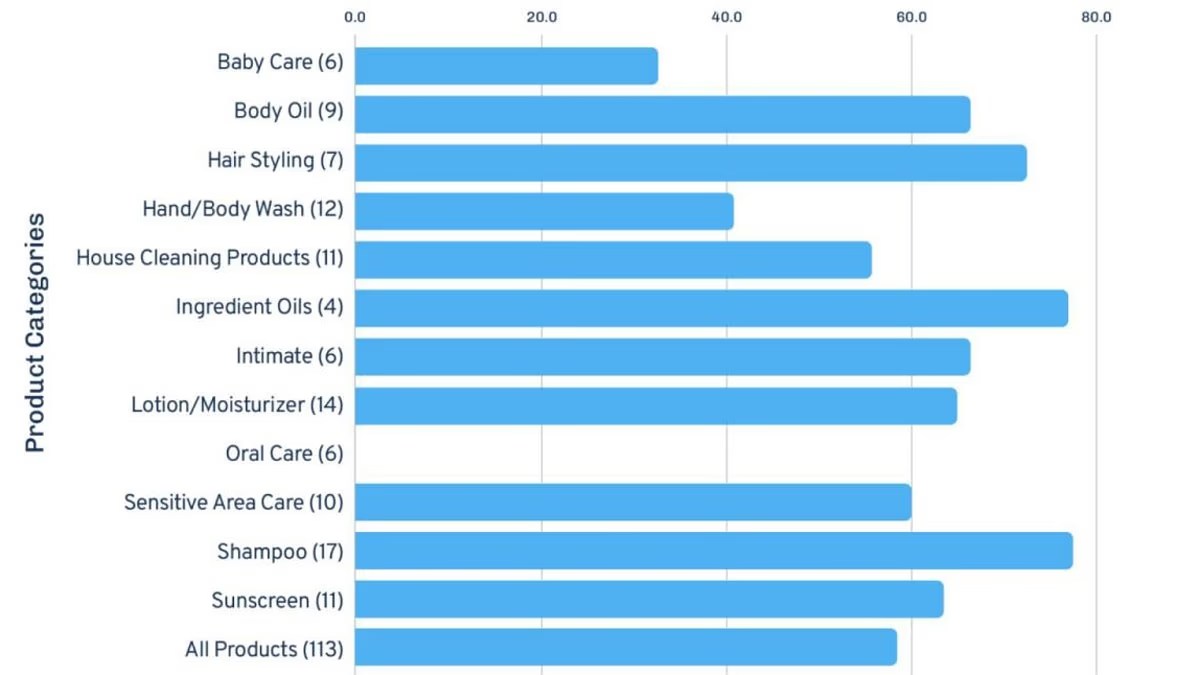
Do we really know what chemicals are in the personal care and cleaning products we use every day? A new study published in Environment & Health suggests not.Previous investigations have found that product manufacturers and labels may not always tell the full story when it comes to everyday goods and what's inside them, which prompted a team from several research institutions across the US to take a closer look.They analyzed the chemical composition of 113 personal care and cleaning products, covering 12 categories that included laundry products, sunscreen, baby lotions, shampoo, deodorant, and toothpaste.The tested products weren't named, but were sold at Target, Amazon, Walmart, and Dollar Tree.Almost all products contained unlabeled chemicals. (Schultz et al., Environ. Health, 2026)A huge 98 percent of these products contained at least one chemical not listed on its label, while 85 percent contained at least one unlabeled chemical known or suspected to be hazardous to human health."We found undisclosed harmful chemicals in products claiming to be free of them," says environmental health scientist Jenna Hua, from the Million Marker Research Institute in the US."That means someone can carefully read ingredient lists, choose 'clean' products, and still end up exposed to the very chemicals they were trying to avoid."The label can't protect you when it doesn't show what's really in the bottle."More than 1 in 4 products had chemicals that contradicted selling points. (Schultz et al., Environ. Health, 2026)One of the categories of substances the researchers were specifically assessing were endocrine-disrupting chemicals (EDCs), which either mimic or block natural hormones in the body. Our hormones are key biological messengers, and EDCs interfere with them.EDCs have been linked with a whole host of health problems, from breast cancer to obesity. What this study posits is that even if you know the risk of EDCs and are trying to avoid them, you might still be exposed to them without being aware of it.
Scientists Tested 113 Everyday Products Sold by Major US Retailers. 85% Contained 'Undisclosed Harmful Chemicals'
Do we really know what chemicals are in the personal care and cleaning products we use every day? A new study published in Environment & Health suggests not.
692 words~3 min read