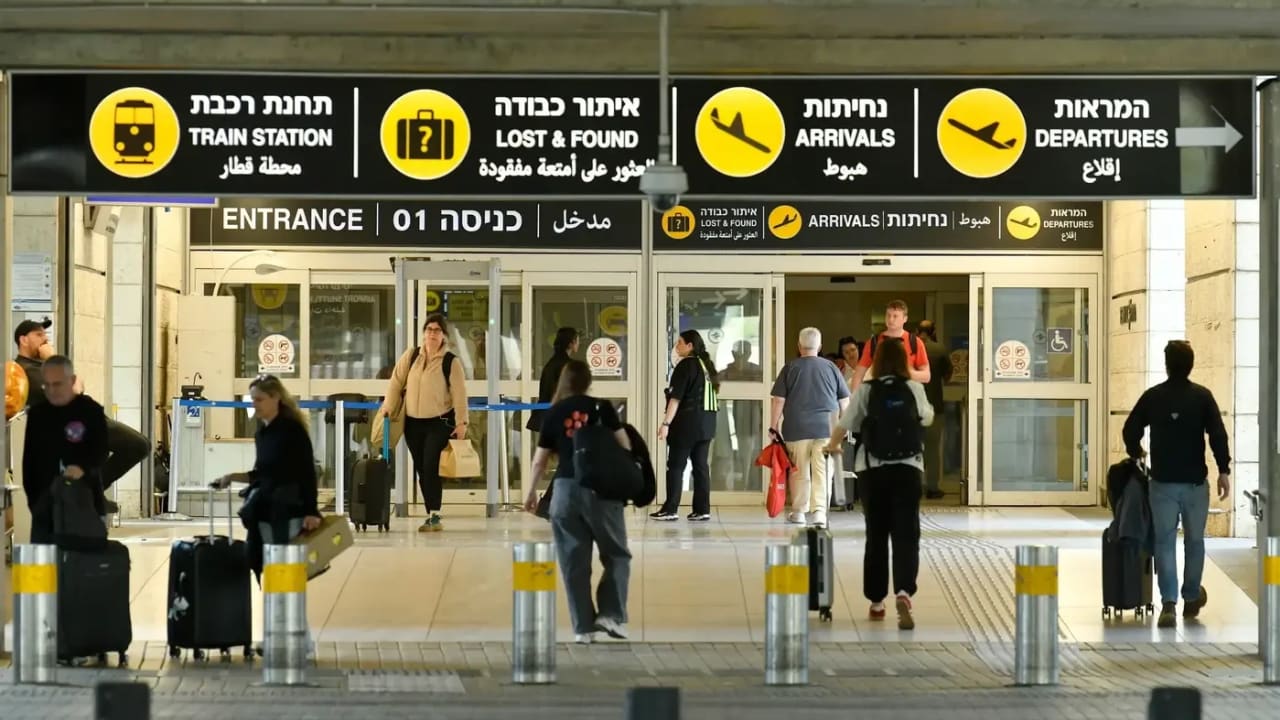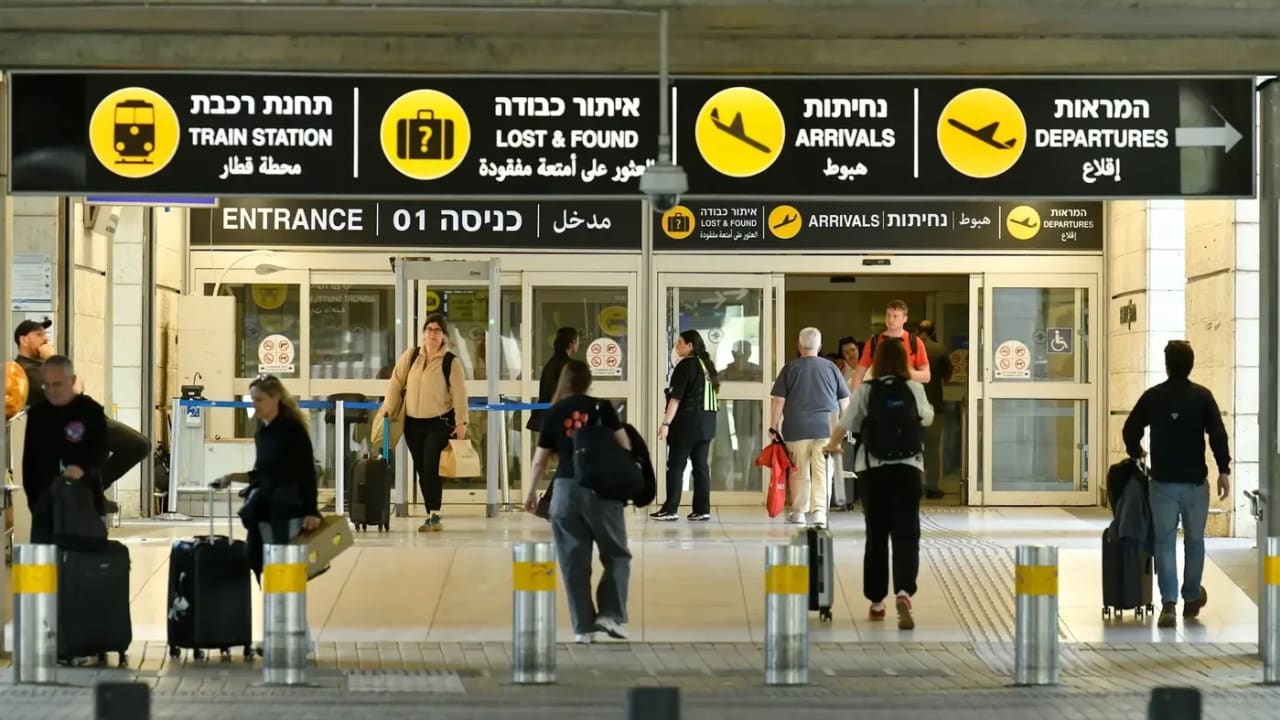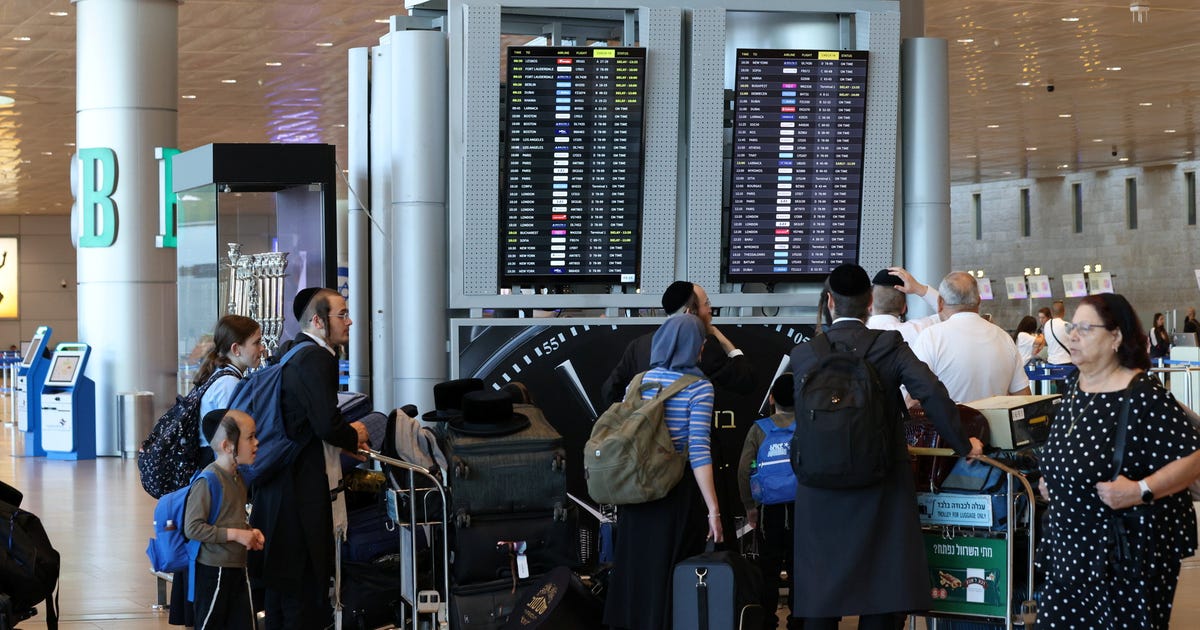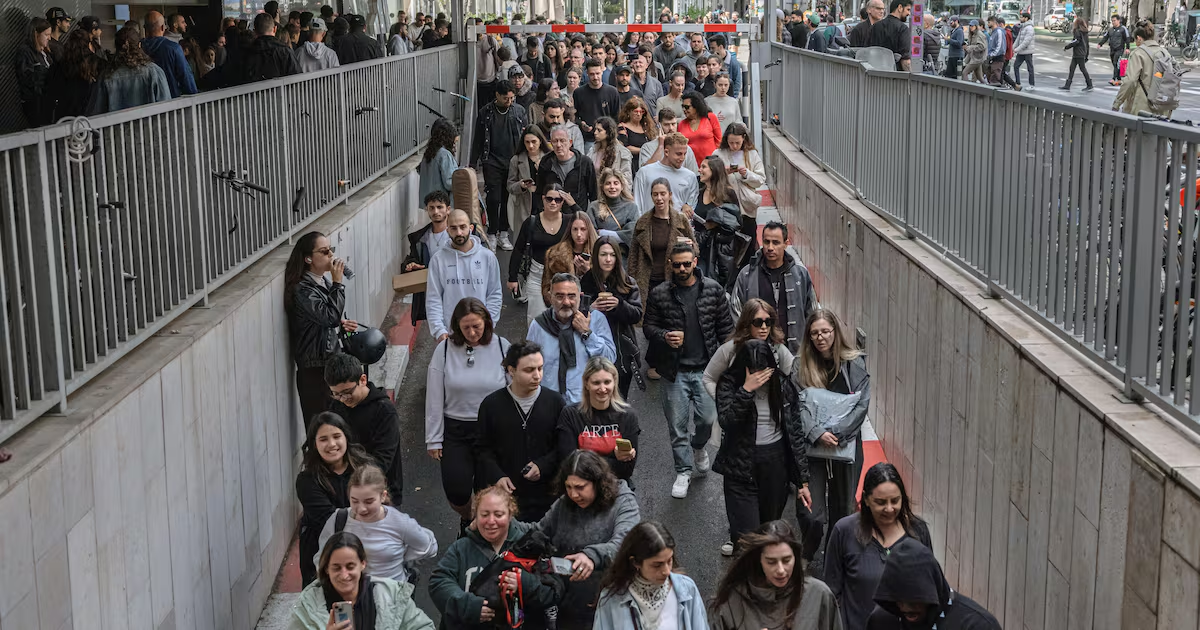
Jonathan didn’t want to leave Israel. When his wife first broached the idea, it was he who pushed back. But as the country’s war in Gaza dragged on, and the stresses of the conflict compounded the economic pressures and social tensions never far below Israel’s surface, he realised they had to go.Then one evening, as he returned to his apartment in Tel Aviv, he ran into the child of one of his neighbours. They spoke, and the boy, aged five or six, said he would see Jonathan that night in the building’s shelter, where residents would go to take refuge from missiles launched by Israel’s foes.“That was one of the big breaking points for me ... [I thought:] that’s the future of the country and this is what he knows,” Jonathan recalls.“Imagine, for a couple of years now, people have been in this fight-or-flight mode. And there’s no escape from this cycle ... When you combine all of the social, the economic, the political aspects, it just became untenable.”And so, in 2024, the 30-something real estate professional, who asked for his full name not to be used, packed up his home in Tel Aviv and moved to the US with his family, joining a wave of 150,000 Israelis who have left the country over the past three years.The outflow has been fuelled by a period of unprecedented tumult in Israel. In early 2023, prime minister Binyamin Netanyahu’s government launched a controversial drive to overhaul the judiciary, triggering the deepest domestic crisis in Israel’s near-80-year history. Then Hamas’s October 7th attack plunged the country into a war that became a years-long regional conflict, drawing in Iran and allied militant groups from Lebanon to Yemen.By international standards the share of Israelis who have left over this period is not huge. But for Israel the outflow is highly unusual – and has already had an outsize impact. Combined with a drop in immigration, the exodus turned Israel’s net migration negative in both 2023 and 2024 – something that happened only three times in the preceding century. Analysts expect overall figures for last year, which are not yet available, will also be negative.With studies – including one last week from Israel’s tax authority – suggesting rising numbers of those leaving are high earners, it has also awakened fears of a brain drain that could, if sustained, do serious damage to Israel’s tech-heavy economy, its public finances and even its military.“This is basically the first time in 100 years that there has been a continuing negative balance [in consecutive years],” says Sergio DellaPergola, professor emeritus at the Hebrew University of Jerusalem, noting previous one-off instances in the 1920s, before Israel’s 1948 foundation, and then again in the 1950s and 1980s. “So this is absolutely exceptional.”Indeed, the idea of Israel as a country of immigration is central to its modern identity. The new state was founded as the world recoiled at the horrors of the Holocaust. Offering a home to Jews around the globe was a fundamental part of its raison d’être. Between 1948 and 1960, immigration accounted for 65 per cent of population growth. The share has dropped since, but was still close to 20 per cent in the two decades before the pandemic.For a long time, there was also a stigma around those who left. In the 1970s, then prime minister Yitzhak Rabin branded émigrés “moral lepers”, “the fallen among the weaklings” and, for good measure, “the dregs of the earth”. Language around the topic is freighted with judgment. The Hebrew word used for the immigration of Jews to Israel – aliyah – literally means “ascent”. Emigrants were often called yordim – or “those who descend”.“Emigrating was a mark of shame. The implication was: ‘You’re not going to take part in this grand experiment of recreating a Jewish homeland for the first time in 2,000 years. What are you? A traitor to the cause?’” says Alex Weinreb, research director at the Taub Center, a Jerusalem-based think tank. “My father has 10 first cousins, all born in the 1930s and 1940s. Most have never set foot outside of Israel, on principle ... They’re all part of the national religious community. And for them it’s a way to signal that in this time they are making a political statement just by being here.”With time, the stigma faded – Rabin took back his comments in the 1990s – and growing numbers of Israelis began to move abroad. But the topic remains highly politicised. When academics from Tel Aviv University released a study this month estimating continuing high levels of emigration in 2025, opposition politicians seized on it to attack the government.“They promised Gazans would emigrate voluntarily. But in the end the October 7 government encouraged voluntary emigration from Israel,” Meirav Cohen, from the centrist Yesh Atid party, wrote on X.The Tel Aviv study, which excluded newcomers who had lived in Israel for less than three years, calculated that 100,000 had left the country in 2023 and 2024 and estimated that another 45,000 to 50,000 departed last year.Demonstrators gathering during a rally against the Israeli government's judicial overhaul plan near Azrieli Mall in Tel Aviv last September. Photograph: Jack Guez/AFP via Getty Images Multiple factorsMigration is driven by multiple factors. But few who study it doubt that Israel’s polarised political climate and three years of unrelenting warfare – during which Israeli forces have laid waste to Gaza and southern Lebanon, and Hamas, Hizbullah and Iran have fired thousands of missiles at Israel – have played an important role in the current wave of emigration.Exits rose as Netanyahu’s far-right coalition embarked on a controversial attempt to limit the powers of the judiciary in early 2023 that sparked the biggest wave of protests in Israeli history. They then jumped sharply after Hamas’s October 7th attack, with 14,000 leaving in that month alone. Strikingly, the outflow has taken place at a time of widespread concern among Israelis over rising anti-Semitism in western countries.Lilach Lev Ari, a sociologist of immigration and demography and professor at Oranim College, carried out a qualitative survey in 2024 and 2025 of 71 Israelis who emigrated to the US. The interviewees expressed concerns about the social and political climate in Israel, primarily following the judicial reforms in 2023. Such concerns were more common among those who emigrated in the last three years than those who emigrated previously.“We can now definitely add the sociopolitical atmosphere in Israel to the reasons for the recent wave of emigration,” she says.For some Israelis, the idea of emigrating is inconceivable. Benjamin Blatt, from Jerusalem, speaks for many in saying that although war “pushes people away”, for him, personal connections in the country are more important. “I wouldn’t leave,” he adds.But among secular and more liberal Israelis, who have watched on as the country has lurched to the right under successive Netanyahu governments, concerns about the direction of the country are visceral. Many in this camp regard October’s election, which will pit Netanyahu’s coalition with extremist and ultrareligious parties against a more politically heterodox but largely secular opposition, as a make-or-break moment for Israel.DellaPergola at the Hebrew University of Jerusalem says that if there were “a change in running the country”, there might be an increase in the number of Israelis returning from abroad. “If there is no change, there might be an increase in those who leave because of political dissatisfaction with the government,” he adds.Among those who have already left is Adi, who asked to be identified by a pseudonym, who moved with her family to Spain earlier this year. For years, she had worried about the growing influence of religion and ultranationalism in Israel’s public sphere, particularly in the school system that serves secular Jews and in the army. She was also horrified by the government’s attempts to weaken the judiciary “instead of fixing it”.As Israel’s war with Hamas morphed into a multiyear conflict on multiple fronts, her concerns about the direction of the country were compounded by the prospect that not only her husband, but eventually also her children would have to serve in an army “controlled by people whose values are different from mine, and whom I cannot trust any more”.“I decided to leave with sadness, but I feel it’s the right thing to do for my children. At least for now, I want to give them an opportunity to experience something else and to open the door for them to a life elsewhere in case Israel becomes an illiberal democracy,” she adds. “I truly hope Israel gets back on track and we can return to live there. But I’m not optimistic any more ... In the long term, I’m afraid there’s no future there for liberal people like us.”For many Israelis, financial considerations also play a key role. The country has long grappled with a high cost of living, and although the housing market has cooled since the start of the war, properties remain expensive, particularly in cities such as Tel Aviv and Jerusalem.Jonathan and his wife both had good jobs in Israel. But he says the affordability of housing was one of the big factors as they weighed whether to move abroad. “Finding anything reasonable [in Israel] was problematic. We’re talking about close to a million dollars for a 100sq metre apartment in Petah Tikva,” he says, referring to a city near Tel Aviv.“Within a year of moving to America, we were able to buy a house we could never afford in Israel on a piece of land we could never afford in Israel.”Liberal activists block the path of ultra-Orthodox Jewish protesters earlier this month outside a new downtown cafe in Jerusalem that has become a flashpoint between the city's liberal community and the ultra-Orthodox public. Photograph: Abir Sultan/EPA Looming strainsEmigration in the first half of 2025 was 20 per cent lower than the same period a year earlier. But net outflows are still expected for the year overall. Economists warn that if these persist, they will exacerbate the looming demographic strains on an economy in which male members of the fastest-growing population group – ultra-Orthodox Jews – have traditionally not entered the workforce or taken part in Israel’s obligatory military service.This month’s study by Israel’s tax authority found the rate of departure of affluent Israelis, including high-tech and healthcare workers, was almost twice as high in 2023 and 2024 as in 2019. If repeated, the annual loss in tax receipts could swell to $3.5 billion (€3 billion) in five years, it added.The findings echoed another study this year by researchers from Tel Aviv University, which found an increasing net outflow of Israelis who worked as doctors and engineers, or had a high-tech education or one focusing on science, engineering and maths.Itai Ater, an economics professor who was one of the authors of the study, says although Israel could cope with the current outflows, “the concern is what we see now is kind of a promo of the future”.“Israel as a country depends on its human capital. We are not rich in natural resources. That’s what makes a brain drain or emigration more dangerous or potentially dangerous,” he adds.Economists say the biggest risk would be if the departures hurt Israel’s powerhouse tech sector, which accounts for a fifth of economic output, as well as half of exports, and is highly dependent on high-skilled workers.But Eran Yashiv, a professor of economics at Tel Aviv University, contends that the implications are wider still, arguing that an outflow of workers from Israel’s most productive sectors would not just hit tax receipts.It would also add to the manpower strains on Israel’s already overstretched military – which depends on a system of national service and being able to call up reservists – as well as make government plans for a huge ramp-up in defence spending even harder to finance, he says.“It would mean longer reserve duty for the non-ultra-Orthodox Jews who remain in Israel, which hurts their own economic activity. It’s like a chain reaction that can have big knock-on effects as more of the military and economic burden is placed on a smaller group of people,” he adds.Others are more cautious. Weinreb at the Taub Center notes that highly skilled workers generally account for a higher share of emigrants than their population share, and previous warnings of a brain drain from Israel were wide of the mark. But he says there is a risk that if emigration becomes “normalised” it could generate a “self-perpetuating cycle”.“The more people leave, the more you have the establishment of communities and networks, and the more people get comfortable in the place they have moved to,” he adds. “Then there are social mechanisms which start to come into play that can reinforce and even accelerate levels of outward migration. That’s something which does concern me.”In recent months, the government has begun to take measures to encourage high-skilled workers to return. Among them are an exemption from tax on income earned and accrued outside Israel and a mechanism allowing workers to offset taxes paid abroad against income tax in Israel.Dror Bin, chief executive of the Israel Innovation Authority, says it is too soon to say whether the changes have boosted returns, but he expects them to have a tangible impact in the coming years. “The changes are really fundamental, the tax benefits and certainty created by this reform,” he says. “This is a good time for [Israeli tech employees abroad] to come home.”Other officials expect geopolitical factors to be decisive. Eran Berkovich, director of the Aliyah and Integration Unit at the Jewish Agency for Israel, which helps Jews immigrate, said there had been an uptick in the number of people beginning the aliyah process after a ceasefire last year ended the worst of the fighting between Israel and Hamas in Gaza.“People are waiting to see how the security situation develops,” he says. “I have no doubt that if it stays as it has been in the last weeks and months, and the situation with Iran remains stable, we’re going to see more people coming to Israel in 2027.”Whether – and how soon – those who left over the past three years will return is a different question. Jonathan, the real estate worker, says that while the transition to life in the US has not been a “cakewalk”, “simple things” such as the greater sense of safety and not having to run to air-raid shelters have made a big difference to his family’s quality of life.“My wife’s mother came to visit us after our son was born. And on the first day she was asking: ‘Where is the shelter?’ and why we don’t have one. I was like: ‘That’s not the reality we live in’. We’re very fortunate we could pick the reality where we want to raise our children. I recognise that’s not everybody’s reality,” he says.“Would we go back? It’s entirely possible, I wouldn’t rule it out. But right now I don’t see it as the best choice for people who have the social and economic mobility to go ahead and figure things out somewhere else.” – Copyright The Financial Times Limited 2026
‘Not optimistic any more’: Exodus from Isreal fuelled by war and political polarisation
A wave of 150,000 Israelis, many of them high earners, have left the country over the past three years amid political tumult and war
2,518 words~11 min read