A research from Dubai Electricity and Water Authority have evaluated five autonomous PV cleaning robots under desert conditions. The researchers found cleaning efficiencies of 69% to 99%, while also identifying battery, corrosion, ingress-protection and mechanical reliability issues.
A research team from the United Arab Emirates’ Dubai Electricity and Water Authority (DEWA) has evaluated the cleaning performance of several PV cleaning robots in a desert environment. The team also outlined operation and maintenance recommendations for stakeholders based on the results.
Bhaduri added that the team evaluated the durability and operational reliability of the robots themselves under real desert conditions, identifying practical vulnerabilities associated with high temperatures, batteries, ingress protection, electronics, mechanical alignment and material degradation. “Based on these field observations and industry feedback, we further proposed a practical checklist for evaluating robotic PV cleaners before deployment,” she added.
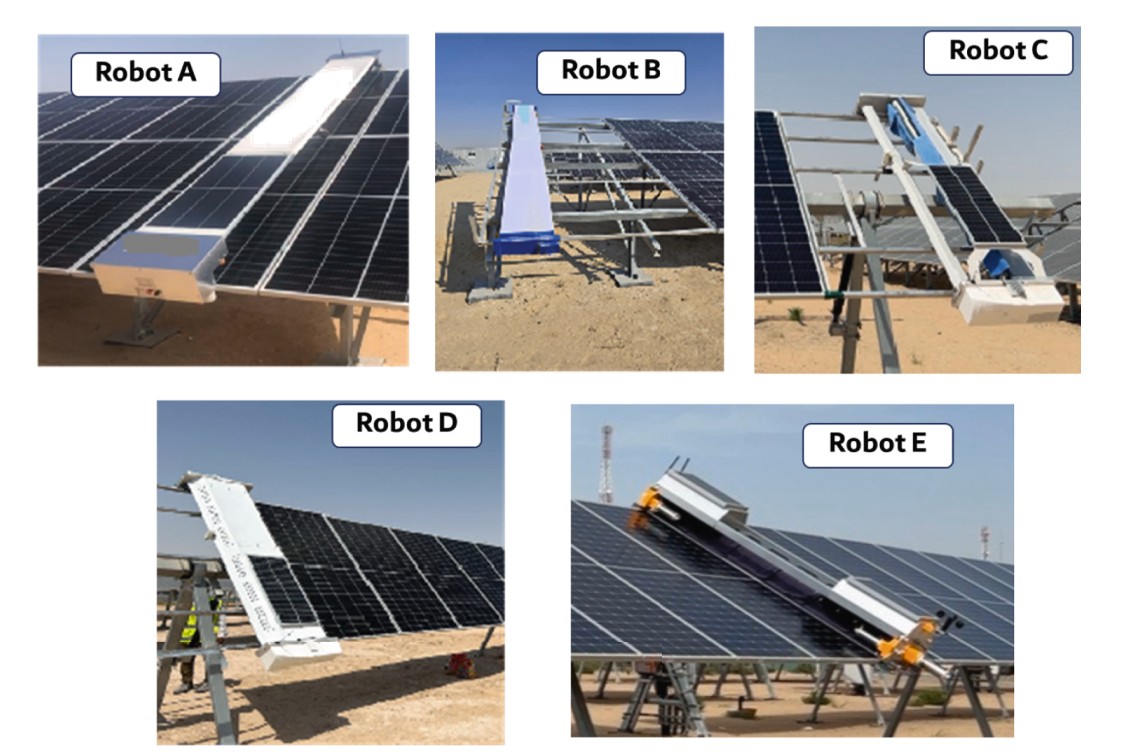
Overall, the study evaluated five autonomous dry-cleaning robots. Robots A and B used bristle-based brushes and operated on fixed-tilt PV systems in a two-in-portrait configuration. Robot A weighed 48 kg, while Robot B weighed 45 kg. Robots C, D and E were deployed on single-axis trackers in a one-in-portrait configuration and weighed less than 40 kg. Robots C and E used microfiber cloth-based cleaning systems, while Robot D used bristles. Robots C and D were produced by the same manufacturer, allowing a direct comparison of the two cleaning materials. The systems were manufactured in China, India and Greece by undisclosed companies.