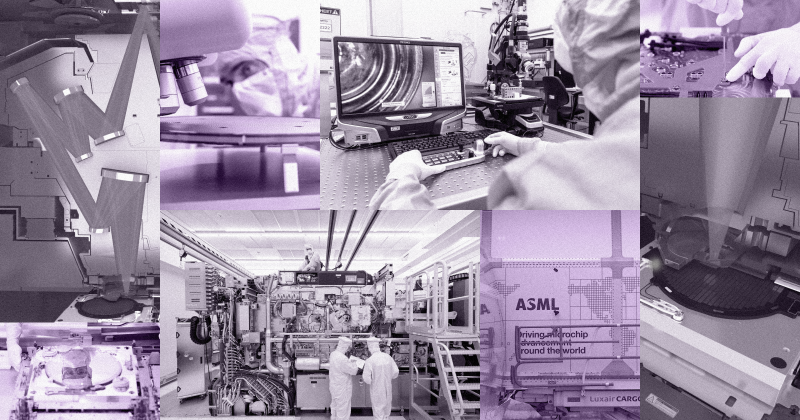
The United States is engaged in an economic and national security arms race with China. Superiority in technology, especially in the artificial intelligence complex, is a critical battleground.A handful of companies possess technologies that could help determine which country wins this contest. Nvidia, which holds a near monopoly in accelerated computing semiconductors, is one of them. But there is another technology leader that arguably represents an even more essential asset in the battle with China. ASML, headquartered in the Netherlands, traditionally a close U.S. ally, has a monopoly on manufacturing machines essential to fabricating the world’s most advanced semiconductors. This includes the chips that form the foundation of the artificial intelligence revolution.Over the past three decades, ASML has invested billions of dollars in developing the processes and technologies required to manufacture extreme ultraviolet lithography machines. Each EUV machine costs hundreds of millions of dollars and is roughly the size of a bus. U.S.-led export controls prevent China from purchasing these machines, which are critical to maintaining the West’s technological advantage in advanced semiconductors.
Semiconductor supplier ASML continues to dominate, but for how long?
ASML has a monopoly on the production of semiconductor machines, but its dominance requires continued export controls on China.
TL;DRAI
ASML's EUV monopoly (35%+ margins) attracts U.S. startups; China pursues alternatives but trails 10+ years. Supply chain: Western-controlled next decade; ASML's stable innovation underpins AI infrastructure decisions if export controls hold—geopolitical asset.
629 words~3 min read