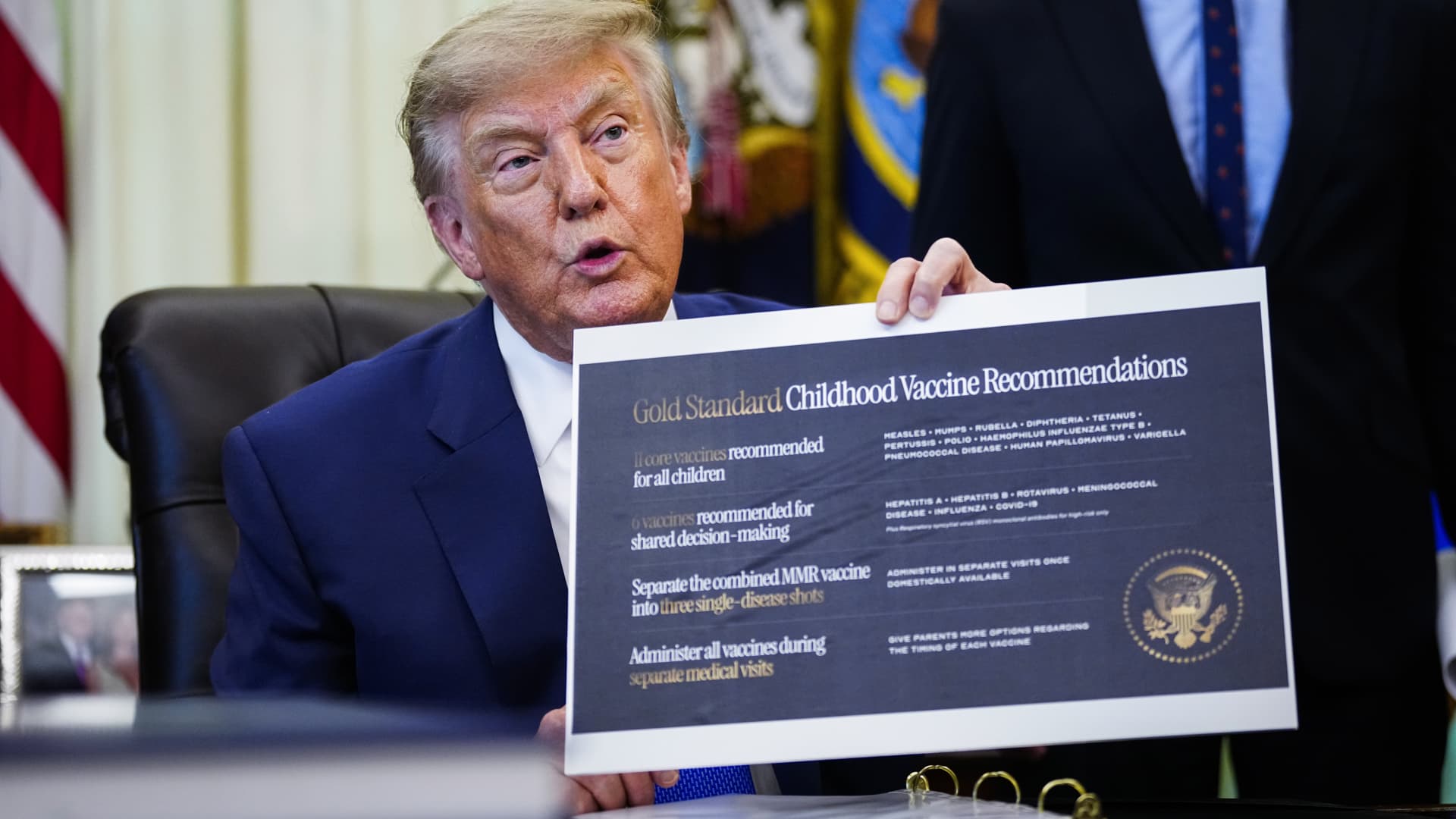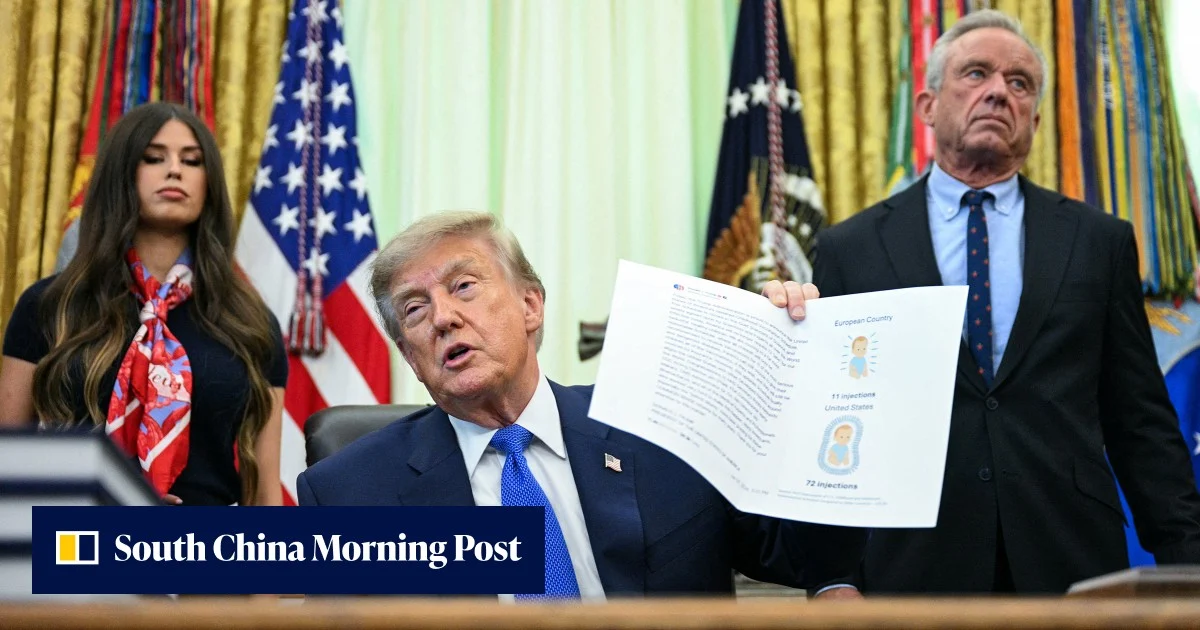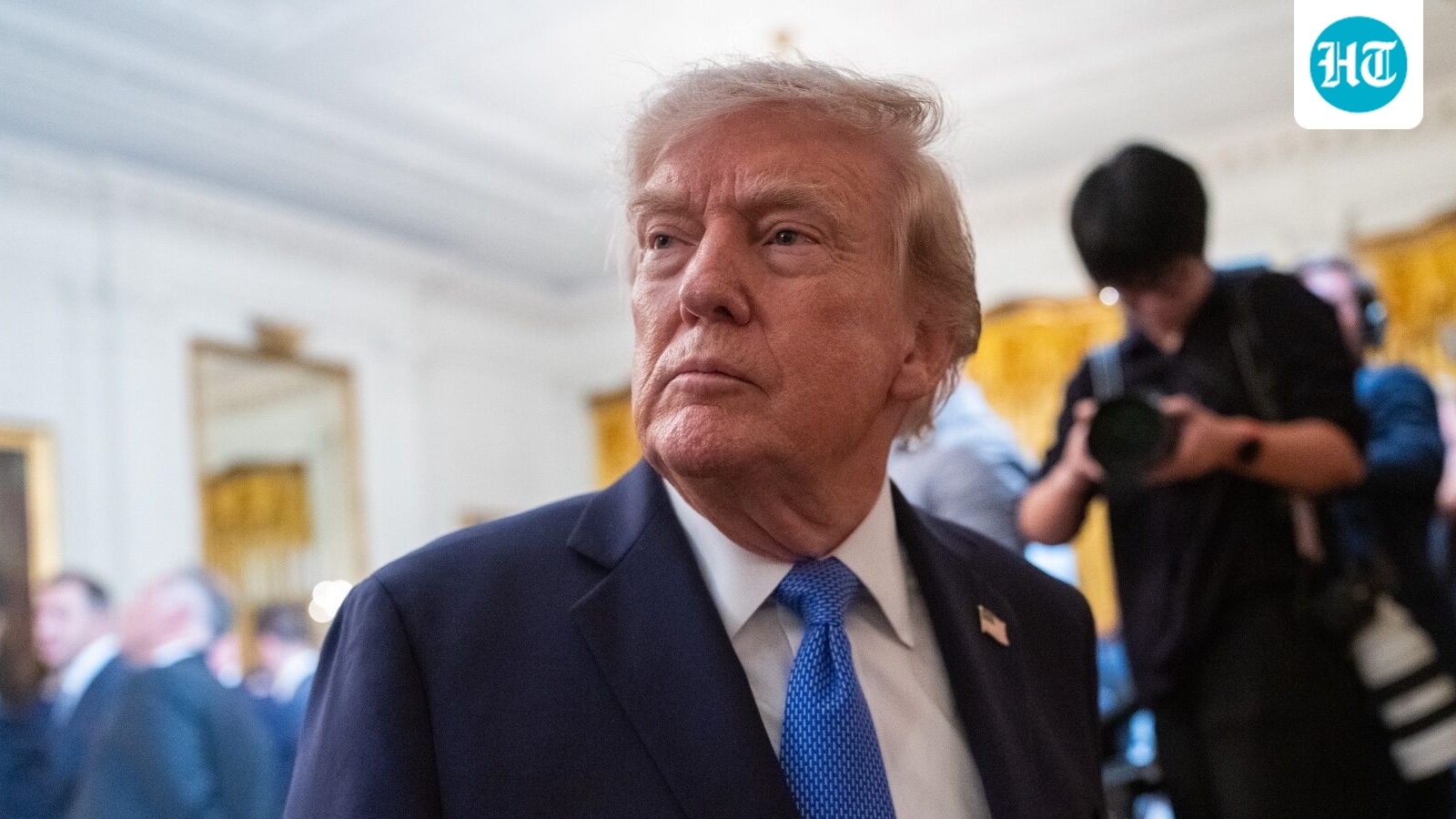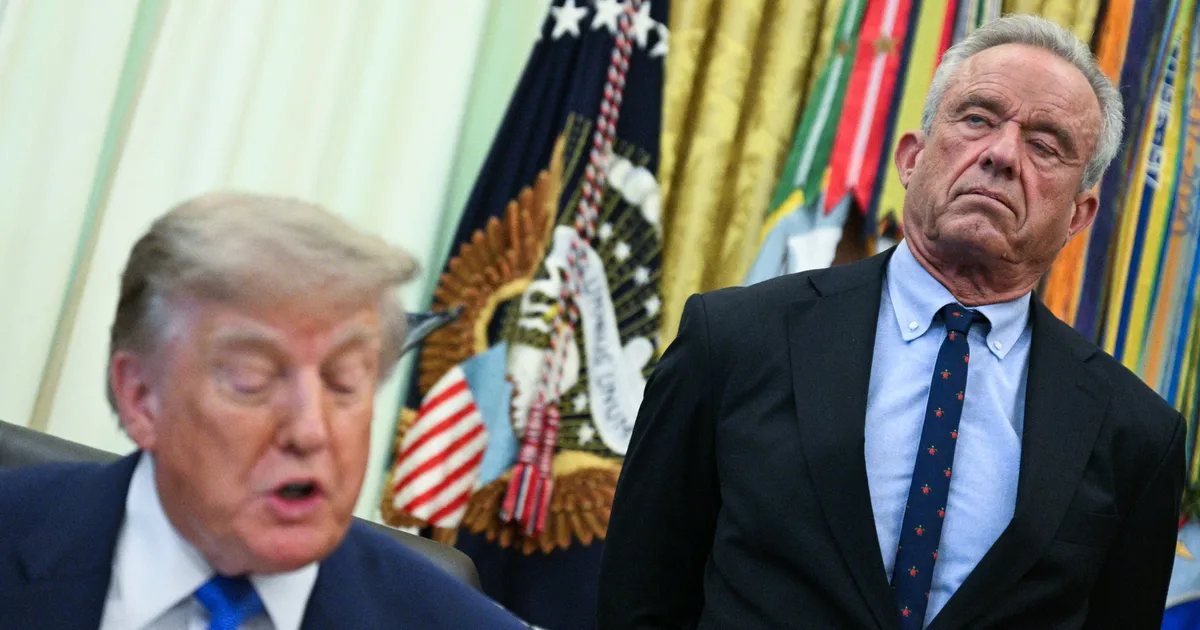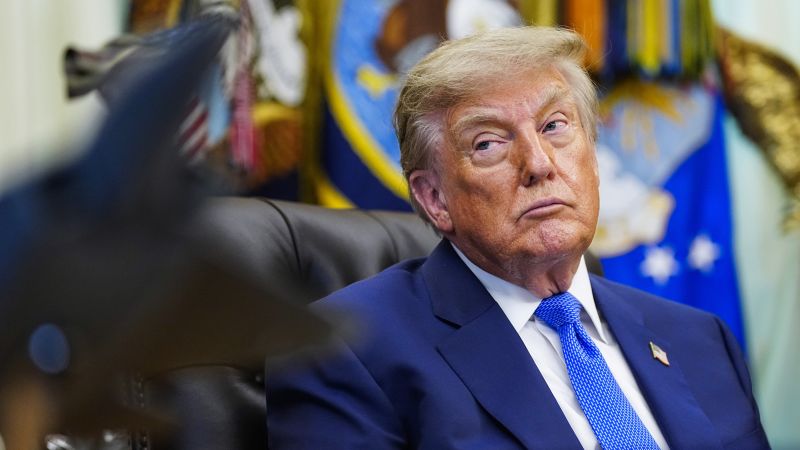
President Donald Trump signed an executive order this week that seeks to dramatically reshape vaccine policy in the United States, including a change that contradicts one of his other stated goals: to give children fewer shots.
Trump’s order says the combination vaccine that protects against measles, mumps and rubella, called MMR, “should be administered in three separate single-disease shots,” and all childhood immunizations should be given at separate medical visits.
Immunologists and vaccine experts say there’s no valid reason to do that. Splitting up and spreading out childhood vaccines would be a seismic shift for families and a complicated, costly pursuit for the country that would only leave more people vulnerable to preventable diseases.
A combination MMR vaccine has been used in the United States for more than 50 years. Scientific studies have consistently shown that combination vaccines like MMR increase vaccination coverage and vaccine confidence, and they do that partly by reducing the total number of shots, which can be scary for kids and their parents.
Merck, which developed the original MMR combination shot, stopped supplying single, or monovalent, vaccines against measles, mumps and rubella in the US in 2008. In a letter to doctors explaining the change, the company said the combined vaccine “is preferred” because it “eliminates the need for 3 separate injections and reduces the chance of delays in helping protect against any of these potentially serious diseases.”