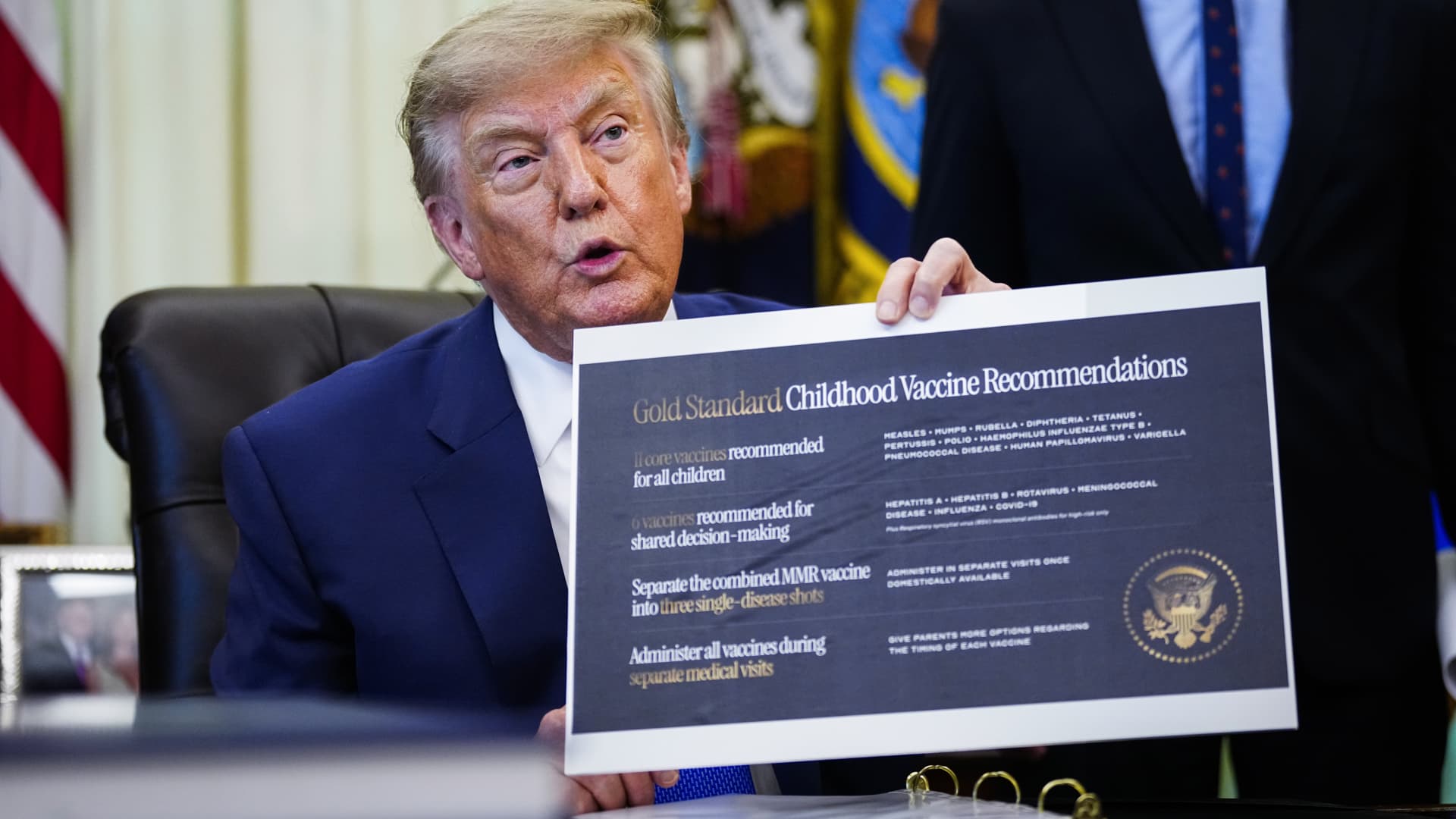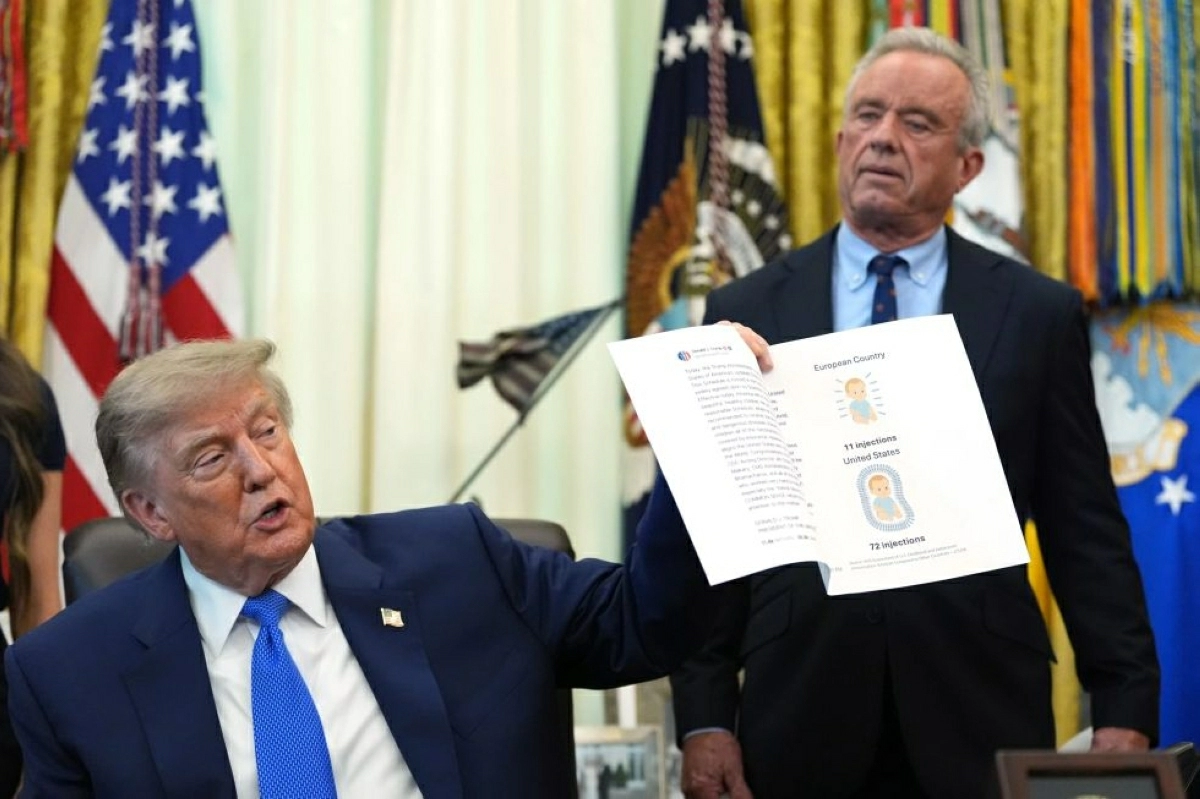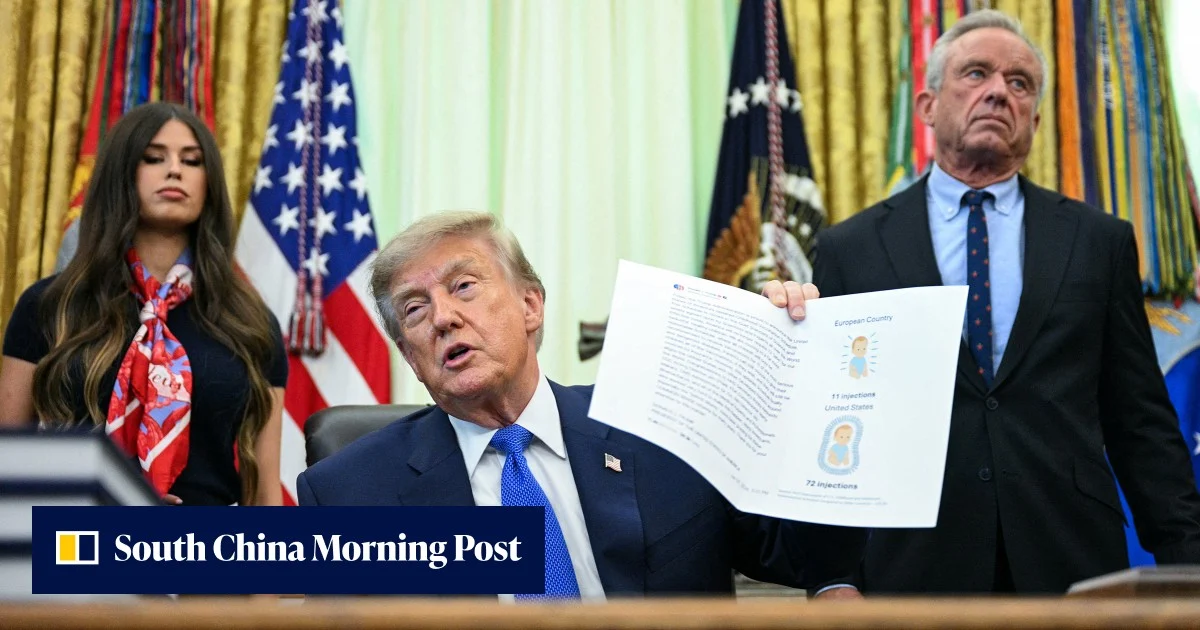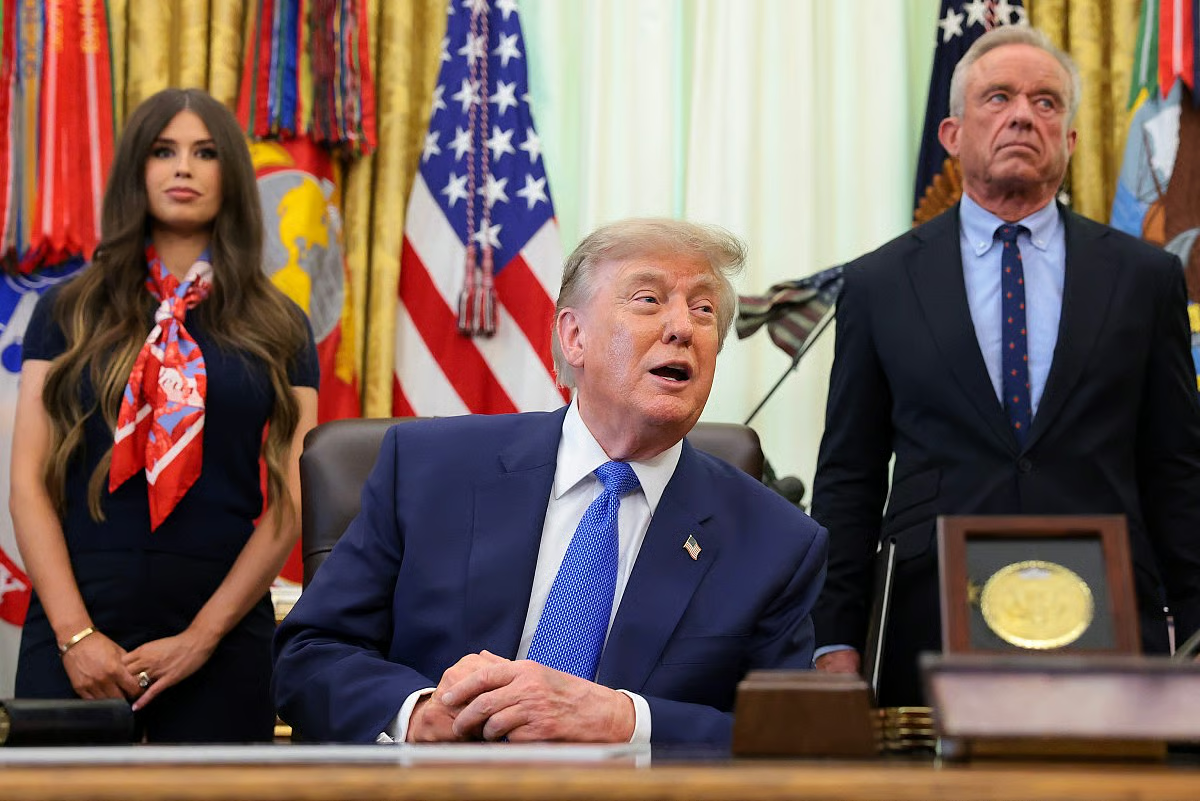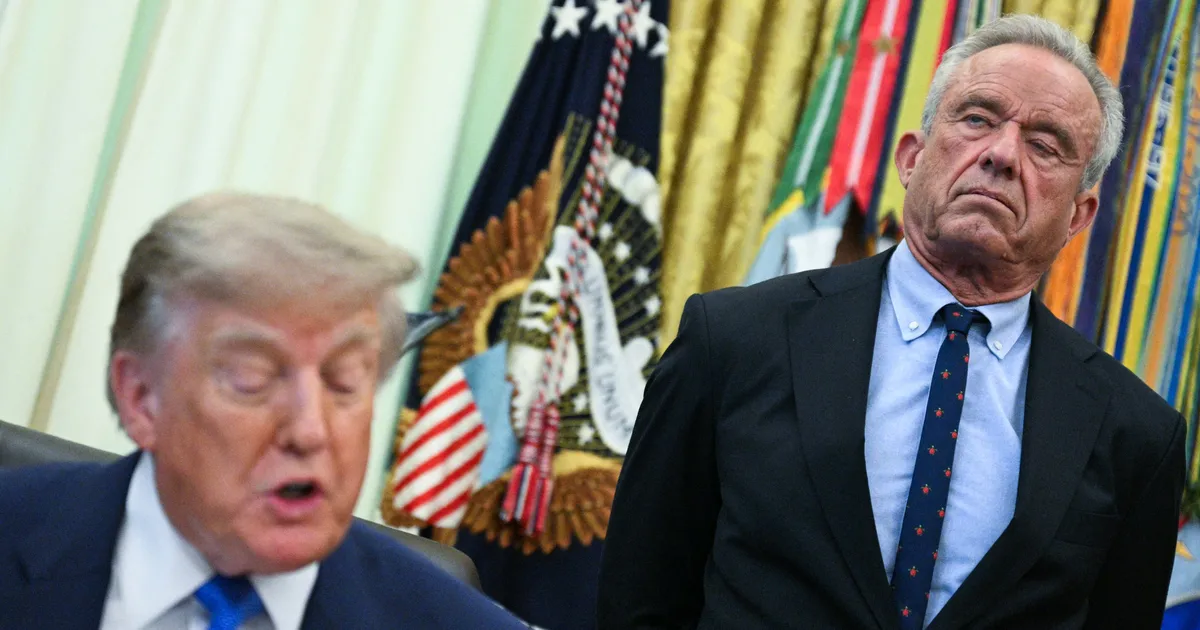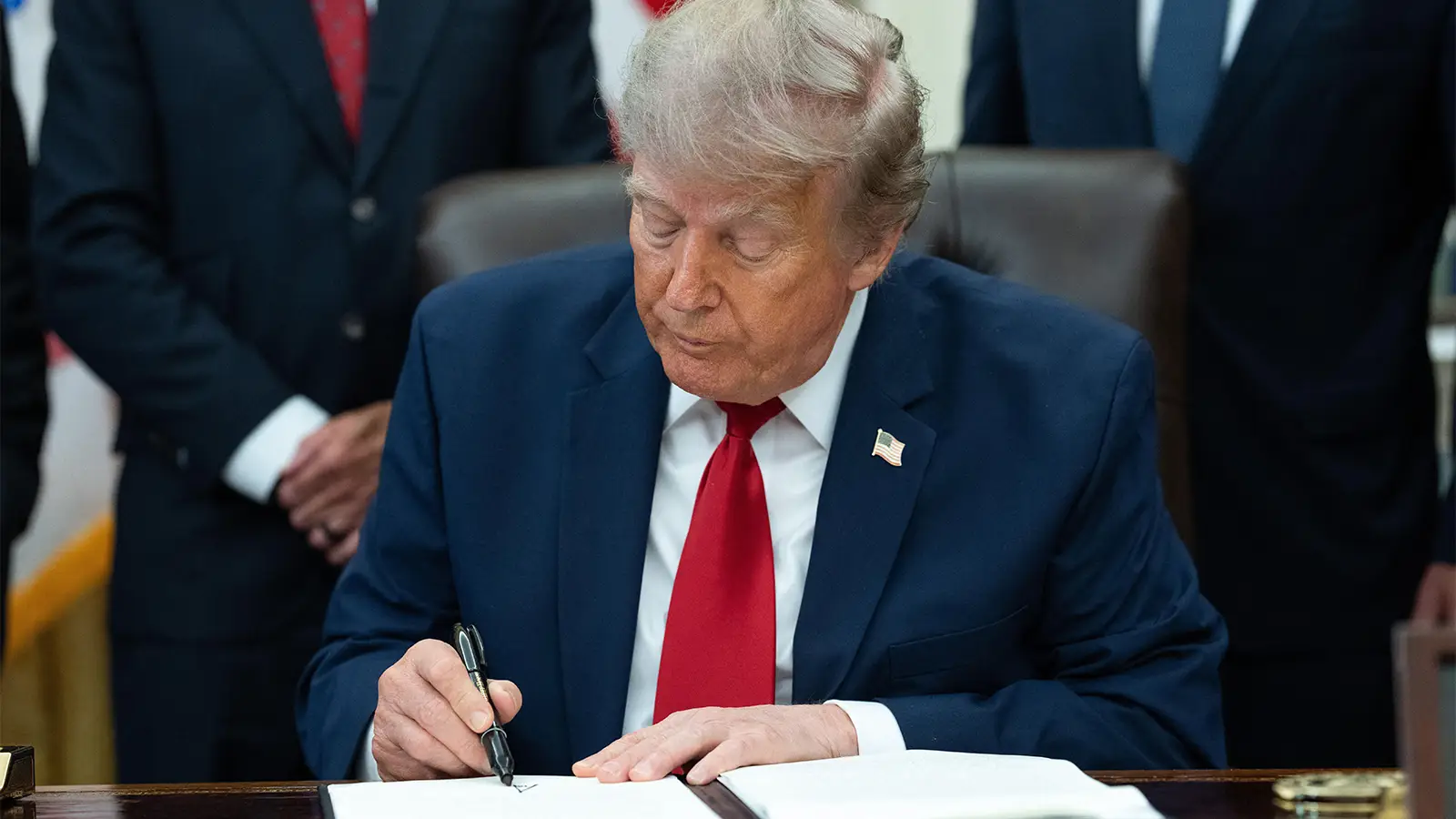
Children in the United States normally get two doses of the MMR vaccine: one at 12 to 15 months, and one at 4 to 6 years of age.Credit: Courtney Perry/Washington Post/GettyResearchers are worried that an executive order signed by US President Donald Trump earlier this week will have negative consequences for children’s health across the country — and are laying out the scientific evidence that backs up their concerns.Autism is on the rise: what’s really behind the increase?The 10 August order calls for children to be vaccinated against fewer diseases than they currently are, and it recommends that combination shots, starting with the one for measles, mumps and rubella — commonly known as the MMR vaccine — be split into individual jabs that are spread out over time.The order is “not in any sense grounded in science”, says Paul Offit, a viral immunologist and director of the Vaccine Education Center at the Children’s Hospital of Philadelphia in Pennsylvania.Trump’s authority to change the schedules that physicians use to vaccinate children is limited, because these schedules are typically set by US state health officials. But Nature spoke to paediatric vaccine specialists to learn what the effects of delaying kids’ vaccines — or even recommending a delay — could be.What does the science say about splitting up vaccines?When he signed the executive order, Trump justified the change by stating that combined vaccines contain a dangerous amount of fluid. A vaccination is “the size of a bottle of soda”, he said. But Offit says there is no evidence to support this claim. One dose of a childhood vaccine such as the MMR shot contains roughly one-tenth of a teaspoon (about half a millilitre) of fluid, he adds, which is a far cry from the “vats” that Trump said they contain.‘Staggering’ number of people believe unproven claims about vaccines, raw milk and morePrevious research1,2 has shown that combined vaccines against multiple diseases can increase population-level immunity and decrease health-care costs, because families can visit the clinic fewer times to receive fewer shots, says Mark Jit, a health economist at New York University. For example, the proportion of people vaccinated against diphtheria, tetanus, pertussis and a bacterial infection called haemophilus influenzae type b increased by 8% in Belgium after the country introduced a jab that combined all four shots into one3.In 2006, a research team reported that when combined jabs are available, children are, on average, immunized against diseases at a younger age4. This means that children are protected earlier in life, rather than having to wait for separate jabs, Jit says. For diseases that spread quickly, such as measles, a delay of even a few months “can make a whole world of difference” in terms of whether kids get sick, he says.When signing the order, Trump falsely suggested a link between vaccine and autism, an idea that began in 1998. This was when a now-retracted paper5 tied the MMR vaccine to autism and sparked debate about splitting up the shot to reduce risk. Since then, dozens of countries and independent panels of scientists have tested and affirmed the safety and efficacy of the MMR jab, which has been administered hundreds of millions of times since its development in 1971. No link to autism has ever been found.Are individual jabs available for kids in the United States?
Trump wants MMR vaccine split up: the science behind why it’s a bad idea
Numerous studies have shown that separating childhood jabs will delay protection and increase costs for families.
551 words~3 min read