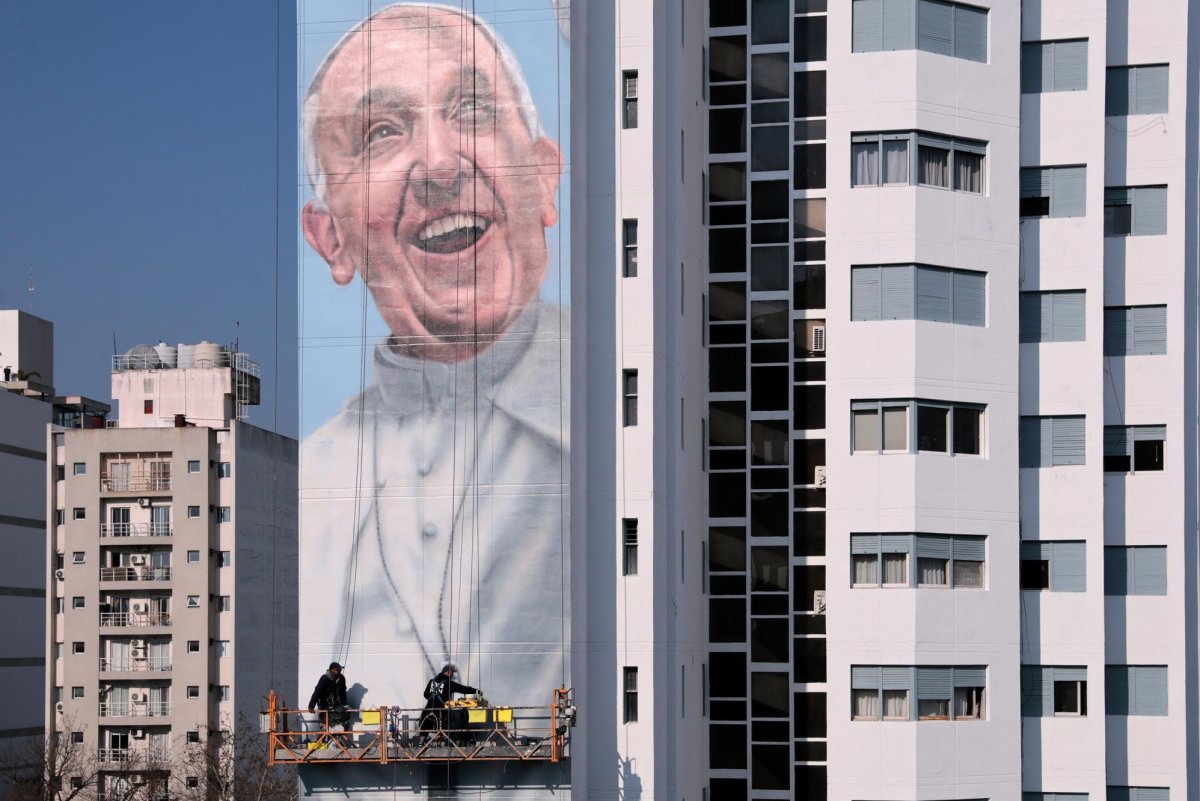
A mural on a multi-storey building depicts Pope Francis, painted by Argentine urban artist Martin Ron in La Plata, Argentina, in July 2025. File Photo by STR/EPA
Aug. 14 (UPI) -- For centuries, Catholicism was so deeply woven into Latin American identity that the two sometimes seemed inseparable. That assumption can no longer be made.
The Catholic Church remains the region's largest religious institution, and Latin America still holds a significant share of the world's Catholics. But its dominance has declined sharply, even as evangelical and Pentecostal churches have expanded and growing numbers of Latin Americans say they belong to no religion at all.
The shift is changing more than how people worship; it is gradually reshaping the region's social and political landscape.
Catholicism's roots in Latin America run deep. Priests accompanied Christopher Columbus on his second voyage in 1493, and religious orders such as the Franciscans, Dominicans and Augustinians later carried out much of the evangelization of the continent.