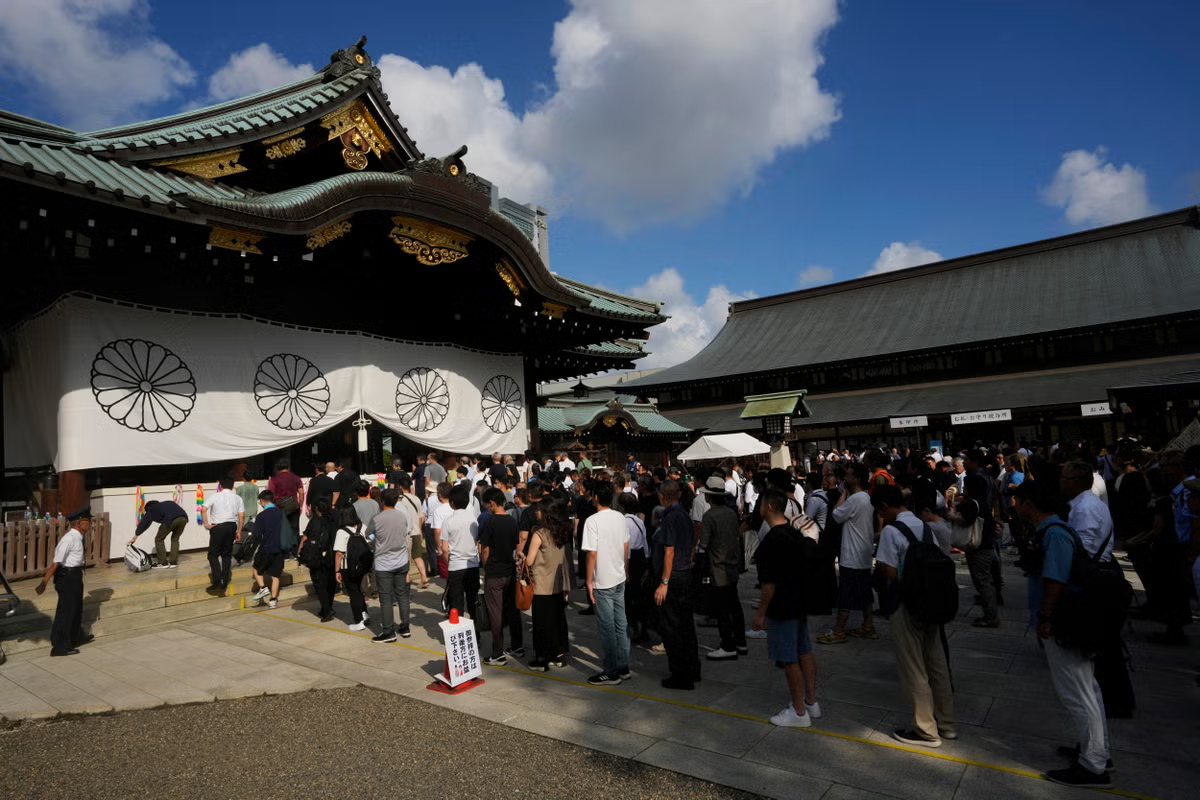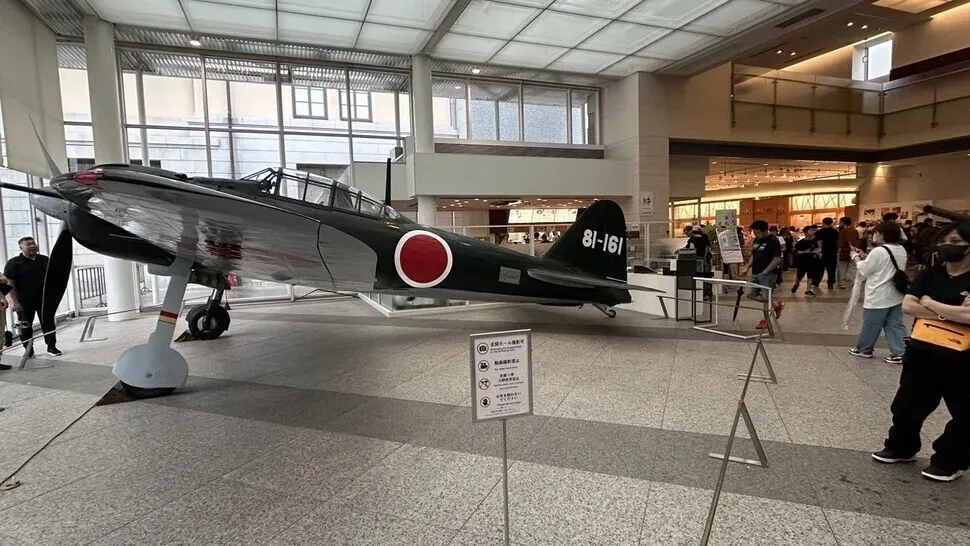
A Zero model fighter jet, one of the main aircraft used by Japan during WWII, is displayed at the Yushukan war history museum in Tokyo’s controversial Yasukuni Shrine on Aug. 13, 2026. (Hong Seock-jae/Hankyoreh)
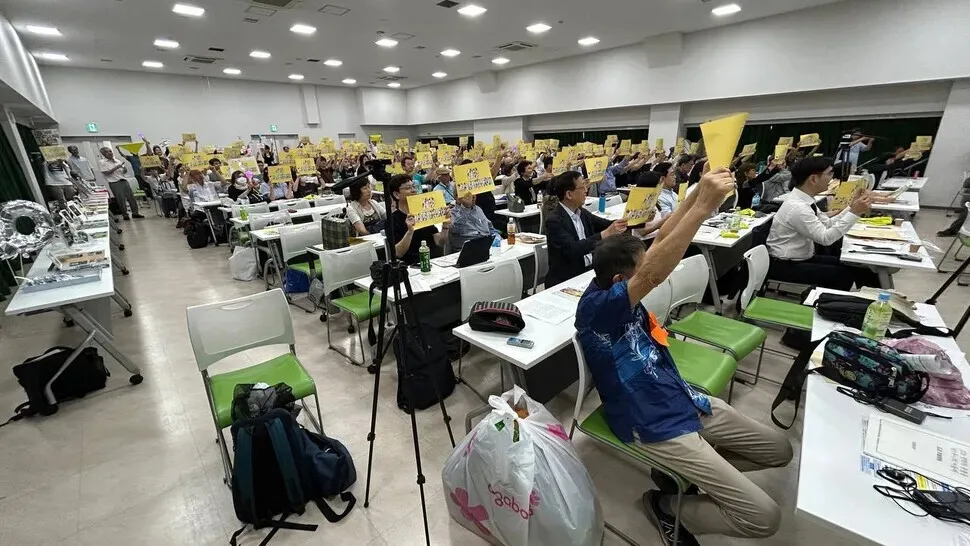
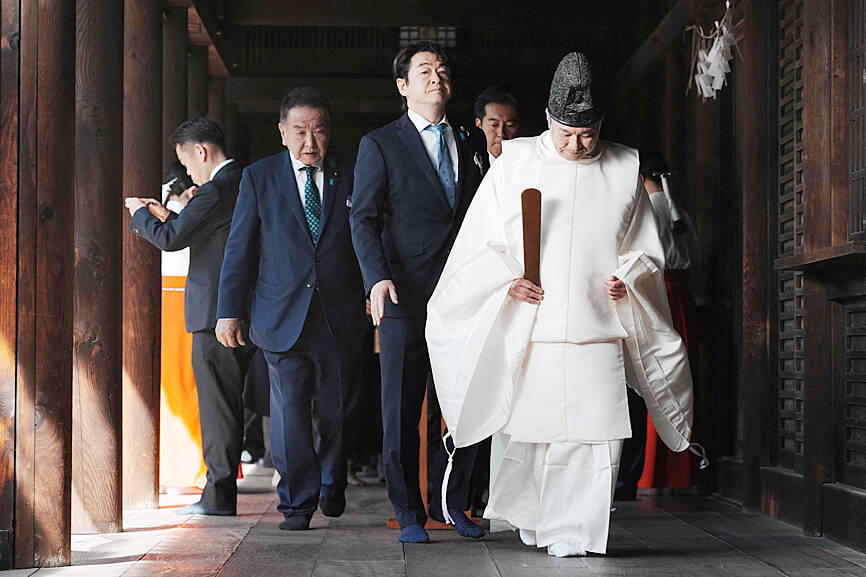
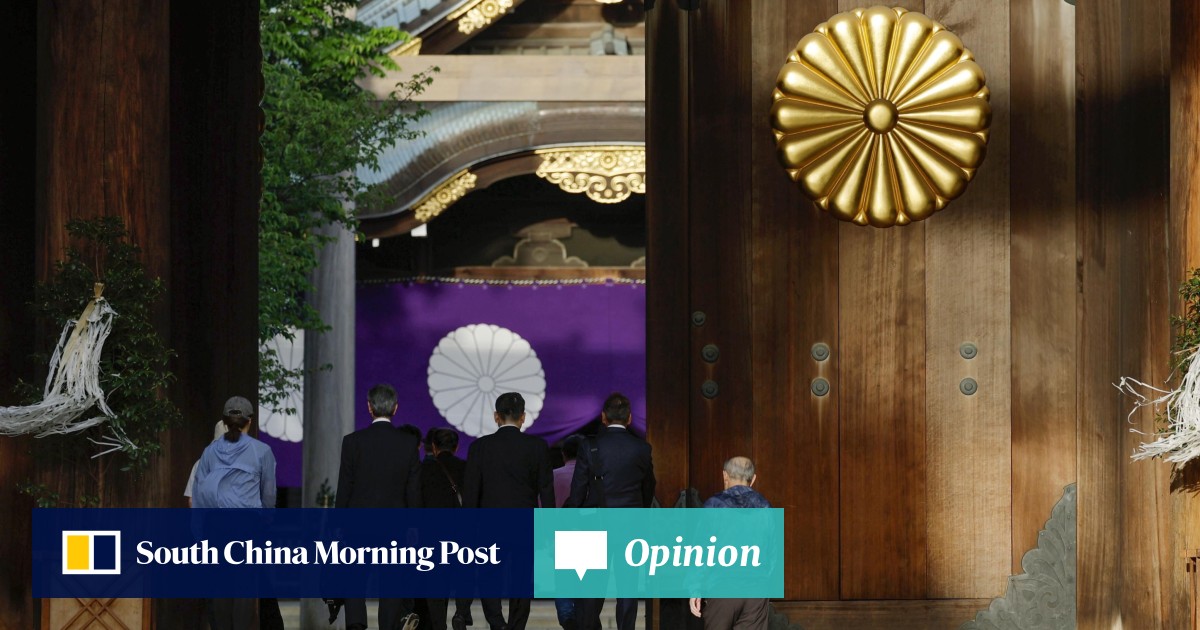
“I was shocked to see an exhibit saying that Japan helped Asian countries gain their independence,” Japanese youth activist Hanako Chiba told the Hankyoreh on Thursday, referring to the Yushukan war history museum at Tokyo’s controversial Yasukuni Shrine.That was two days before Aug. 15, which Japan commemorates as the end of World War II, but which Korea celebrates as its liberation from Japanese colonial rule.Chiba had visited the Yushukan on Aug. 8 with young Korean activists as part of a joint campaign to reckon with the two countries’ fraught history. While at the museum, she closely scrutinized the items on display.“I couldn’t find any mention of Japan’s colonial rule over the Korean Peninsula or Taiwan. This was my second visit to the Yushukan, and I realized that instead of presenting the historical facts, it only presents information favorable to Japan.”A map at the Yushukan showing the independence of various countries after World War II fails to label Korea as an independent country, unlike Vietnam and the Philippines.That omission is based on a specious argument: that since Japan “legally” annexed Korea in 1910, Korea’s liberation in 1945 was different from the independence gained by Asian countries colonized by the Western powers.The museum even attempts to justify the 1937 Nanjing Massacre during the Second Sino-Japanese War, in which hundreds of thousands of people were killed by invading Japanese forces. An exhibit claims that the Japanese were “mopping up enemy remnants” who had hidden among the civilian population.The museum also labels a 30-meter warship rope known as a kezuna, which was made from hair donated by some 10,000 Japanese women during the First Sino-Japanese War, as an “expression of patriotism.”Zero model planes, which were used as suicide attack planes toward the end of WWII, and Kaitens, crewed torpedoes and suicide craft, are on display for everyone to see. A child stood by the exhibits with a look of wonder on their face, saying, “Those planes and trains are so big!” Baby dolls wearing military uniforms, tank-shaped keyrings decorated with the phrase, “Imperial Japanese Army Tank,” and other items were being sold at the museum’s gift shop. “By displaying a life-size fighter plane, it seems that they are attempting to make the space feel like a theme park so as to immerse visitors in this fabricated story,” said Rei Tashiro, another youth activist.