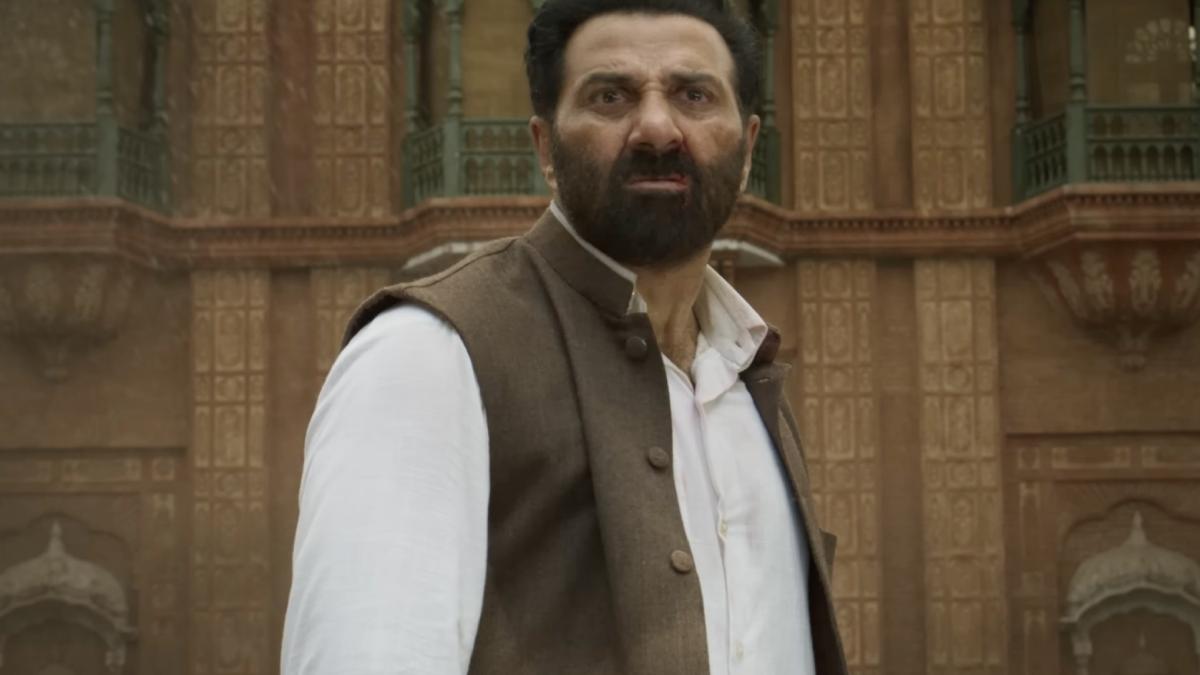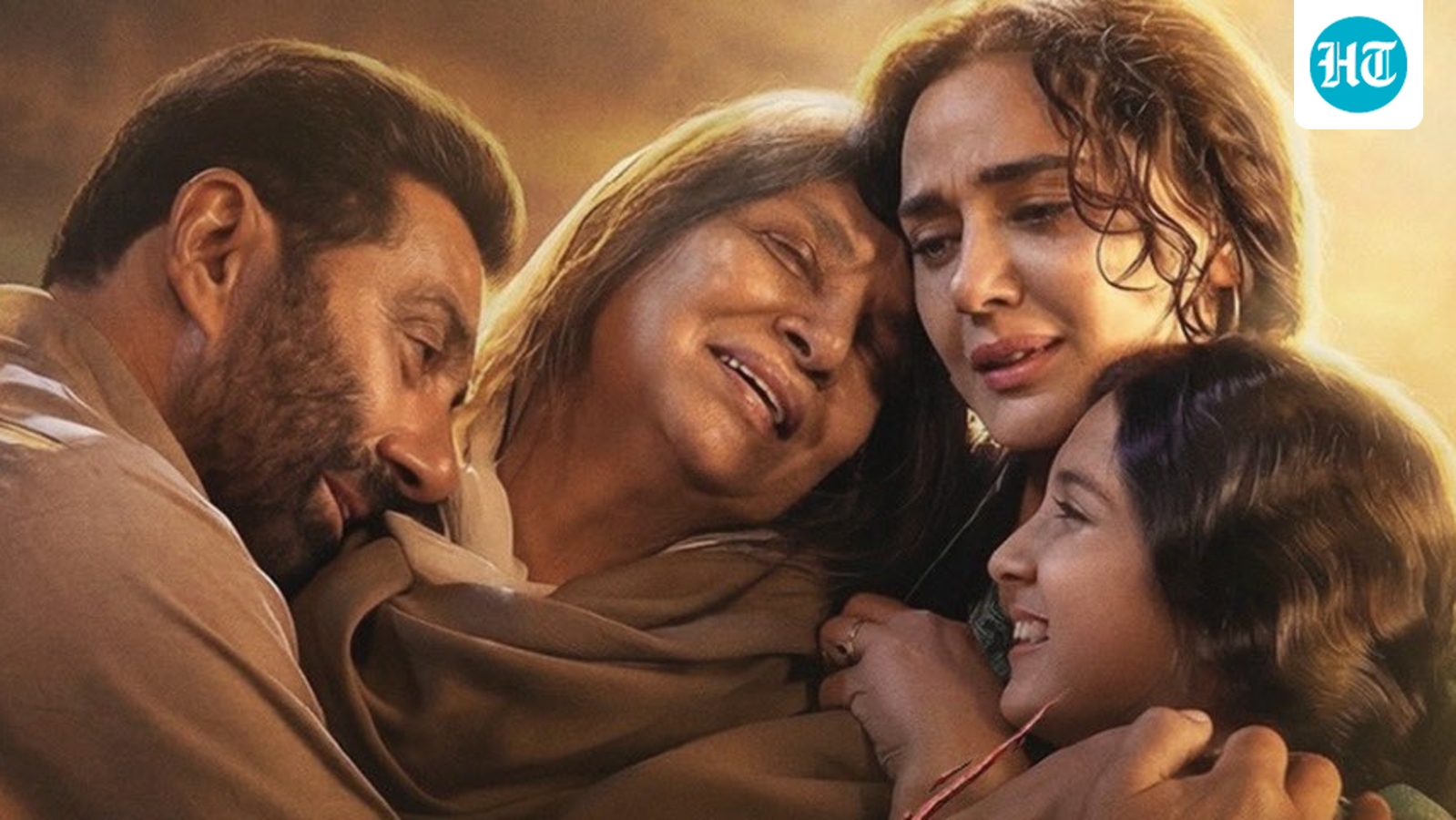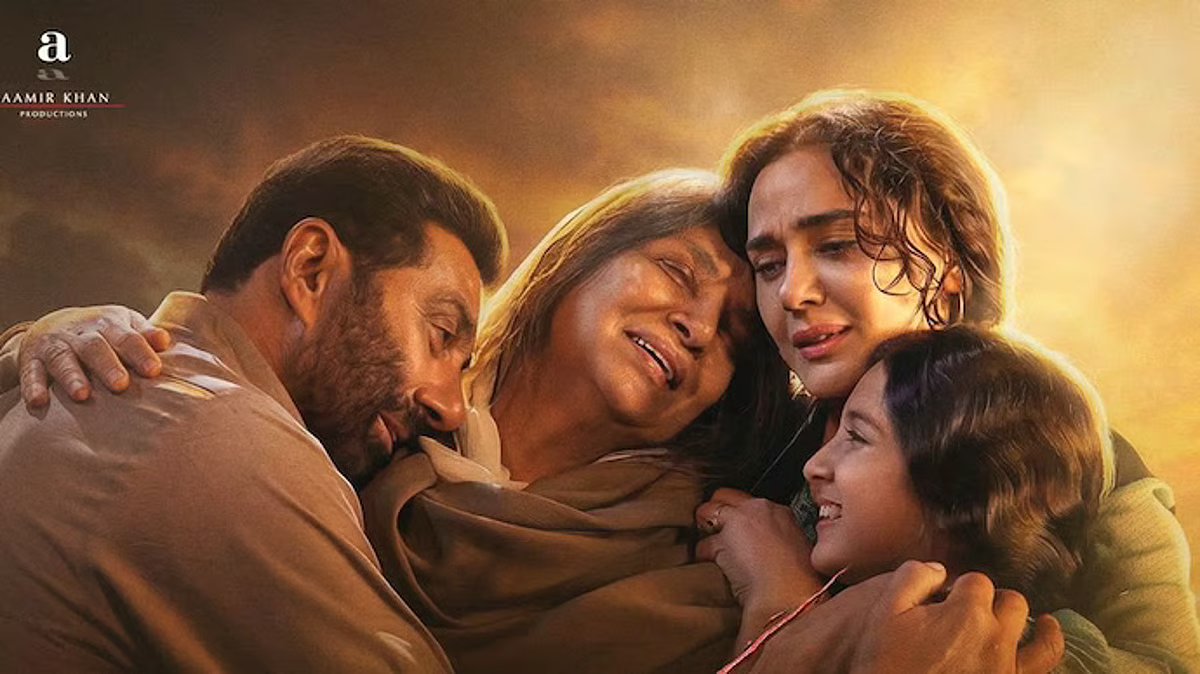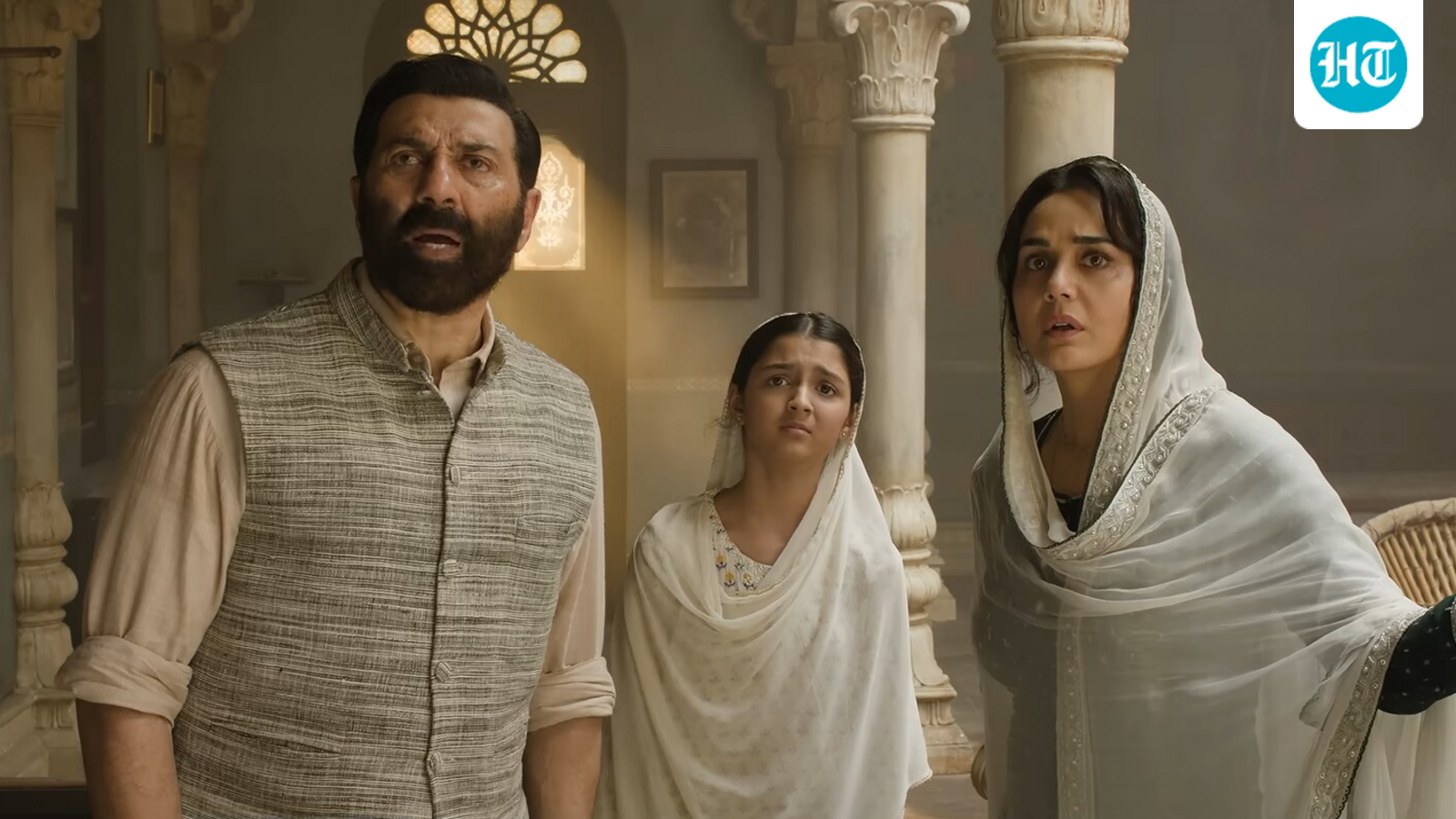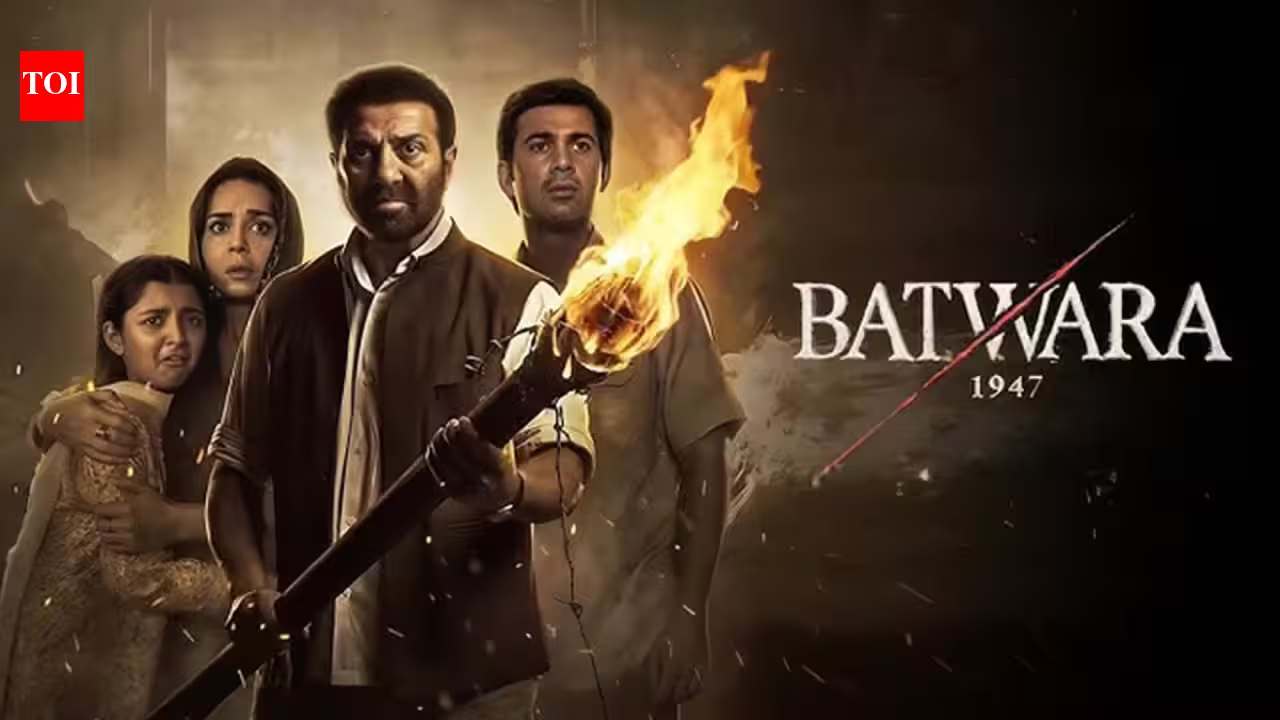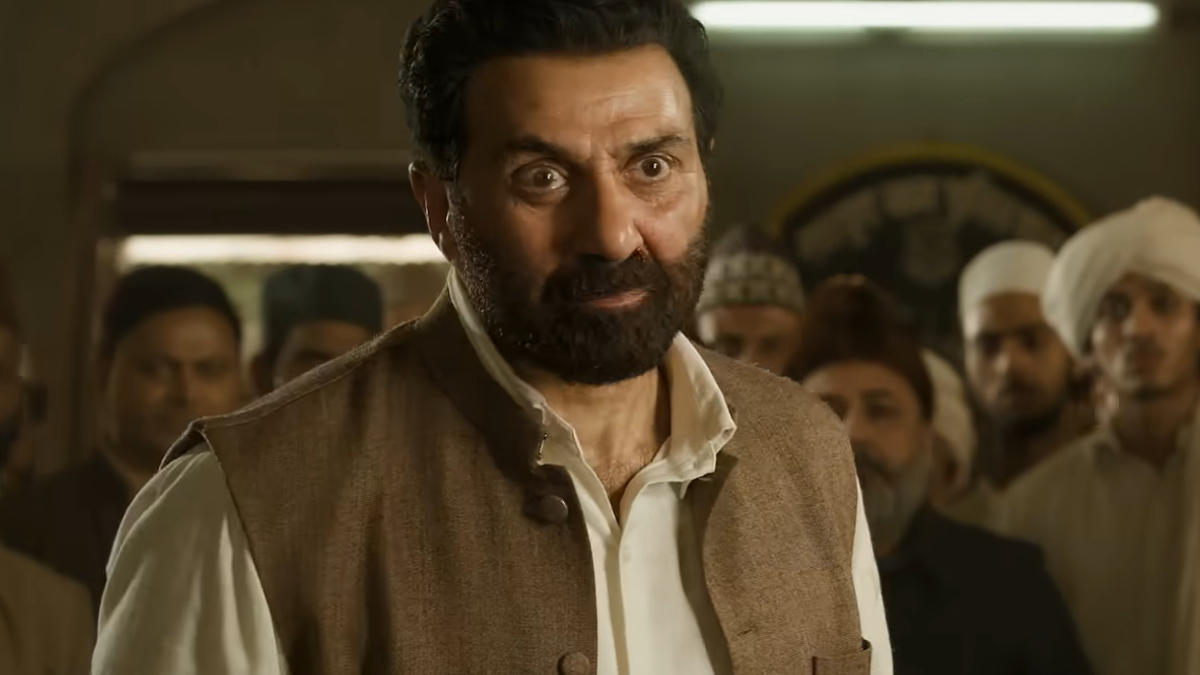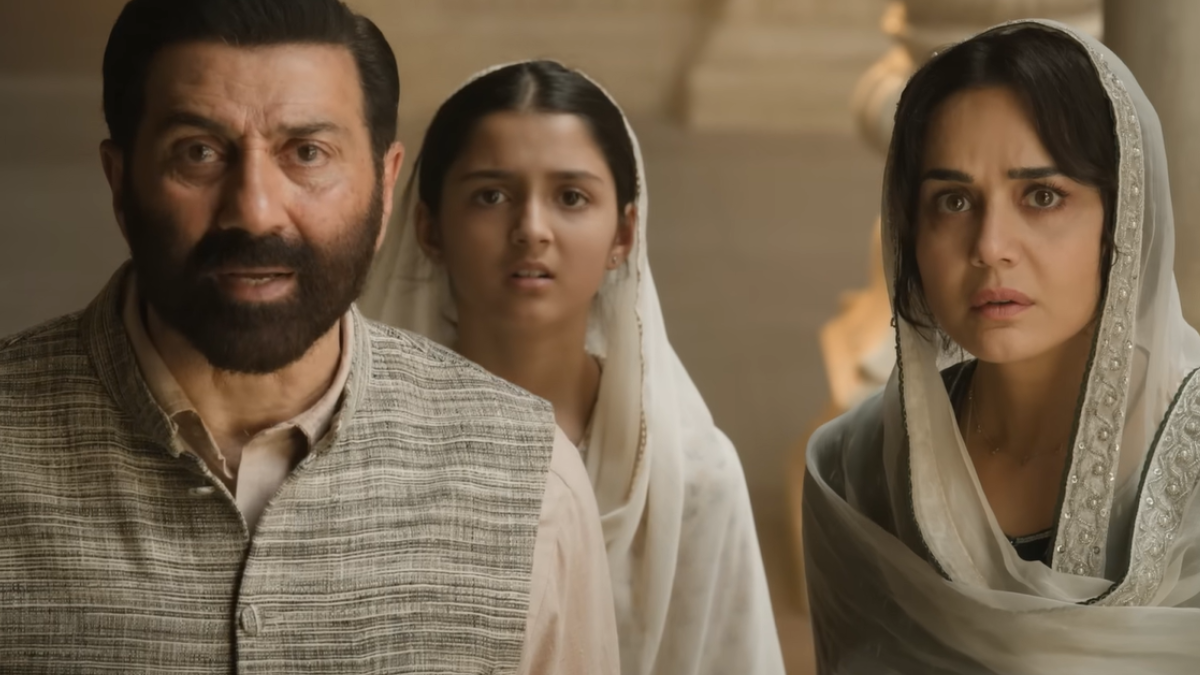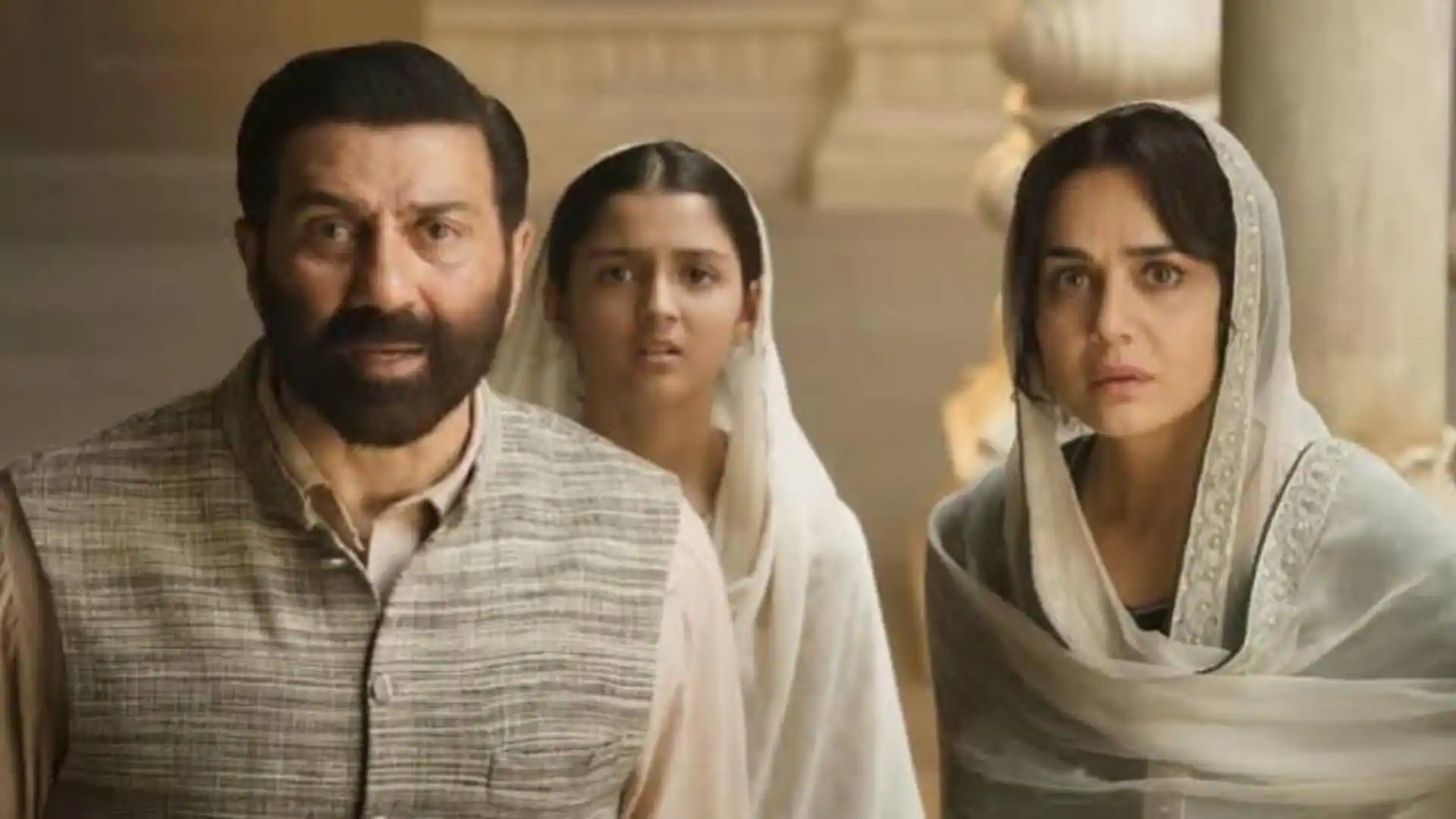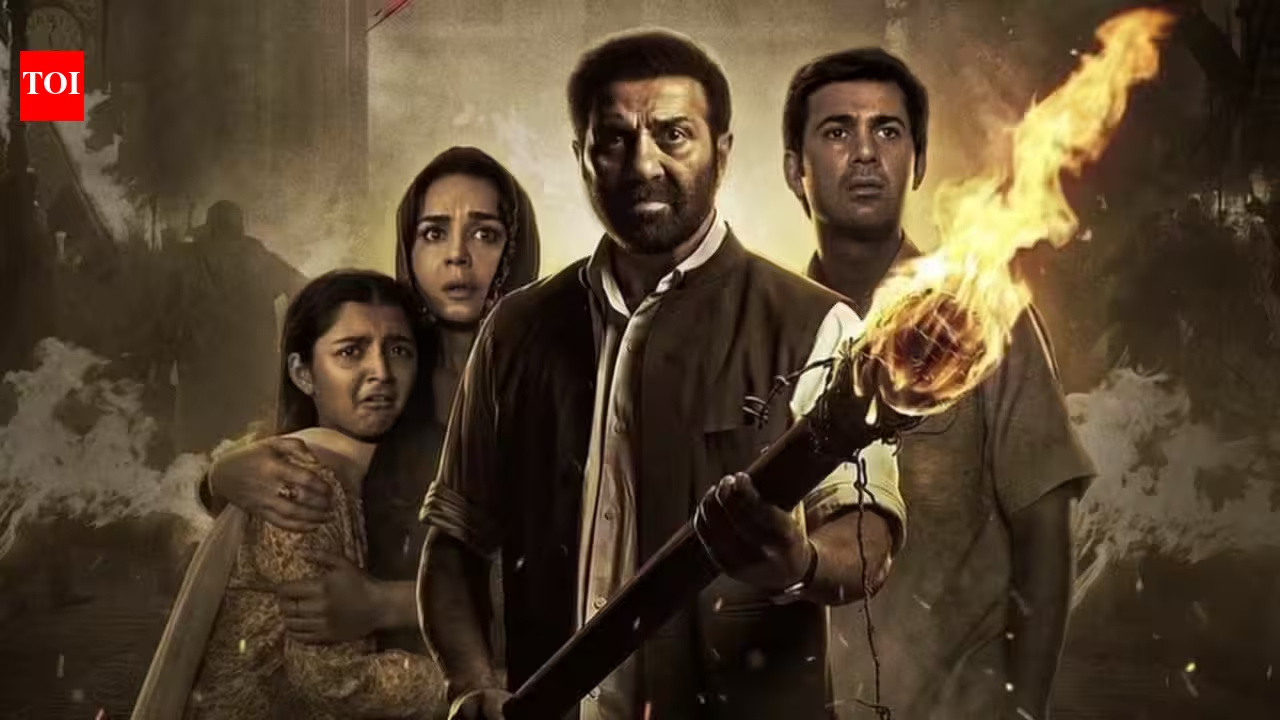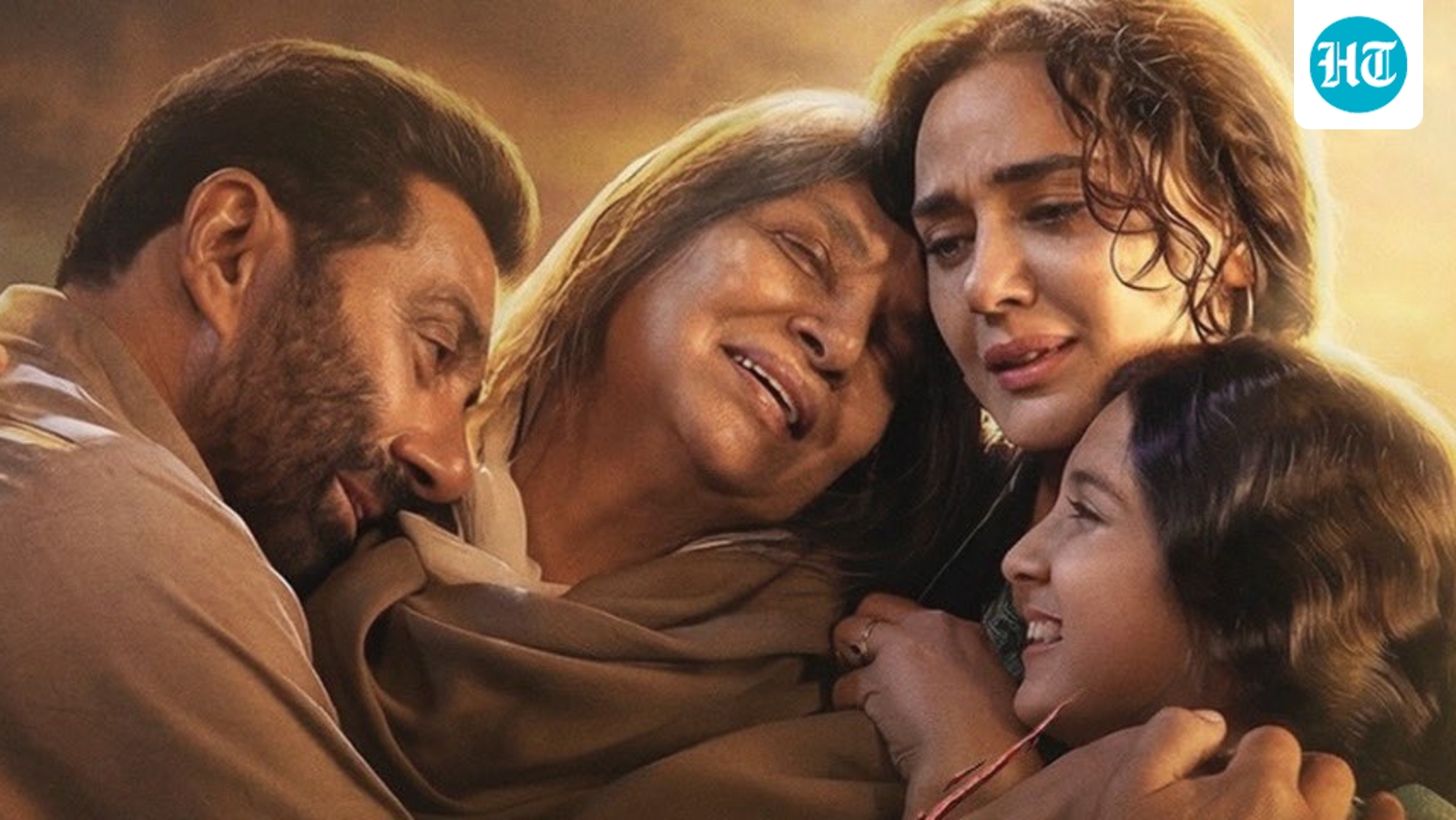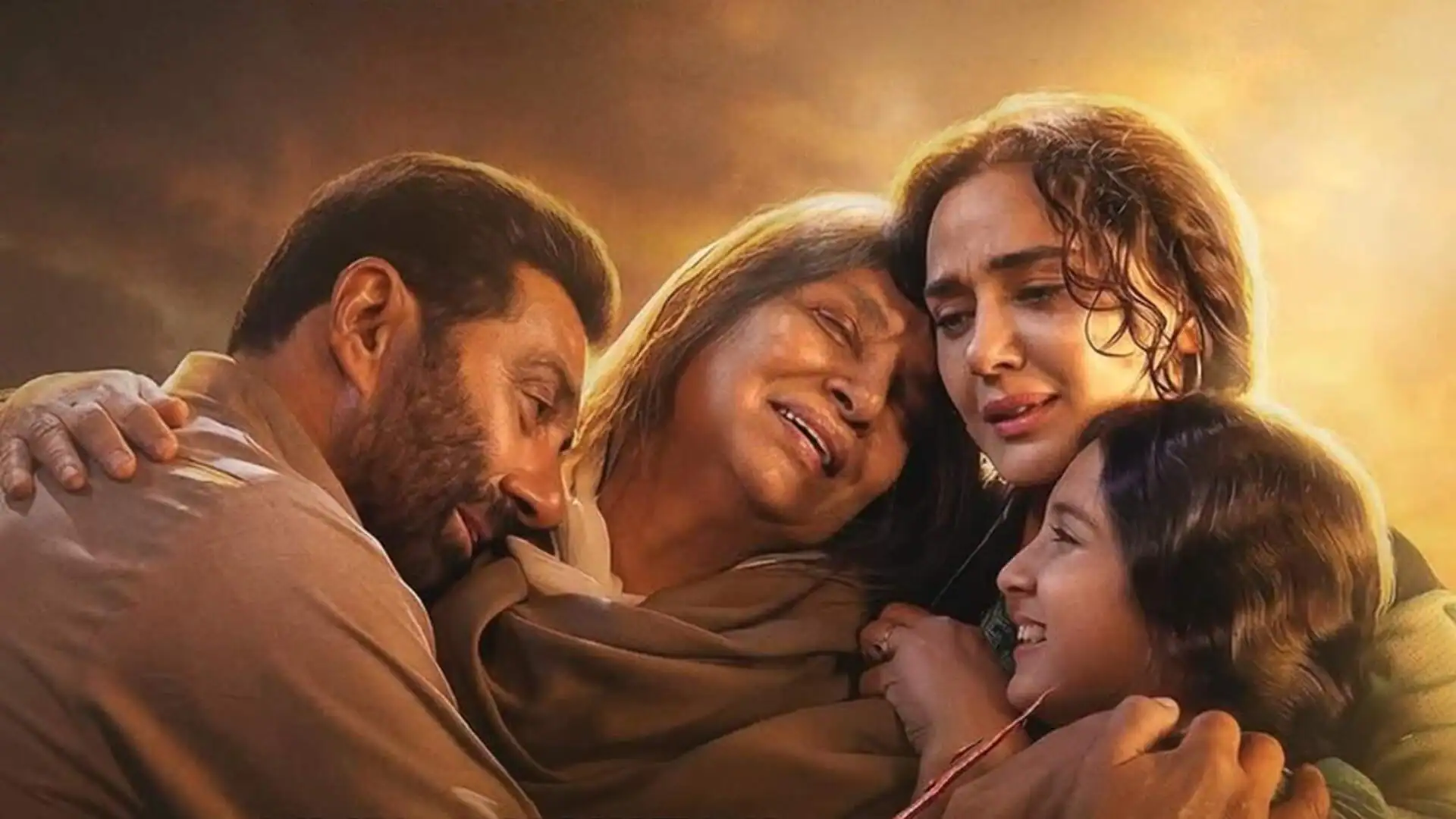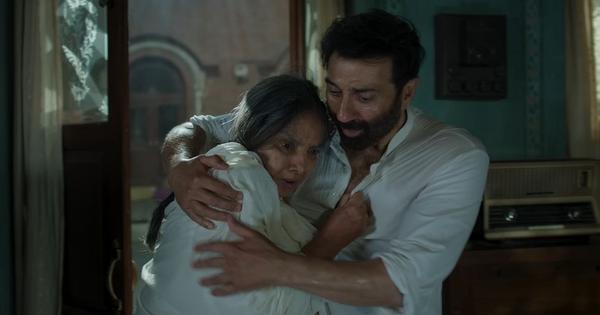
A chunk of Sunny Deol’s career is devoted to swinging hand pumps at Pakistanis, bashing in their heads or simply bellowing at them until their eardrums burst. In Rajkumar Santoshi’s Batwara 1947, Deol is in a different zone and a different register.The Hindi-Punjabi film is adapted from a play about compassion trumping communal hatred during the horrific time of Partition. Even Sunny Deol, then, must behave.Deol plays Sikandar, a Muslim businessman from Meerut who flees to Lahore after being targetted by Hindu rioters. Sikandar, his wife Hamida (Preity Zinta) and daughter Tanno (Khushi Hajare) enter the mansion allotted to them, only to find an elderly Hindu woman there.The house belongs to Durgavati (Shabana Azmi). Her own son and his family are missing. Durgavati refuses to leave until her son returns.The domestic quandary is soon eclipsed by the antics of the fanatic politician Yaqub (Abhimanyu Singh), who wants to purge the neighbourhood of its Hindu past. Adding to Sikandar’s woes is his son Javed (Karan Deol), who has been catalysed by the carnage he witnessed back in Meerut and is on Yaqub’s side.Sunny Deol, Preity Zinta and Khushi Hajare in Batwara 1947 (2026). Courtesy Aamir Khan Productions.Batwara 1947 is based on Asghar Wajahat’s well-known play Jis Lahore Nai Vekhya, O Jamya E Nai. Can you say you have lived if you have never seen Lahore?Santoshi’s adaptation, co-written with Wajahat reduces one of the historic centres of Punjabi culture to a few streets and interior sets. Santosh Sivan is listed as the cinematographer, but you wouldn’t know from the drab, television serial-level visuals.The storytelling is similarly stodgy and plodding. Sunny Deol’s famous fists of fury are unleashed in a few scenes but for the most part, the Bollywood strongman stands around looking befuddled or sharing Durgavati’s tears over her plight.Even the dullness that pervades the 145-minute film can’t conceal its cogent, clear-eyed denunciation of religious bigotry. In warnings against mixing politics and religion, pleas to respect the traditions of all faiths and resistance to zealotry, Batwara 1947 is as much about Partition-era Lahore as it is about present-day India.Ali Fazal plays Habib, a poet with a dodgy wig, wisdom beyond his years and some of the film’s better monologues. In a refreshing change from similar movies, the female characters stand up to Yaqub and his posse of wild-eyed tormentors, be it Preity Zinta’s Hamida or Yaqub’s feisty sister (Kanikka Kapoor).Zinta is a particularly lively presence, a more full-bodied character than the one-note Sikandar or the persistently hammy Abhimanyu Singh. As the passive and yet poignant Durgavati, Shabana Azmi packs a punch.The veteran actor brilliantly brings out Durgavati’s agony over her missing son as well as her deep connections to the only place she can call home. Azmi’s Durgavati radiates care and understanding, which melt Sikandar’s initial opposition and convert him into a warrior for peace.
‘Batwara 1947’ review: Dull storytelling and sharp messaging
Rajkumar Santoshi’s adaptation of the play ‘Jis Lahore Nai Vekhya, O Jamya E Nai’ is out in cinemas.
477 words~2 min read