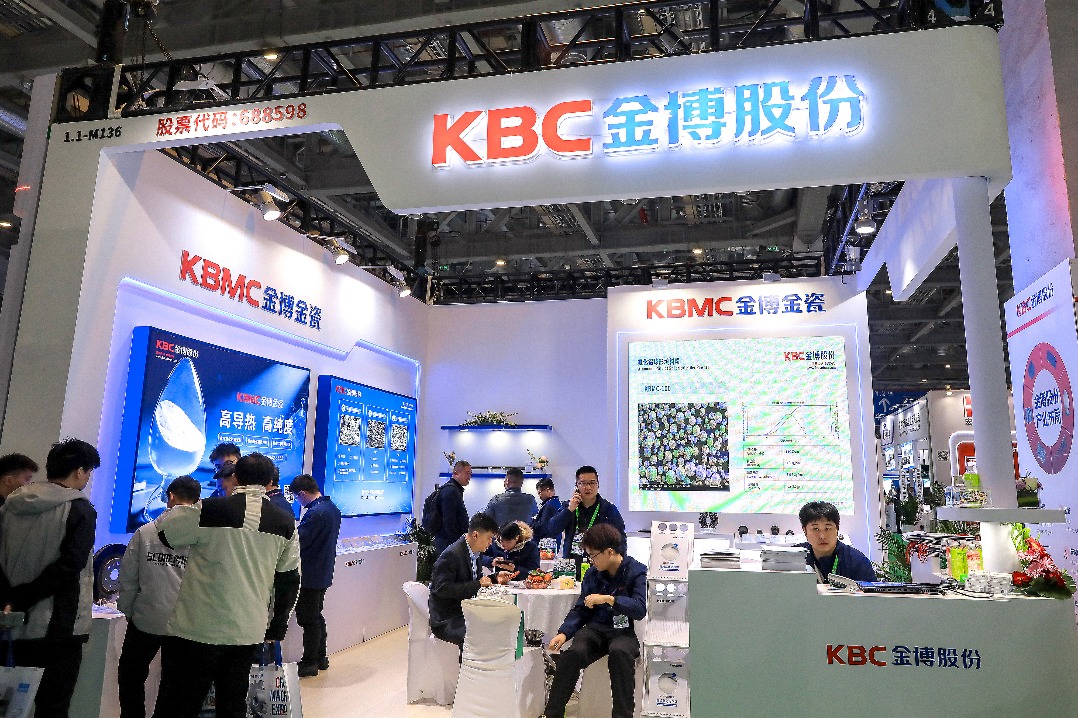
At a factory in Yiyang, Central China's Hunan province, a carbon-ceramic brake disc made by KBC Corp Ltd is light enough to lift with one hand. Yet, as company executives readily admit, the true challenge is producing tens of thousands of them with the microscopic precision demanded by global automakers.
Nearby, KBC's next breakthrough appears deceptively simple — a black sheet less than half a millimeter thick, that resembles delicate traditional Chinese Xuan paper.
While the brake disc is already fitted onto mass-produced electric vehicles, the sheet — carbon paper vital for hydrogen fuel cells — is undergoing customer validation and initial deliveries. Together, they demonstrate how KBC is leveraging two decades of carbon-materials expertise to pivot beyond its traditional base in photovoltaic manufacturing.
"For more than 20 years, we have focused on just one thing," said Dai Chaohui, president of KBC. "We are now using our accumulated expertise to unlock new, high-value applications."
This strategic shift is reshaping KBC's finances. Photovoltaic products, which generated 990 million yuan ($146.7 million) in revenue in 2023, fell to 175 million yuan by 2025 amid broader solar sector realignment.