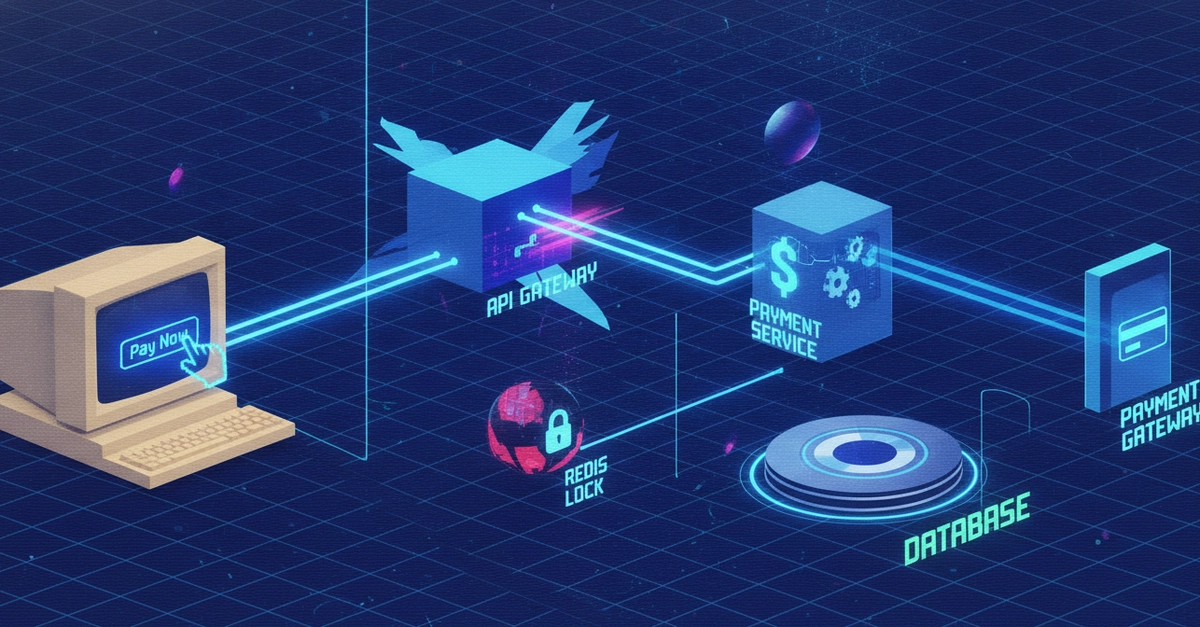
Have you ever clicked a checkout button on a website, noticed nothing happened instantly, and clicked it three more times out of frustration? Behind the scenes, that website might have just processed multiple duplicate requests, potentially ordering multiple copies of the same item or corrupting your account state. To prevent this kind of digital chaos, software engineers use a clever programming technique called debouncing.
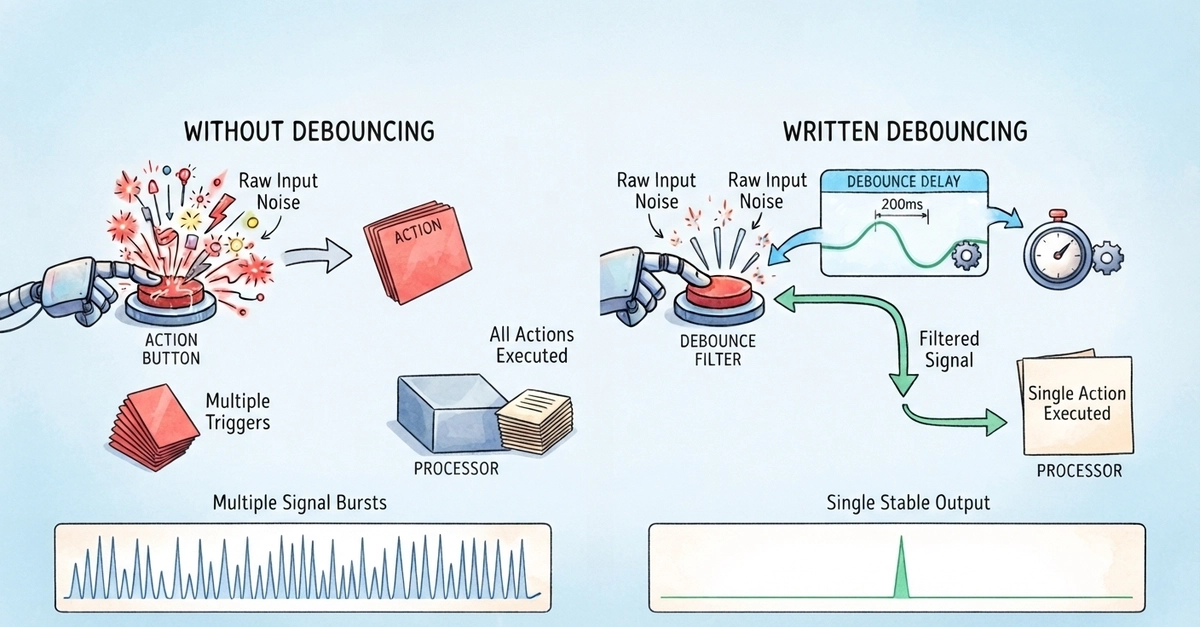
Debouncing is a software design pattern used to limit the frequency of highly demanding operations. It ensures that a specific piece of code is only triggered after a set period of silence has elapsed since the last request was made. In simple terms, it groups a rapid series of actions into a single execution, running the code only when the dust has finally settled.
A Relatable Analogy: The Home Security Light
To understand debouncing, think of a motion-activated home security light installed in a backyard. This light is designed to turn on when it senses movement, but it also features an internal shutdown timer. If a stray cat runs past, the sensor detects motion and turns the light on.
Instead of turning the light off and on again rapidly every single time the cat takes another step or moves its tail, the light starts a five-minute countdown. If the cat moves again within those five minutes, the light does not flicker; it simply resets its countdown timer back to five minutes. The light will only finally turn off once there has been a continuous five minutes of total stillness in the yard. In this scenario, the security light is debouncing the motion triggers—waiting for a quiet period of inactivity before executing its final action of shutting off.