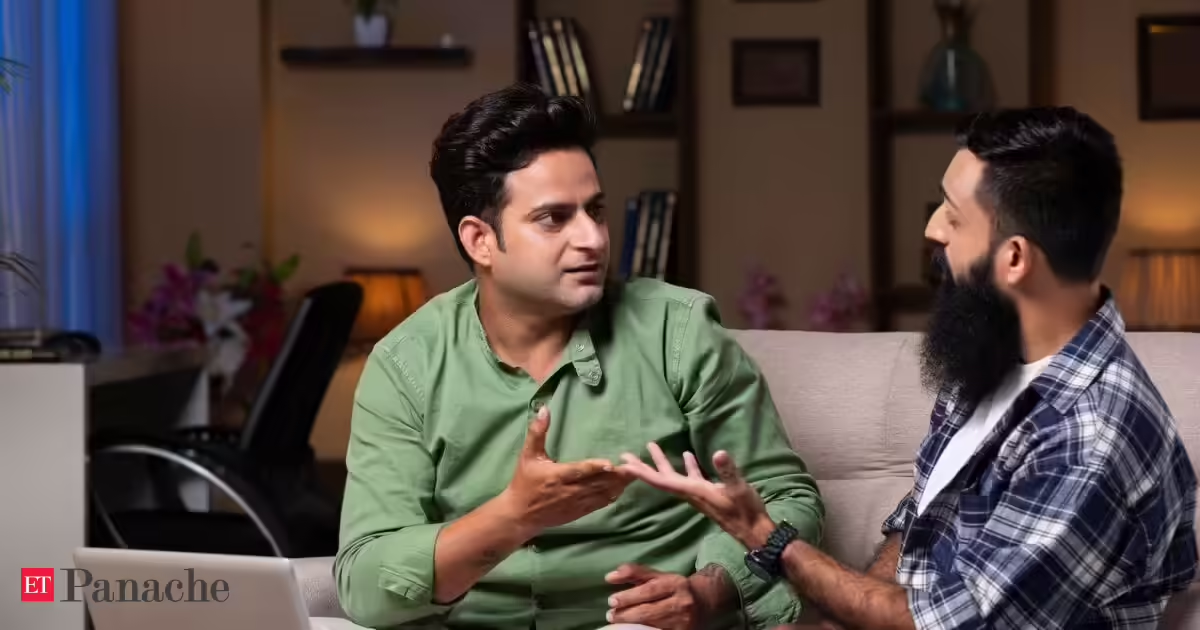
Why CEOs are seeking out ‘the hard truth’ from mentorsCEO mentoring: CEOs are 'looking for advice from someone who has been through that situation and has the war wounds'. Photograph: iStock Emma JacobsFri Aug 14 2026 - 06:00 • 3 MIN READThe feedback was “brutally honest”, at times knocking “the wind from my sails”, said one senior financial services leader who preferred not to be named.The bracing – but useful – observations came not from a colleague but a mentor he had sought out, who is chair of another company.The executive had been paired up with the mentor by Russell Reynolds Associates as part of its programme matching C-suite leaders with those who have been there, done that. The recruitment firm is one of a small group of organisations providing such a service.“All the clichés are true,” says Suzanne Bose-Mallick, head of executive mentoring, referring to how many executives lament that it can be lonely at the top. The pressure, she says, has intensified as the “speed of turnover of CEOs is higher. It’s got more complicated than ever before. Leaders don’t have a huge amount of time to make decisions.”Mentorship is an opportunity to gain access to experience, as well as offering a contrast to the typically overly polite workplace culture of many companies.While coaching has become a staple of corporate support for leaders, mentoring has tended to be seen as a way to develop less-experienced employees, or in the case of reverse mentoring, for junior staff to teach senior leaders about new technology and communication styles. Confidentiality and chemistry are key to the relationship working.“The higher you get in an organisation, the fewer people will tell you what you actually need to hear,” says Steffen Syvertsen, chief executive of Å Energi, the Norwegian energy group focused on hydropower.For the past year, he has been talking to a mentor, which is one of the “few relationships where there is no organisational agenda ... [and where he benefits] from having someone to ask difficult questions without an agenda of their own”. The mentor helped cut through media “noise” and focus on priorities, he said.Russell Reynolds has run a mentoring programme for the past three years and has more than 150 mentors on its books. The programme runs for 12 months, but some pairings continue for a second or even third year. It does not disclose costs but those are typically paid for by the mentees’ organisation.[ Should everyone over the age of 40 have a mentor under 30?Opens in new window ]“A lot of leaders have mentors” but few do on a formal basis, says Symon Elliott, leadership adviser at Russell Reynolds. In between the regular meetings, they can speak over the phone as “so many things can arise, like press, or a bid has come in”.Chief executives are “looking for advice from someone who has been through that situation and has the war wounds,” says Amy Speake, CEO at Holmes Noble, an executive search firm. “You go to them with challenges and know you won’t like the answer. It’s about being able to listen to the hard truth even if you don’t want to hear it.”Bose-Mallick warns “these are not cosy lunches ... mentoring creates great judgment [by helping] people learn from others who have faced similar challenges. A mentor might say this is what happened in a similar situation.”One mentor told Bose-Mallick that their ambition was to help their mentee avoid the time and financial costs their mistakes had cost them in their leadership career.According to a study published in the Harvard Business Review, a majority of CEO mentees said they made better decisions as a consequence (69 per cent) while 84 per cent said the advice saved them from making expensive blunders and sped up their proficiency.Martin Scicluna, formerly chairman of Deloitte, the consultancy where he worked for more than 30 years, and now chairman of supermarket Sainsbury’s, says mentoring differs from coaching because it is more practical. “It’s a very different process. It’s not quite teaching, it’s discussing how to handle the conflicts.”Scicluna says he asks his mentees to consider how a proposal looks to their board and helps to provide different perspectives of various members, as well as ensuring they are developing key relationships.In essence it is “passing on your knowledge and helping them solve the question themselves”. There is a danger, he says, that experienced mentors think they have “seen it all and know all the answers. You don’t. All issues are unique.” – Copyright The Financial Times Limited 2026IN THIS SECTION
Mentoring v coaching: ‘The higher you get, the fewer people tell you what you need to hear’
Why CEOs are seeking out ‘the hard truth’ from mentors
758 words~3 min read