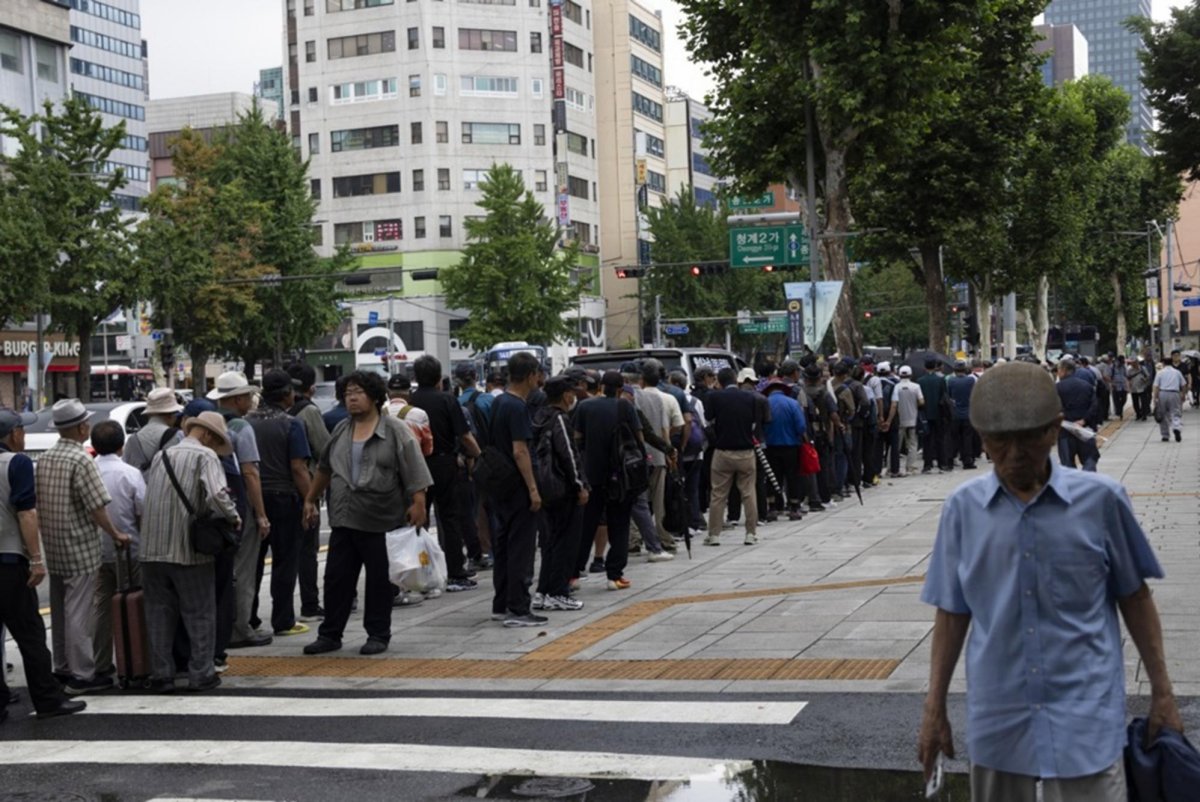
More than 8 out of 10 subscribers of the elderly care insurance are of Korean ethnicity, with most coming while already seniors An elderly man on an escalator. (123rf) South Korea is rapidly becoming a ethnically diverse country, with more 5 percent of the population being categorized as foreign residents, but government data showed Friday that only 4,790 foreign nationals were recieving benefits from the state-funded insurance system for the elderly.Of 1.16 million beneficiaries of the long-term care insurance as of December, 2024, just 0.4 percent were foreign nationals, according to a report by the Health Insurance Research Institute. This is despite immigration data showing that Korea has more than 100,000 foreign residents over the age of 70.Of them, 85.7 percent are holders of the F-4 visa for overseas Koreans, which is a long-term visa issued for foreign nationals of Korean descent. This is similar to overall population data from the Korean Immigration Service, which showed that 82 percent of over-70s were on F-4 visas.It was found that Korean-Chinese accounted for 78.8 percent of all foreigners receiving support from the state-operated eldercare insurance program, with most, but not all, on F-4 visas.Long-term care insurance is a program mandated for all subscribers of the national health insurance. It provides financial subsidy and care service for those aged 65 and above, or those suffering from age-related disease such as dementia.Data shows that most foreign recipients of the senior care benefits were already senior citizens when they received their visas and subscribed to the program. They received their residential permit at an average age of 71.2, and became eligible at the average age of 77.6, according to the HIRI report.Among foreign nationals receiving senior care benefits, almost two-thirds of them received help while living at home, as opposed to being admitted to elderly care facilities.The report showed that as of 2024, the long-term care insurance program had a 13.2 billion won surplus ($93.2 million) from foreign subscribers, meaning foreign subscribers of the senior care service paid more than the amount they received in benefits.Reports showed that the overall insurance program as a whole was expected to enter a deficit starting this year.
Less than 1% beneficiaries of state elder care are foreign nationals
South Korea is rapidly becoming a ethnically diverse country, with more 5 percent of the population being categorized as foreign residents, but government data
360 words~2 min read