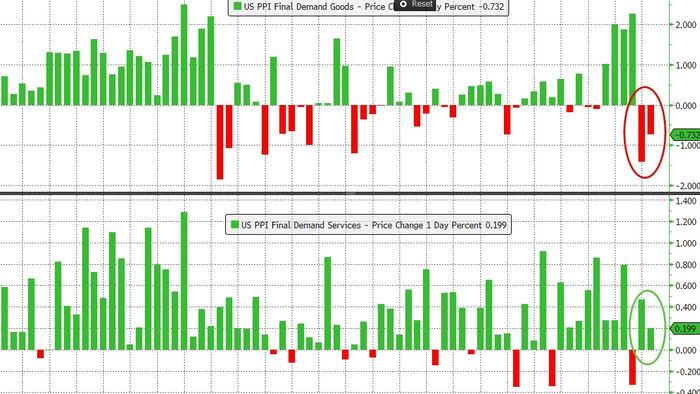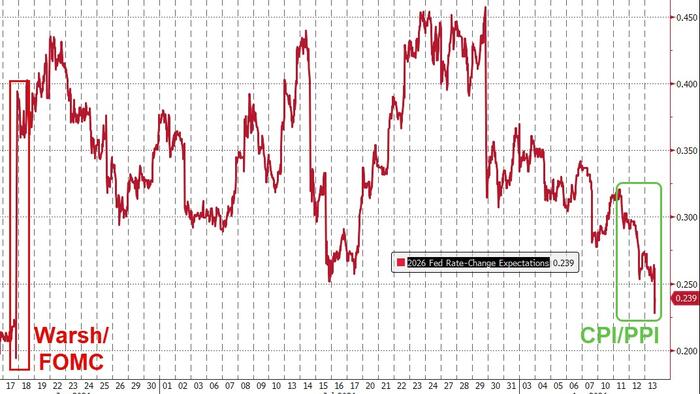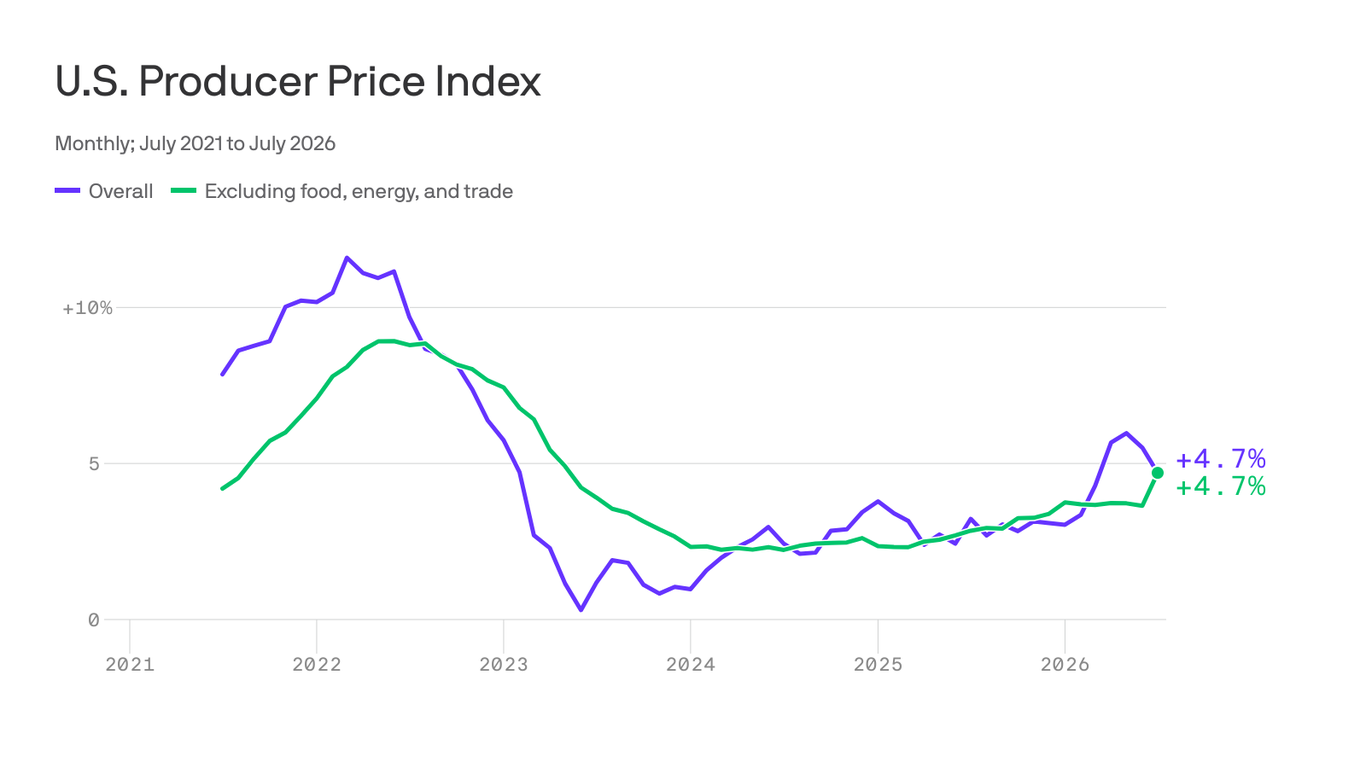
Another inflation marker came out on Thursday: the produce price index, which showed inflation was a bit cooler in July. Headline inflation is at 4.7% year-over-year, and core inflation is a bit lower, at 4.2% — both shaped by energy prices.Thursday was another day of softer inflation data, according to Ben Ayers, senior economist with Nationwide.“Beyond energy, there's not much inflationary pressure,” he said.It’s disinflation — not deflation — according to Stephen Juneau, senior U.S. economist with Bank of America.“Prices aren't falling at all,” Juneau said, “but [there’s] a little bit lower price growth than what we were accustomed to.” Though constraints on global energy markets are still very much a thing, those constraints affect producers in a few ways, said Erin McLaughlin, a senior economist with The Conference Board. Producers are facing higher material costs, transportation costs, and “manufacturers, producers of goods have to purchase energy to power their plants,” McLaughlin said.So, how long will it take until energy isn’t shaping inflation?“Given the the uptick in energy prices at the start of August, we kind of would expect to see some of those pressures still remain,” said Grace Zwemmer, U.S. economist at Oxford Economics. Zwemmer said it’ll take longer to get down to pre-war levels. “There will be [a] slight lag between energy prices coming down and further deceleration in that transportation and warehousing sector,” she said. And, of course, there is always the risk of a secondary shock.“Really, what we've seen in the last year or two is just a rolling environment of shocks, right?” McLaughlin said. “This Iran war shock. Before that, we had the tariff shock.” It’s hard to completely count out another inflationary shock — like a hurricane — being just around the corner.
Inflation cools for producers in July
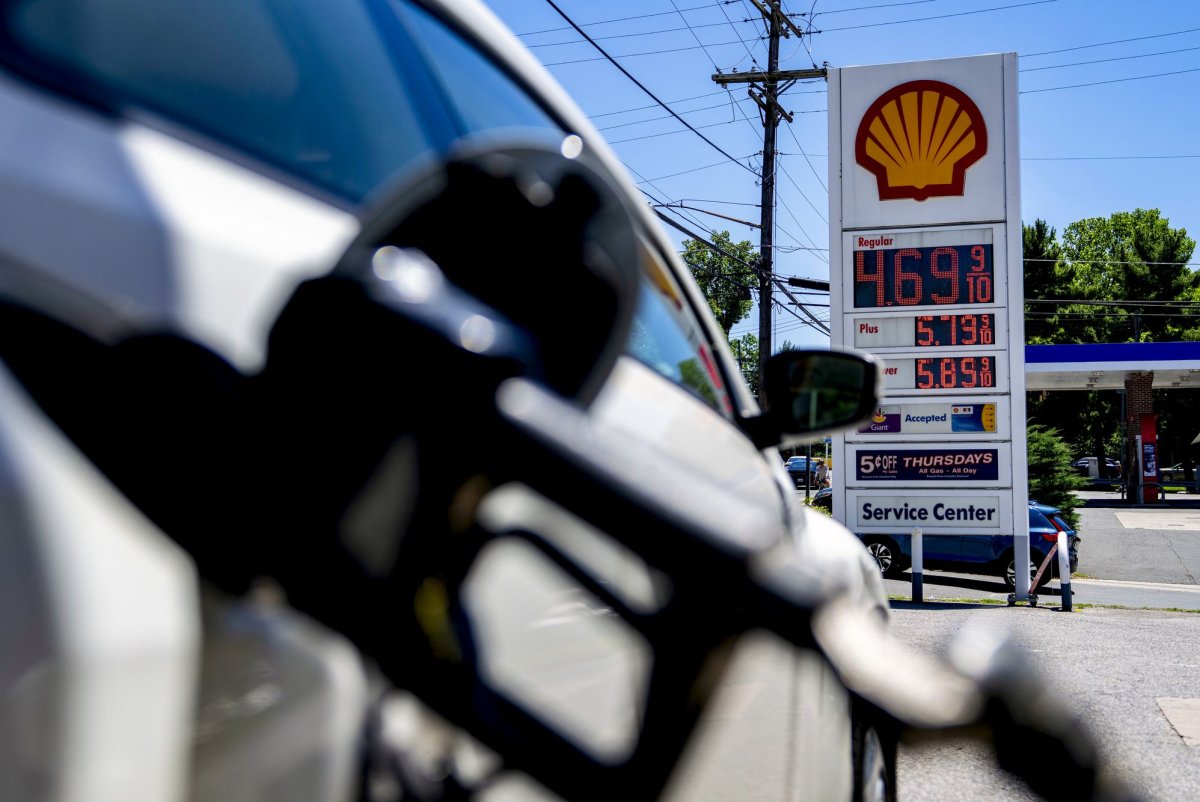
Energy prices remain elevated, which affects costs of transportation, materials, and power.
289 words~1 min read