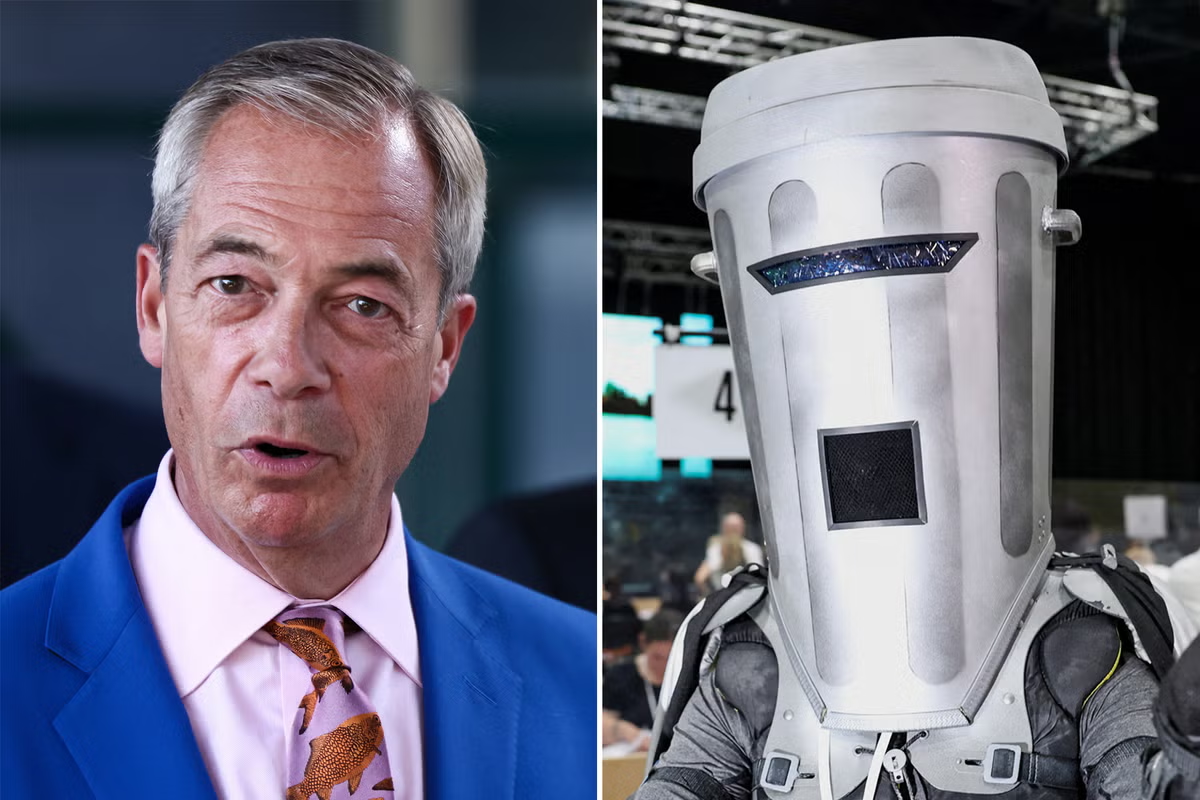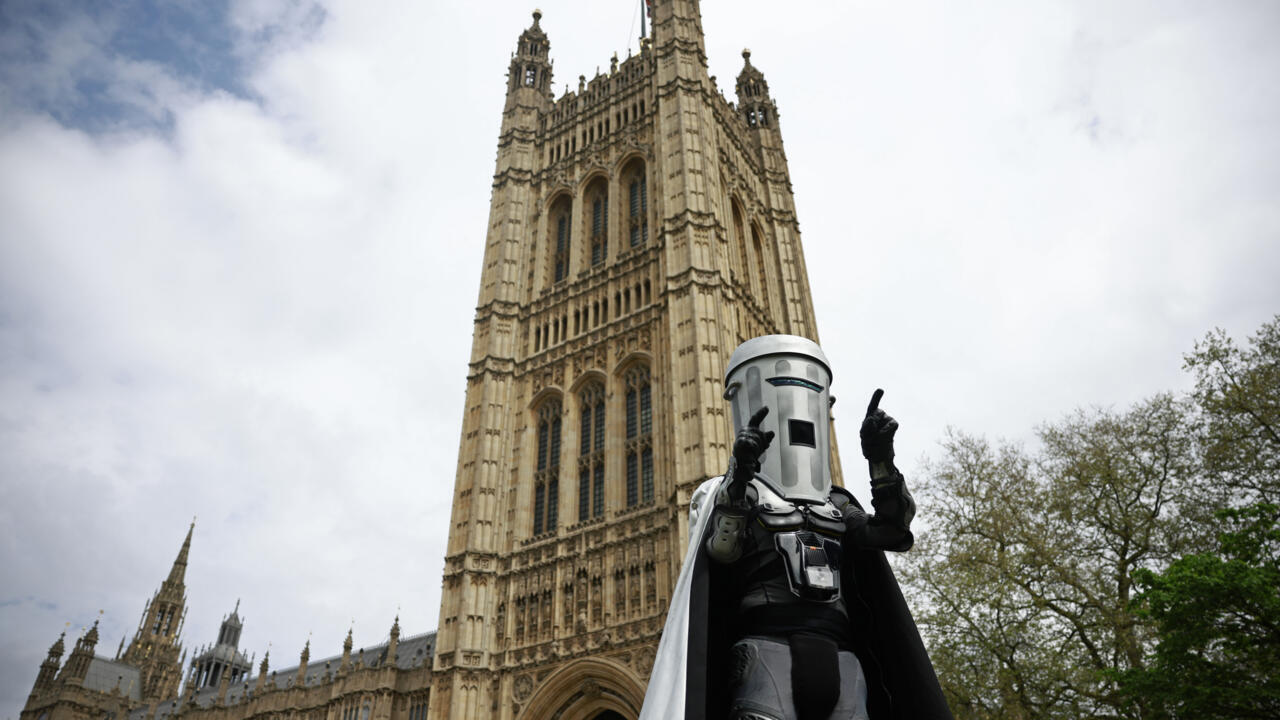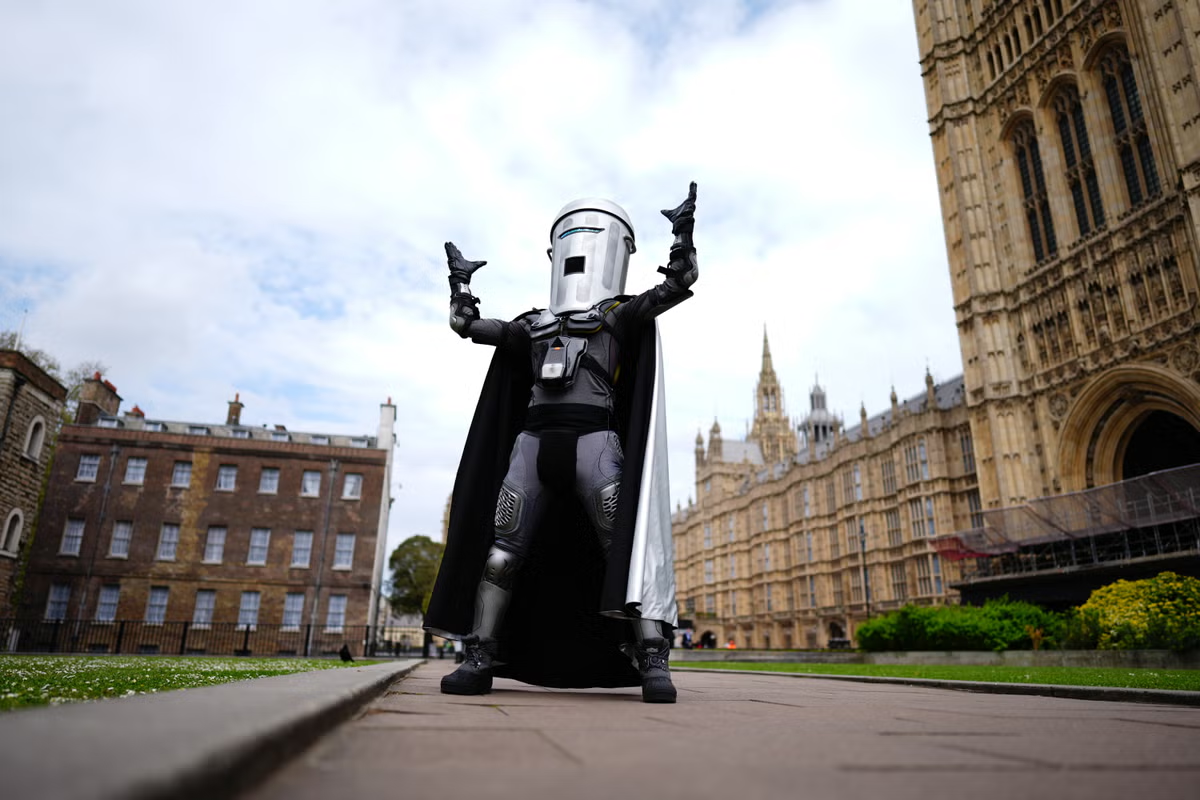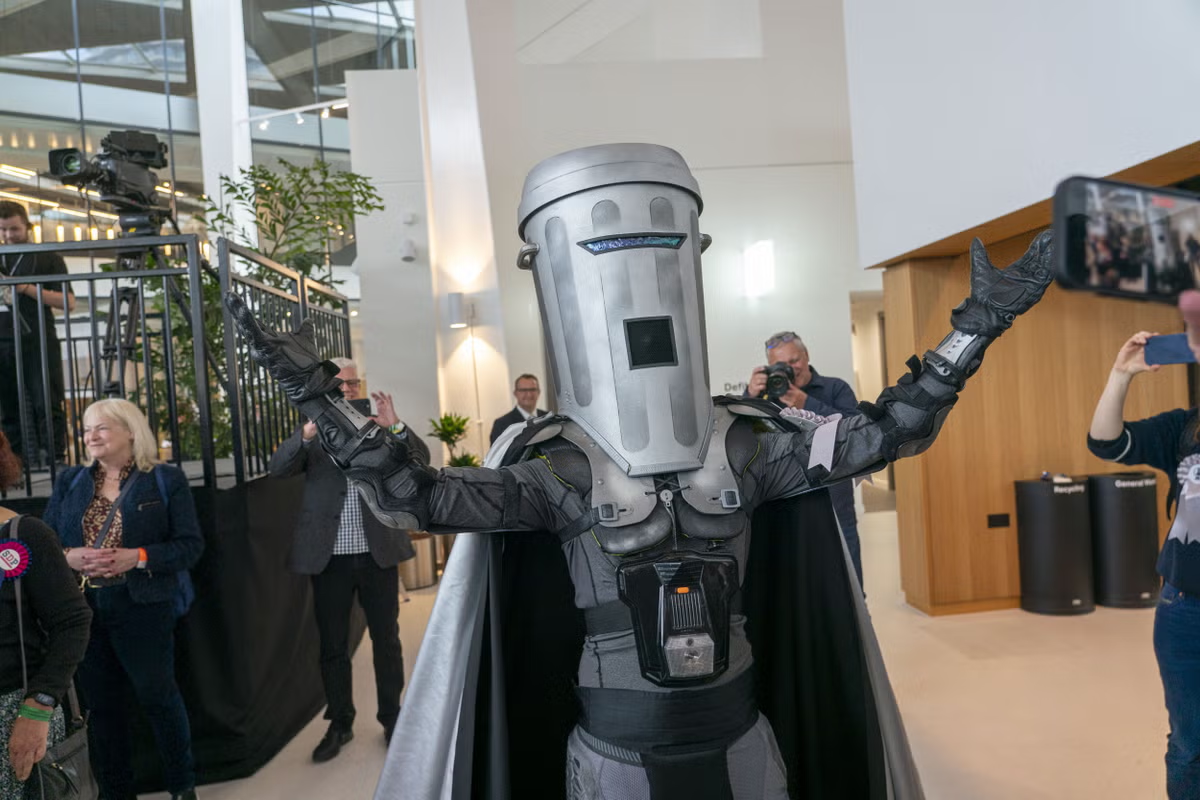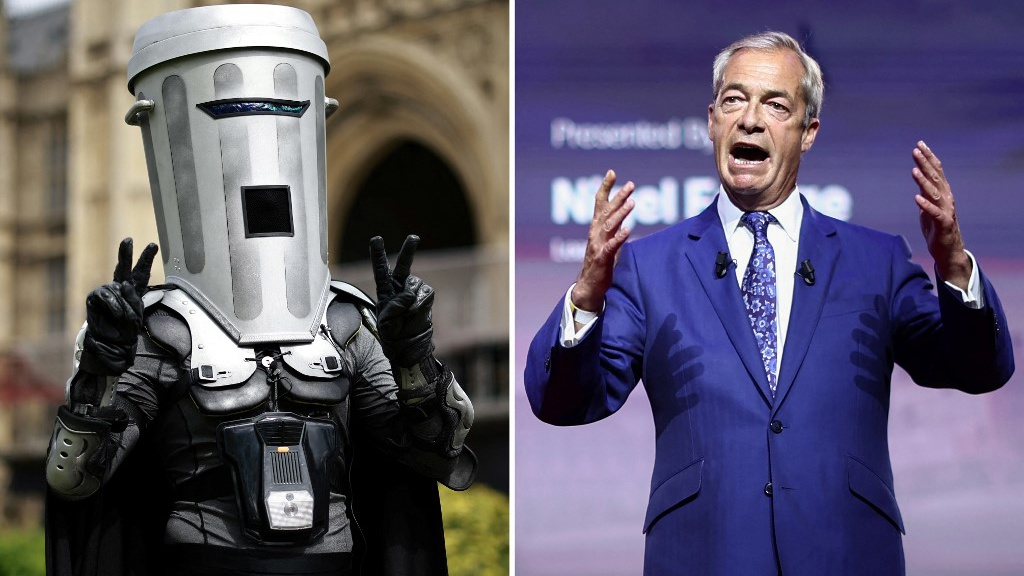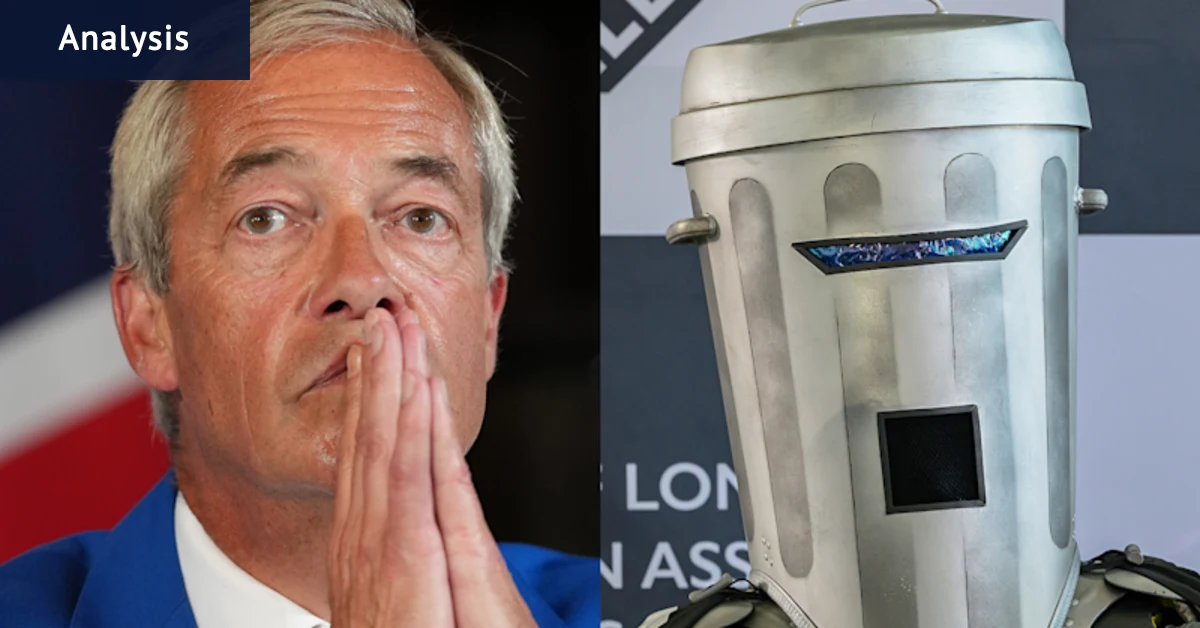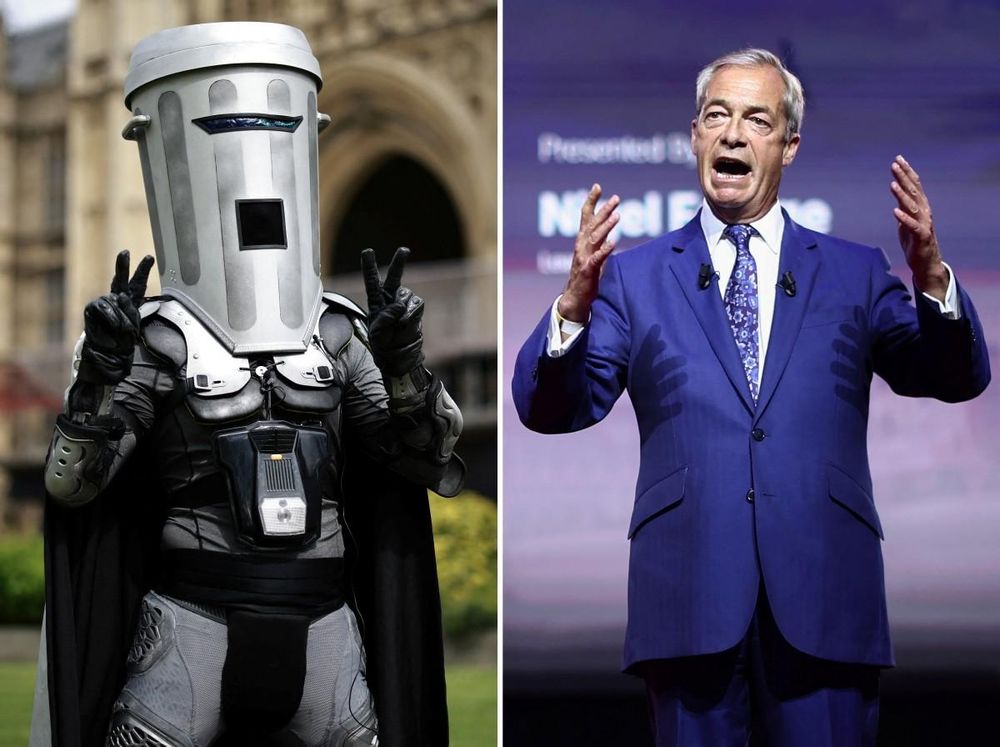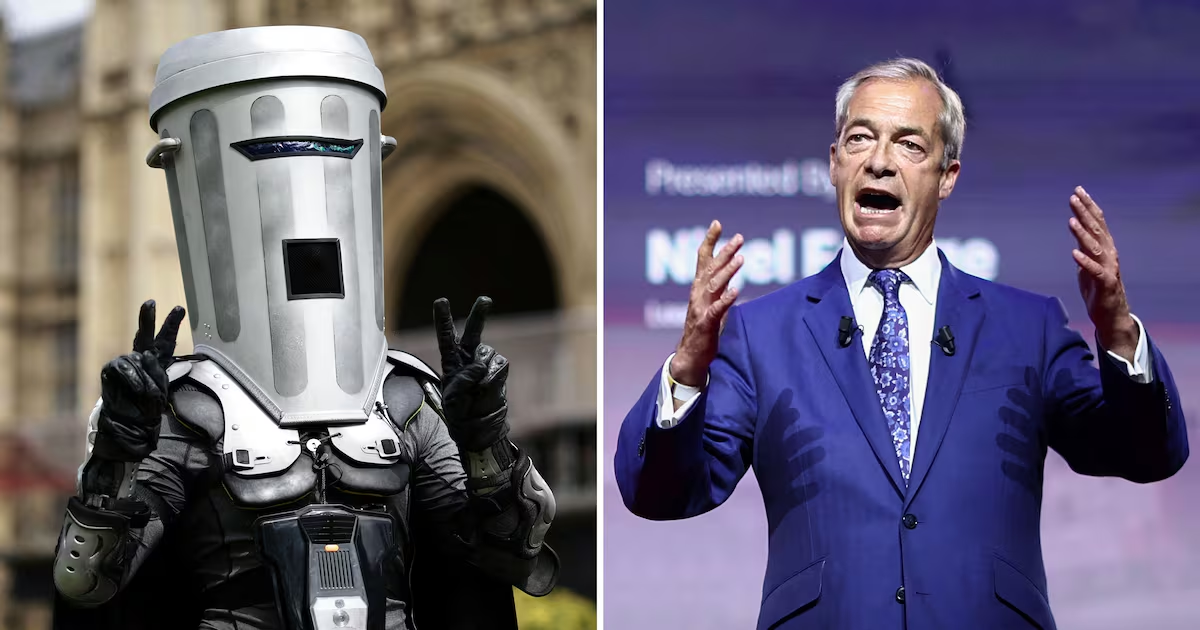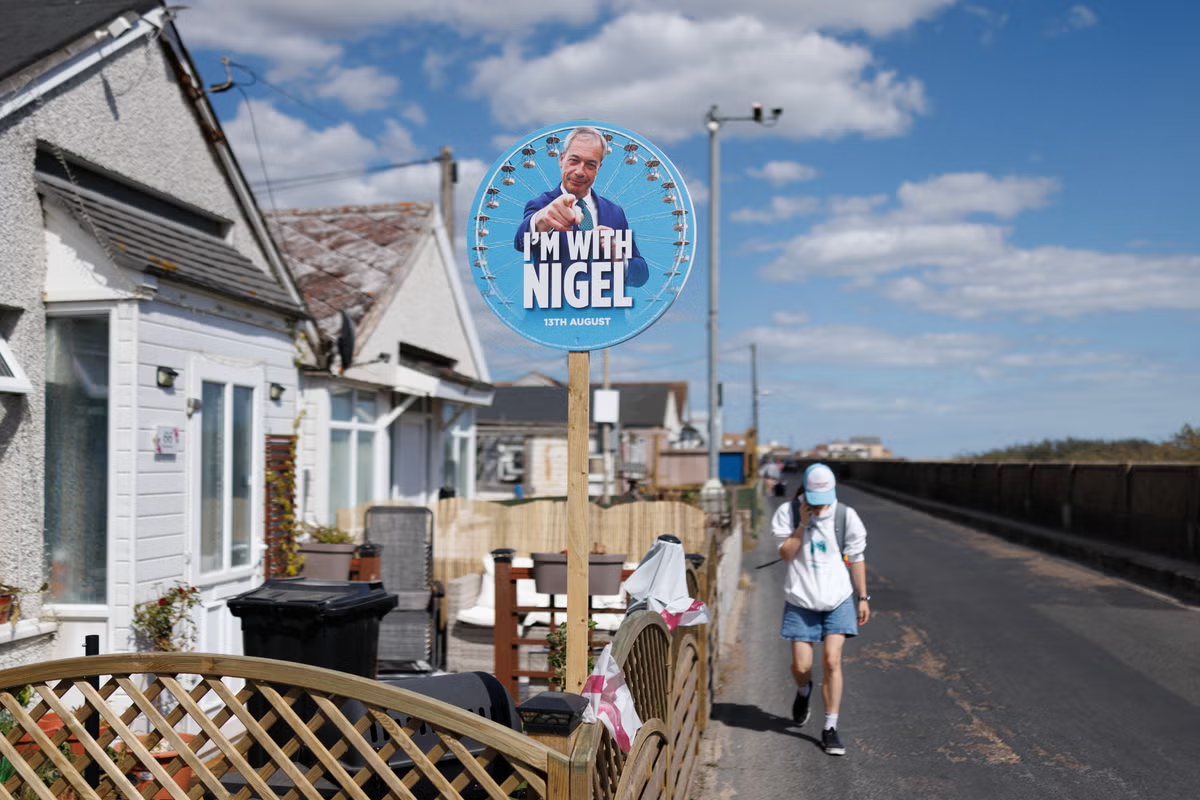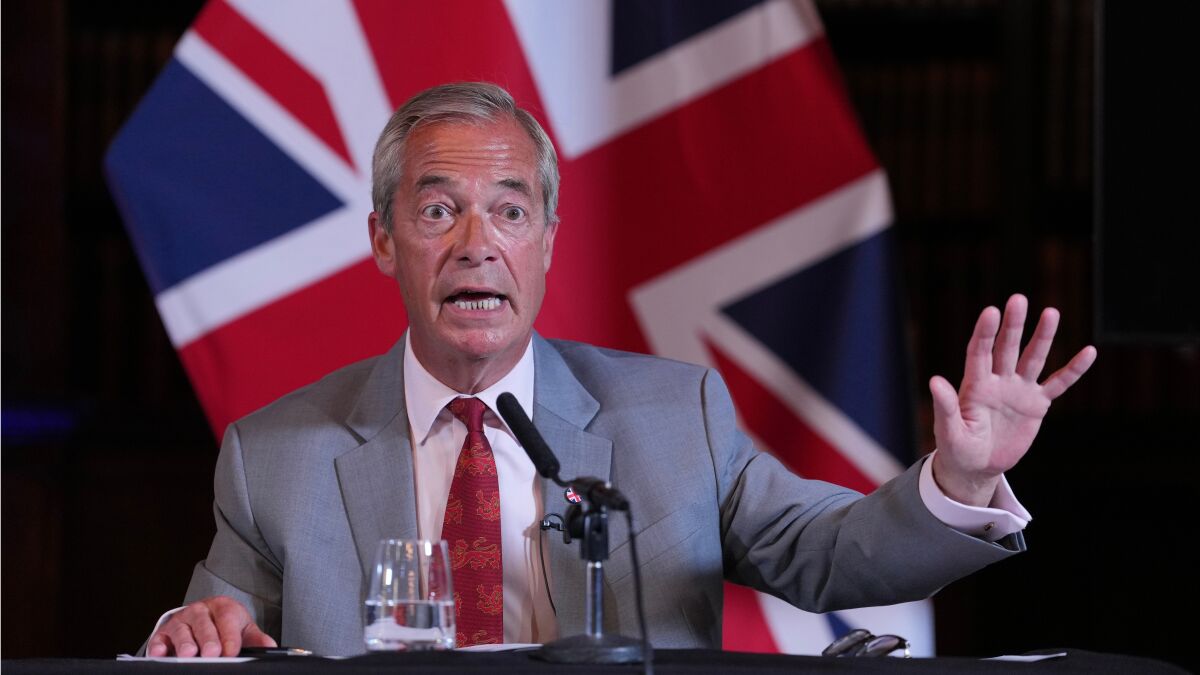
The polls suggest that Nigel Farage will win today’s Clacton-on-Sea by-election, just as he had planned when he resigned and stood again just over a month ago, and as was to be expected, given that the UK’s main parties have decided to boycott this vote, have not fielded their own candidate, and have delegated the task of opposing the nationalist leader to Count Binface – the 5,000-year-old candidate who came from space with a rubbish bin on his face – and to 32 other candidates, including no fewer than three from the Official Monster Raving Loony Party, which has been fielding candidates in fancy dress on its electoral lists since the early 1980s. In this circus of an election, the best-organised circus performer wins, one might say, and the final smirk will, as always, with Farage, but that is not even the moral of this midsummer spectacle taking place in what was once the most sought-after holiday destination for the English middle classes of the 1960s, with its funfair that everyone tried to replicate because it was so new and spectacular on the shores of Essex. However much Farage may be polling at 70 per cent in Clacton, however much local voters may complain that they feel taken for a ride by this experiment in circus politics, this is the summer of discontent for the nationalist leader and his formula – alas, widely exported – of the people against the establishment.It all began shortly before 7 May this year, the day of the local elections. The Guardian broke a sensational story: Nigel Farage had received a ‘gift’ of £5 million from a Thai-British billionaire, Christopher Harborne, in 2024, and had failed to declare it to the Electoral Commission. It was spring 2024; shortly afterwards, in May, the then Conservative Prime Minister Rishi Sunak would announce the date of the snap election – 4 July – which would hand the UK government to Keir Starmer’s Labour Party with a resounding majority, sweeping the Tories – who had been in power for 14 years – out of the House of Commons and bringing into Parliament, for the first time after seven attempts, Nigel Farage, who won in Clacton-on-Sea – the 5 million ‘gift’, which Farage continues to describe as ‘for personal use’, most likely contributed to that victory.Back in May this year: the local election campaign was drawing to a close; everyone knew it would be a victory for Farage’s party, Reform UK, and a colossal defeat for Starmer’s Labour, which, having failed to reverse the course of that inevitable defeat, had prepared itself to deal with it. The Guardian breaks the story, journalistic investigations into Farage’s murky funding begin, but we are now on the eve of the vote, and everything is going as predicted. Farage shouts with joy in his victory speech, Reform UK is the country’s largest party, and Starmer has to go – ‘Starmer out’ was the slogan of Farage’s campaign.The Prime Minister, who had never been a brilliant leader, and who had weathered some truly devastating scandals – such as the one surrounding the appointment of Peter Mandelson, a New Labour veteran and friend of the depraved financier Jeffrey Epstein, as ambassador to the United States – but who was well aware of the storm on the horizon, had prepared himself. He takes responsibility for the defeat, says that the British people’s vote will be heeded, announces changes, and presses on. From that moment on, his task has been to quell the discontent within Labour, which – despite sitting on a massive haul of parliamentary seats handed to it by Starmer himself – has become convinced that the problem is Starmer himself; simply remove him and the world will once again smile upon a left that had been waiting to return to power for fourteen years and which, after just two, is already exhausted, short of ideas and short of unity. Starmer tries, but fails: the frenzied internal infighting that until then had been the exclusive preserve of the Tories – who had devoured prime ministers at a serial-killer’s pace – also engulfs Labour, which ousts Starmer and puts all its eggs in the basket of the then Mayor of Manchester, Andy Burnham. Burnham played his cards brilliantly: he overcame Starmer’s veto on standing as a by-election candidate and returned to the House of Commons – the first step towards the Labour leadership and thus Downing Street – campaigned in Makerfield, won, organised his troops and forced Starmer to resign. To Burnham’s credit, in Makerfield he soundly defeated the Reform UK candidate: it must be said that he was not a strong candidate; he had those little problems that Reform UK tends to have with its politicians almost everywhere – supremacist statements, misogyny, racism – after all, the pool from which it draws its candidates is like that. But it must also be said that Reform UK had invested heavily in this race, so his defeat has a wholly new and very sweet national flavour for his opponents. Leaving aside reflections on the perverse mechanisms that have been set in motion within a panicked Labour Party, Burnham is, in fact, carrying out Farage’s plan: Starmer is effectively out.But this victory, if we can call it that, coincides with the start of Farage’s ‘summer of discontent’. The Sunday Times lands another scoop – yes, this is also the story of certain traditional media outlets proving that journalism isn’t about packaging plagiarised content into bite-sized chunks for social media, nor is it about social media rants disguised as political proposals. In early July, the investigative team at the conservative newspaper (owned by Rupert Murdoch) revealed that George Cottrell, a wealthy, semi-aristocratic man in his thirties who calls Farage ‘daddy’ and who spent a few months in American prisons after being convicted of fraud, had provided money, ‘personal security’ assistants and properties to the leader of Reform UK. It is a story to which the Sunday Times adds new details every Sunday, but it is still the same story first revealed by the Guardian in the spring: Farage’s murky relationship with his financiers and the donations fuelling his political rise, which are consistently concealed from public records. Since the House of Commons has already launched an inquiry into Farage over the £5 million, and since every revelation tarnishes the image (which is essentially false, in any case) of the populist leader who is tearing the system to shreds, Farage is doing what he does best: playing the victim of this system. In a heartfelt and whingeing live announcement on social media, he claims to be persecuted by the media and politicians who, unable to beat him on the issues, are trying to bring him down by underhand means; he resigns as an MP (thereby automatically suspending the House of Commons’ inquiry) and stands for re-election in Clacton, in what he describes, without much imagination, as a by-election pitting ‘the people against the establishment’.The major parties declare: we won’t field any candidates; we won’t take part in this farce. It is an inevitable yet paradoxical choice, because whilst it is right not to spend money and resources on Farage’s one-man show, boycotting the election also means handing him victory on a plate. And this is where the irresistible Count Binface comes in. With his space suit, his oratory style befitting an alien who has landed on planet Earth from a distant galaxy – fascinated by something unique to this place: democracy – and his constant puns on rubbish bins, in honour of his costume and his name, he becomes Nigel Farage’s main challenger. Inside the bin is Jon Harvey, a comedian and writer of political satire programmes famous throughout the UK (and beyond, such as "The Thick of It"), who has already stood in four general elections and two London mayoral elections. His best result came in 2024, when he stood in the constituency of former Prime Minister Sunak: 398 votes, 0.6 per cent of the total, coming sixth out of thirteen candidates. In none of his election campaigns has he ever recouped the £500 that every candidate pays as a deposit to stand (for the London mayoral election, the deposit is £10,000), which is refunded if a candidate secures more than 5 per cent of the vote. Today, for all the other candidates in Clacton – apart from Farage and Binface – the threshold for success is simply to get their £500 back.Binface has become an international phenomenon, highly sought-after by the media worldwide, but his appeal lies not only in the highly cultured way he speaks, his wit, his tragicomic manifesto, or his ever-ready quips (which are deeply British: half the time, only the British understand them), but in the fact that he has completely transformed the concept of the ‘outsider’ and, by extension, the system itself. Of course, it matters that Binface is challenging Farage, who has always positioned himself as the outsider (despite being a wealthy member of the middle class with a career in the City of London) and who, this time round, has been overtaken by the candidate from outer space. Had this been a normal election, Binface would have met the fate that such candidates usually face: he would have forfeited his deposit and enjoyed his sole moment of glory on someone else’s victory podium – that moment when all the candidates are gathered together and we discover just how bizarre British politics can get – he was even on stage alongside Burnham, in Makerfield, together with the ‘fox’ candidate. But this is no ordinary election, for various reasons: the first is that it is clearly a diversionary tactic orchestrated by Farage to buy himself some breathing space from the investigations into the large sums of undeclared money he has received: it is a tactic that is not working for him, as every day new details emerge about his network of controversial financiers and the ‘creativity’, shall we say, with which Farage manages the incoming funds; the second is that it is pointlessly costly, because the MP who was in office until July will in all likelihood still be there on 14 August, and this is a blow to the image of the anti-establishment maverick who is always criticising others’ reckless spending and now finds himself wasting his own voters’ money and time; the third is that, for the first time in decades, Farage is no longer the outsider; he is no longer the wittiest, the most brazen, the least entangled in power struggles, the least stuffy: there’s Binface. Of course, just as we were all going mad over Conte, just as we all started repeating: ‘better a rubbish bin than a half-corrupt nationalist’, Farage was able to regain some control over this farce by denouncing Binface as the establishment’s candidate, attacking Jon Harvey in particular, who is opposed to Brexit and is a moderate. But even this manoeuvre failed him, precisely for the reasons this election came about: the murky waters in which Farage operates have not cleared. To tell the truth, the far-right vote is currently fragmenting due to the presence of a party even further to the right than Reform UK, called Restore Britain: a reorganisation is being painstakingly negotiated, but amidst enormous personal rivalries, scandalous Trump-style interference and, once again, a lack of transparency regarding funding. As journalist Carole Cadwalladr puts it – having spent ten years exposing this lack of transparency and its links to Russia’s destabilisation campaigns, and now seeing much of the British press rallying behind her allegations – “All the chickens are coming home to roost”.Count Binface’s election campaign has been highly effective – a refreshing departure in a summer marked by wildfires, heatwaves, wars and various democratic upheavals. With the slogan “Make your vote Count”, Binface has been splitting his time for weeks between television studios and visits to voters in Clacton: he claims to know more local constituencies than Farage does, who is either at Trump’s court or off somewhere else counting his money; he has presented a 20-point manifesto in which he twists the key slogans of Farage’s populism, turning them into comedy (one of the best points: “More jobs, more doctors and more of those other things people vote for”); he had his photo taken with his summer reading; one is Michael Crick’s essay entitled “One Party After Another: The Disruptive Life of Nigel Farage” and the other is Martin Bell’s memoir, “An Accidental MP”, which recounts the mad and victorious election campaign of the famous BBC war correspondent who is always dressed in light-coloured clothes. In the leaflets that Binface has been handing out across Clacton, there is also an explanation of the biggest mistake made by Nigel Farage: “Why vote for me?”, writes Binface, and answers: “This election is a farce and should never have taken place. If the current MP for Clacton wins, there will soon be another by-election, due to parliamentary inquiries. Vote for me and there won’t be another election, which means that together we’ll save taxpayers around 350,000 pounds even before we start: lovely.” As The Times revealed, Farage’s advisers had told him that by resigning he would put an end to the inquiries into council funds, but in reality they have merely been suspended and will resume once he is re-elected: according to many commentators, there will still be an election in Clacton in December.Voters living in this seaside constituency, which has lost all its former charm, are complaining to every journalist they come across – and there are a great many of them: even if we want to vote against Farage, how can we bring ourselves to throw our vote into a rubbish bin? No one points out to them that ten years ago they voted en masse for Brexit; there’s no point in being fussy about fanciful ideas today, but the best answer, as always – as with everything – comes from the irresistible Count Binface: “Next time, you’ll still be able to vote for a ‘normal’ party. This is your chance to do something different, and to give the establishment something it’s never seen before.”
Hurrah for Count Binface, who has exposed the limits of British populism
The Reform leader has attempted to divert attention from his investigations by calling for a by-election in Clacton; the polls favour him, but the 5,000-year-old candidate from outer space has now exposed the lies of British populism. For once, the anti-establishment figure is a complete waste of space
2,363 words~11 min read