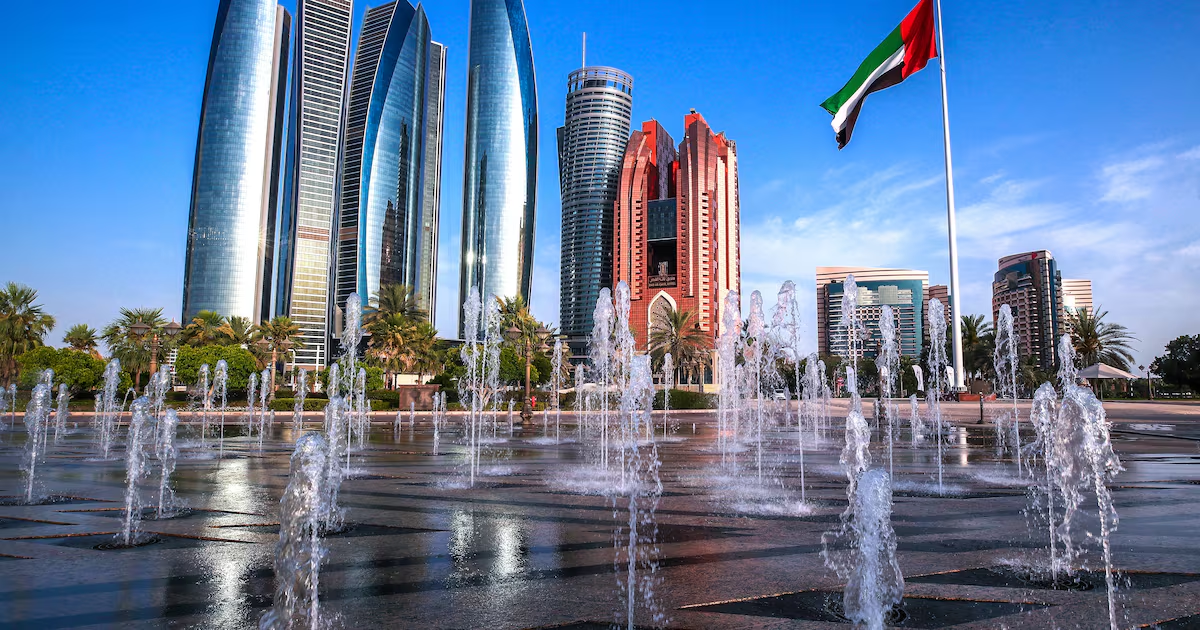
Dubai | New Delhi: Nearly six months after the start of the Iran war roiled the travel and hospitality industry in the Gulf, hotels in the UAE are preparing for a rebound in visitor arrivals as Dubai and Abu Dhabi roll out fresh incentives to draw tourists and airlines offer greater flexibility to travellers ahead of the peak winter season. Hotels are strengthening staffing across front office, food and beverage, housekeeping, guest relations, and commercial functions, with recruiters reporting renewed demand for experienced hospitality professionals.Some UAE-based employees who got relocated to other markets during the turmoil are also returning, industry executives said. Dubai is offering up to AED 3,000 (₹77,000) in discount vouchers to guests staying with residents, while Abu Dhabi is offering up to 20,000 free 30-day visas (worth around ₹7,000 each) to Indian travellers who book at least three consecutive nights at its hotels until October 31 through participating operators.
Emirates is also offering greater flexibility on ticket date changes, easing potential travel uncertainty."From what we are seeing within our hotels, these initiatives are working," said Saurabh Tiwari, vice-president, operations for Middle East, Sri Lanka, and Maldives at Indian Hotels Company (IHCL), which operates the Taj brand. "We are seeing occupancies progressively strengthen, enquiries increase, and international markets return. Across our own portfolio, the numbers are beginning to demonstrate this."He said Taj Dubai has maintained stable occupancy rates in the high 70s over the past two months. For Taj Exotica, The Palm, occupancy moved increased from about 36% in June to 50% in July, and is expected to cross 60% in August, while for Taj Jumeirah Lakes Towers, occupancy moved from 53% in June to 59% in July, and is estimated to exceed 60% this month.Akshay Jayaprakasan, associate partner, Redseer Strategy Consultants also concurred that operator-level signals are encouraging. "Al Habtoor Grand has reported a significant pickup in bookings, particularly from the UK, Russia and CIS, and expects Q4 occupancy and business to move closer to 2025 levels," he said. "Accor said UAE occupancy improved significantly through Q2, and Dubai portfolio returned to year-on-year growth in July." Hotels in Dubai are already bracing for a strong fourth quarter, with a packed events calendar ahead; return of travellers from the UK, Russia, and CIS countries, and stronger airline connectivity all pointing towards festive season, said Bhanu Chopra, founder and MD, RateGain.He said travel demand in Gulf didn't turn corner in March quarter. The company's data showed Dubai hotel demand fell to 7-14% of pre-disruption levels through March and May. "We're seeing that climb back towards 20-30% as summer picked up," he said. "That's gradual recovery, not a sharp rebound, but it lines up with what we're hearing across industry." Industry is seeing range of promotions reducing price point and making destinations more attractive to Indian travellers.