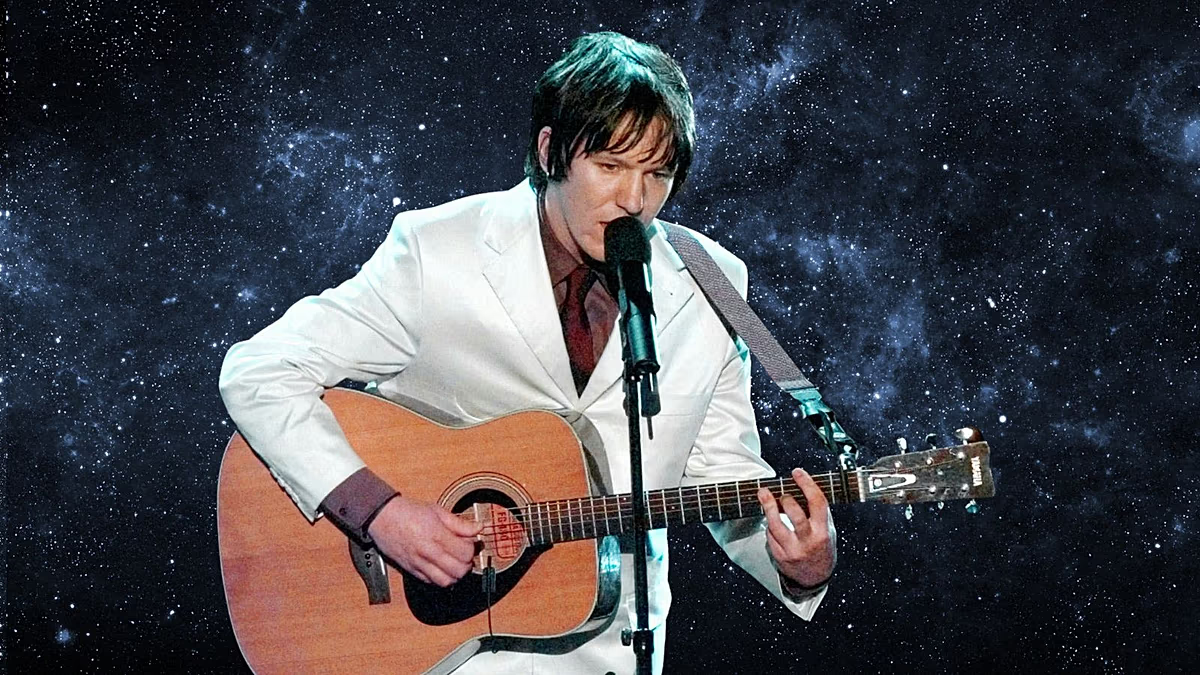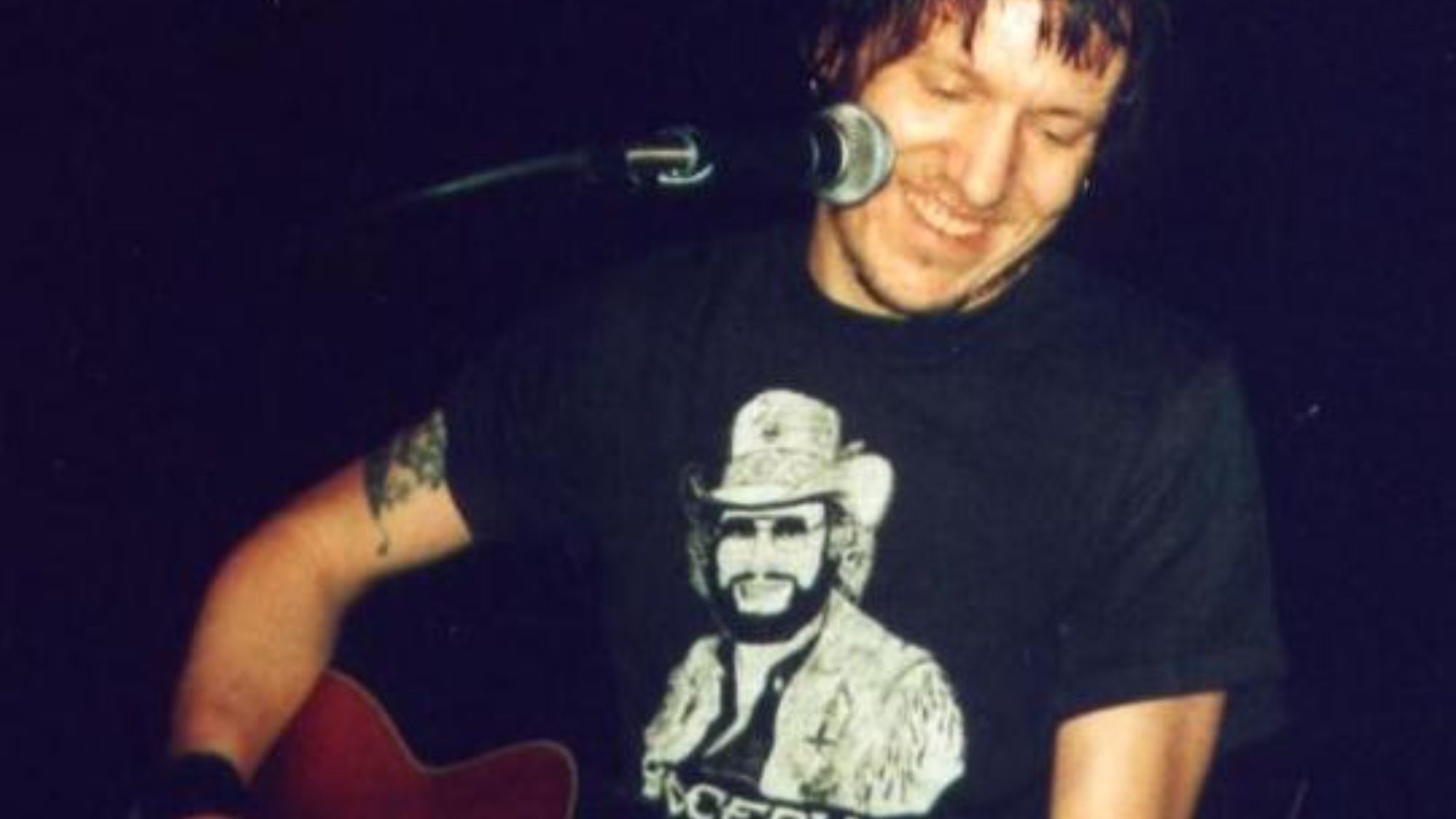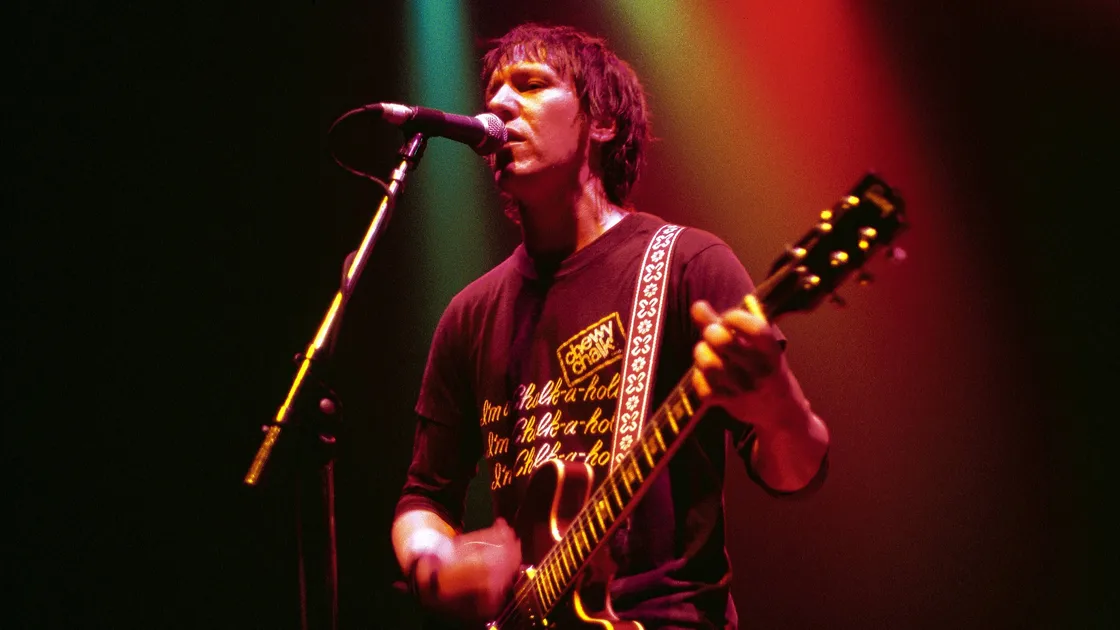
When I was 17 years old, I wrote Elliott Smith a fan letter. It was the year 2000, and I was a high school senior in Dallas. I had never written a fan letter to anyone, but I felt connected to Elliott, despite the fact that we didn’t really have that much in common. He was, after all, a man in his 30s who had tattoos and wore an assortment of black band tees, while I was a teenage girl who shopped at Abercrombie & Fitch. He sang about drinking and drugs; I hadn’t even tried my first beer. He had the aura of a defiant nonconformist, while I was a pleaser and overachiever, writing for the school paper, singing in the choir, and joining an endless stream of extracurriculars and clubs to pad my college applications. But Elliott seemed like the quiet type, and so was I, with high social anxiety and low self-esteem. He seemed like an outcast, and I often felt out of place and lonely in the Texas suburb where I grew up, even with family and friends around me. He seemed sad; I was a bit sad too. But what really mesmerized me most about Elliott was his vulnerability. He laid himself so bare in his music, and when I listened to his songs, it felt like reading a diary. It wasn’t just the lyrics – it was his soft singing style, his careful finger-picking, the way he layered vocal tracks so tenderly. I felt like I knew him, like I was a friend he trusted with his secrets. I wanted to reach out to Elliott to thank him, and convey how important his music was to me. I found an address for his record label, Kill Rock Stars, in the liner notes of one of his CDs, and I mailed the letter. And then I waited. Months passed, and no response. Maybe I sent it to the wrong address, I thought. I never really expected to hear back, but I did wonder if he even got it. Graduation came and went. I headed off to college. Elliott didn’t release any new albums. And in 2003, he died violently and tragically at the age of 34.*****The subject line read “Fwd: Elliott Smith biography.” My former boss had passed along a message that was sent to my old work email — the one associated with my maiden name, which no one had called me in years. It was 2023, and I had recently turned 40. The email was from a writer named Jamie Fisher, who said she was working on a biography about Elliott Smith. “I’m wondering if you’re the same Kirby Van Amburgh who wrote a fan letter to him around 2000,” she wrote. “His family still has the letter, and I was wondering whether you got a response.”I sucked in my breath. This means Elliott got my letter! I thought. He must have read it, right? And if he kept it, maybe it meant something to him. I responded to Jamie immediately. Even though I hadn’t gotten anything from Elliott, she still wanted to talk to me, so we set up a time to chat on the phone the next week. Before our phone call, Jamie also sent me a photo of my letter to Elliott. It was handwritten on notebook paper, both sides. In the letter, I wrote that I was a 17-year-old girl who had bought all of his CDs. I think your music is really addictive. It’s so original and creative. I’ve never heard anything like it. I shared that I liked to play the piano and guitar and sing. I told him that he was an inspiration to me, that listening to his music encouraged me to create my own style. I try to write my own songs and make them as unique and personal to me as your work is to you. But I didn’t want to be a musician as a career, I said. I want to be a writer. I praised him some more and said that even if my letter never reached him, it was OK. You are worth the time it took to write this, and you’ll keep kicking ass. I told him he was incredible and thanked him. I signed it with a “Sincerely.” If Elliott did in fact read the letter, I could see why he kept it. I’m sure it was refreshing to get something so wholesome. Elliott Smith.C Brandon via Getty ImagesIn the days that followed, I went up into the attic and pulled out my old high school diaries, skimming the pages for mentions of Elliott. I had written about him several times: I journaled about buying my first Elliott Smith CD and hearing the spidery notes of “Speed Trials” trickling through the speakers of my Magnavox boombox. And I wrote about my letter, saying, “I hope he gets it. I hope he likes it!”When we finally got on the phone, Jamie asked if I had continued with my writing or music, and I told her about my winding career path: I was a teacher for several years, then worked at a nonprofit for the next decade. I had dabbled in freelance writing here and there, but it never went anywhere. At one point, I wrote a novel for kids, but it was never published. I told her I had recently transitioned to a job as a writer for a market research company, which I really enjoyed because I got to write every day, albeit in a different way than I envisioned when I was 17. I talked about my songwriting and how I was in a musical duo with my friend Todd in the early aughts. We put out an EP, some singles, and even a couple of music videos, filmed in Todd’s backyard. It was all just for fun, but it was also a bit stressful sharing my songs and putting myself on display like that. I explained that creative writing – both on paper and in music – was emotionally difficult for me. Unlike writing for business, when I wrote anything personal, I felt an intense fear of being exposed. I put so much of myself in my fiction, essays, poems and songs. I was terrified of releasing them for public consumption because any rejection of my creative work felt like a rejection of me as a person. Perhaps that’s why I was so in awe of Elliott: he shared so much of himself in his art, in a way that I never quite could. After a while, Jamie paused and said that she didn’t reach out to me just because of the book. There was another reason.“Elliott wrote you a response.”I literally burst into tears.He did? I choked out. Jamie started crying too. She said that Elliott’s letter was in the box with my letter. She didn’t know why he never sent it. Maybe he didn’t have a stamp and then forgot about it. At any rate, it was there, waiting to be found.Jamie read the letter to me over the phone. Dear Kirby, I read your letter and it made me happy–thanks. Elliott wished me success with my writing, whatever success meant to me personally. He talked about his love of reading and recommended an author he was really into at the moment, Mikhail Bulgakov. He shared that he sometimes secretly wished he was a writer instead of a musician, as his music so often diverged from mainstream tastes. He thanked me for adding a little brightness to his day. I’m glad you see creativity in yourself, the world needs as much of it as it can get, so go out and kick ass!He signed it with a heart.The author with her husband and daughter (2025).Photo Courtesy Of Kirby RockAfter my call with Jamie, I felt a surge of inspiration. Since having my daughter three years earlier, I had stopped going to my writing group, and I hadn’t written a song or even played my instruments in a long time. But now I felt the urge to return to my writing and music, even if for no other purpose than bringing me joy.In the months that followed, I brought my guitar down from the attic. I played “Old MacDonald Had a Farm” for my daughter over and over, building the calluses back up on my fingers. I wrote her an original song about handwashing, “Scrubbly Bubs and Bubs and Scrubs” (which was well received). Last year, along with my husband and two other dads, I played a three-song acoustic set of Raffi covers for our kids’ class at school. It was thrilling to see them laughing and clapping and dancing, a crowd of generous and adoring fans. I rejoined my writing group. I wrote a little book about potty training for my daughter (which was less well received). I revisited a short story about alien abduction that I had initially drafted and abandoned several years earlier. I wrote a bad poem about the lizards on my back porch. I wrote this essay. Now I write and write and continue to write. After I told one friend about Jamie’s call, he asked if I was upset that I never got the letter when I was a teen. I said no. Strangely, I was almost thankful that Elliott never sent the letter. It felt like his words were meant for me at age 40, not age 17. I received his encouragement when I really needed it – not when I was already full of excitement and hope and possibility, but later in life, when I needed to be reminded of the spark inside of me. I wrote to Elliott years ago to thank him. And in a way, I wrote this to thank him again.“Nobody Broke Your Heart,” an intimate biography of Elliott Smith by Jamie Fisher, will be released by Penguin Random House on Aug. 25.Do you have a compelling personal story you’d like to see published on HuffPost? Find out what we’re looking for here and send us a pitch at pitch@huffpost.com.
I Wrote A Famous Musician A Fan Letter. Decades Later, I Got A Response That Rocked My World.
“Maybe he didn’t have a stamp and then forgot about it. At any rate, it was there, waiting to be found.”
1,687 words~8 min read