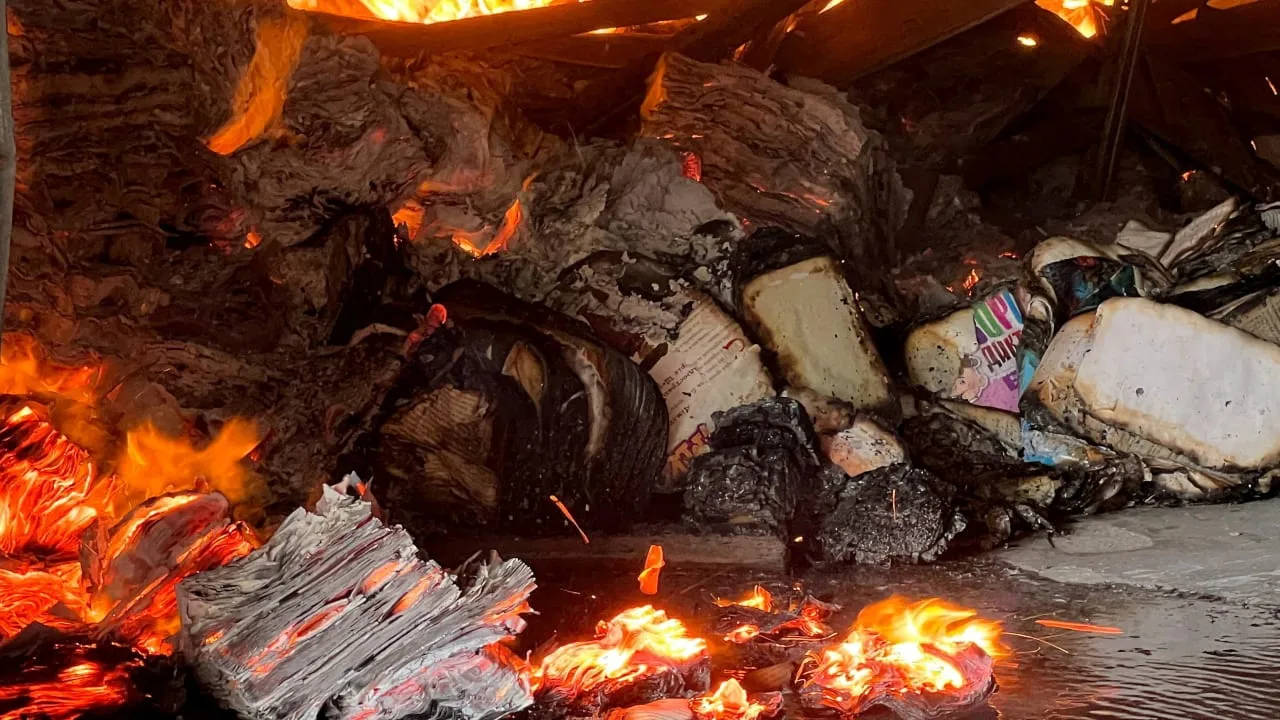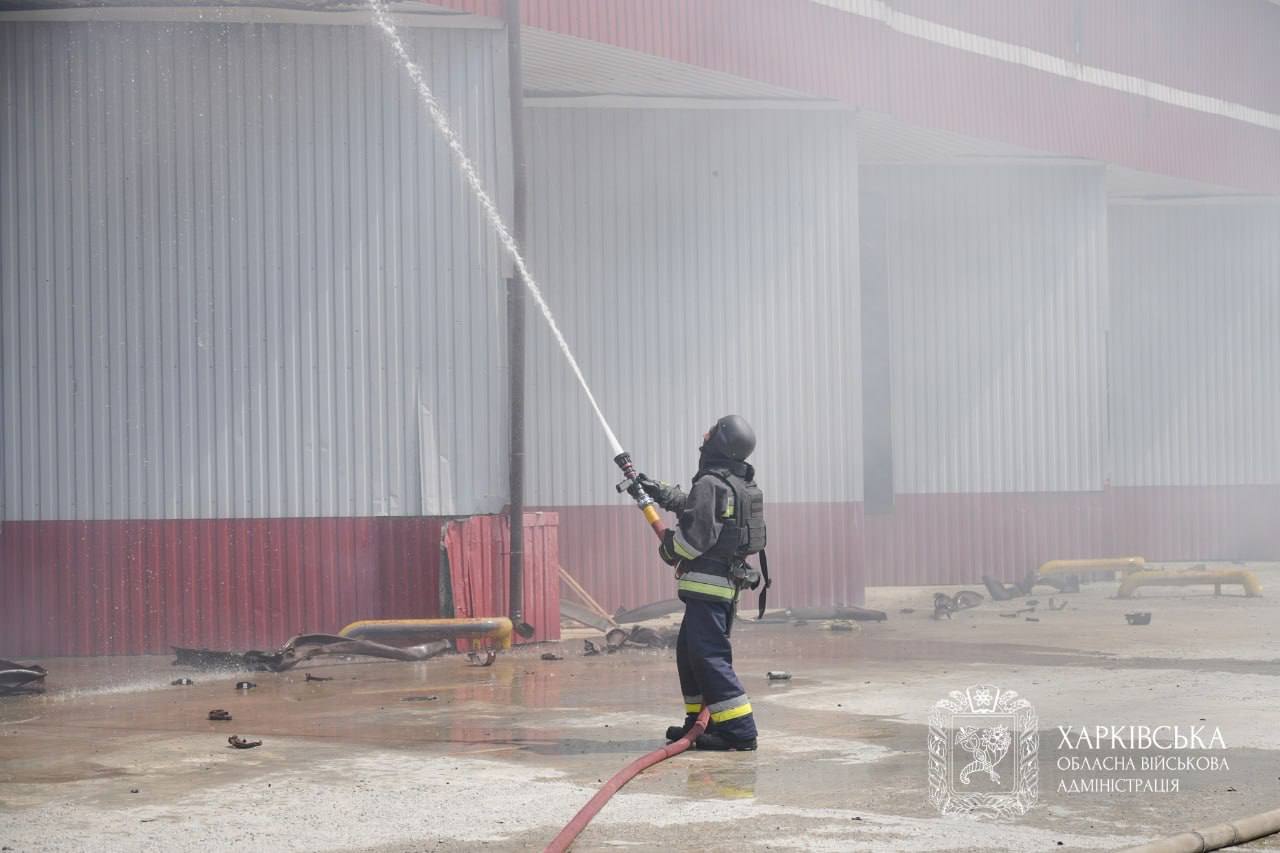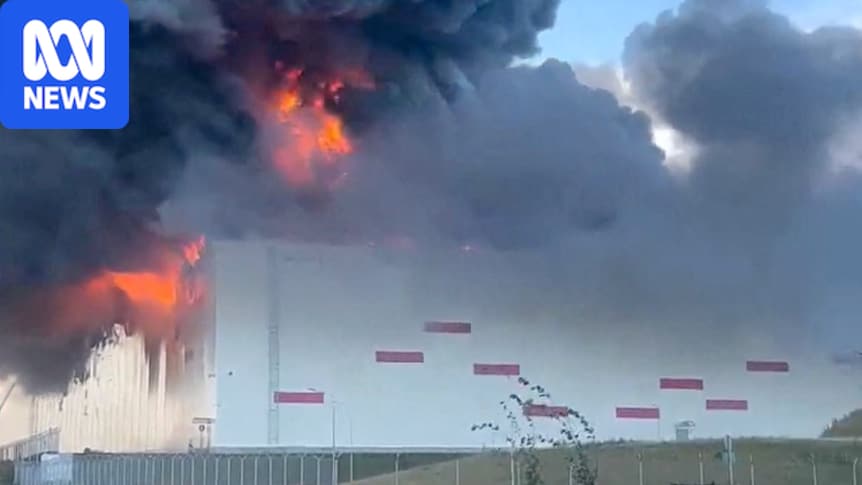
On 1 August Russian drone strikes on a logistics and distribution centre in northern Kharkiv destroyed more than 8 million books, in a war being waged not just at the frontline, but on Ukraine's culture and identity.
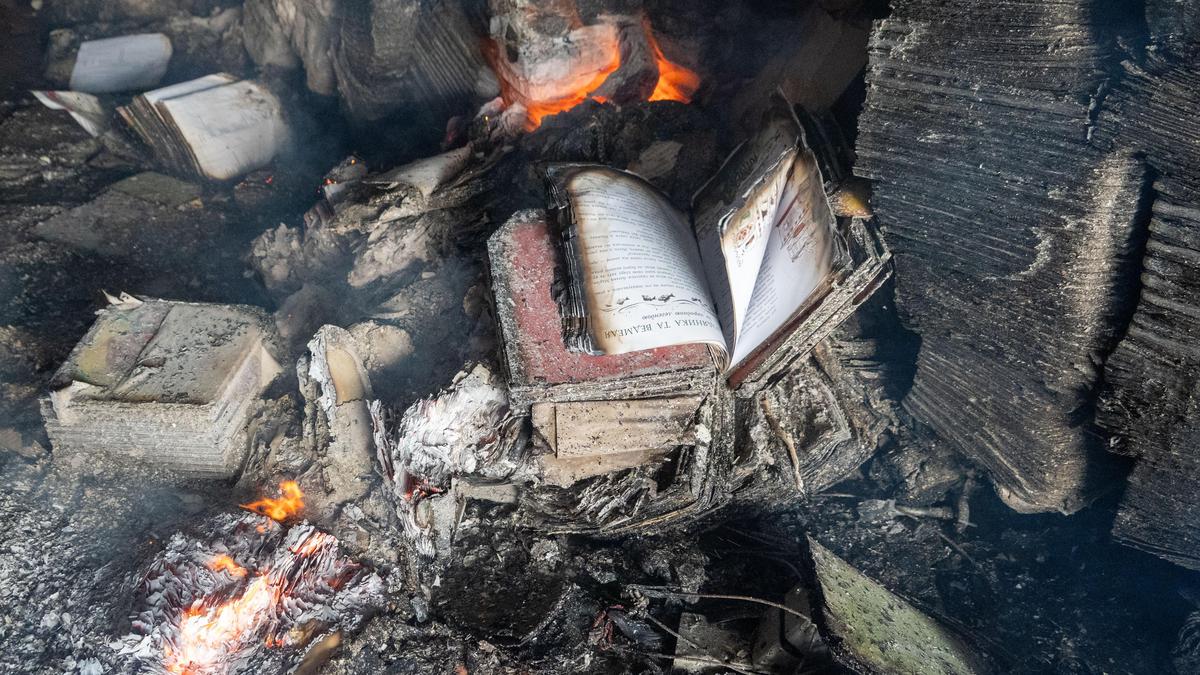
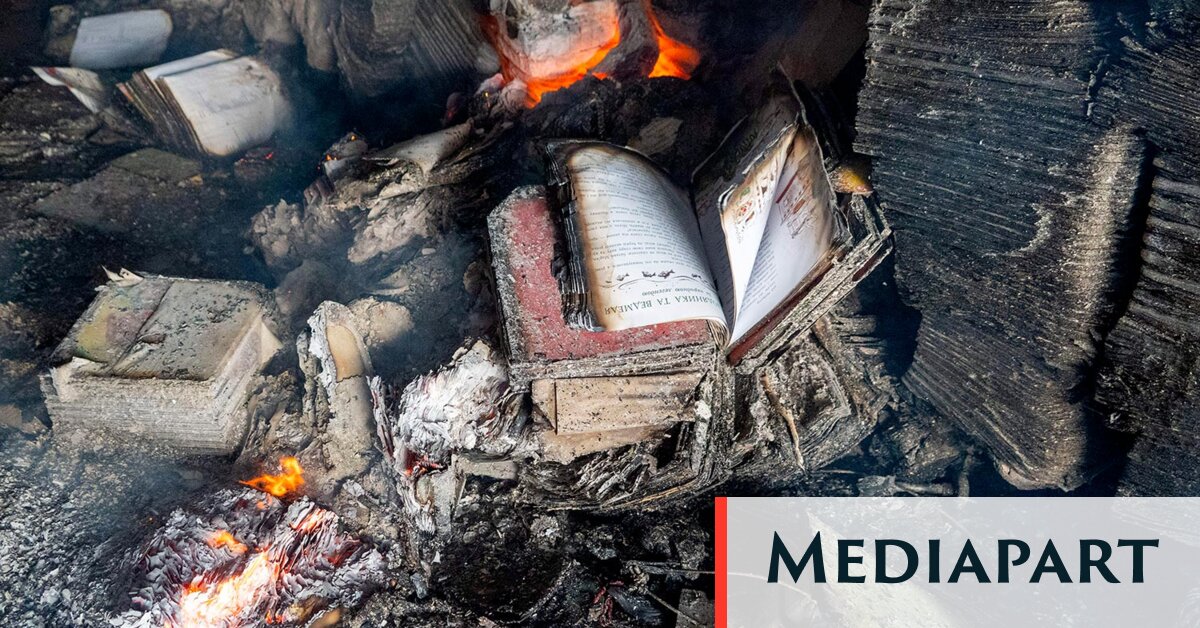
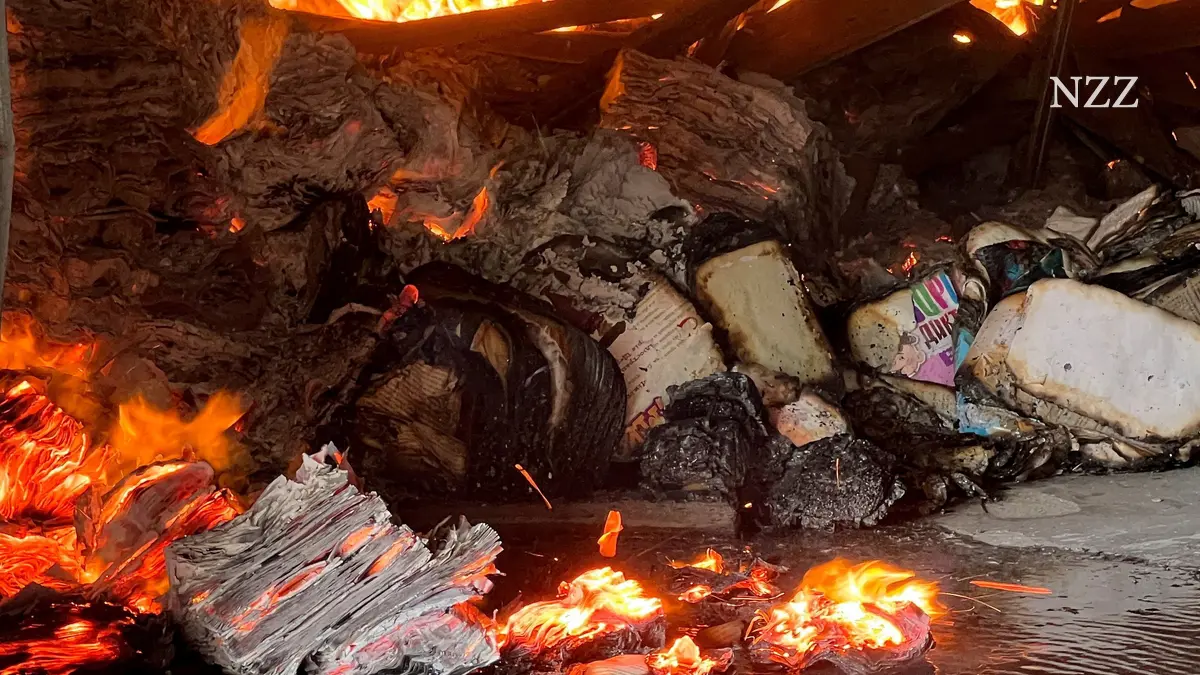
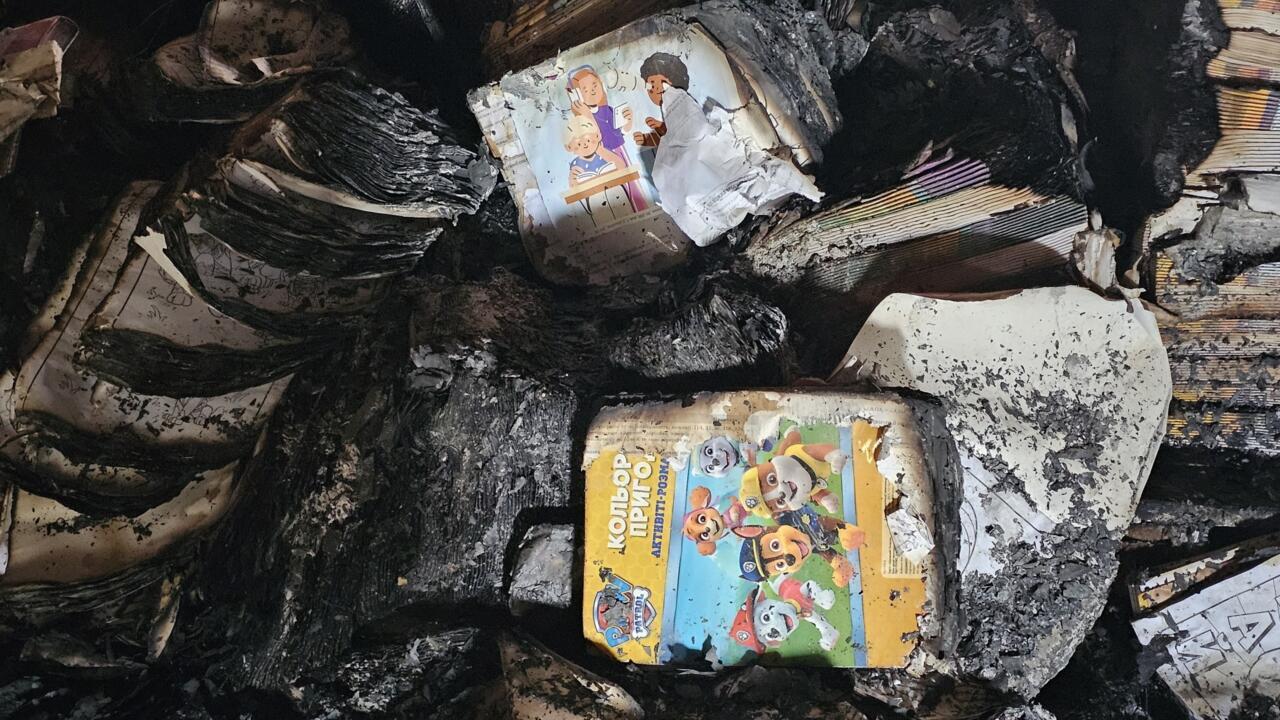
In a northern district of the city of Kharkiv, in northeastern Ukraine, the street leading to one of the country's largest book storage and distribution centres is quiet and green. From the outside, the scale of the devastation is invisible, save for the wooden panels replacing the windows. Upon entering the building, the first whiff of burnt paper sets the scene inside – one of total desolation. Only the shell of this 10,000 m2 warehouse, bigger than a football pitch, remains and it is filled with mountains of ash, scattered piles of burnt books and iron shelves that have been melted and distorted by fire. This is all that's left of the 8 million books that were stored here.
The contents of the warehouse were destroyed in the Russian strike of 1 August. © Emmanuelle Chaze
Impact on education Viktor Kruhlov, CEO of the Ranok publishing house, a leading producer of children's and educational books and one of many that used this distribution centre, recalls the inferno after the Russian drone strikes hit. "Two explosions followed each other, a few minutes apart. There were around 50 employees on site at the time, and it is a miracle that nobody died. Everything melted because of the temperature after the two explosions." The loss to his publishing house is immense. Nothing could be saved. At the busiest time of the year for educational publishing, 1 million of the 8 million books destroyed here were schoolbooks. 'Rewriting history': Claim filed to ICC over Russian looting of Ukrainian heritage "A week later, firefighters are still extinguishing fire hotspots... who would have thought that books would take so long to burn?" he asks, walking across a thick carpet of ashes. "The Little Prince was somewhere here. I don't think we will find it now." Pointing at a pile of charred textbooks, he adds: "Those are books for primary school, which were to be delivered across the country the following day. We deliver them to every school. Here is a science book, it's about nature, life, and you can still see this chapter called 'air'." The destruction of these books will have a lasting impact on education throughout the country, he says. "Ranok is the main children's publishing house in Ukraine; we publish at least one third of the total number of textbooks in Ukraine. Of course, we have other warehouses across the country, but that was the bulk of our production. This was a huge blow to the book industry."