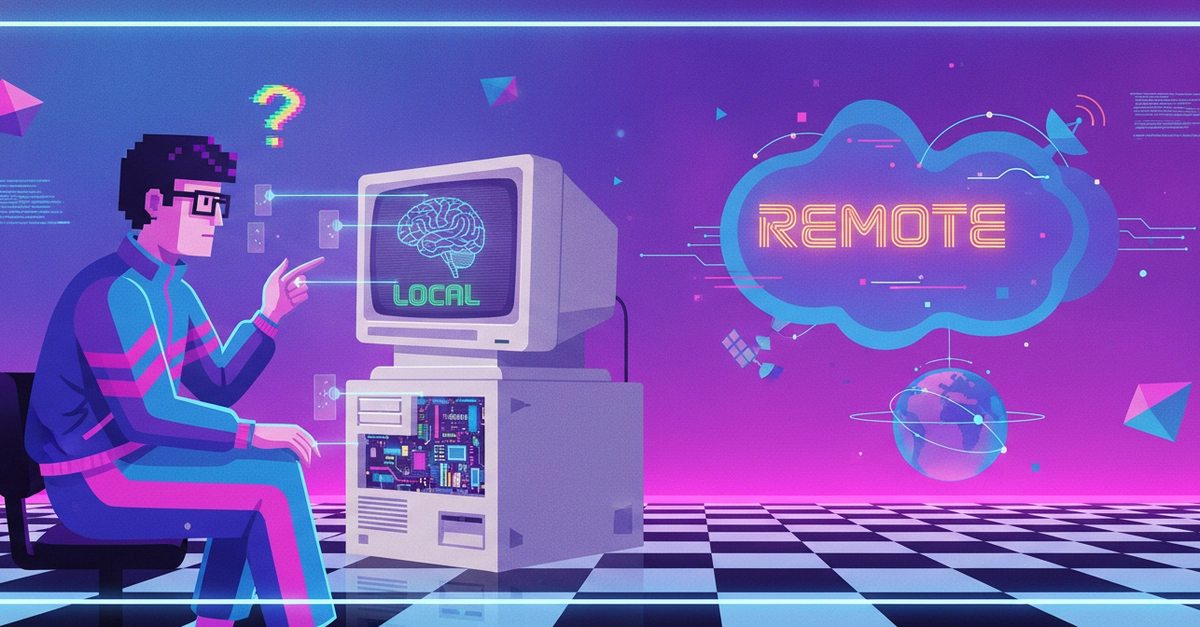
A comprehensive framework for deciding between local LLMs and cloud APIs. Covers cost, privacy, latency, control, and the hybrid approach.
The Cathedral and the Bazaar, Revisited
In 1997, Eric Raymond published an essay that framed a fundamental tension in software: the cathedral (centralized, carefully crafted, top-down) versus the bazaar (distributed, chaotic, bottom-up). Three decades later, that tension defines one of the most consequential decisions in modern software architecture: should you run large language models on your own hardware, or send your data to someone else's cloud?
The question is not abstract. In 2026, a startup shipping AI-powered features faces it directly. So does a hospital wanting to analyze patient records with LLMs. So does a solo developer building a coding agent. The answer shapes cost structure, latency profile, privacy posture, and strategic flexibility for years to come.
This guide provides a framework for that decision — not a one-size-fits-all answer, but a way to think about the tradeoffs with clarity. We will examine cost (using the Local LLM Break-Even Calculator), performance, privacy, latency, vendor risk, and the increasingly popular hybrid architectures that combine both approaches.