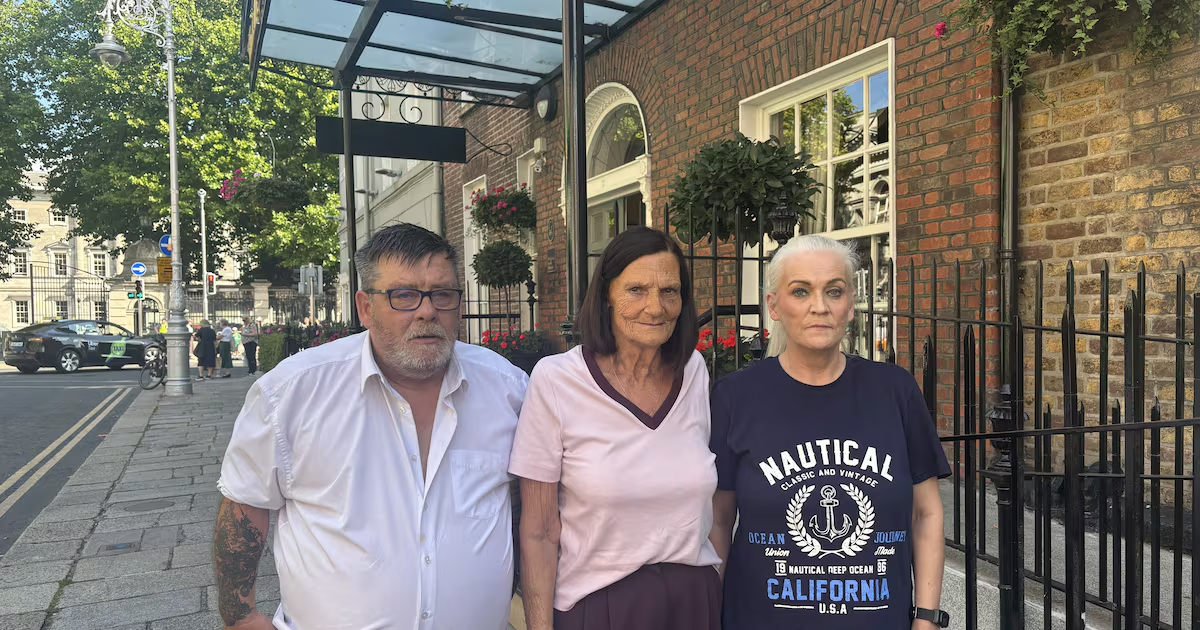
Three survivors of industrial schools in Ireland who went on hunger strike last year and are still waiting on promised State support have said they feel “forgotten about” and “ignored”.“We have been forgotten about and trodden on again and again. But we’re used to being ignored,” one of the hunger strikers, Mary Dunlevy Greene, said on Thursday. Dunlevy Greene was one of three survivors who met officials from the Department of Education on Thursday to raise concerns over the lack of progress in delivering on promises made to them. Last winter four survivors of industrial schools, Miriam Moriarty Owens, Mary Donovan, Mary Dunlevy Greene and Maurice Patton O’Connell, staged a 52-day hunger strike protest outside Leinster House. They slept rough in a tent in a nearby park for the duration of the strike.They sought access to the State contributory pension and an enhanced medical card to support them following the abuse they suffered at the hands of the State.The hunger strike ended in November after the Government agreed to provide financial assistance, priority access for social housing and a range of healthcare supports to survivors of residential abuse in industrial schools. [ Around 4,000 industrial school abuse survivors could qualify for new supportsOpens in new window ]The issue of pensions and medical cards went into further mediation.In February Taoiseach Micheál Martin delivered a State apology to survivors of these industrial schools and information on the supports was published by the department in March. However, the campaigners say many of these services are still not in place. Three of the hunger strikers, Donovan, Dunlevy Greene and Patton O’Connell, met representatives from the Department of Education on Thursday to raise these concerns. Dunlevy Greene was sent to the Mount St Vincent Industrial School in Co Limerick when she was three-years-old, after her mother died in childbirth. Donovan and Patton O’Connell were sent to The Pembroke Alms industrial school in Tralee, Co Kerry, when they were under one year old for reasons described on their court order as “lack of parental guardianship”. Speaking after the meeting on Thursday, the three hunger strikers said they are still waiting on the support that was promised in order to “move on with our lives”.“When we got the original apology [from then taoiseach Bertie Ahern in 1999] we were promised these services, and they were never forthcoming. We were promised lifelong supports for health, and we never got them,” Dunlevy Greene said after the meeting. “Basically, we are 27 years fighting the government on this,” Patton O’Connell said. At the meeting on Thursday they sought the appointment of health liaison officers, a dedicated housing officer and the removal of a requirement to prepay for education courses in order to access a grant scheme. The meeting was “positive, productive, and is moving forward to resolution,” Donovan said.However the marks of the hunger strike remain with them. “It was horrific. No one came to check on us. I lost over three stone. I’ve now got rheumatoid arthritis, my eyesight has suffered and psychologically my mental state is bad,” Donovan said.The protest itself outside the gates of Leinster House was difficult too, because passersby would ask them why they were there and they found themselves retelling their whole life stories. “Our history has been sanitised and just forgotten about. We’d go through it every day, and we did it because the public needs to know. “A lot of students came up to interview us, and we were sorry in a way that these young ones had to take this on board, but glad in a way that they were going to put it out into the public arena again, and maybe it won’t be sanitised and go down in history because it deserves to,” Dunlevy Greene said.The Department of Education has been contacted for comment.
Industrial school hunger strikers feel ‘trodden on’ as promised supports yet to arrive
Financial, housing and healthcare assistance not delivered since Taoiseach issued State apology in February
635 words~3 min read