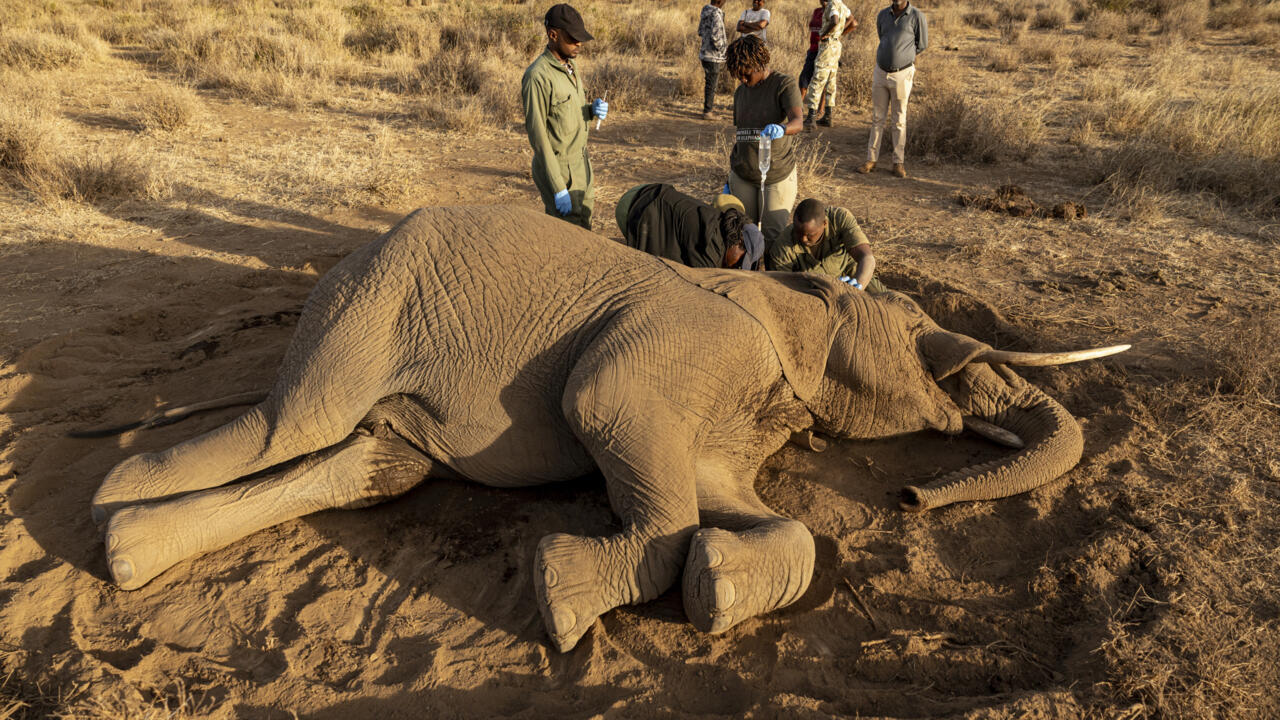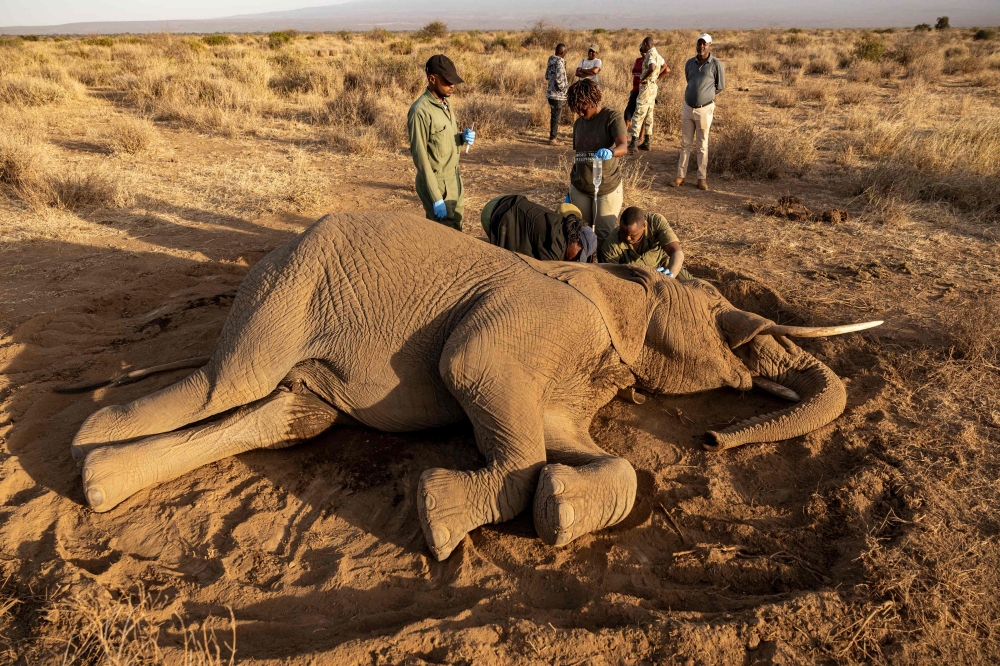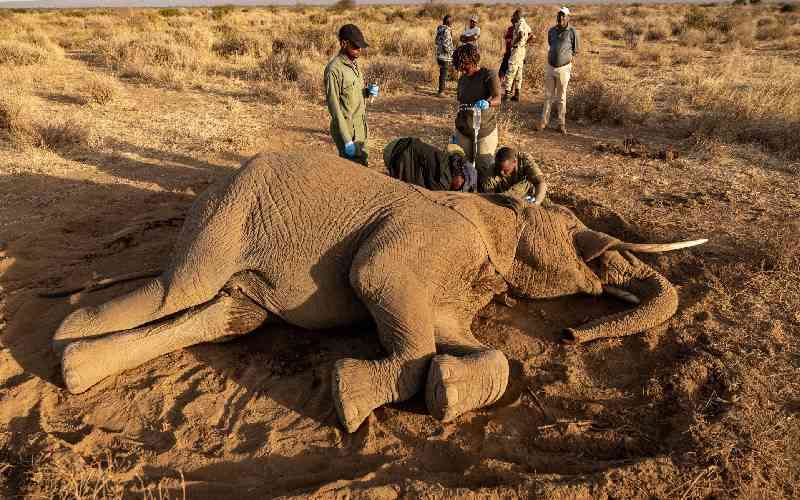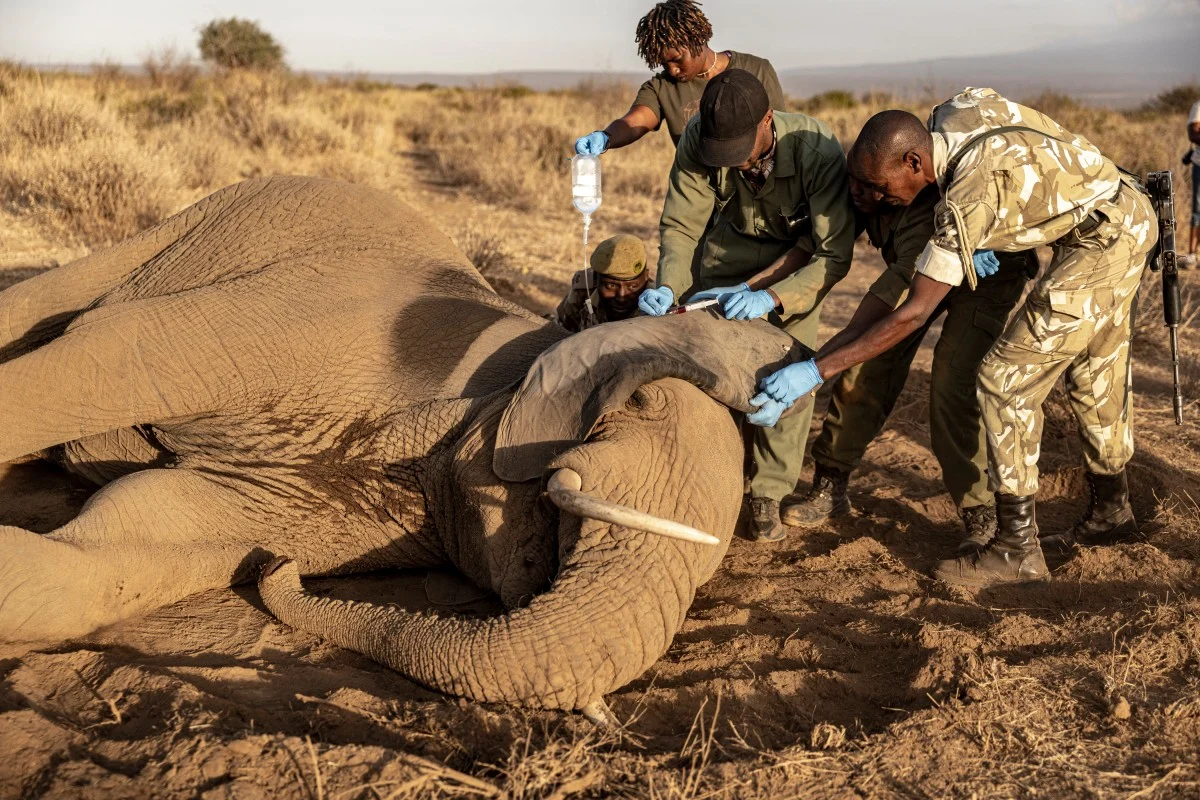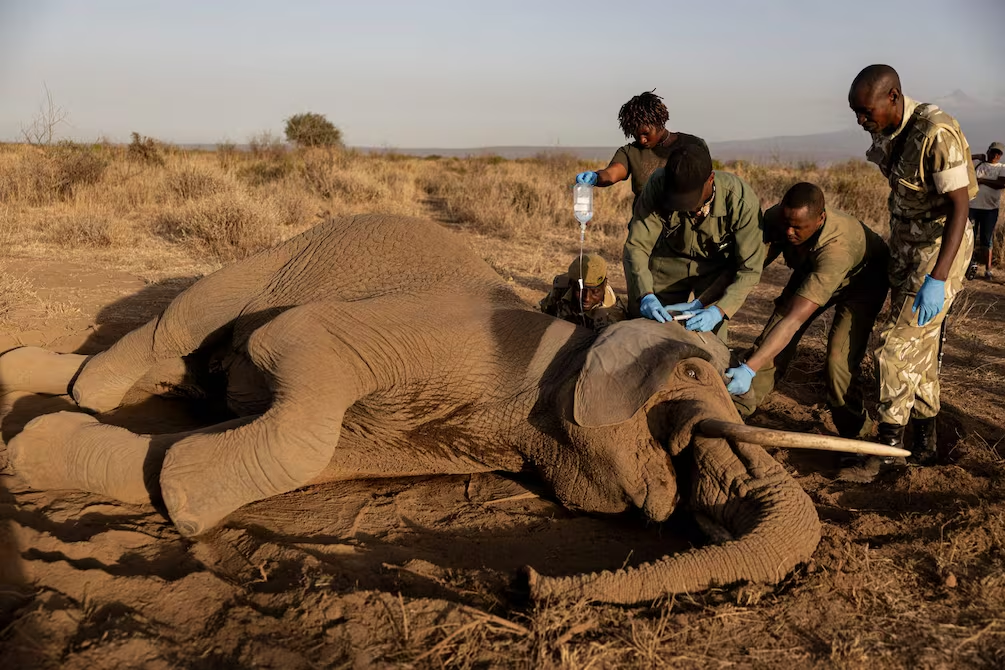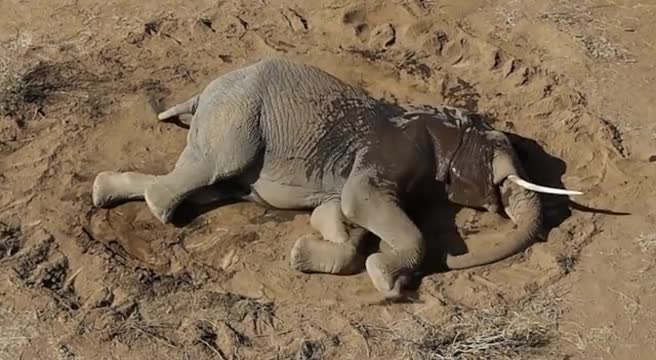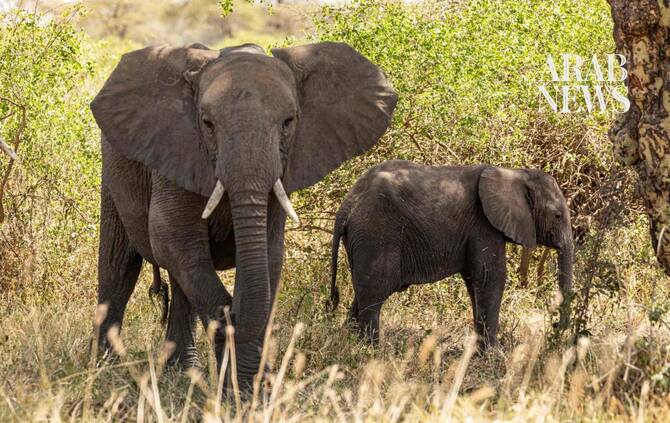
KIMANA, Kenya: Lying on the ground and kicking up a cloud of dust, the elephant slowly exhausted himself in futile attempts to stand, the latest potential victim of a still-mysterious ailment in southern Kenya.
Distressed vets administered a glucose injection — the only option, given that the cause of the ailment remains unknown — to the 11-year-old male, known as Genghis Khan, who was struggling to breathe.
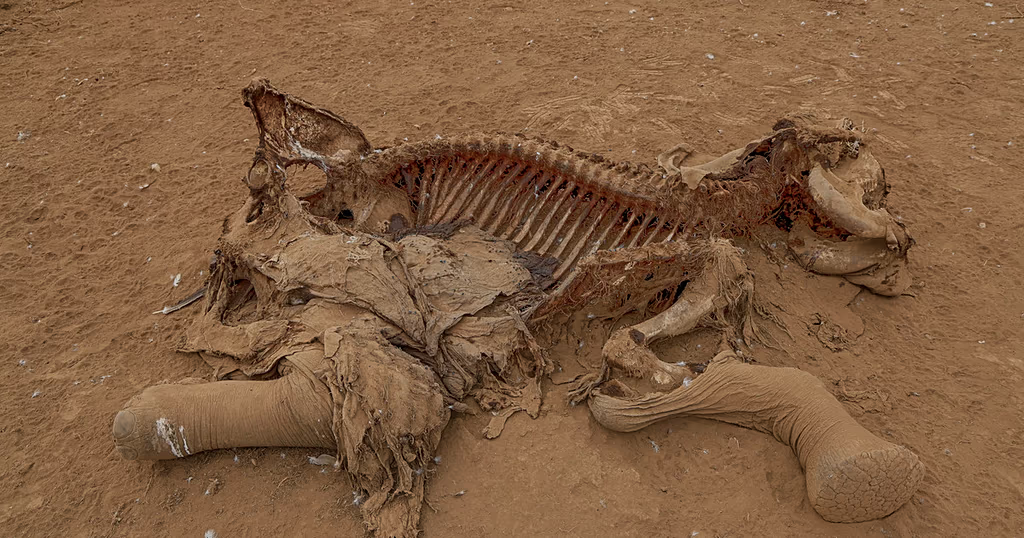
The mystery affliction has killed at least 19 pachyderms, mostly females or young males, since June in Kenya — with all of the animals exhibiting identical symptoms, including partial paralysis.
Elephant herds have made Amboseli — overlooked by Africa’s highest peak, Mount Kilimanjaro in Tanzania — a lucrative tourist hotspot and the mysterious deaths in the region are a sensitive issue in a country where tourism is a huge source of revenue.
“You would find one struggling for a day, struggling for two or even three days. Until they completely die,” said Patrick Papatiti, head of operations for Olgulului communal lands, which includes the Kitenden B reserve where Genghis Khan was found.